

10 Best Sci-Fi TV Shows Nobody Talks About Anymore
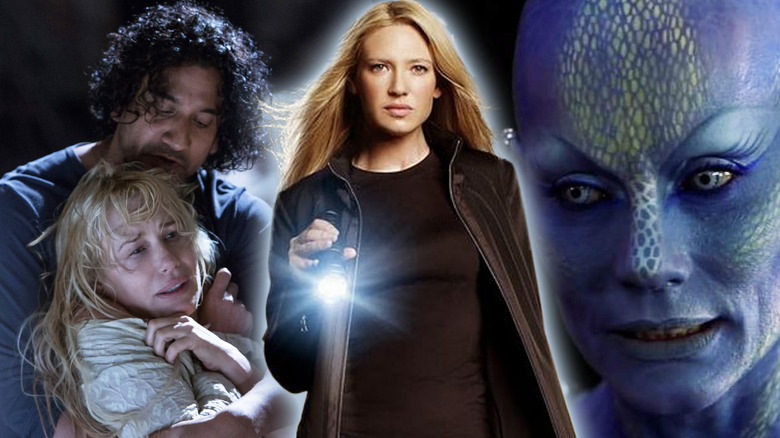
Science fiction has been a television staple for generations, using imaginative premises to push the boundaries of contemporary storytelling. The best sci-fi shows of all time each provide a distinct depiction of the possibilities of the genre and medium in their own thought-provoking ways. But for every enduringly celebrated sci-fi series, there are plenty of underrated and overlooked shows that slip through the cracks. This isn't an indictment on these overshadowed shows' individual quality, of course, as they've each earned their fair share of devoted fans since their respective debuts.
We're highlighting shows that have since fallen out of the wider public consciousness despite their past success and supportive viewers. These are cult classics that deserve far more recognition than they currently receive, years after these shows wrapped up their respective runs. Each of these series told fascinating stories within the genre and, in several cases, should've run far longer than they actually did.
Here are the 10 best sci-fi TV shows that nobody talks about anymore, despite their vocal fan bases.
Farscape
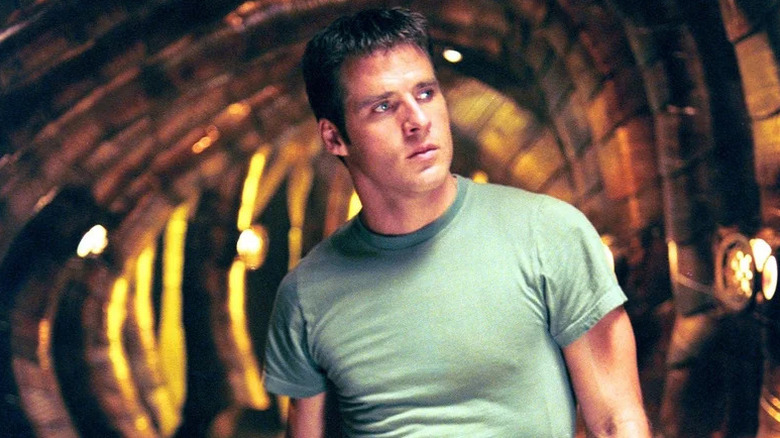
With so much of the '90s dominated by a certain long-running franchise and its spin-offs, the 1999 sci-fi series "Farscape" set out to do the opposite of "Star Trek." The show starts out with astronaut John Crichton (Ben Browder) accidentally sucked through a wormhole while on a test flight. Transported across the universe, Crichton finds himself in the middle of a conflict between the totalitarian Peacekeepers and an eclectic group fleeing in a living spaceship, Moya. Joining Moya's crew, Crichton searches for a way to return home before becoming involved in the escalating conflict against the Peacekeepers.
Compared to the largely unflappable and professional crews of "Star Trek" shows, the interpersonal dynamics throughout "Farscape" are delightfully messy and complicated. There is distrust, multiple betrayals, and romantic entanglements throughout the series, keeping the characters — and viewers — on their toes. The sci-fi series inspired James Gunn's "Guardians of the Galaxy," and between its emphasis on character relationships amid spacefaring action, it's easy to see why. A show that deserves a revival of some sort after its conclusion in 2003, "Farscape" remains the perfect counterpoint to more polished sci-fi.
The Lone Gunmen
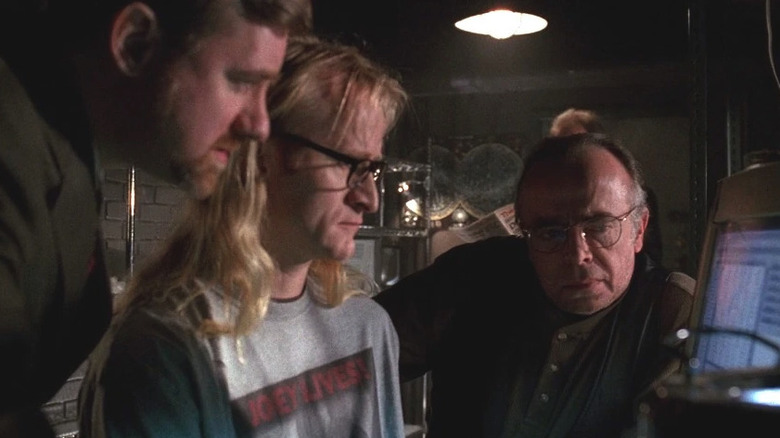
"The X-Files" created its own shadowy shared universe, including the underrated '90s sci-fi series "Millennium" and the direct spin-off "The Lone Gunmen." The latter followed the exploits of conspiracy theorists John Byers (Bruce Harwood), Melvin Frohike (Tom Braidwood), and Ringo Langly (Dean Haglund), who had appeared sporadically in the main series. The trio focused their efforts on uncovering government cover-ups and other malicious schemes by those in power, including the proliferation of a nonconsensual surveillance state. Throughout the group's adventures, they encounter the enigmatic femme fatale Yves Adele Harlow (Zuleikha Robinson), often linked to their various investigations.
Fox cancelled "The Lone Gunmen" after only 13 episodes, citing lower viewership behind its decision to pull the plug. Despite its brief run, the show brought a wackier and more overtly fun perspective to the "X-Files" universe, sometimes even veering into slapstick comedy. The series was also an early project for Vince Gilligan, years before he went on to create "Breaking Bad" and that whole shared television universe with "Better Call Saul." Quirky and ahead of its time with its themes of government surveillance and deep state conspiracies, "The Lone Gunmen" deserved a much longer run.
Torchwood
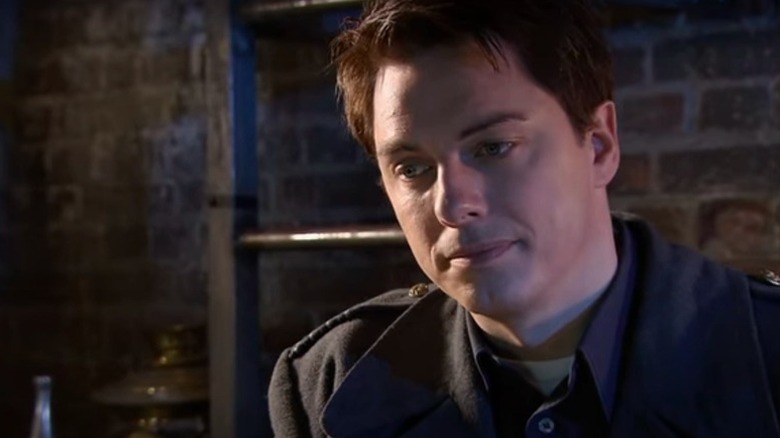
The long-running sci-fi classic "Doctor Who" has entertained generations of fans worldwide since the '60s and become one of Britain's biggest television franchises. This includes a number of spin-off series, such as the 2006 show "Torchwood," which ran for four seasons until 2011. The show is named for the Torchwood Institute, a clandestine organization which monitors and addresses extraterrestrial activity around Earth and scavenges otherworldly tech for its own use. Spearheading Torchwood's operations is the time traveler Jack Harkness (John Barrowman), who gained immortality and has been a fixture with the organization since Victorian Britain.
For the uninitiated, "Torchwood" is a "Doctor Who" spin-off many didn't know existed, especially 15 years after its ending. Through its cloak-and-dagger premise, the show often was much tonally darker than "Doctor Who," offering a marginally more mature perspective in its universe. This is reflected in Harkness, who is much less cavalier than he had been on "Doctor Who," more visibly serious by his extensive experiences. Shining a light on the dark underbelly of the "Doctor Who" universe, "Torchwood" could use a revival as the franchise settles on its future.
Fringe
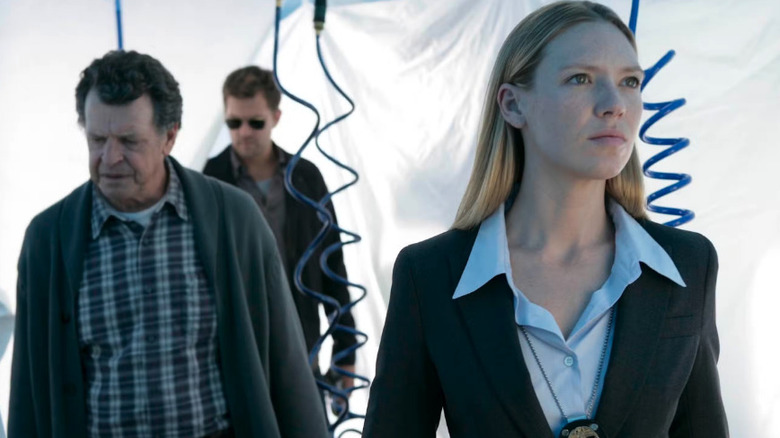
Parallel universes and divergent timelines form the narrative basis for the Fox series "Fringe," which ran for 100 episodes across five seasons from 2008 to 2013. The show centers on a secret joint task force based out of Boston that's headed by the FBI, focusing on the investigation of sci-fi themed cases. As the task force encounters and unravels a series of increasingly disturbing occurrences, they learn that they are linked to the existence of an alternate reality. This discovery escalates into the two universes coming into conflict for survival, all while overseen by a mysterious group of beings known simply as the Observers.
While "Fringe" starts off as a more paranormal case-of-the-week type series, as a brighter spiritual successor to "The X-Files," it steadily builds its own mythology. Moving away from its procedural roots, the show embraced how weird its parallel universe premise could get, improving steadily as it did so. Helping guide audiences with the story's reality-bending twists is a fan-favorite ensemble cast, including Anna Torv, John Noble, Joshua Jackson, and Lance Reddick. "Fringe" was a sci-fi show with airtight writing benefitting a premise that felt unlike anything else on television at the time.
Warehouse 13
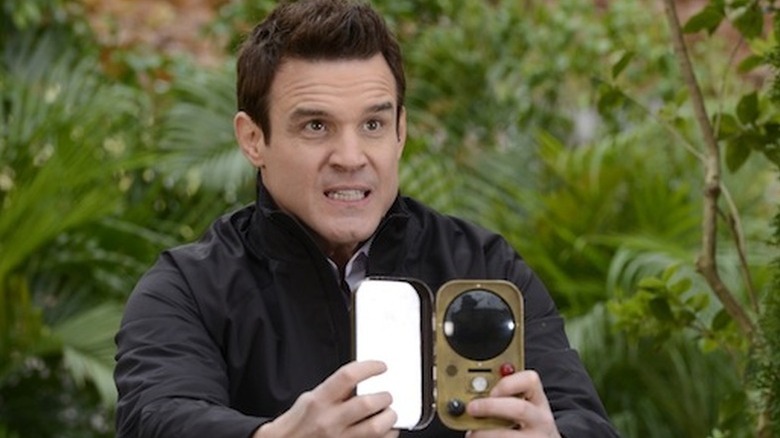
Another sci-fi oriented procedural series that debuted in the 2000s was "Warehouse 13," which ran for five seasons from 2009 to 2014. The show revolves around the titular top-secret government facility in South Dakota, where paranormal objects are stored for safe-keeping. U.S. Secret Service agents Myka Bering (Joanne Kelly) and Pete Lattimer (Eddie McClintock) are tasked with recovering new items to safeguard in the warehouse. These objects range from everything to Edgar Allan Poe's magical pen to Lizzie Borden's cursed mirror, each imbued with supernatural energy.
Compared to most of the shows on this list, "Warehouse 13" has a healthy sense of humor about itself and its MacGuffin-driven premise. Not every relic retrieved by the characters was necessarily one of sinister potential, with some even veering into slapstick comedy. More than anything else, the series reveled in the fun possibilities of its narrative, leaning into historical accounts and urban legends for its episodic tales. A cozy take on the sci-fi procedural genre, "Warehouse 13" makes for an accessible and entertaining viewing experience.
Continuum
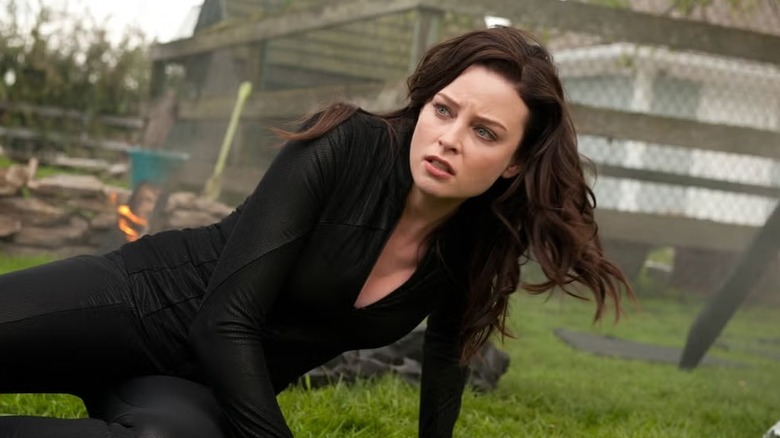
The Canadian series "Continuum" features a time-traveling story of revolutionary proportions in its scope. The show starts with a group of freedom fighters in 2077 fleeing to the year 2012 to prevent their totalitarian future from coming into power. The time travelers are joined by Kiera Cameron (Rachel Nichols), a police officer from their time period separated from her family and friends as she tries to stop the ensemble. Joining the local Vancouver police of the early 21st century, Cameron tries to locate the revolutionaries and return to her own time.
"Continuum" features its own story about the consequences of time travel and tampering with history, seen through Kiera's perspective. As she tracks down the freedom fighters from his near-future time period, Kiera gains a greater realization about the injustices of her superiors and the future where she's from. This gives her a redemptive arc, complicated by the fact that her future family's existence lies on the line of her decision. A nuanced exploration of cyberpunk and time travel tropes with a humanist heart, "Continuum" ran for four seasons until 2015.
12 Monkeys
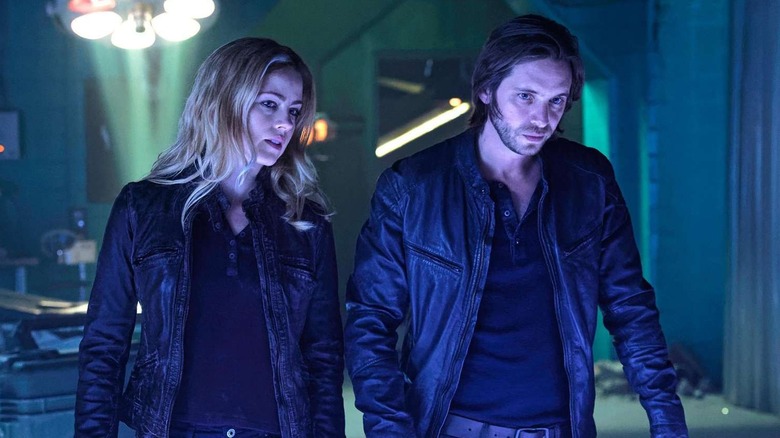
Terry Matalas and Travis Fickett loosely adapted the 1995 movie "12 Monkeys" for television in 2015, putting their own spin on the time-traveling story. The show features a future where the world has been devastated by a virus unleashed by a mysterious organization known as the Army of the 12 Monkeys. In order to prevent this apocalyptic fate from coming to pass, James Cole (Aaron Stanford) is transported back to 2015 to identify and stop the organization's enigmatic leader. As Cole teams up with local scientist Cassie Railly (Amanda Schull), he finds his time-traveling actions have caused unintended consequences.
All the way through its fourth and final season, "12 Monkeys" was one of the best sci-fi shows people weren't watching. Matalas and Fickett have created a complex tale that prominently incorporates the intricate mechanics of time travel, fueling many of the plot twists surfacing across the series. To match this complexity, the scripting is incredibly tight while the performances keep audiences invested rather than becoming overly obtuse. Arguably the best time travel show ever made, "12 Monkeys" deserves far more recognition than it currently gets.
Humans
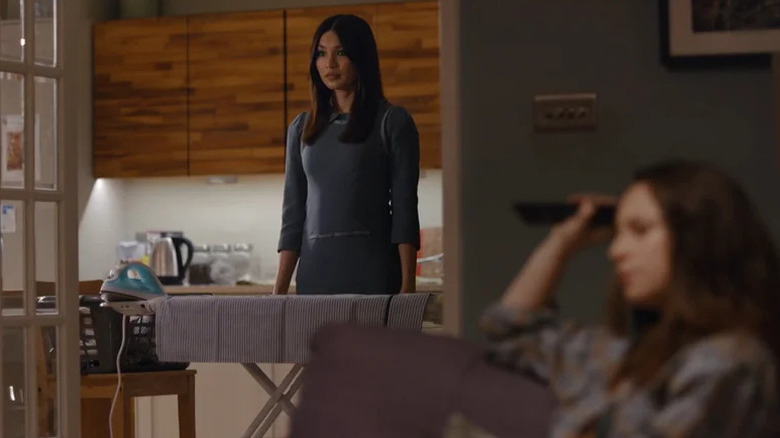
The nature of consciousness and identity is explored in the British sci-fi series "Humans," which ran for three seasons from 2015 to 2018. The show takes place in a world where humanity has begun to employ androids, or synths, to serve various functions in society. The series follows a group of sentient synths who conceal the truth about their status as they split up and go into hiding. This includes Anita (Gemma Chan), who finds herself at the center of a growing tension between synths and humans.
"Humans" is a mature and far-reaching exploration of what it means to be human through the eyes of its main synth characters. The initial sentient six see the best and worst parts of humanity through their individual experiences, informing their respective outlooks. Anchoring the whole sci-fi series is a star-marking performance from Gemma Chan, with Anita serving as the perfect point-of-view character for the story's themes. A well-paced and articulated sci-fi drama, "Humans" is the sort of show that leaves audiences pondering on the implications of sentience, especially amid the proliferation of artificial intelligence.
Sense8
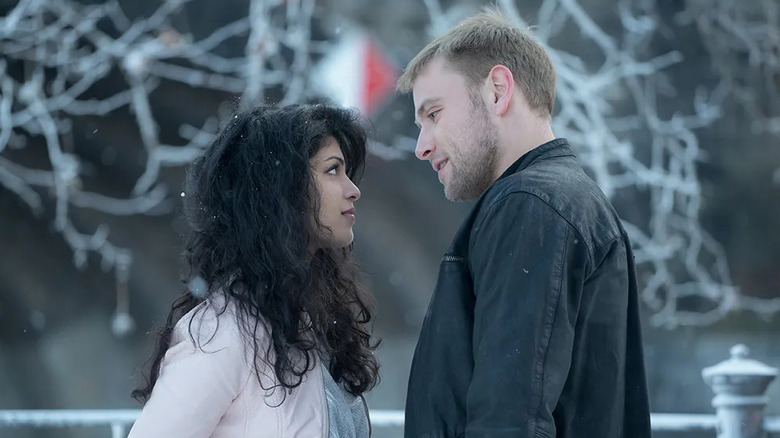
One of the most ambitious Netflix original sci-fi series is "Sense8," which featured an expansive global canvas for its story. Premiering in 2015, the show revolves around eight strangers from different parts of the world who suddenly find themselves connected telepathically. Through this psychic bond, the group is able to share emotions, memories, and knowledge while learning how to communicate with each other. As the story progresses, the group encounter hostile sensates, including those leading a shadowy organization hunting them worldwide.
With filming locations all over the world and a strong ensemble cast from the story's multitude of international regions, "Sense8" definitely was positioned for a wide audience. That global scope, unfortunately, didn't come cheap, informing Netflix's decision to cancel "Sense8" after two seasons. Thankfully, the series got the opportunity to conclude its story on its own terms, wrapping the series with a feature-length finale released a year after its final season. An early Netflix original that inadvertently set the stage for even bigger sci-fi productions on the platform, "Sense8" is an overlooked and original gem in its library.
Night Sky
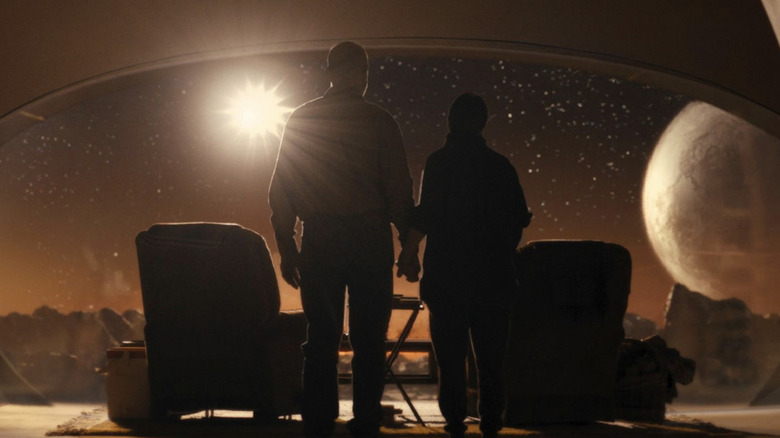
Sissy Spacek and J.K. Simmons shined in the stunning sci-fi series "Night Sky," which premiered in 2022 on Prime Video. Spacek and Simmons play retired couple Irene and Franklin York, respectively, who maintain a sleepy domestic dynamic in their twilight years. The couple also holds the secret that a shed on their property sits on a strange device capable of transporting them to an alien landscape. This otherworldly discovery is complicated by the appearance of a strange cult linked to the mystery behind the portal.
Unfortunately, "Night Sky" was cancelled after just one season, bringing its uniquely space-bending tale to a premature end. But Spacek and Simmons are absolutely sublime together in playing the Yorks, even before the more fantastical elements to the story start to surface. This provides the show's driving mystery with a firm emotional grounding before it takes its story into one of cosmic proportions. Short-lived but weaving a memorable tale in its eight episodes, "Night Sky" is one of Prime Video's most underrated shows.