

2017 Flopped Harder Than Any Other Year In Blockbuster Box Office History
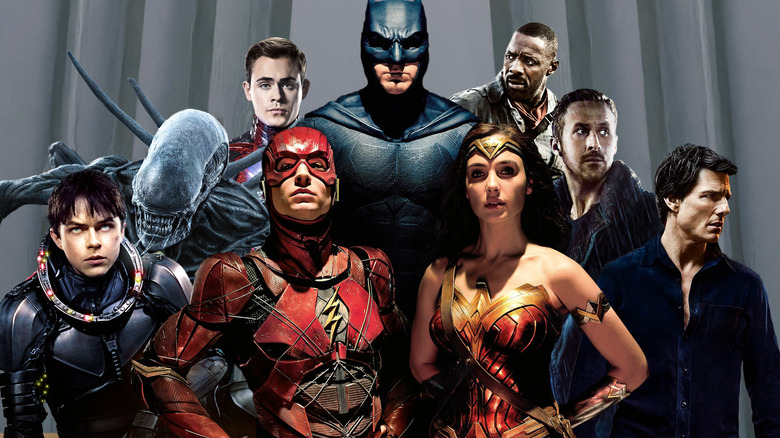
There's been a great deal of talk about the box office over the last handful of years, essentially since the COVID-19 pandemic upended the industry in 2020. No year in the history of the box office will ever be worse than 2020, when the pandemic shut down theaters all over the world for months on end, but in terms of bad years when things were operating under "business as usual" rules? It's difficult to find a worse year for blockbuster cinema than 2017.
In the 2000s, and specifically the 2010s, Hollywood studios became franchise and big-budget, tentpole-obsessed. That made the industry a little more top-heavy than usual, with the biggest movies accounting for a bigger percentage of the box office. 2017 had some hugely profitable movies, such as "Star Wars: The Last Jedi," Disney's live-action "Beauty and the Beast" remake, "Despicable Me 3," and "Jumanji: Welcome to the Jungle," among others.
The problem? That year saw an outsized number of high-profile movies fall well short of expectations, with many of them outright bombing, in some cases at historic levels. Four of the movies on Wikipedia's list of the biggest box office bombs of all time were released in 2017. Those include "Ghost in the Shell" ($170 million worldwide/$110 million budget), "King Arthur: Legend of the Sword" ($149 million worldwide/$175 million budget), "The Mummy" ($409 million worldwide/$195 million budget), and "Transformers: The Last Knight" ($605 million worldwide/$260 million budget).
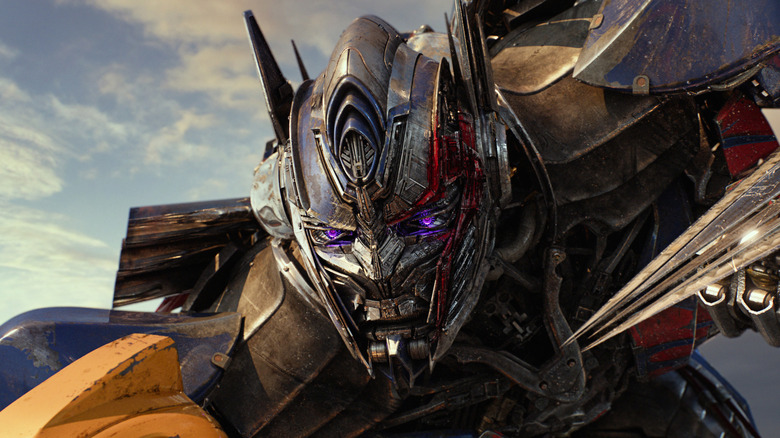
Now, "The Last Knight" wasn't an outright bomb, but 2014's "Transformers: Age of Extinction" made $1.1 billion, making it one of the 50 highest-grossing movies of all time. That's a momentous drop-off. So what happened?
Hollywood's franchise obsession came to a head in 2017
"Transformers: The Last Knight" is only one example of how Hollywood's franchise obsession became a huge problem in 2017. A decade after Michael Bay's first "Transformers" became a smash hit, the franchise was running out of gas.
Pixar's "Cars 3" made just $384 million worldwide, and it remains one of Pixar's lowest-grossing films, particularly pre-pandemic. "The LEGO Ninjago Movie" pulled in a mere $123 million, compared to 2014's "The LEGO Movie," which made $470 million. "Alien: Covenant" was also doomed at the box office, earning just $240 million, compared with "Prometheus," which made $403 million. Even something like "Daddy's Home 2" ($180 million worldwide/$69 million) was a hit but made far less than the $243 million its predecessor did, despite a smaller budget.
Those don't even represent the worst of it. "Justice League" was a disaster that doomed the DCEU, which began in 2013 with Zack Snyder's "Man of Steel." On a gargantuan budget of around $300 million, it made just $661 million. In an attempt to play catch-up with Marvel, the film's performance left Warner Bros. floundering with DC for years afterward.
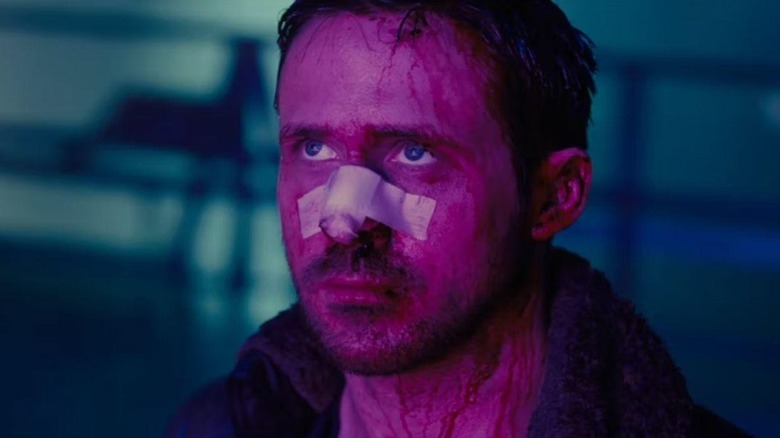
Perhaps worst of all was the box-office bomb "Blade Runner 2049," which became a cautionary tale. Making just $167 million worldwide against a budget of at least $150 million, it was a catastrophe, one that wasn't hard to predict either. No matter how acclaimed this movie was, the original "Blade Runner" also flopped in theaters and was never going to shoulder the weight of a blockbuster budget.
It's a prime example of the "franchises at all costs" thinking that dominated Hollywood at the time. It's a line of thinking that became remarkably costly, particularly during the year in question.
Presumed hits turned into box office disasters in 2017

Hollywood's franchise woes didn't simply extend to already-running franchises in 2017 — they also extended to would-be presumed hits based on IP, in hopes of creating new franchises. A prime example is Lionsgate's "Power Rangers," which overestimated the franchise's potential. It made just $142 million against a $100 million budget. A trainwreck that derailed sequel plans, even though plenty really liked the movie.
Good or not, the box office has never been a judgment on quality. "Bad" movies make lots of money, and "good" movies bomb all the time. It's the nature of the beast.
Warner Bros. also got in over its head with "King Arthur: Legend of the Sword." Directed by Guy Ritchie, it was supposed to start a six-film "King Arthur" franchise. It flamed out with $149 million against a $175 million budget. Then there's "The Dark Tower," based on Stephen King's beloved novels of the same name, earning $113 million on a $60 million budget. It's by no means the biggest offender on this list, but a misfire nonetheless when factoring in marketing costs.
Stephen King's "It" became the biggest horror hit ever with $700 million that same year, but not all King is created equal. Dwayne Johnson's "Baywatch" was also a presumed slam dunk, but it pulled in just $178 million on a $69 million budget. Not an outright flop, but by no means the hit anyone wanted. Similar things happened across the charts in 2017.
For every "Murder on the Orient Express" ($353 million worldwide/$55 million budget), there was a "CHiPS" ($27 million worldwide/$25 million budget). For every "Pitch Perfect 3" ($185 million worldwide/$45 million budget), there was a "The Nut Job 2: Nutty by Nature" ($69 million worldwide/$40 million budget).
Lots of non-franchise, big-budget movies bombed in 2017 as well
The other problem is that non-franchise movies, many of which were made with adult audiences in mind, also met grim fates at the box office. It wasn't limited to movies with franchise ambitions.
"Downsizing" ($55 million worldwide/$68 million budget) is one prime example. As was Ben Affleck's "Live by Night," which did only $23 million worldwide on a $65 million budget but lost Warner Bros. an estimated $75 million when all was said and done. While that one was released at the tail end of 2016, it made the bulk of its money in 2017. A bad omen of things to come.
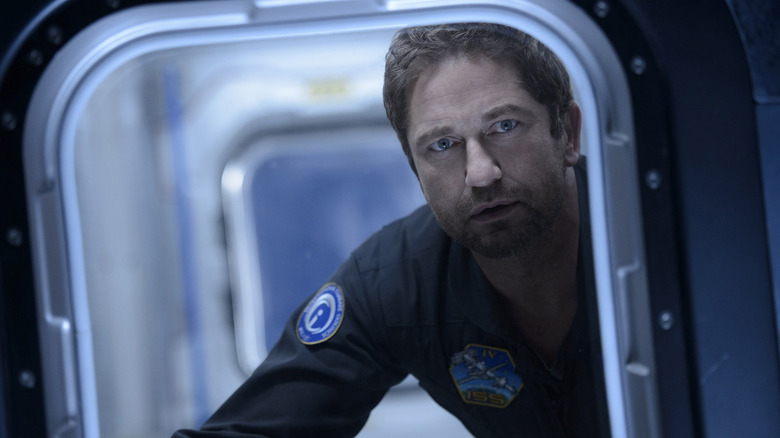
Even seemingly safer genre movies floundered, such as the star-studded "Life" ($100 million worldwide/$58 million budget). Or the mega-budget "Valerian and the City of a Thousand Planets" ($256 million worldwide/$177 million budget). We could also look at the disaster pic "Geostorm" ($222 million worldwide/$120 million budget) or Gore Verbinski's "A Cure for Wellness" ($26 million worldwide/$40 million budget).
The flops were many and varied. That's why 2017 movie ticket sales were the lowest in 25 years at that point, dating back to 1992. The total domestic box office that year was just over $11 billion, down from $11.3 billion the prior year. More importantly, the total number of tickets sold plummeted. Audiences grew increasingly disinterested in many franchises and chose to ignore a large number of non-franchise offerings. It was the perfect storm for a disastrous year.
Granted, we've had worse years since. The domestic box office failed to crack $9 billion in 2025, as the industry has struggled mightily to recover from the pandemic. In 2017, Hollywood had no such excuses.
Hollywood failed to learn some valuable lessons from 2017's failures
Looking back, Hollywood should have learned some valuable lessons from the failures of 2017. "Blade Runner 2049" was a prime example of how not all IP is good IP just because it's IP. All the same, we still see that mistake being made all the time."The Mummy" was putting the cart before the horse, with Universal trying to start a whole monster movie cinematic universe right from the jump. The Dark Universe may have deserved better, but it was too much, too soon. This still happens frequently in the industry today.
Even positives somehow became negatives. Women-led films topped the box office for the first time in 59 years in 2017, led by "Star Wars: The Last Jedi" ($1.3 billion) and "Beauty and the Beast" ($1.2 billion). The problem? Hollywood still underserves female audiences, with hits like "Barbie" more of an exception to the rule than they should be.
Another huge issue is that oversized budgets doomed many of these movies. I've been talking about Hollywood's budget problem and the reckoning that must come for years now. It's still a problem, and it's only worse now with the box office on even less certain ground.
2017, in retrospect, was a cavalcade of failures that stemmed from how things were working at the time. Hollywood's obsession with franchises led people to focus less on non-franchise fare. That's a bigger issue now than it's ever been. With the benefit of hindsight, this may be one of the most consequential years at the box office ever recorded. It's just amazing how much of it seems to ring just as true now as it did then.