

10 Worst Superhero TV Shows Of All Time, Ranked
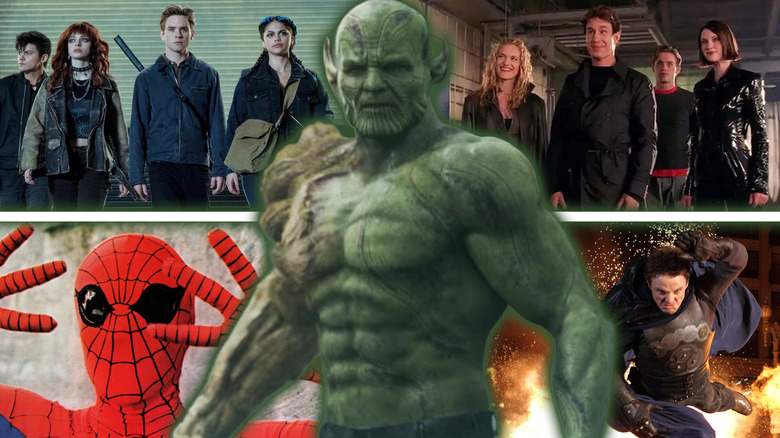
It would be easy to assume that, in terms of superhero television, we've spent the last decade in something of a golden age. After producing a few genuine hits at Netflix, the advent of Disney+ allowed Marvel Studios to finally bring its television output up to speed with its theatrical releases. Warner Bros., meanwhile, was able to produce colorful, crowd-pleasing series through The CW's Arrowverse at the same time they produced more adult series like HBO's "Watchmen" and "Peacemaker." Outside the Big 2, adaptations of "Invincible" and "The Boys" are two of the most popular superhero series in production.
While things have certainly come a long way from the humble beginnings of the '60s and '70s or the chilling depths of the '90s, there are still shows produced in this golden age that stand out for all the wrong reasons. Going back through the history of the superhero subgenre on TV, we're taking a painful look at some of the worst superhero series of all time.
Iron Fist
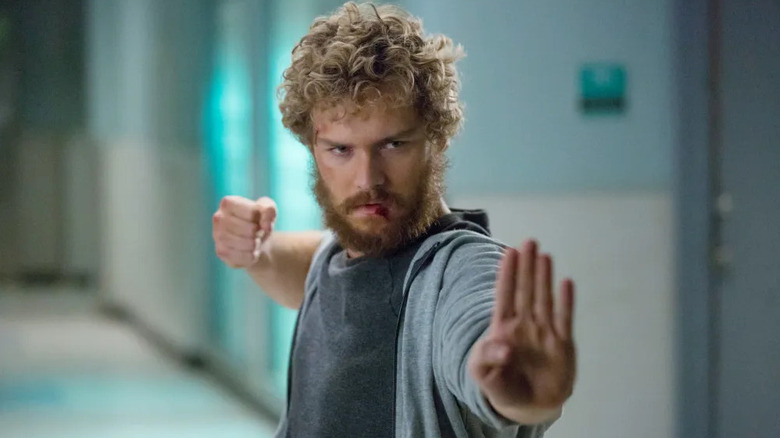
"Iron Fist" is only memorable for representing the first time Marvel Studios showed any sort of weakness. By the time it hit Netflix in 2017, the company's earliest and arguably sole total failure, "The Incredible Hulk" with Edward Norton, was so forgiven and forgotten that its canonicity was all but dismissed by a few scenes of Mark Ruffalo in "The Avengers." And as underwhelming as "Iron Man 2" and "Thor: The Dark World" were to many Marvel fans, they can really only be considered failures in comparison to what the studio had already proven themselves capable of. Neither were anywhere close to requiring a retcon, with "Avengers: Endgame" and "Thor: Love and Thunder" even revisiting the first "Thor" sequel.
This is all necessary to remind readers that, when the first reviews for "Iron Fist" started rolling in, it was a bit like seeing a god bleed. After the hat trick of streaming hits in the first seasons of "Daredevil," "Jessica Jones," and "Luke Cage," Marvel and Netflix gave us the final piece of its ill-fated "Defenders" puzzle in the form of a dull, derivative corporate drama about a boring billionaire who speaks and fights like Steven Seagal.
We can't put all the blame on Finn Jones for making Danny Rand such a boring protagonist though. Aside from the eye-roll-inducing white-guy-obsessed-with-"eastern-mysticism" dialogue and the slappy-throwy pseudo-martial arts, the series is so unimaginative in its writing, direction, and even cinematography that it comes across as a pale imitation of the 1st season of The CW's "Arrow." "Iron Fist" improved significantly in its second outing — even so, and despite Jones' understandable desire to redeem himself, we have no interest in seeing this version of the character ever again.
The Marvel Super Heroes
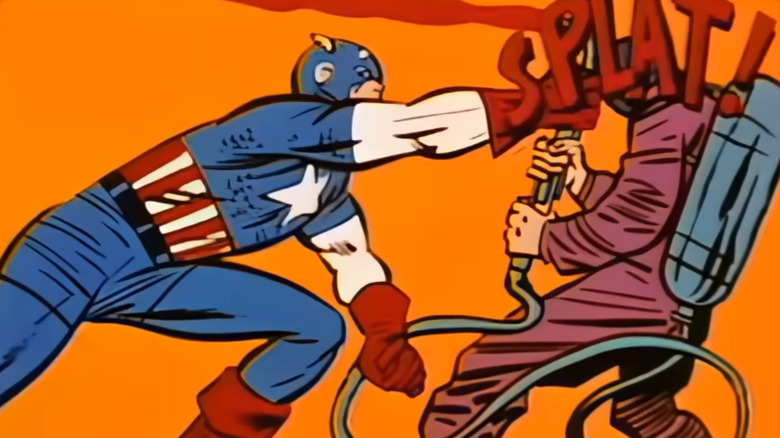
We suppose "The Marvel Super Heroes" deserves some credit. After all, the 1966 series was the first television show to bring Marvel Comics characters to the small screen, premiering just a year before the first animated "Spider-Man" and "Fantastic Four" series debuted. That being said, considering that this was also the same period that gave us the delightfully campy '60s "Batman" series and a whole slew of classic Hanna-Barbera cartoons like "Scooby-Doo, Where Are You!," and "Johnny Quest," it's fair to describe "The Marvel Super Heroes" as contemporarily disappointing.
You can't argue that the series lacked compelling source material. In fact, the entire project essentially consisted of literally scanning pages of popular Marvel Comics issues and minimally editing them to give audiences the passing impression of a Saturday morning cartoon. When we say minimal, we mean minimal — sure, Shaggy and Scoob might seem a little stiff listening to Fred's latest plan of action, but they're practically lifelike compared to the static "animation" of "The Marvel Super Heroes." It certainly doesn't help that the stilted, dispassionate voice acting feels just as wooden.
This process was seemingly chosen to ensure the series' immediate and ambitious franchise-like production schedule. "The Marvel Super Heroes" began by airing five episodes every week, with each night/episode devoted to a different character. Pulling largely from "Tales of Suspense," "The Avengers," and "Journey into Mystery," it was essentially five TV shows in a trench coat — "Captain America," "The Incredible Hulk," "The Invincible Iron Man," "The Mighty Thor," and "Prince Namor the Submariner." At best, the series is pleasant as a kind of screensaver for the most diehard Marvel Comics fans, through which they can passively enjoy art from the likes of Jack Kirby and Steve Ditko while doing something else.
The Cape
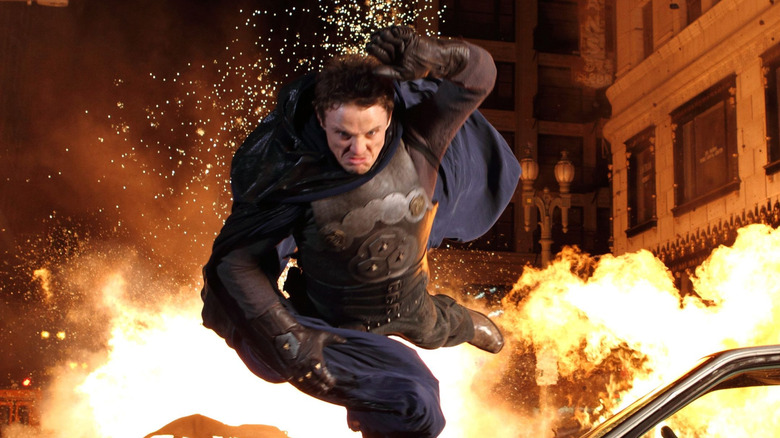
We have a genuine fear here at /Film that "Community" may have successfully laundered the popular perception of "The Cape." It earned an unexpected second life in pop culture discourse almost exclusively through the hilariously enthusiastic endorsement of Abed Nadir (one of the sitcom's characters, played by Danny Pudi) and his improbable prophecy that the NBC superhero show would receive "six seasons and a movie" (which became a sort of rallying cry for "Community" itself, arguably willing the upcoming film into existence). Despite Abed's passion, "The Cape" had already been canceled after a single season — and it isn't that hard to see why.
If you weren't around or, more likely, had better things to do in the early months of 2011 than entertain an obviously ridiculous premise for a new TV series, "The Cape" followed the exploits of a vigilante whose "superpower" was literally just a cape. Formerly the last honorable police officer in the fictional "Palm City," Vince Faraday (David Lyons of "The Beast in Me") is robbed of his reputation, family, and life after a crime lord known as Chess (James Frain) frames him for murder, resulting in his apparent death. Vince is subsequently rescued by a circus of criminals (coincidentally led by future "Community" actor Keith David), who provide him with various parlor tricks and unconventional gadgets (including his nigh-indestructible spider silk cape) to aid in his one-man war against Chess.
It's a setup that borders on so weird it just might work — and maybe with a stronger creative vision it could have. As it stands, however, "The Cape" is depressingly predictable, a mash-up of superhero tropes and cop drama cliches that inspires nothing.
Powers
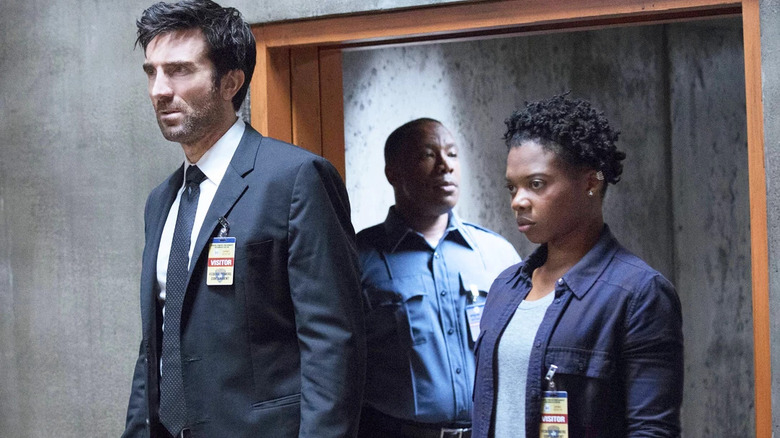
Hey! Remember when your PlayStation Plus membership came with a subscription to a library of original streaming series? Yeah. Neither do we. It's likely because that library seemingly began and ended with a lifeless superhero drama called "Powers."
Based on a solid, Eisner Award-winning original comic book series from writer Brian Michael Bendis (co-creator of Miles Morales, Ironheart, and Jessica Jones, as well as one of the architects of the Ultimate Marvel line) and artist Michael Avon Oeming, "Powers" had a tremendous amount of potential. At a time when the Marvel Cinematic Universe had successfully put superheroes at the center of pop culture, it was frankly brilliant to conceptualize a television series that could use the reliable police procedural format to deconstruct the rising subgenre. Even in the final product, there are flashes of the tone, sense of humor, and thematic identity that would eventually make "The Boys" one of the most popular comic book series ever made (the series even features Sister Sage actor Susan Heyward in a starring role). But those flashes of life aren't enough to save a show that feels dead on arrival.
"Powers" stars a woefully miscast Sharlto Copley as Christian Walker, a once-great superhero (who are awkwardly referred to as "powers" in this world) who was stripped of his gifts. He thus becomes a reluctant member of the Los Angeles Police Department's Powers Division, charged with investigating super-power-related incidents and holding the heroes of the city accountable. While the comics are able to explore this premise to a satisfyingly extreme degree, the series lacks the same vision and command of the superhero genre — not to mention the necessary production budget to pull off an adaptation like this.
Secret Invasion
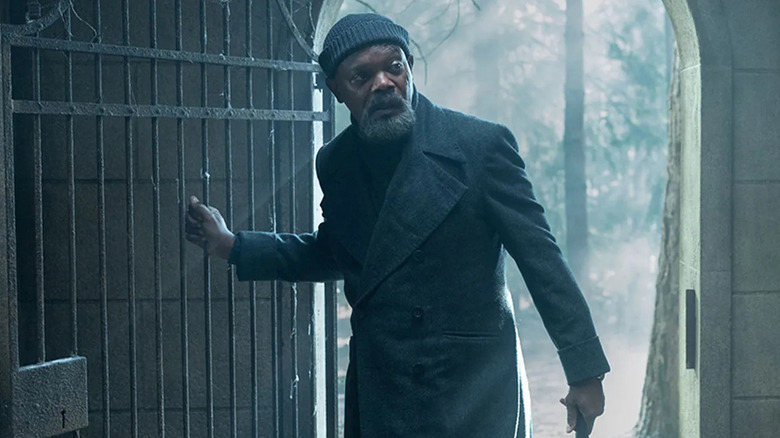
Even considering that it debuted during the post-"Avengers: Endgame" decline of the Marvel Cinematic Universe, "Secret Invasion" was still a shockingly messy misfire. "Iron Fist" came to Netflix with several disadvantages, including a tenuous connection to the MCU proper, a minimized TV production budget (with a relatively tiny scope in terms of narrative scale and special effects), and a star with relatively little star power.
By comparison, "Secret Invasion" had everything going for it: Samuel L. Jackson signed on to lead the series, alongside popular actors like Martin Freeman, Ben Mendelsohn, Don Cheadle, Olivia Colman, and Emilia Clarke (they even got a more famous "Game of Thrones" actor in the mix); the series was essentially a direct sequel to the "Captain Marvel" films, and shared a title with one of the most impactful Marvel Comics events of all time; and with a total production budget of nearly $225 million (over $37 million per episode), it cost ten times as much as "Iron Fist" to make. That the series had all this going for it and was still delivered to Disney+ subscribers in such a dismal state was is mind-blowing.
The only reason "Secret Invasion" isn't ranked much lower on this list is due to the significant mitigating factors surrounding its troubled production. Creative conflict and extensive reshoots muddied whatever potential the series might have had. The end result is nonetheless a veritable soup of unconvincing storylines and vague narrative ideas, as grotesquely mismatched as the horrifically rendered Super Skrulls themselves. It's a disheartening waste that frankly shatters the confidence we'd like to have in Marvel's output.
The Amazing Spider-Man
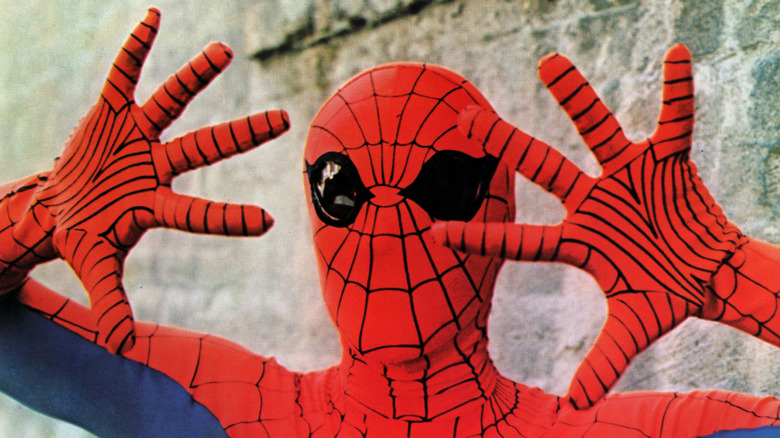
In all fairness, it was insanely ambitious for anyone to attempt a live-action "Spider-Man" adaptation in the '70s, especially with a television budget. In terms of technical execution, we're probably just now entering an era where something like this could be done successfully with the resources of Marvel Studios and Disney+ at its disposal. Then again, the attempts at making the audience believe that a man could climb walls and swing from webs weren't the main problem with "The Amazing Spider-Man." In fact, one could argue Peter's powers were the only thing about the series that even slightly justified its existence.
Starring "The Sound of Music" actor Nicholas Hammond in the title role, the 1977 series was the first full attempt at bringing the wall-crawler to life outside comics or animation. (Hammond is fine in the role, though he often feels more like Christopher Reeve's Clark Kent than Peter Parker.) Astoundingly, it tosses out most of what fans love about the character from the comics. Rather than a relatable high school student, Peter is an adult, and his supporting cast like Mary Jane, Harry Osborn, and Gwen Stacy are nowhere to be found, replaced instead by Peter's co-workers at The Daily Bugle. Worst of all, his incomparable rogues gallery of villains like the Green Goblin and Doctor Octopus had to be completely ignored, and the series makes up various unmemorable criminals that fit with its budget. To cap it all off, Hammond's spidey-suit is probably the worst we've ever seen.
Stan Lee all but disowned the series after its release, upset by how "juvenile" it was compared to the comics. While not necessarily unwatchable, "The Amazing Spider-Man" is so far beneath the litany of "Spider-Man" stories we've gotten since that fans need not waste their time.
Mutant X
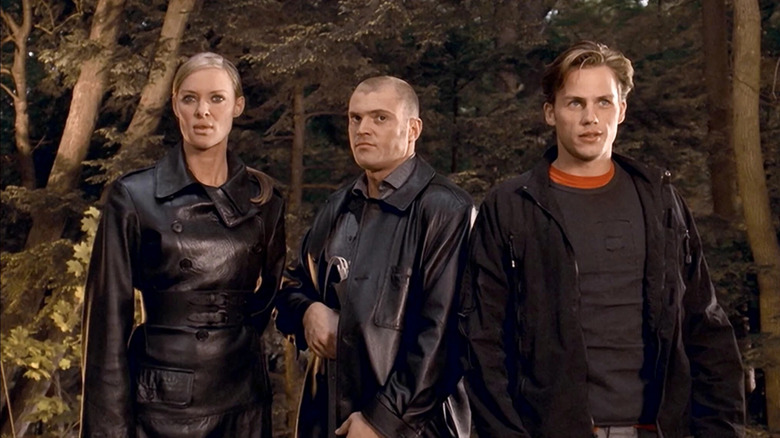
Of all the series on this list, we'd argue that "Mutant X" is by far the strangest. If you were to read that title, and learn that the series it belongs to was A.) created by Avi Arad in 2001 (the year after he executive produced "X-Men") and B.) produced by Marvel, you would probably assume that it was an "X-Men" series. Right? Wrong.
Maybe Arad and Marvel happened to have another idea for a story about mutants that had nothing to do with the entire established mutant mythos from the film or comics themselves. Maybe they wanted to make a mutant TV show without having to involve 20th Century Fox, who owned the exclusive film and television rights to "X-Men" and its characters at the time, and that's certainly what the latter studio argued in their lawsuit against Marvel. Fortunately, for Marvel, they were able to make nice with Fox by sharpening the separation between "Mutant X" and "X-Men" as much as possible. Unfortunately, for TV audiences, this resulted in one of the blandest superhero shows ever made.
Rather than genetic anomalies, "Mutant X" followed a group of otherwise normal humans who were genetically modified by the government. Adam Kane, the leading scientist behind the initiative (John Shea), forms Mutant X as an independent task force to rescue and protect the lives he changed. Even ignoring the insultingly boilerplate sci-fi-TV premise, the execution (or, should we say, X-ecution) somehow managed to do a disservice to a project as inherently empty as "Mutant X." The performances are weak, the direction incoherent, and the action embarrassing (a combination of awkward staging and failed "Matrix"-like wirework). The real "Marvel" here is that the show ran for three seasons before getting canceled.
Gotham Knights
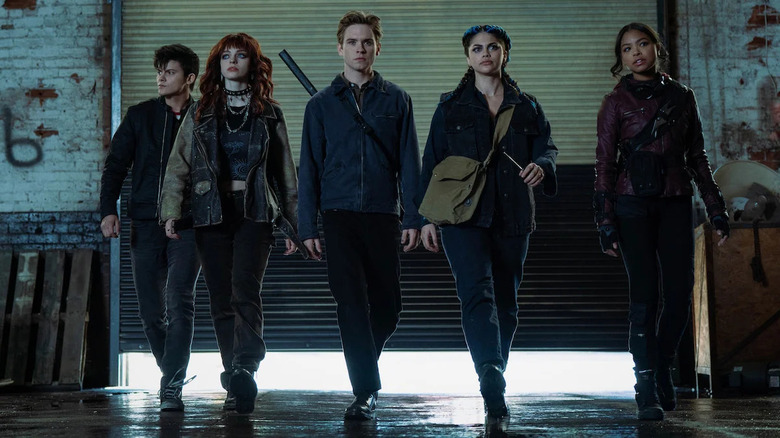
To describe "Gotham Knights" as officially licensed fanfiction would be an insult to the creativity of authors across the internet. While even the most simple (and/or lascivious) liberties taken with the "Batman" characters and mythos carry a certain vitality through their obvious passion for the source material, this death march of a CW series had all the promise of a funeral.
By the time of its release in 2023, the idea of a "Batman" series without Batman was already so exhausted it was laughable. "Gotham" and "Pennyworth: The Origins of Batman's Butler" improbably made it work in their own ways, but "Batwoman" (and even "Titans" to an extent) should have shown whoever was in the position to make such programs that the game was up. And yet, as the Arrowverse gasped its final breaths, The CW gave us "Gotham Knights", a "Batman" series that not only kills Batman before it begins but hands the story of his death to an underwritten original character with less personality than an extra on "Gossip Girl."
Forget Dick Grayson, Damian Wayne, or even Terry McGinnis — instead, meet Turner Hayes (played by a blameless Oscar Morgan, who does his best to navigate the script's conflicting cliches). He's the semi-estranged adopted son of Bruce Wayne, apparently, who is somehow implicated in his father's murder. On the run and in cahoots with other teen suspects in the crime, he must work with them to clear their names and save Gotham from the real threat. It's the kind of thin plot that feels transparently contrived to sell the audience on a team that has no reason to exist. Predictable and fundamentally broken, "Gotham Knights" feels like a series fighting to convince itself of its own worth.
Black Scorpion
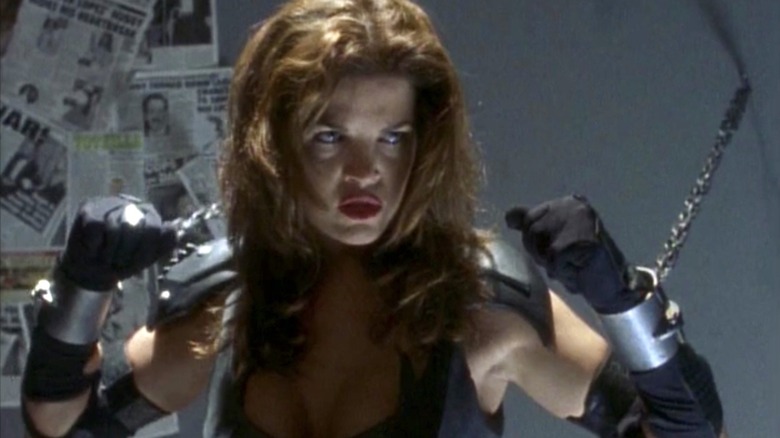
If any show on this list is worth watching, it's "Black Scorpion." Aside from the fact that you have a pretty good chance of finding it on a FAST streaming service, it's the only series that's so unbelievably bad that, honestly, you kinda need to witness it for yourself. And, yes, we'd also argue it crosses comfortably into so-bad-its-good territory.
In the wake of the assassination of her father, Darcy Walker (Michelle Lintel) follows in his footsteps to become a detective in the Angel City Police Department. Upon discovering the extent of the corruption that had poisoned the city's law enforcement and elected officials, she uses some combination of technical brilliance and martial arts mastery to become the Black Scorpion, a vigilante with a costume that's ridiculous even by superhero standards.
Released in 2001, "Black Scorpion" was created by B-movie legend Roger Corman and Craig J. Nevius, who notably collaborated on (among many other projects) the infamous unreleased 1994 "Fantastic Four" movie. (They had previously made two "Black Scorpion" TV movies in the late '90s.) With that in mind, it's almost hard to take any issue with the series' laughably poor quality. You might even wonder if Corman and Nevius aren't in on the joke with you. Some readers will regard "Black Scorpion" as a campy masterpiece. On the other hand, it doesn't take long for the nonsensical dialogue, sloppy action, brain-dead plotting, and casual sexism to wear out the series' welcome.
Inhumans
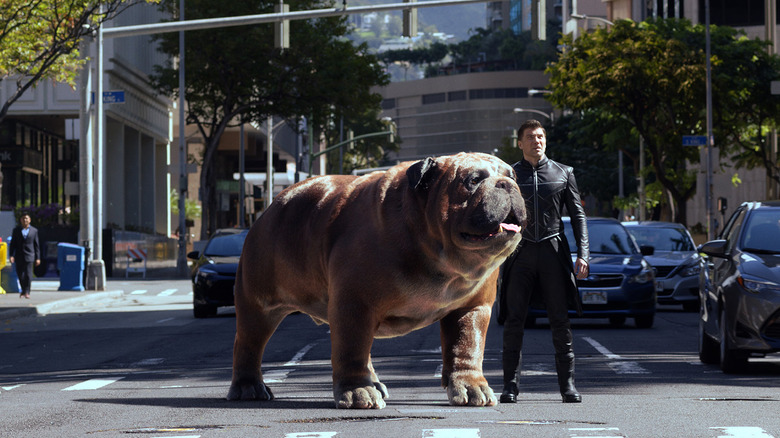
Though "Inhumans" was created and showrun by Scott Buck, it had long been the cynical, myopic passion project of former Marvel Entertainment CEO Ike Perlmutter. His determination to adapt Marvel's most overlooked superteam wasn't born of a love for Black Bolt or Medusa. Instead, like his attempt to push Kevin Feige out of Marvel Studios or his decision to impede the development of "Black Panther" and "Captain Marvel" (on the basis that movies led by anyone other than a white man would fail), "Inhumans" was the result of poor business judgment and unchecked ego. Upset that Fox was enjoying the success of the X-Men, Perlmutter wasn't satisfied with merely minimizing the mutants' presence in the Marvel brand — he wanted to use the Inhumans to make them irrelevant.
Unsurprisingly, Perlmutter's passion stopped there. With Marvel Television still under his purview, "Inhumans" was lambasted as the worst thing Marvel had ever produced upon its release in 2017. The series looked embarrassingly cheap, despite trailers touting the use of IMAX cameras. They even had the audacity to screen the first two episodes in IMAX theaters. Story-wise, it follows the Inhuman royal family as they mostly stumble around Hawai'i in exile after failing to prevent an insurrection (which, for the record, is pretty hard to root against considering the show's heroes endorse a society built on a brutal genetic hierarchy). They hardly even use their Inhuman gifts, with the story engineering infuriating, individual contrivances to render each of them powerless. The series as a whole is so lacking in effort that one can't help but see it as the perfect synthesis of Perlmutter's lazy cynicism.