

How To Read The Witcher Books In Order
We may receive a commission on purchases made from links.
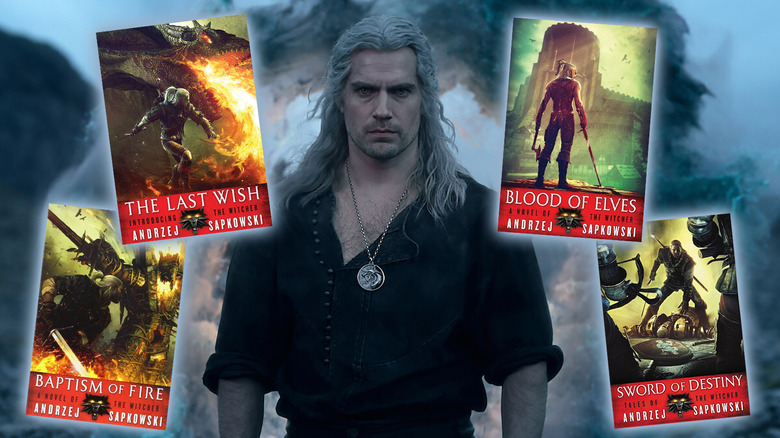
One of the most expensive TV shows of all time is "The Witcher," based on the novels by Polish author Andrzej Sapkowski. The show itself has seen its fair share of creative ups and downs, including original star Henry Cavill leaving the Netflix series. But something that's fortunately stayed consistent in quality for the franchise is the book series on which the series is based, with the most recent installment written by Sapkowski in 2024. These books have inspired not only the big-budget Netflix series but also a line of acclaimed video games and other adaptations of Sapkowski's work.
For those interested in diving into the literary adventures of series protagonist Geralt of Rivia, there is a recommended reading order, which differs from the order in which the novels were first published, as the story was not told chronologically. Also, for the purposes of this article, we're just focusing on Sapkowski's novels, not the comic book adaptations and art books they have since inspired.
Here is how to read the "Witcher" books in order to best experience Geralt's story in full.
Publication order vs recommended order
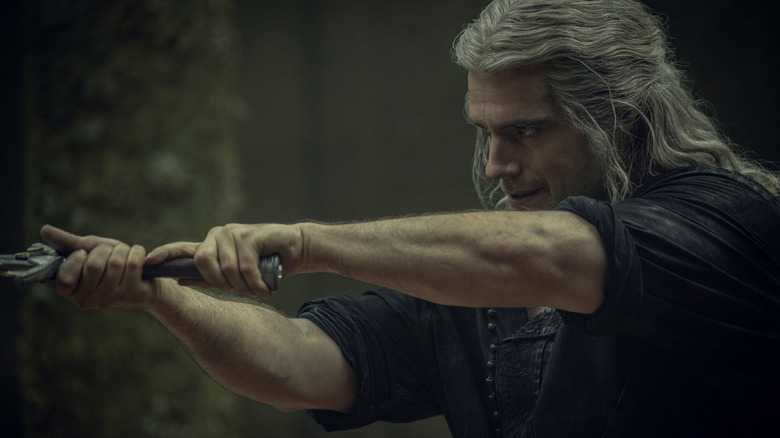
Just like "The Witcher" season 1 and its shifting dates with destiny, the novels in the series have been published out of order from its canonical chronology. For the most part, Sapkowski chronicles the ongoing adventures of Geralt in order but, in more recent years, has provided tales from Geralt's younger days. Also, several of the short stories that were later compiled in franchise book anthologies date as far back as 1986. For those who want to read the "Witcher" books in the order that they were published, here is the publication order with the year of their original Polish edition dates:
-
Sword of Destiny (1992)
-
The Last Wish (1993)
-
Blood of Elves (1994)
-
Time of Contempt (1995)
-
Baptism of Fire (1996)
-
The Tower of the Swallow (1997)
-
The Lady of the Lake (1999)
-
Season of Storms (2013)
-
Crossroads of Ravens (2024)
Keep in mind, for short stories, the above the dates listed are the official compilation publication dates. Now, for those who want to experience "The Witcher" saga in a more in-universe chronological fashion, there is a recommended reading order. The rest of the article below places the novels in their recommended reading order to get a clearer understanding of Geralt's journey.
Crossroads of Ravens
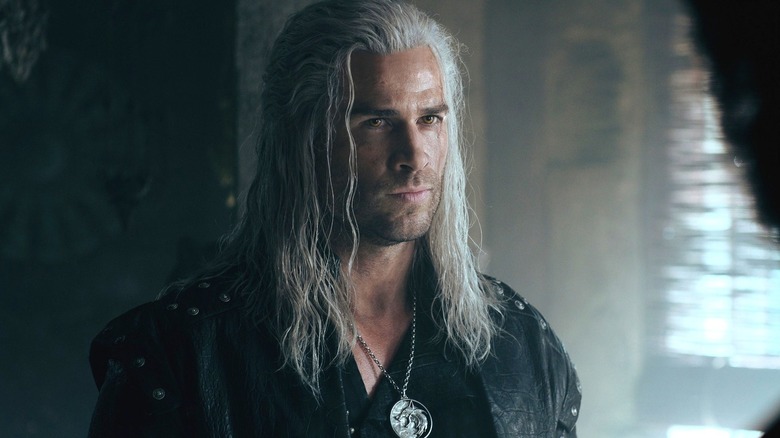
The earliest full novel, not short story, in the literary series so far is 2024's prequel "Crossroads of Ravens." The novel follows a teenage Geralt shortly after he completes his training as a witcher, ready to prove himself as a monster hunter. The tale is something of a coming-of-age story for Geralt, who witnesses the evil of men firsthand and steps up to contend with as he would any other monstrous beast. This prequel story presents readers with a fresh introduction to Geralt without egregiously breaking the canon that Sapkowski created.
Purists might argue that it's best to save "Crossroads of Ravens," given its writing and publication long after the bulk of the series. While we respect that opinion, the 2024 novel really is accessible as a starting point to the wider narrative, detailing Geralt's origins and earliest exploits. Reading this book after other stories published earlier in the series certainly enriches the overall experience, but it isn't necessary for its enjoyment. This may be a hot take, but newcomers can do just as well to start with "Crossroads of Ravens" as the subsequent books we've listed.
The Last Wish
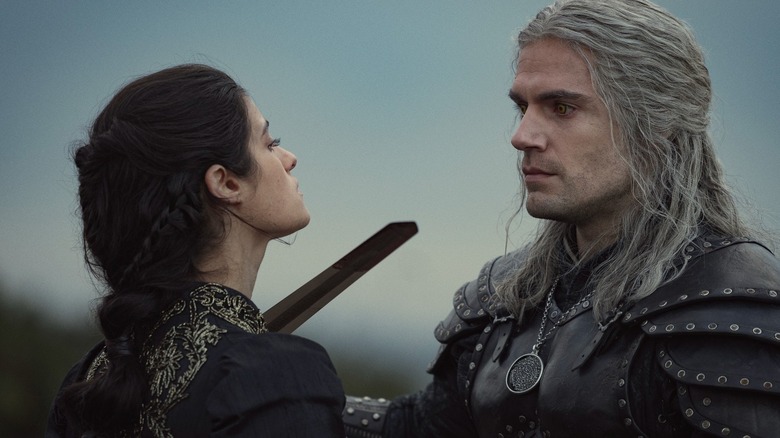
Many fans would consider "The Last Wish" as the true starting point to the wider "Witcher" saga, and we won't fight them too hard on that score. The 1993 short story collection features a framing device of a wounded Geralt thinking back on recent events leading up to his latest skirmish. One of the most important "Witcher" moments is Yennefer's introduction, taking place in the titular short story "The Last Wish." This features Geralt and his companion Dandelion, or Jaskier, encountering Yennefer of Vengerberg while dealing with a rogue djinn.
If you're looking to dive into "The Witcher" as the world first was introduced to Geralt, this is where to start. Compared to his depiction in "Crossroad of Ravens," he is a well-established monster hunter at this point in his life. More than just featuring the debut of Yennefer, the short stories included in this collection also set up the main character Ciri, albeit further down the timeline. A formative piece of the "Witcher" lore, "The Last Wish" is where the adventures really begin.
Sword of Destiny
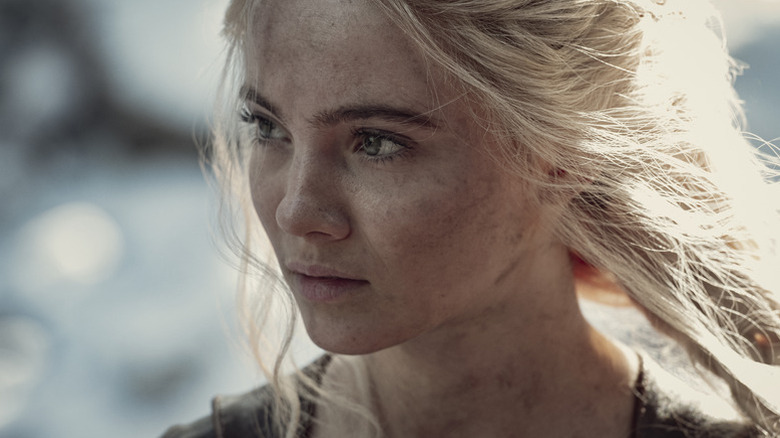
The second collection of short stories in the series, 1992's "Sword of Destiny" is pivotal in setting up Sapkowski's subsequent full novels. The titular tale has Geralt finally meet Ciri after interacting with her pregnant mother in the preceding volume of short stories. The collection also revolves around Geralt's continuing friendship with Dandelion and his complicated romantic dynamic with Yennefer. In between the run-ins with familiar faces, Geralt participates in everything from a dragon hunt to trying to prevent a war between a duke and a community of merfolk.
The big through line in "Sword of Destiny," other than Geralt and Dandelion's traveling partnership, is the love story between the witcher and the witch. Yennefer elevates her magic in a big way throughout the stories in the collection though remains conflicted on how serious to keep her relationship with Geralt. This back-and-forth dynamic also revolves around a frank depiction of Yennefer's infertility as a nuanced point in the couple's relationship. These intertwining character arcs, including the introduction and growing role of Ciri, play a huge role in the saga moving forward.
Blood of Elves
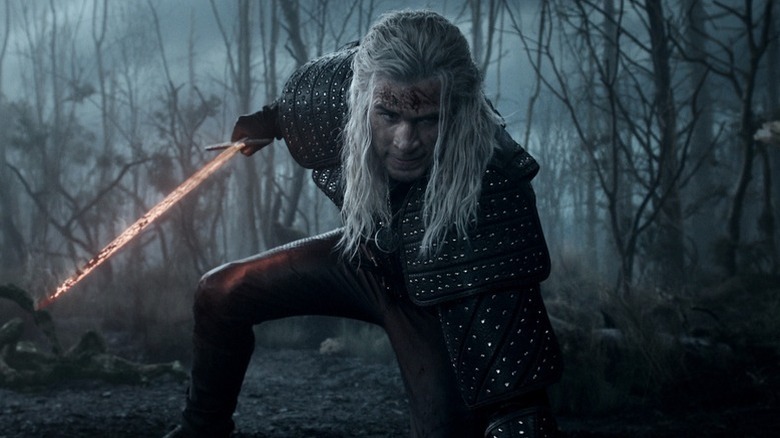
The first full novel in the series is 1994's "Blood of Elves," which heavily involves Ciri and her surrogate father dynamic with Geralt. The story has Ciri identified as a person of extreme importance, not just because of her claim to the throne in the Kingdom of Cintra but because of her mixed elven heritage. Competing factions have their own plans for Ciri, some who are looking to assassinate her while the Emperor of Nilfgaard wants to marry her to legitimize his conquest of Cintra. Meanwhile, Geralt serves as Ciri's protector while she trains with the other witchers and the sorceress Triss Merigold as they realize her true magical potential.
"Blood of Elves" is really where the larger conflicts that define "The Witcher" and its overarching narrative take shape. The story showcases the wider political intrigue in the realms that Geralt and his compatriots find themselves in and Ciri's vital role in all of it. The novel also provides a solid direction for the found family between Geralt, Yennefer, and Ciri to gradually coalesce. After two volumes' worth of short stories, Sapkowski was starting to weave a more epic tale which takes visible shape in "Blood of Elves."
Time of Contempt
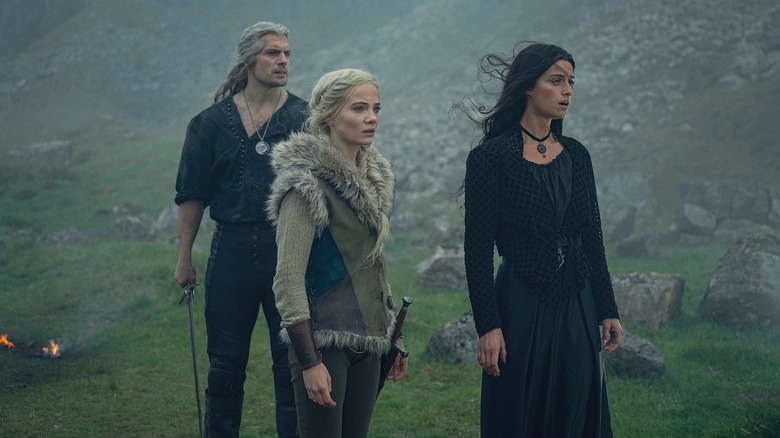
The second novel in the series, 1995's "Time of Contempt," escalates the tension between the Empire of Nilfgaard and the Northern Kingdoms, with Ciri caught in the middle. Sensing an all-out war is coming, Geralt is faced with the inevitability of having to choose sides in the coming conflict. Meanwhile, Yennefer intends for Ciri to continue her magical training with her old associates, though the young girl is unhappy with having so much of her life dictated to her. Everything comes to a head as Geralt and Yennefer finally reunite and reconcile just in time for anticipated hostilities to begin breaking out.
From the long-awaited reunion between Geralt and Yennefer to Ciri's desert arc, "Time of Contempt" advances the story in a big way. The destructive potential at Ciri's fingertips is explicitly spelled out by the novel's ending while Geralt finds himself on the defensive at the cost of trying to stay neutral. Tonally, "Time of Contempt" feels like "The Empire Strikes Back" as our heroes see the scope of what they're up against and the dangers of their unchecked inner darkness. Another major chapter in the saga, "Time of Contempt" has the story's true stakes come into focus.
Baptism of Fire
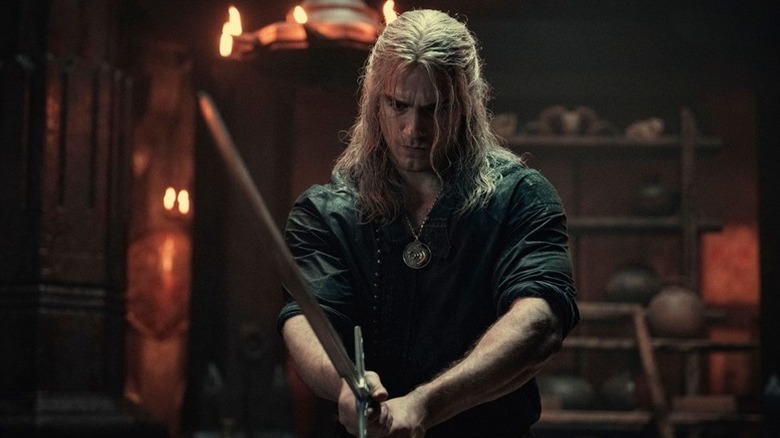
With the third novel, 1996's "Baptism of Fire," the war between the Empire of Nilfgaard and the Northern Kingdoms is well underway. Still recuperating from his grievous wounds in the preceding book, Geralt sets out to locate Ciri, joined by Dandelion and an archer named Milva. This is juxtaposed with Yennefer out for revenge against the rogue mage Vilgefortz, who had attacked and defeated Geralt in the previous book. In the meantime, Ciri has fallen in with a group of young outlaws, which fuels her propensity for violence to openly use lethal force.
"Baptism of Fire" serves as the basis for "The Witcher" season 4 though the adaptation squanders its potential compared to the novel. The story is key in the development of Ciri and her increasing flirtation with her own inner darkness and capacity for destruction. On a lighter note, the novel is also when Geralt is knighted and formally earns his title linking him to Rivia. An installment where the saga's three main characters are separated, "Baptism of Fire" marks the trio in a state of transition.
The Tower of the Swallows
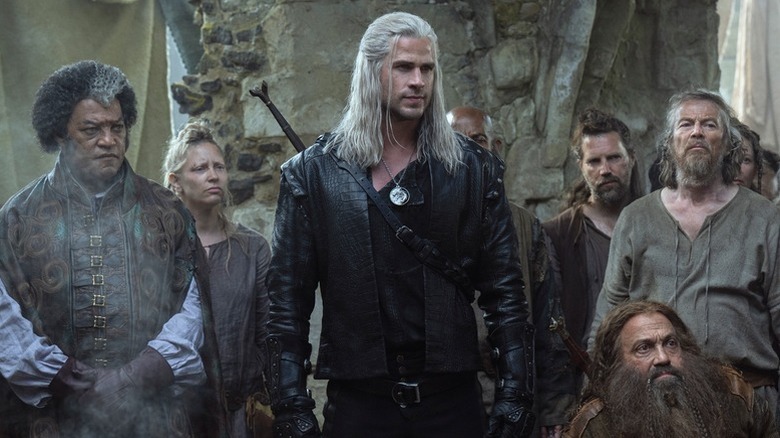
The penultimate story, chronologically, in the saga, 1997's "The Tower of the Swallows" gives Ciri a clear antagonist to contend with in Leo Bonhart. A bounty hunter hired to track down and assassinate Ciri, Bonhart murders her outlaw friends, the Rats, and forces her to participate in gladiatorial matches instead. Geralt and Yennefer continue their own separate searches for Ciri and Vilgefortz, respectively, despite Geralt being warned off from his quest. As Ciri makes her escape and is pursued by Bonhart and other interested parties, she embraces her elven heritage, entering the magical Tower of the Swallow.
Plot elements from "The Tower of the Swallows" are also incorporated into "The Witcher" season 4, including Ciri and the Rats and the memorable introduction of Bonhart. Like the novel before it, the narrative really does shift more to Ciri's journey than Geralt and Yennefer, though they continue to play a big role. So much of the overarching saga revolves around Ciri and her prophesied destiny, with this story bringing her a big step forward in confronting this. "The Tower of the Swallows" brings in the last major pieces on the chessboard, maneuvering them for an epic finale.
The Lady of the Lake
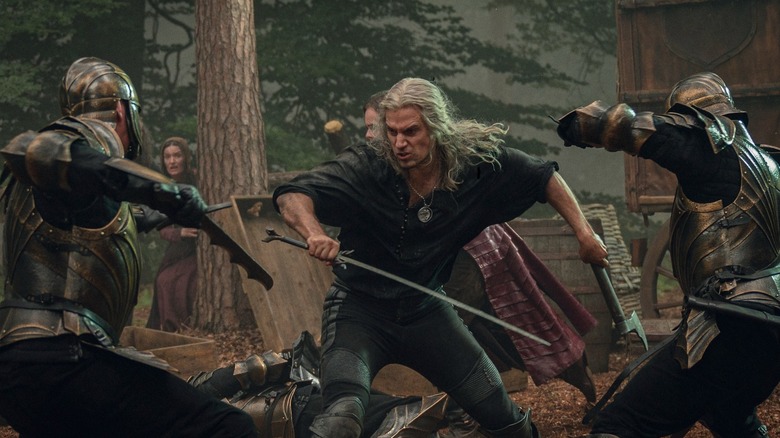
The final main story in the literary iteration of "The Witcher," 1999's "The Lady of the Lake" ties Sapkowski's tale to Arthurian legend. Ciri begins to learn the full breadth of her magical potential as well as more about elven culture and her own heritage. Geralt embarks on a quest to rescue Yennefer from Vilgefortz, leading to a fierce rematch with the rogue mage, while Ciri has her own renewed confrontation with Bonhart. However, the trio's reunion in the wake of these battles gives way to the showdown with the Emperor of Nilfgaard, whose shocking connection to Ciri is unveiled.
"The Lady of the Lake" is a bittersweet ending to the main saga, something telegraphed by Ciri in the novel's prologue. This is underscored by the deaths of several major characters over the course of the story while the fate of the core trio is left somewhat ambiguous. The novel also features an interesting framing device, with Ciri recounting her tale to Sir Galahad of Camelot, effectively making the saga a tale within a tale. If you wanted to stop reading after "The Lady of the Lake," the novel provides a satisfying conclusion, but there is an additional book in the series written by Sapkowski.
Season of Storms
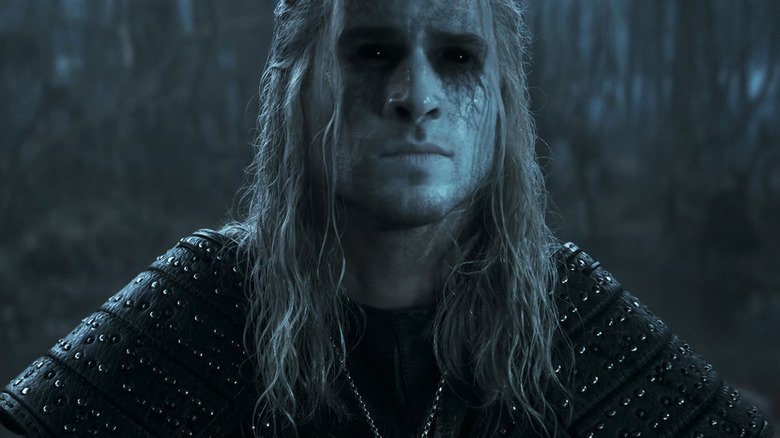
If we're really splitting chronological hairs, "Season of Storms" largely takes place within the events of "The Last Wish." Published in 2013, the story features an early adventure of Geralt's before he meets Ciri and becomes more entangled with Yennefer. This involves the witcher being arrested and having his prized swords confiscated, with much of the story following Geralt as he tries to get them back. Over the course of doing so, Geralt stumbles upon conspiracies involving the local royal family and a group of magicians.
"Season of Storms" feels like a side story to the larger saga, more of a series of misadventures that Geralt falls into. What makes reading the novel after "The Lady of the Lake" key is its epilogue, which is set over a century after the main events of the 1999 book. Nimue, the Lady of the Lake, is rescued by someone resembling Geralt, hinting at the witcher's survival or at least his continuing role in the overarching narrative. The main tale within "Season of Storms" itself is largely inconsequential, so its timeline placement isn't of paramount concern when delving into this book.