

5 Movie Franchises That Should Have Stayed In The '80s
These days it can be hard to shake the feeling that culture is on an inexorable slide towards oblivion. An AI garbage future endorsed by the likes of Joe Russo looms as Netflix prepares to subsume hallowed movie studio Warner Bros. Meanwhile, Hollywood simply can't stop spending obscene amounts of money on big franchises, many of which have been around for decades and continue to exist merely as an extension of studios' desire to milk our collective nostalgia for all its worth.
Thankfully, there is light in the darkness. Amid the legacy sequel barrage of the last few years there have been some examples which prove such movies need not be cynical cash grabs. "Blade Runner 2049" might have been a flop, but it was also a beautiful, haunting follow-up to Ridley Scott's 1982 classic which progressed the story while simultaneously paying loving homage to the original. Meanwhile, 2022's "Top Gun: Maverick" took the legacy sequel concept to the danger zone, reminding our streaming-dulled minds what it was like to watch a rock solid Hollywood actioner. Both these films were based on '80s hits and both managed to rekindle the magic of their predecessors.
Unfortunately, these are the exceptions. Hollywood loves exhuming beloved 1980s franchises and propping them up in the 21st Century like the box office equivalents of poor old Bernie Lomax. But trying to fool modern audiences into thinking there's still life in these IP often does the exact opposite. As such, it's about time we take stock of these ill-fated '80s nostalgia plays, if only to strengthen our resolve the next time studios try to tempt us back to the multiplex by puppeteering the lifeless limbs of our childhood heroes.
Indiana Jones
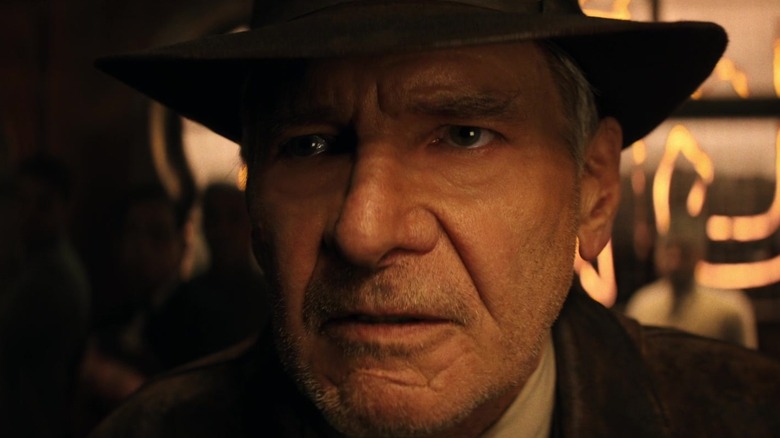
Many of us in the 2020s will likely be familiar with the creeping sense that so many films are just sort of doing impressions of actual movies. If you've sat through the Russo brothers' worst effort, "The Electric State," you might know what I mean. These things look and sound sort of like movies but they don't feel the same. Well, many of us experienced something similar watching Henry Jones Jr. return for one last adventure in 2025's box office dud "Indiana Jones and the Dial of Destiny."
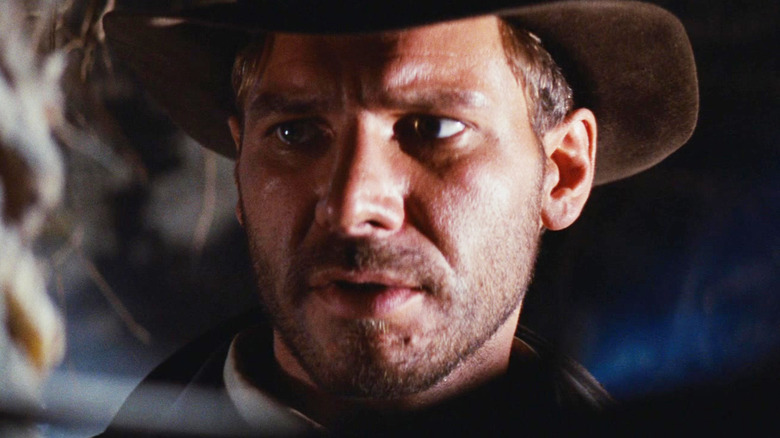
The 1980s gave us three undeniable classics in 1981's "Raiders of the Lost Ark," 1984's "Indiana Jones and the Temple of Doom" and 1989's "Indiana Jones and the Last Crusade" — a perfect trio of films that defined action adventure filmmaking for a new generation. Then came 2008's "Indiana Jones and the Kingdom of the Crystal Skull," a critically-derided legacy sequel that despite being overseen by director of the original trilogy, Steven Spielberg, failed to match the thrills of those first three films.
Surely, if Spielberg couldn't help revive the franchise, that should have been it for Harrison Ford's hero? Well, it wasn't. 2023 gave us "Indiana Jones and the Dial of Destiny" which showcased a safer, less exciting Indy in what was designed as a final outing for the once great adventurer. Was it a catastrophe? Financially, yes. Otherwise it was kind of ok. But it also had that uncanny feeling of being an impression of how films used to be made, which wasn't helped by the dodgy de-aging tech. Regardless, the movie simply wasn't worthy of such a historic franchise and while the "Dial of Destiny" filmmakers set out to avoid a "Crystal Skull" misstep, they forgot to avoid pitfalls of their own making.
Ghostbusters
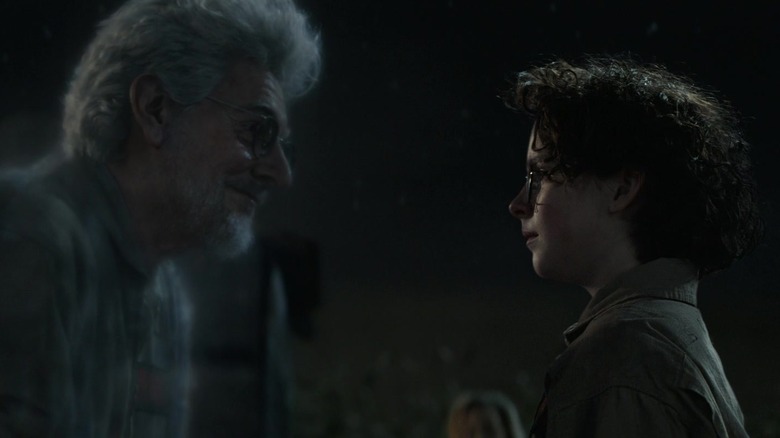
Had the franchise not become the phenomenon it did during the '80s, the "Ghostbusters" films feel like they wouldn't get made today. Charming comedic leads team up to battle supernatural forces in movies shot on-location in New York? That's the kind of lovable wackiness only the 80s could provide, which it did with 1984's "Ghostbusters" and 1989's "Ghostbusters II." The only way a "Ghostbusters" gets made today is in the form of a misguided reboot and two soft reboots, all of which slip from the cortex immediately after viewing like some ethereal specter you're not even sure was ever really there.
After "Ghostbusters II" the saga stayed mercifully dormant until someone decided that a Kristen Wiig, Melissa McCarthy, Kate McKinnon, and Leslie Jones team-up was the way to rekindle things. Look, the movie received enough hate at the time from sad fanboys who simply hated the all-female cast and needed the world to share in their misery. But it's also true to say that nobody holds "Ghostbusters" 2016 close to their heart in the way so many kids who grew up in the '80s do the originals.
The 2016 "Ghostbusters" paved the way for "Ghostbusters: Afterlife" which I'm not sure is all that impressive, but it happened. This soft reboot and its 2024 sequel, "Ghostbusters" Frozen Empire" once again weren't complete disasters, but that gets to the heart of the issue. These are some of the most beloved and celebrated franchises in cinema history. They deserve better than forgettable or even kind of okay. Sadly, "Ghostbusters" never got the respect it deserved in that regard. Aside from "The Real Ghostbusters" cartoon which ran from 1986 to 1991, then, I think it's fair to say that this franchise should have remained firmly in the '80s.
Tron
There are so many incredible '80s movies that should have gotten sequels, but 1982's "Tron" isn't one of them. "Tron" was a groundbreaking movie that pushed filmmaking forward with its unprecedented use of computer-generated effects. Sadly, none of that was reflected in the box office, where "Tron" flopped. Like its similarly lauded yet commercially unsuccessful fellow 1982 sci-fi thriller "Blade Runner," however, the film amassed a cult following in the years after its release, which got Hollywood thinking.
Disney decided to test whether that cult following was sizable and devoted enough that a legacy sequel to "Tron" would prove to be the money-maker the original never was. 2010's "Tron: Legacy" was the result, and it sort of worked. The film made $400 million on a $170 million budget suggesting that fans were willing to show up for this long-dormant franchise. Still, reviews were middling at best and once again the film felt like it simply wasn't worthy of bearing the name of a beloved '80s staple.
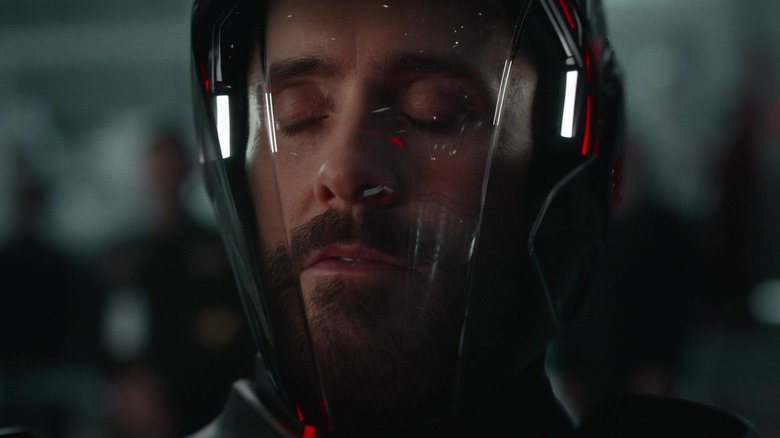
How did Disney take things to the next level? With the thoughtless sequel, "Tron: Ares" of course. For some reason, the studio decided that reliable box office poison and noted weirdo Jared Leto would be the ideal man to lead this ill-fated follow-up, which ended up making just $142 million on a $180 million budget. Reviews weren't very good either, all of which proves that "Tron" very much belongs in the '80s until somebody can figure out how to make it exciting again (and not hire Jared Leto).
Rambo (sort of)
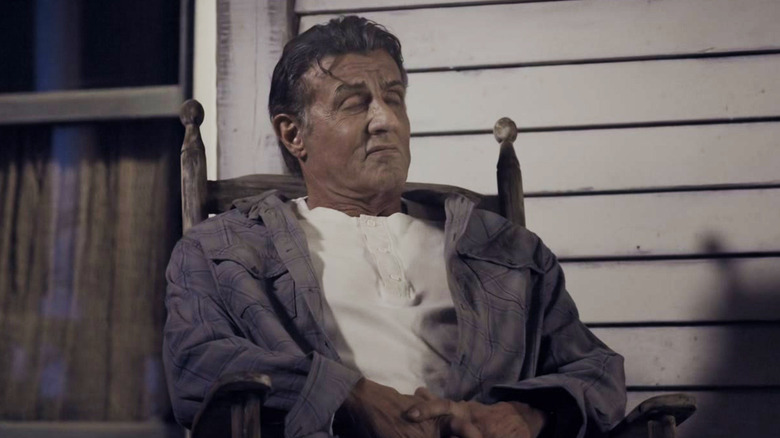
1985's "Commando" was a chance for Arnold Schwarzenegger to out-Stallone Sylvester Stallone, which he arguably did with his bombastic actioner designed to give Rambo a run for his money. But unlike Sly, Arnie left his action hero behind after just one movie and never returned as Colonel John Matrix. Stallone, meanwhile, was busy transforming John J. Rambo from a haunted Vietnam Vet with PTSD and an aversion to killing into an overpowered, unstoppable beast of a man whose kill counts pretty much doubled with each movie.
After 1982's "First Blood" saw Sly portray his tortured ex-Green Beret as a pacifist who fights reluctantly, the hilariously-titled "Rambo: First Blood Part II" began his metamorphosis into a killing machine, and things only got more intense with 1988's "Rambo III." Author David Morrell, who wrote the book on which "First Blood" was based, might have balked at witnessing his multi-layered character transmogrified in such a way, but audiences loved it. Both "Rambo" sequels released in the '80s outdid the first movie in terms of box office receipts, even if there were many fans who felt that John J. deserved better than to be reduced to a one-dimensional superhero.
Back then, however, none of those fans could have predicted what would happen to that same character in 2019. After the actually good 2008 revisit, "Rambo," Stallone brought his action hero out of retirement for another legacy sequel that simply didn't need to happen. 2019's "Rambo: Last Blood" will hopefully prove true to its name as this misguided fifth entry in this franchise was a generic finale unworthy of the man whose name it bore. And to think, Sly could have ended this franchise on a real high had he stuck with his 2008 film as the grand finale.
Terminator (sort of)
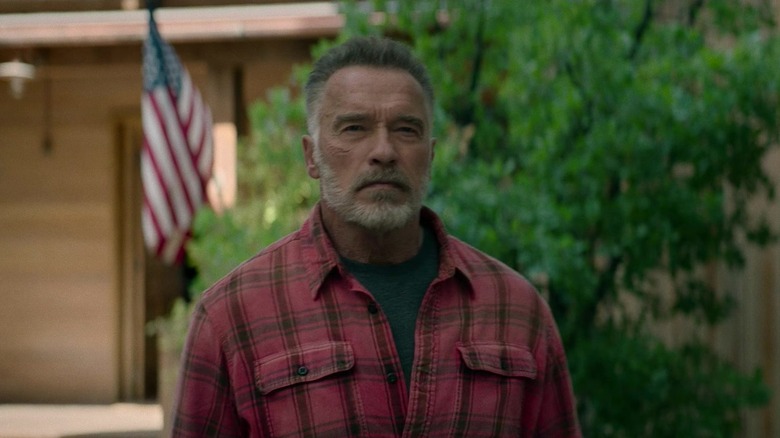
Ranking the "Terminator" movies is pretty much a case of putting 1984's "Terminator" and 1991's "Terminator 2: Judgment Day" at joint number one and then casting the rest of the wretched sequels into the mental equivalent of the molten steel pit in which Robert Patrick's T-1000 met his end. If it weren't for James Cameron's unimpeachably brilliant 1991 sequel, this franchise would most certainly qualify as perhaps the number one franchise that should have been left in the 1980s.
Cameron's 1984 original was a breakout hit that took all the tropes of the burgeoning slasher movement pioneered by the likes of John Carpenter, and added a sci-fi twist to create something novel and fresh. It helped launch Arnold Schwarzenegger's career and became part of the cultural vocabulary as a shorthand for concerns about the rise of technology. The sequel did what all great sequels do by essentially remaking the first movie with vastly increased stakes and bigger action. Then, it all went downhill.
2003's "Terminator 3: Rise of the Machines" has its fans, and was a decent enough attempt at revitalizing a franchise that hadn't been part of the popular consciousness for more than a decade. But this is "The Terminator" — IP that gave us two of the most celebrated action movies of all time. It deserved better. Rather than trying to honor their duty to respect this seminal saga, however, Hollywood churned out some of the most disappointing and disrespectful sequels ever made. By the time 2019's "Terminator: Dark Fate" turned Schwarzenegger's iconic T-800 into a suburban dad who runs a drape-fitting business Arnie could see the writing on the wall and announced he was finished with the "Terminator" franchise. Let's hope Hollywood follows suit.