

15 Best Body Horror Movies Of All Time, Ranked
We may receive a commission on purchases made from links.
Of all the things the horror genre uses to freak you out — ghosts, ghouls, demons, monsters, creatures, killers, goblins, sometimes leprechauns — nothing tops manipulating the human body as the most disturbing. We all have a body, yet we're often just as terrified of them, or at least unsettled by what could happen to them. We are fragile creatures, after all, and horror is often at its best when it capitalizes on the frailty of flesh and blood.
That's where the body horror genre comes in. This isn't a subset of movies for the faint of heart — if that's you, you may want to stick to our list of the best horror movies with no blood or gore. Not every movie on this list is strictly "gory," per se, as that's the beauty of body horror: It often deals with more fantastical fears of how the body could be transfigured. Still, you'll see a lot of strange contortions, gooey excretions, and general bodily mayhem in the films on this list, so make sure you're in the right frame of mind before diving in.
These are the 15 best body horror movies of all time, ranked.
15. The Substance

French writer/director Coralie Fargeat revived horror's obsession with fleshy transformation in this surprise 2024 breakout, earning an Oscar for Best Makeup and Hairstyling and a Best Actress nomination for Demi Moore. That's no small feat for an Academy that has historically disregarded horror, but it speaks to the cultural waves "The Substance" made with its over-the-top style and sledgehammer approach to feminist themes.
Moore plays Elisabeth Sparkle, a faded 50-year-old celebrity and aerobics host fired by her sexist producer, Harvey (Dennis Quaid), because of her age. Elisabeth discovers a black-market serum that creates a younger, more "perfect" alter ego. Enter Sue (Margaret Qualley), who grotesquely rips her way out of Elisabeth. The catch: They must alternate consciousness every seven days. Things get particularly icky when Sue starts overstaying her welcome.
"The Substance" marries concept and theme, with Fargeat's outrageous sense of corporeal collapse intersecting with the cruel reality of being a woman in the entertainment industry. Her gross-out spectacle turns Hollywood's obsession with youth into a vicious nightmare. It's worth seeing, even if John Carpenter didn't like it.
14. Titane

You really should see "Titane" knowing as little as possible, but rest assured, it earns its place on this list as another film in which a French filmmaker anatomizes the human experience by rupturing the physical body. The Cannes jury rewarded director Julia Ducournau with the 2021 Palme d'Or, making her only the second woman to win the festival's top prize.
Agathe Rousselle plays Alexia, a car-show dancer with a murderous streak whose obsession with steel and chrome turns into, well, something more, when she ends up pregnant and leaking motor oil. On the run, she hides by posing as Adrien, a boy who went missing a decade earlier, and she's taken in by a grieving fire captain, Vincent (Vincent Lindon).
The body horror is as brutal and tactile as you could hope for, as Alexia binds her swelling belly, breaks her own nose, and feels the cold pressure of metal pushing against her skin. But Ducournau continues her trend of anchoring her films' more sickening inclinations in a deep emotional core — underneath the mangled flesh, "Titane" is a tender story about two damaged people uncovering some kind of lost sense of family.
13. Rosemary's Baby
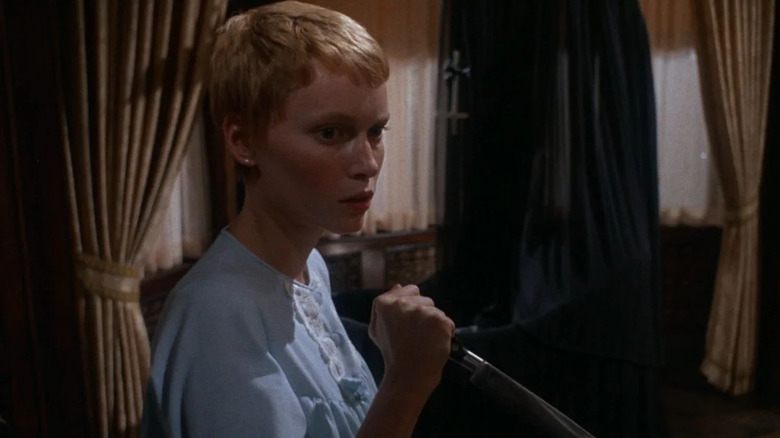
Stop, let me explain! "Rosemary's Baby" may not have the excess of ooey-gooey disgust that many other flesh-bound flicks on this list contain, but that doesn't make it not body horror. Instead, it reorients its sense of fear regarding the body, as a woman's sense of agency is invaded, while the world around her tries to insist that everything is okay.
This horror classic — which is surrounded by controversy — is based on Ira Levin's 1967 novel and follows Rosemary Woodhouse (Mia Farrow), a young newlywed who moves into a historic, supposedly normal apartment building called The Bramford with her husband, Guy (John Cassavetes). Things soon become harrowing, because after what seems to be a disturbing dream about an encounter with a demonic entity, Rosemary discovers she's pregnant, though the trials of her abnormally painful and distressing pregnancy are universally dismissed.
The overriding theme of gaslighting and manipulation is what simultaneously fuels the film's secret undercurrent of body horror. Rosemary knows what is happening to her, can feel it plainly inside her, yet her insular and suffocating support system insists that it's all in her head, driving her mad. "Rosemary's Baby" combines the suffering of the body with the anguish of being beguiled.
12. Society
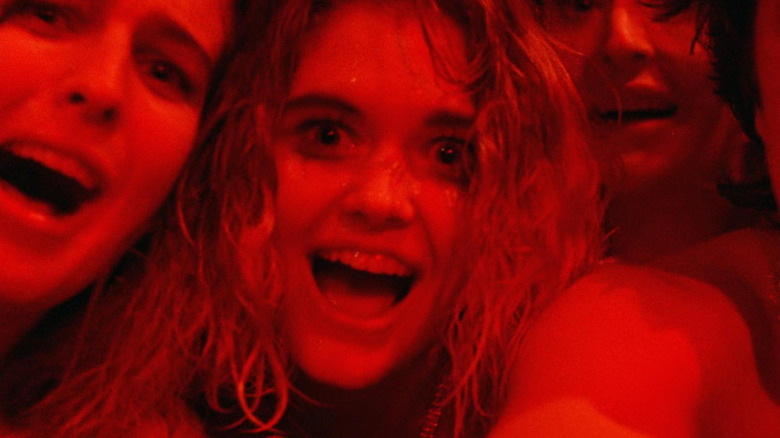
The award for "Movie We Absolutely Cannot Post Most Screenshots From" goes to Brian Yuzna's "Society." The producer behind "Re-Animator" and "From Beyond" made his directorial debut with this gleefully disgusting 1989 class-war nightmare. It was barely released in the U.S., but it became a home-video cult favorite thanks to word of mouth about its shocking final act.
Billy Warlock stars as Bill Whitney, a Beverly Hills teenager who feels like a stranger in his family. When a friend plays him a tape suggesting his parents and their wealthy neighbors are involved in something monstrous, Bill's paranoia kicks into overdrive. Turns out the elite may be an alien species feeding on the classes beneath them.
The film builds its satire of wealthy '80s insularity before unleashing a climactic party where effects artist Screaming Mad George turns bodies into a writhing, melting mass of faces and limbs. You can't get a more literal "eat the rich" allegory, and you wish today's attempts would go this bonkers. "Society" is one of the most underrated '80s horror movies that you need to see.
11. From Beyond
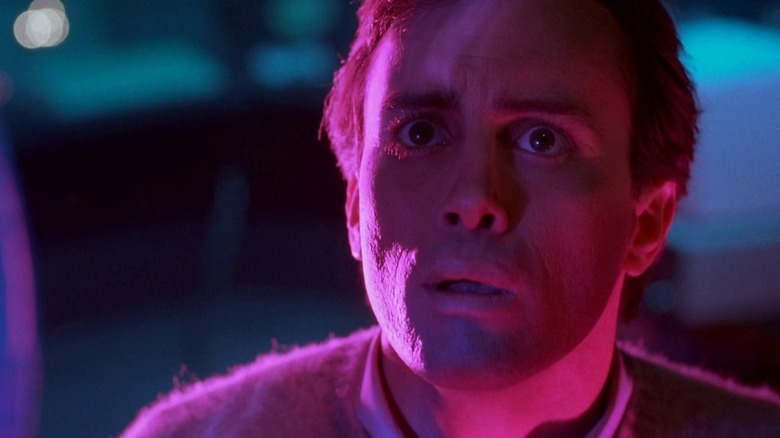
If you liked "Society," then "From Beyond" will most assuredly be your jam, too. Directed by famed horror craftsman Stuart Gordon, the film reunites much of the team behind his previous film, "Re-Animator," for this loose 1986 adaptation of H.P. Lovecraft's 1934 short story, cranking up the slime and sleaze to levels you would only find in the '80s.
Jeffrey Combs plays Crawford Tillinghast, assistant to the brilliant Dr. Edward Pretorius (Ted Sorel), whose invention, the Resonator, stimulates the pineal gland and lets people perceive horrifying creatures from another dimension. After Pretorius is decapitated by one of them, Tillinghast is blamed and committed. Psychologist Dr. Katherine McMichaels (Barbara Crampton) and a no-nonsense cop, Bubba Brownlee (Ken Foree), take him back to the lab to prove his story, where Pretorius returns as a mutating monster.
"From Beyond" is one of the great cosmic horror movies, living up to the lineage set by the author of its original material. While Gordon retains that sense of celestial dread, he makes it even more provocative with wondrous practical effects, dark humor, and a kinky streak. Deranged and funny, "From Beyond" is some of the best of goopy '80s body horror.
10. Tetsuo: The Iron Man

No, this is a different Iron Man. Shinya Tsukamoto wrote, directed, edited, and co-starred in this 1989 Japanese cyberpunk freak-out, made on a shoestring budget with 16mm black-and-white film and help from his theater troupe. At just over an hour, it's a sensory assault that delivers all the lunacy you want from your body-horror extravaganzas.
Tsukamoto plays the Metal Fetishist, a man who shoves a metal rod into his leg, then gets hit by a car driven by a salaryman (Tomorowo Taguchi). The Fetishist curses him, and the salaryman's body begins to sprout wires, pipes, and scrap, his flesh giving way to machinery. It culminates in a gruesome, now-infamous drill transformation and a final fusion that turns two enemies into one monstrous mass.
Tsukamoto's frantic stop-motion, jackhammer editing, and Kenji Kawai's clanging score evoke the experience of being trapped inside a malfunctioning factory, creating a nightmare about urban alienation and the dehumanizing grind of modern industry. It's a Japanese answer to director David Cronenberg's anxieties about the body and technology, and it's one of the best Japanese horror movies of all time.
9. Eraserhead
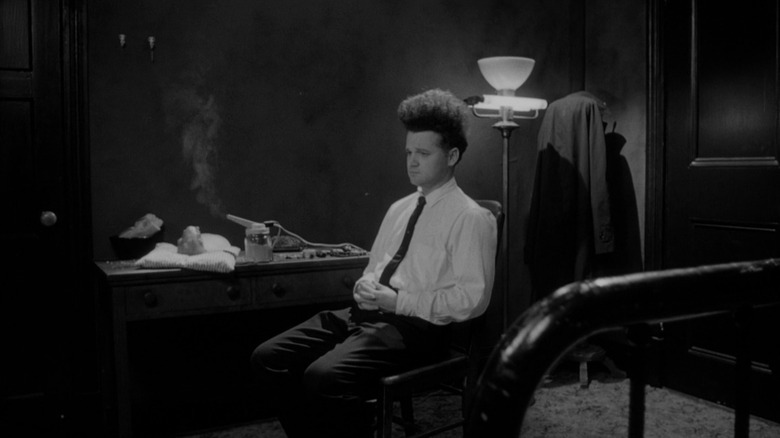
The body horror of "Eraserhead" centers on a single body: the tiny, freakish mutant infant that Henry Spencer (Jack Nance) and his giant shock of hair find thrust into his life by his girlfriend, Mary (Charlotte Stewart). David Lynch's directorial debut may be the most succinct calling card an auteur has ever made, encapsulating the frightening, darkly humorous, and surreal breadth of his talents in a film that began as a university project.
Yes, "Eraserhead" may have taken five years to make, because of a meager budget and lack of resources, but its doggedly handcrafted, DIY origins lend it a homespun appeal that makes its enrapturing environments and scenario all the more impressive. As his own production designer and special effects supervisor, and with the claustrophobic texture added by Frederick Elmes's cinematography, Lynch's nightmarish black-and-white industrial cityscape feels palpable and unsettling, underscored by screeching sound design.
But that deformed, alien-like baby is the film's spine, and you'll find it as inescapable as Henry throughout. His exasperating cries are as vexing as they are pitiful, the anxieties of fatherhood put forth through an entity as hideous as he is desperate to be loved.
8. The Fly
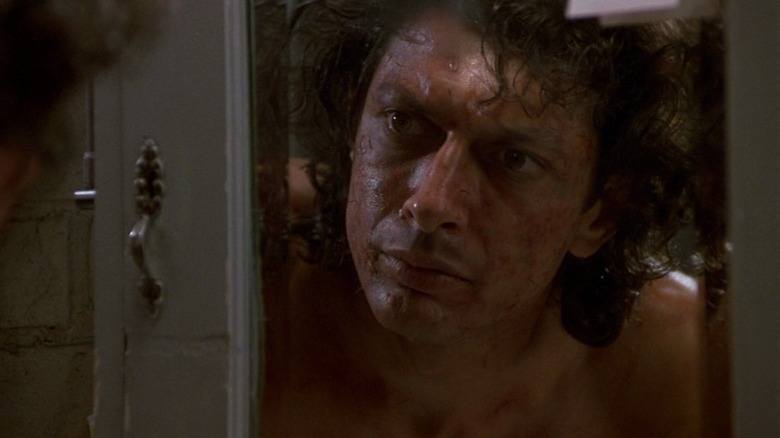
Some may say that "The Fly" is the only contender for the greatest body horror movie of all time. Since this is a ranked list and "The Fly" is not at the top, you can say I beg to differ, but there's no doubt that David Cronenberg's disgusting adaptation of George Langelaan's 1957 short story and the 1958 film of the same name is some beautifully heinous work that has completely grossed out generations of moviegoers.
The film follows a brilliant scientist named Seth Brundle (Jeff Goldblum) who invents "telepods," which can disintegrate, transmit, and reintegrate physical matter — sometimes they even do it correctly. But when he tests the telepods on himself, he finds his DNA has been scrambled with a common housefly that ended up in the machine with him, causing him to horrifyingly morph in a series of wonderfully nauseating, practical-effects-led monstrosities.
The makeup and VFX work by Chris Walas and Stephan Dupuis is a sight to sicken in all the best ways, and the pair won an Academy Award for their unflinchingly gross work turning handsome Hollywood A-lister Goldblum into a human-fly monster.
7. Videodrome
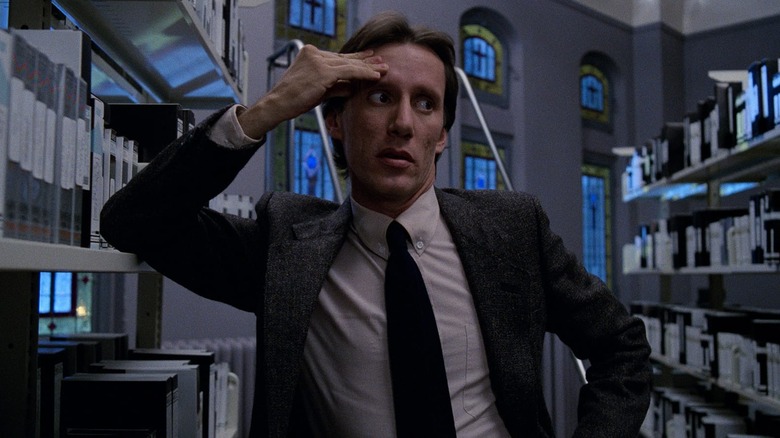
Yet another David Cronenberg body-horror bonanza, "Videodrome," like "The Fly," delivers remarkably visceral moments of macabre bodily transformation, with truly incredible special effects, especially the scene in which James Woods encounters a seemingly organically breathing television. Cronenberg was ahead of the curve in recognizing our newfound dependence on a broadcast, digitized world, and "Videodrome" presents it in transgressive glory.
"Videodrome" follows James Woods as Max Renn, president of the Toronto UHF CIVIC-TV station, who is always looking for a new lurid novelty to entice viewers of his over-the-top channel. He soon discovers and becomes obsessed with a channel broadcast via an unsanctioned signal called Videodrome, which consists purely of graphic depictions of violence and torture.
From there, "Videodrome" keeps upping the ante with its depictions of salacious urges and bodily transformation, as Cronenberg literalizes the organic body's newfound dependence on the digital world. We've only grown more dependent on, and desensitized to, the perversities on our screens — today, "Videodrome" feels less like a warning and more like a dirge.
6. Re-Animator
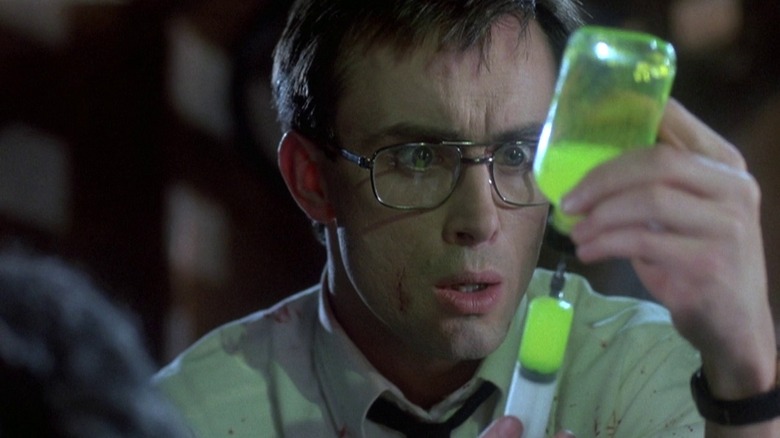
As the legendary director of several all-time great kitschy horror movies, Stuart Gordon had his work cut out for him with his adaptation of H.P. Lovecraft's 1922 novelette "Herbert West: Reanimator." Setting the tone was a delicate balancing act, as he and co-writers Dennis Paoli and William J. Norris approached the original story, about a medical student who decides to start, well, reanimating dead bodies, with plenty of outrageous humor and gross-out shock value.
Jeffrey Combs plays Herbert West, the central student-turned-mad-scientist, an arrogant, obsessive pupil who transfers to Miskatonic University. He invents a glowing, fluorescent-green chemical reagent that can revive dead tissue and convinces his roommate and fellow medical student, Dan Cain (Bruce Abbott), to help him test the serum, starting with a dead cat and quickly moving on to human corpses.
That, plus some additional human drama, eventually leads to a violent, gory rampage involving reanimated bodies led by a sentient decapitated head leading an army of the deceased. It's all presented in that beautiful analog magic that '80s schlock was so apt to provide, and "Re-Animator" proved successful enough to spawn two sequels: "Bride of Re-Animator" and "Beyond Re-Animator."
5. An American Werewolf in London
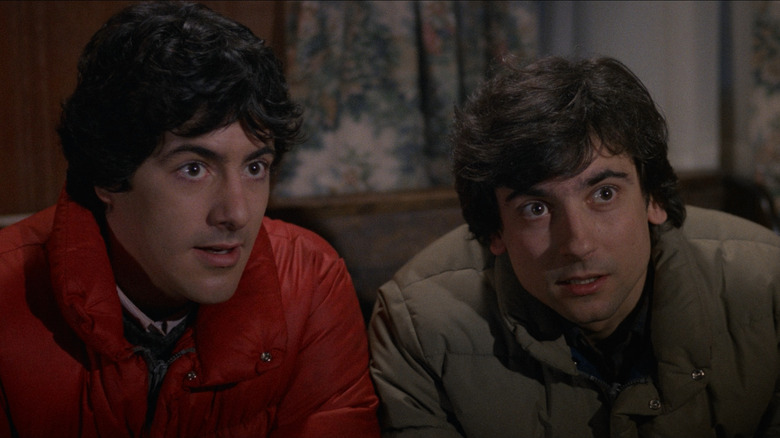
Writer-director John Landis, another body-horror favorite who blends laughs and scares, takes a sardonic approach to a tale of a man calamitously cursed to become a giant, monstrous wolf. It's certainly no slouch at body horror, as the werewolf transformation scene and Rick Baker's amazing special effects helped create a new category at the Oscars.
The film follows American college students David Kessler (David Naughton) and Jack Goodman (Griffin Dunne) as they backpack through England. While crossing the moors under a full moon, a massive werewolf attacks them, killing Jack and leaving David to slowly transform in London, tended by nurse Alex Price (Jenny Agutter).
"An American Werewolf in London" tries to have its cake and eat it too, and it succeeds. It fully commits to being a werewolf movie while subverting the genre's essence. Much of the film is David killing time in an apartment, waiting for the inevitable, and the hilariously abrupt ending denies any emotional catharsis. But then you see the diligence that went into turning Naughton into a beautiful practical werewolf, and you know the people behind it love what they're making.
4. Possession
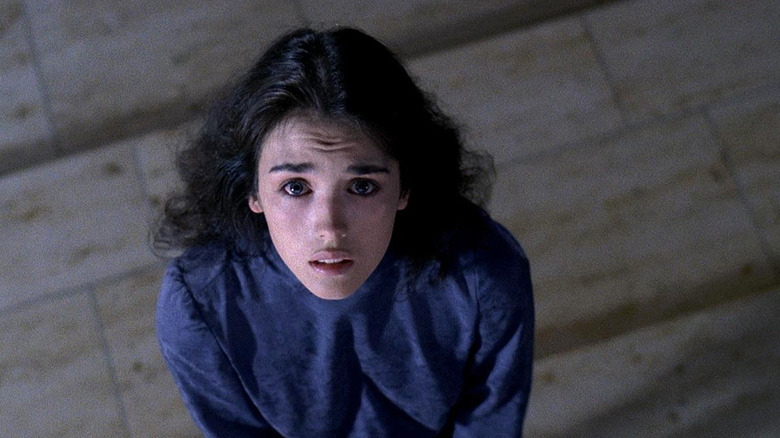
"Possession" is a must-watch for every horror fan, and its body horror arrives in unexpected bursts that will rattle you almost as much as Isabelle Adjani's and Sam Neill's gonzo, outré performances. Co-writer and director Andrzej Żuławski's deliriously disturbing marital drama-turned-psychological freak-out took decades to catch on with audiences, but it's finally achieved the cult status that makes it a must-see for any horror fan.
Set in West Berlin near the imposing concrete of the Berlin Wall during the Cold War, the film follows Mark (Neill), an international spy, who returns home after a long assignment to find his wife, Anna (Adjani), demanding a divorce. That leads to a slew of distressing discoveries, including Anna's affair with a strange, brash man; doppelgängers; a secret apartment; and a goopy, tentacled creature Anna makes love to.
"Possession" holds nothing back, and Żuławski has described the film as almost embarrassingly personal, as if transmitted directly from his id amid a nasty divorce. That comes through in the film's unhinged performances and grotesque moments of bodily release and havoc, especially the famous, frenzied subway sequence in which Adjani delivers a ballistic performance.
3. Invasion of the Body Snatchers (1978)
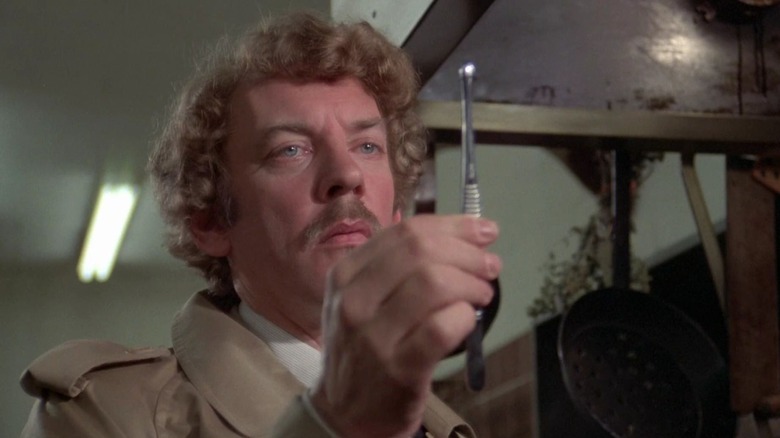
The body horror of Philip Kaufman's famed 1978 adaptation of Jack Finney's 1955 novel (and a remake of Don Siegel's 1956 adaptation, making this one of the best horror remakes ever) lies not only in the sickly physical transformations that unfold on-screen,but in the idea that you don't actually know what lies within the everyday people who surround you. Kaufman crafts a paranoid nightmare in which the horror of the body stems from the unknowable.
Donald Sutherland plays Matthew Bennell, a health inspector whose colleague, Elizabeth (Brooke Adams), becomes convinced her boyfriend is no longer himself. Soon Matthew is dodging his neighbors, with help from Jeff Goldblum, Veronica Cartwright, and Leonard Nimoy as a smooth-talking psychiatrist who is, shall we say, not the most reassuring presence.
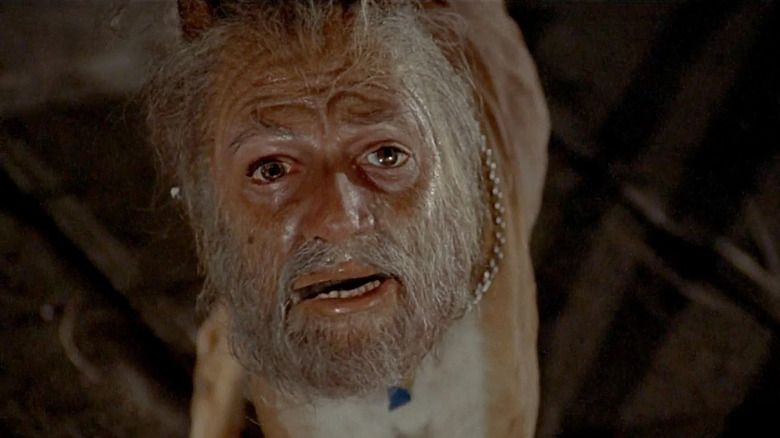
The body horror lifts it above simple allegory. Watching half-formed duplicates slither out of their cocoons, including the infamous dog with a man's face, is the stuff of lasting nightmares, and the effects are gooey and refreshingly tangible. The real chill is the film's portrait of '70s alienation, and its final shriek, one of the best horror movie endings of all time.
2. Alien
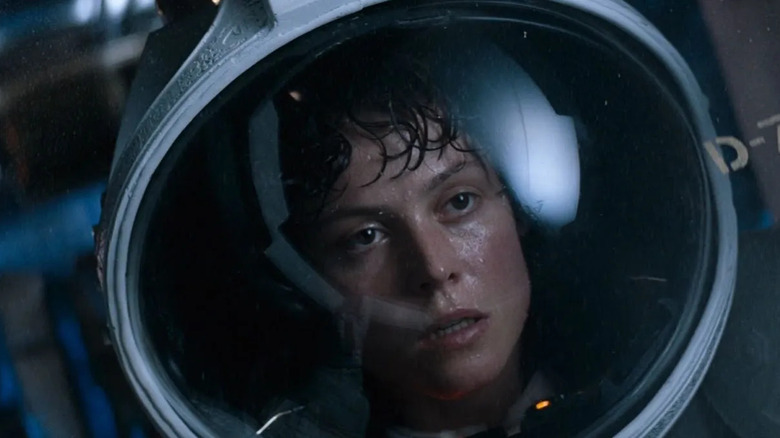
Ridley Scott's seminal, claustrophobic, space-set creature-feature horror movie "Alien" is essentially a haunted-house movie with a bigger budget and sickening H. R. Giger-designed creature effects, giving it the runway to contain one of the most infamous body-horror moments ever filmed. Dan O'Bannon's script sends the crew of the commercial towing vessel Nostromo to investigate a mysterious signal, where crewmember Kane (John Hurt) gets overly curious about a nest of very suspicious leathery eggs — the consequences are not great.
The film's endlessly unnerving sensibilities stem from its primal body horror. The alien's life cycle, a grotesque inversion of pregnancy, implies an unsettling aura of invasion: a facehugger forcibly implants an embryo, and the chestburster rips its way out of the body.
It's also a masterclass in dread, as Scott lets the creature lurk in the shadows while Sigourney Weaver's Ripley stands as a formidable, and then-trailblazing, horror heroine. The franchise this film spawned would, of course, see a downfall, but Scott's film still stands as a particularly perfect organism.
1. The Thing

This list has primarily encompassed two types of body horror: those that exploit the uncertainty of what lies within the hidden depths of people, and the sticky, visceral carnage of watching those people being sickeningly transfigured. John Carpenter's "The Thing" encompasses the best of both worlds: It's built on the anxiety and paranoia that anyone around its central characters could be a threat, and that threat eventually reveals itself in gleefully gruesome ways.
Based on John W. Campbell Jr.'s 1938 novella "Who Goes There?" (and the 1951 film "The Thing from Another World"), it follows an Antarctic research team, led by Kurt Russell's flamethrower-toting helicopter pilot MacReady, as it discovers that a shape-shifting alien can perfectly imitate any living thing, including the people trapped with them.
Rob Bottin's monstrosities are legendary: chests that sprout teeth, heads that sprout legs, bodies that stretch and split in ways that defy description. Yet it all comes back to that sense of paranoia, culminating in a brilliant, chillingly ambiguous ending. Toss in Ennio Morricone's famous, pulsing score and Carpenter's typically tense direction, and you've got an all-time body-horror masterpiece.