

The End Of Oak Street Was Made For One Very Specific Kind Of Audience
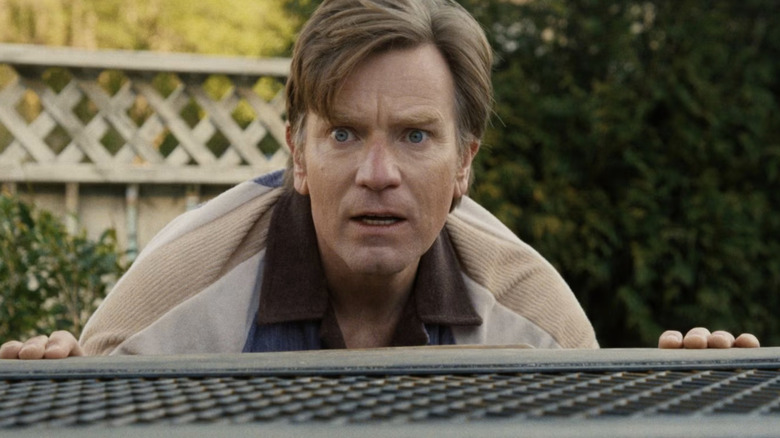
This article contains spoilers for "The End of Oak Street."
So what's the deal with 1980s nostalgia in films and TV, and will it ever die down? The answer to that is complicated. Nostalgia will always exist in the arts; the music, movies, and TV that inspired your favorite artists are generally what they loved when they were young. Most movies, especially genre films, involve the filmmakers reacting to and being inspired by the culture of their youth. Yet it's true that '80s nostalgia has especially lingered. Netflix's "Stranger Things" only just ended, and this summer featured, of all things, a big-budget "Masters of the Universe" movie. The rise of geek culture during the '00s and '10s certainly helped contribute to this longevity. 1980s media is near-synonymous with fandom, and now that fandom has become socially acceptable to hold onto well into adulthood, there's no need for these adults to move on.
This month's "The End of Oak Street" would appear to be yet another example of '80s nostalgia, as the movie is an unabashed love letter to the '80s output of Steven Spielberg and his Amblin Entertainment company. Yet although writer/director David Robert Mitchell has gone on record admitting as much, the film itself is far more pointed in its subtext than merely a celebration of movies that Mitchell, his fellow Gen-Xers, and Elder Millennials like myself loved growing up. Instead, especially for that specific audience, "Oak Street" is a surprisingly mature movie. It's suffused with melancholy for the end of an era, as its title suggests. Through this lens, "Oak Street" is as much a farewell as it is a revisitation of the blockbusters of yesteryear, and its acknowledgment of the passage of time is what will help make it resonant for years to come.
The End of Oak Street is a lament for a vanished America
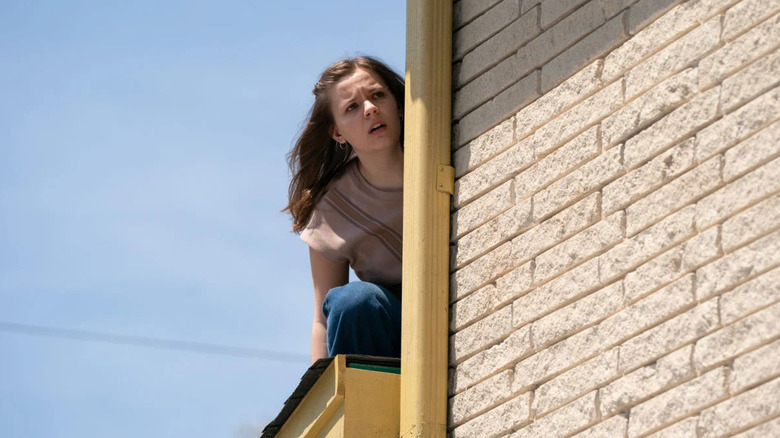
The Gen-Xers and Elder Millennials remember a time when the internet didn't yet exist and social media hadn't corroded society. Of course, no era in American history was ever genuinely (ahem) "great," but the pre-digital age did feel a lot simpler, and the films of the 1980s are representative of that feeling. Even so, many of the genre movies of that period contained subtext warning of evils already very present in the culture, if not ones just around the corner. What is "Poltergeist" if not an indictment of capitalism leading to revenge from beyond the grave? What's "Gremlins" if not a warning against complacency with technology and the abuse of the natural world? And those government officials weren't very nice to "E.T.," were they?
David Robert Mitchell makes "The End of Oak Street" a responsible 2026 answer to those aforementioned '80s classics, using his film to comment on the vanishing of an America we once knew. In the film, the Platt family finds their neighborhood transported without warning into a space filled with unknowable, uncontrollable organisms. That these are dinosaurs instead of a deadly virus like COVID-19 doesn't make the metaphor any less potent. Mitchell threads moments and images of loss throughout the movie. He lets his camera linger on the victims of the dinos. Scenes include slow pans across a series of photographs of couples and families, reminders of the people lost or broken by the incident. When Audrey Platt (Maisy Stella) takes a beat in the middle of the mayhem to cry-sing along to Steve Winwood's "Valerie" in the family car, it's a moment of yearning for the more idyllic before times that we can all relate to.
The End of Oak Street is a cinematic balm for the middle aged
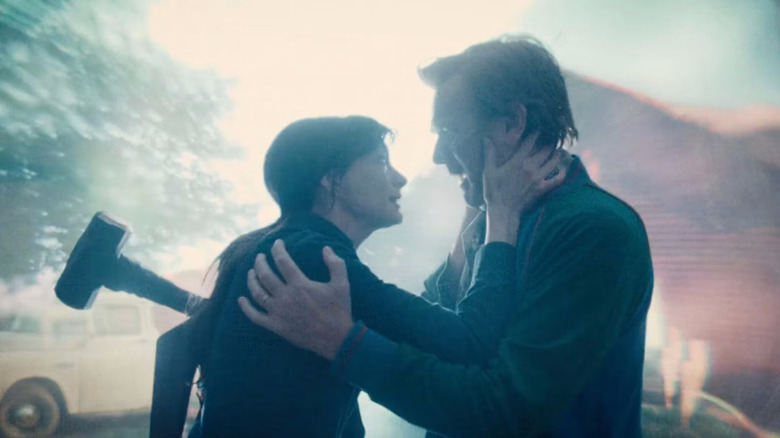
"The End of Oak Street" concludes with a dedication to David Robert Mitchell's father, who passed away in 2024, and this tribute recontextualizes the whole film. It makes Greg Platt (Ewan McGregor) a more tragic figure, with his demise in the jaws of an Allosaurus both heartbreaking and shocking. It also makes his resurrection via time-travel shenanigans feel so much more earned rather than pandering. When I spoke to Mitchell recently, I asked the director how he landed on dinosaurs as the movie's subject, and his answer was very illuminating:
"The dinosaur thing, some of it came from childhood. Again, my own love of dinosaurs. But then some of that came from my dad, [who] was obsessed with dinosaurs ... He and my uncle, they made stop motion animation dinosaur short films that I was watching them do as a kid."
Loss is a double-edged sword. Of course, grief is part of it, but there's also the remembering and celebrating the life of the deceased and your relationship to them. As I said in my review of the film, I lost my own father to complications with his health earlier this year. We happened to share a love of genre movies, including "Jurassic Park." Although he died relatively young, it's true that Gen-Xers and Elder Millennials are now at an age where our family members are likely to start passing away. "The End of Oak Street" is an acknowledgment of both the horror and the tenderness of this reality. Like dinosaurs themselves, life is beautiful and terrible all at once, and films like "Oak Street" are here to help us understand the totality of that.
"The End of Oak Street" is in theaters now.