

The X-Men '97 Season 2 Finale Kills Off A Major Marvel Hero
We may receive a commission on purchases made from links.
Spoilers for "X-Men '97" Season 2 Episode 9 "Survival of the Fittest" follow.
"X-Men '97" has made it very clear that no X-Man is safe ever since Season 1, Episode 5, "Remember It," when Gambit (A.J. LoCascio) and several other beloved mutants were killed in an attack on Genosha. Season 2 upped the body count even higher with Apocalypse's (Ross Marquand) brutal murder of Magneto (Matthew Waterson).
Gambit has returned this season as Apocalypse's Horseman, Death, but as if to balance the cosmic scales that resurrection now culminates in the loss of another X-Man: Kurt Wagner/Nightcrawler (Adrian Hough). In "Survival of the Fittest," the X-Men face a problem on two fronts. Apocalypse's soul resides in Gambit and could wake up at any time. Meanwhile, X-Factor and X-Force have joined to attack the X-Men and eliminate Apocalypse by killing Gambit.
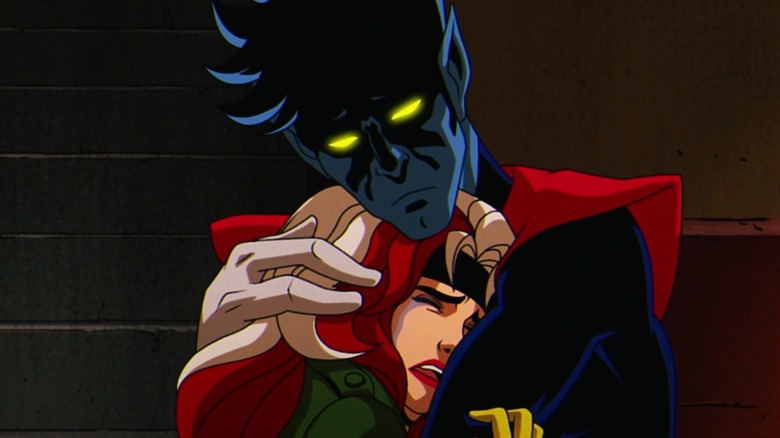
The battle ultimately comes down to Rogue (Lenore Zann), who isn't willing to lose Gambit, her sugah, yet again. Rogue, Nightcrawler, and Beast (George Buza) track down Ship, the Celestial craft which transformed the ancient En Sabah Nur into Apocalypse millennia ago. Rogue's determination intrigues the Celestial Eson (Waterson), who offers power to defeat Apocalypse, but at the cost of her own life. Affirming she'd give "anything" for Gambit, Rogue takes the deal.
Rogue, her absorbing powers amplified by the Celestial, rips Apocalypse's soul from Gambit and imprisons it. She shares a kiss with the now purified Gambit — the kiss they could never have before because of her lethal touch. You'd be forgiven for thinking this was all building up to Rogue's demise, but as her Celestial powers fade away, the bill doesn't come due. Nightcrawler renegotiated the deal with Eson, offering his own life in exchange for Rogue's.
How X-Men '97 built up to Nightcrawler's death
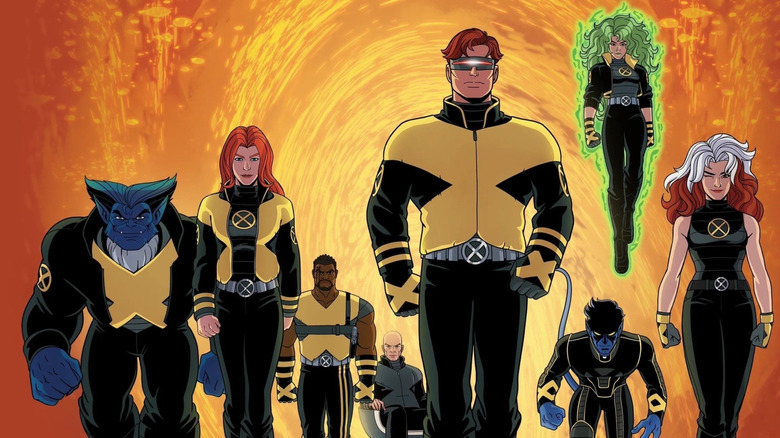
Remember, Rogue is Nightcrawler's sister (his biological mother Mystique is Rogue's adoptive mother). If he was going to sacrifice himself for anyone on the team, it'd be her. But "X-Men '97" frames Kurt's sacrifice as deeper than saving only one life.
"I know they will grieve, but I also believe with time, my memory will be a seed from which new ones will grow," Kurt says. When Eson questions how he can be so sure, Kurt, his hands in a praying position, answers: "Because ... I have faith."
Both the original animated "X-Men" and "X-Men '97" have largely defined Nightcrawler by his Catholicism. Now, his journey ends with a Christ-like sacrifice: giving his life to ensure a better world for others. His last words play over a montage of the X-Men and Xavier's School students living in harmony, ending on a shot of Rogue and Gambit sitting together. Rogue holds Kurt's bible, bookmarked by a photo of the two of them together.
If you look back to "X-Men '97" Season 2 Episode 8, "The Dead Man's Hand," you might notice some foreshadowing. The X-Men were playing poker and the "dead man's hand" (two black aces and two black eights, which was the playing card hand that legendary gunslinger Wild Bill Hickok had when he was shot in the back) is what Nightcrawler pulled. In that episode, Kurt's hand seemed to only hint that the X-Men were about to meet the revived Gambit, but now it's clear as an omen of Kurt's own fate. Beast, who won the round, quoted Jack London and said life is sometimes about playing a poor hand of cards well. That's what Nightcrawler does to save Rogue.
Nightcrawler could've died much earlier in X-Men '97
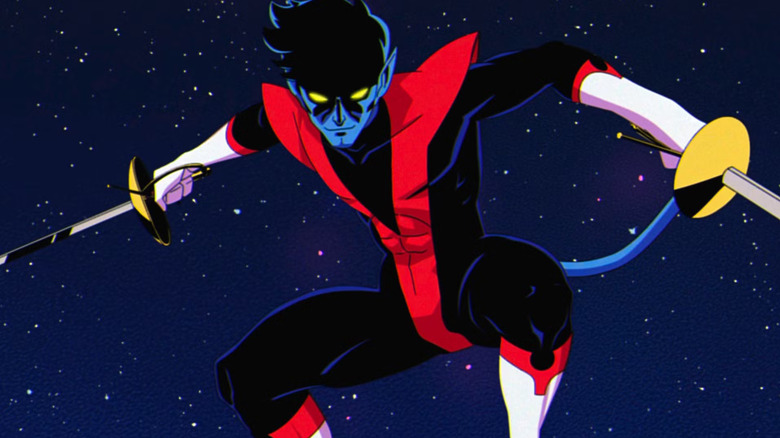
In the behind-the-scenes book "X-Men '97: The Art and Making of the Animated Series" by James Field, supervising producer Jake Castorena revealed that Nightcrawler was the original choice to die in "Remember It," not Gambit. Recall, that episode is when Nightcrawler returned to the series. Choosing Gambit instead was the right call; it definitely made a bigger splash to kill off a main character, and Gambit's death allowed Rogue a character arc of grief and vengeance.
By keeping Nightcrawler around, "X-Men '97" also got to give him his long overdue time in the spotlight. Nightcrawler is a mainstay of the "X-Men" comics, but he was only a guest star on the original animated series. In "X-Men '97," he got to actually become an X-Man, even getting a spot in the title sequence roll-call. We've gotten to see plenty of Nightcrawler these past 1.5 seasons, from preaching sermons to swordfighting Sentinels alongside Wolverine (Cal Dodd). That makes his sacrifice now carry much greater weight.
Knowing that Gambit took Nightcrawler's intended place in "Remember It" makes "Survival of the Fittest" feel like a delayed inevitability finally arriving. But it was essential that someone had to die here. Otherwise, Gambit's resurrection would feel too easy; if you're going to undo the show's most powerful moment thus far, you have to balance it out with another loss. And again, the saintly Nightcrawler is definitely the X-Man most inclined to sacrifice himself.
But man, Rogue cannot win, huh? In "Survival of the Fittest," she gets her boyfriend back, but loses her brother. That she was willing to sacrifice her own life for Remy, though, underlines why Rogue's life and love was worth Kurt giving his own.
"X-Men '97" is streaming on Disney+.