

The Halo Video Game Remake Proves One Thing About Any Future Adaptation
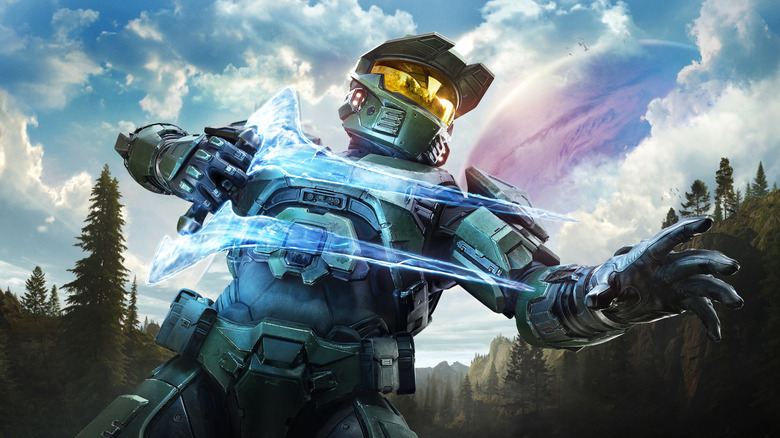
A quarter of a century after "Halo: Combat Evolved" blasted its way onto consoles and changed the landscape of first-person shooters forever, it's almost like we never even left the iconic ringworld at all. There's plenty to be said about the direction the sci-fi franchise has taken over the years, from the inevitable pivot regarding Xbox exclusivity (an unforgivable sin to purists, but a boon to filthy PS5 owners like myself) to the mass layoffs enacted by Microsoft to the very idea of developer Halo Studios pouring so many resources into a remake rather than a sequel. To that effect, the fully-reimagined "Campaign Evolved" arrives at a bizarre moment in gaming and the entertainment industry at large. But there are some important lessons to take away from this undeniable success.
The most pressing takeaway of all? While some may quibble about the wholesale changes made to the aesthetics of the original game (which, to be clear, still hold up wonderfully), "Campaign Evolved" might as well be the final word on any modernized update on the classic story. The graphics are stunningly rendered, the environments are more expansive and immersive than ever, and the seamless gameplay speaks for itself. In fact, this inadvertently proves a point that I'm not sure anyone involved in this project would've ever intended. Following a game that has now officially reached its final form, it's fair to wonder what any live-action adaptation could possibly hope to add.
The question, as always, hinges on whether Hollywood is paying attention. They've certainly tried to make a "Halo" movie adaptation happen, to no avail. Even the short-lived Paramount+ series mostly just came and went, casting further doubt on the prospects of a proper adaptation. What "Campaign Evolved" suggests is that a "definitive" version isn't advisable — or even possible.
Campaign Evolved shows why a direct 1:1 Halo adaptation is a bad idea

Ever since the early aughts, when the original "Halo" trilogy recruited an entire generation of gamers in the intergalactic war against the Covenant hegemony of extraterrestrials, the movie industry has collectively salivated over the idea of turning unprecedented video game sales into box office receipts. When even Steven Spielberg gets caught up in the "Halo" hype, you know a franchise has tapped into a very formidable segment of pop culture. In many ways, a big-budget blockbuster putting moviegoers in Spartan-117's MJOLNIR armor felt inevitable — almost as inevitable as Microsoft refusing to leave well enough alone and keeping the super-soldier in service long after the perfect ending of "Halo 3." ("Halo 4," in all fairness, kind of rules.)
But let's just say that "Halo: Campaign Evolved" finished the fight before Hollywood could really get started. We've now seen the beloved story brought back to life faithfully and with a modern polish, striking the perfect balance between old and new. It's one thing to add a sprint feature, rerecord dialogue and the classic score, and create a trio of new levels embracing sequel elements (like battle rifles and marauding Brutes). But it even goes so far as to include a few subtle additions laying the groundwork for the events of the sequel games. This is as satisfying an experience as gets, outside of simply replaying the campaign of "Combat Evolved" for the umpteenth time.
Seriously, where would a "Halo" movie or TV show even go from here? The most diehard of fans couldn't possibly want the video-game equivalent of a Disney remake: a shameless copy/paste job that puts Gus Van Sant's shot-for-shot "Psycho" remake to shame. The answer — the only answer — is to try something new instead.
The ideal blueprint for a Halo adaptation might be the Paramount+ series -- no, really, hear us out
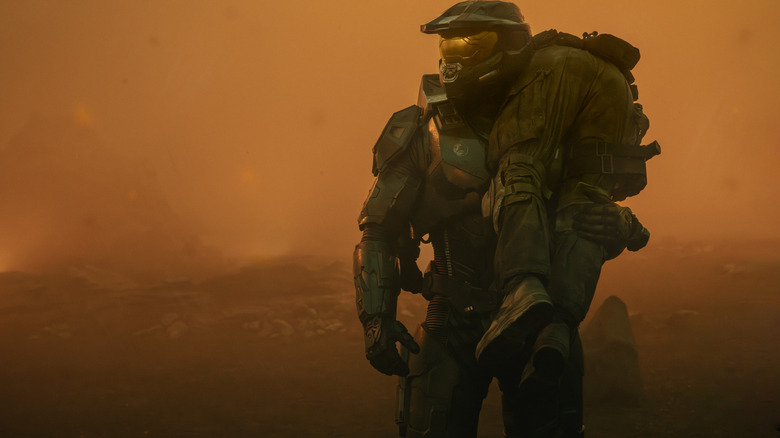
I know, I know. There's no sugarcoating the disaster that was the Paramount+ "Halo" series, which truly felt like a "Halo" adaptation in name only. Anyone who even bothered to watch it in the first place soon recoiled in horror at a storyline that butchered the intricate world-building finesse of the games, took gloriously goofy sci-fi concepts and turned them into low-rent versions of themselves, and, yes, refused to let Pablo Schreiber's Master Chief actually keep his damn helmet on for longer than five minutes at a time.
But, despite everything, the "Halo" show got one thing right: It attempted to tread new ground and tell its own original story, at the very least. To state the obvious, this was one of the main reasons behind the internet backlash to the series. But the problem was in the execution of such ideas, not the approach itself. The more "Halo" diverged from canon, the more interesting it became as its own unique piece of science fiction. Besides, what alternative is there, really? Barring an adaptation of the various "Halo" books (particularly author Eric Nylund's "The Fall of Reach"), it's abundantly clear that the plot of the games is best left untouched.
No, any live-action "Halo" production should take inspiration from the likes of "Fallout" and (hopefully) Zach Cregger's upcoming "Resident Evil," which suggest that there's more artistic merit in telling new stories in familiar settings — not the same story retold exactly as before. Direct adaptations like HBO's "The Last of Us" can only go so far before the inherent constraints of live action become too big to ignore. Instead, "Campaign Evolved" proves the only way forward for "Halo" is, well, forward.