

5 Best Alan Hale Jr. Movies & TV Shows, Ranked
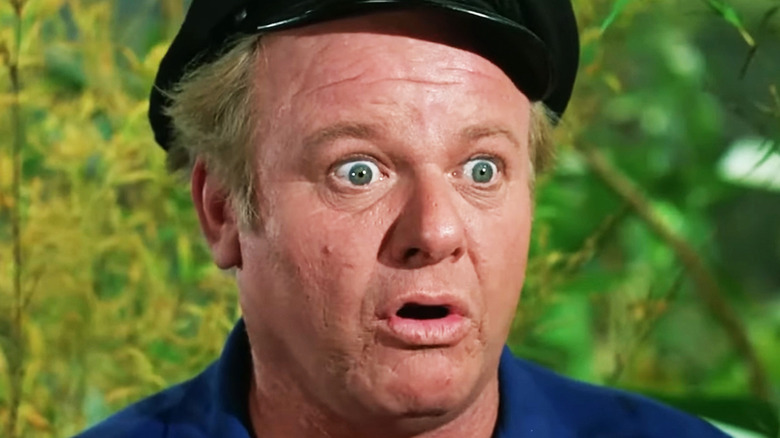
From the moment he first appeared as Captain Jonas Grumby, aka The Skipper, Alan Hale Jr. remained fond of "Gilligan's Island." Rightly so. The actor brought joy to millions as the perpetually perplexed Skipper, and the importance of such a thing was not lost on the man himself. That said, he had a lot more to be proud of. Though he remains best-known for his role on Sherwood Schwartz's beloved sitcom, even a brief glance at Hale's filmography reveals a remarkable career that extends far beyond the shores of Gilligan's Isle.
Hale might never have attained superstardom, but he wasn't necessarily aiming for such a thing. In an interview with the Paducah Sun (via MeTV), the actor said, "I love acting. With me, it's a way of life, but I couldn't care less whether I become an actor's actor." He went on to reference his father, Alan Hale Sr., a journeyman character actor of the Golden Age who, according to his son, was "not in the least star-conscious." Said Hale, "I'll settle for that."
But settling wasn't really the way to put it. Hale had an enviable career in show business working with the very best of the best; Gregory Peck in "The Gunfighter" (1950), Kirk Douglas in "The Big Trees" (1952), John Wayne in "The Sea Chase" (1955) – Hale even worked with the great Clint Eastwood on one of his most important Westerns, ultimately ascending to heights many actors only dream of. By the time he passed away in 1990, the actor had amassed a truly impressive filmography. His supporting roles were significant for the fact they often saw Hale work with Hollywood royalty, but he also had plenty of leading parts, too. Here are five of his best projects.
5. The Fifth Musketeer
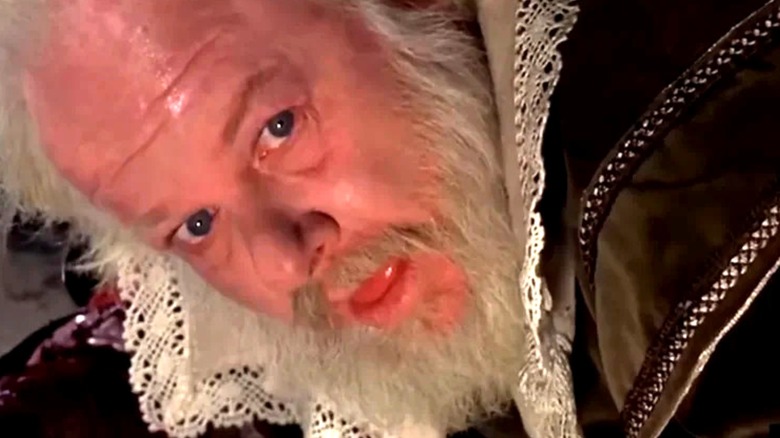
By the late '70s, "Gilligan's Island" had been off the air for more than a decade. The castaways' adventures continued via animated spin-offs and TV movies, but Alan Hale Jr. wasn't just reprising his Skipper role in the post-Gilligan years. In 1979, he played Porthos the musketeer in "The Fifth Musketeer."
This swashbuckler from British filmmaker Ken Annakin was an adaptation of the last part of Alexandre Dumas' novel "The Vicomte of Bragelonne: Ten Years Later," a story that took its cues from the real-life figure of the Man in the Iron Mask. Lloyd Bridges, José Ferrer, and Alan Hale Jr. play the Three Musketeers alongside star Beau Bridges as Philippe of Gascony and his twin brother, French King Louis XIV. As an aging Porthos, Hale helps his compatriots as they set out to free Phillippe from the Bastille.
"The Fifth Musketeer" wasn't a critical triumph when it debuted, but that's beside the point for this particular list. What makes Hale's portrayal of Porthos significant is that it's the same role his father, Alan Hale Sr., played in the 1939 film "Man in the Iron Mask." As such, this was a full circle moment for the younger Hale, who bore a notable resemblance to his father. As an older Porthos (Hale Jr. had actually portrayed younger versions in two 1950s films), he is equally boisterous as the Skipper, but there is also a tinge of pathos to his portrayal, given the connection to his late father and the fact that Hale's bearded swordsman is felled in the third act. "The Fifth Musketeer" is also a welcome addition to the late-career Hale filmography, if only because it balances out his and Jim Backus' mini "Gilligan's Island" reunion in the awful 1979 action comedy "Angel's Revenge."
4. The True Story of Jesse James
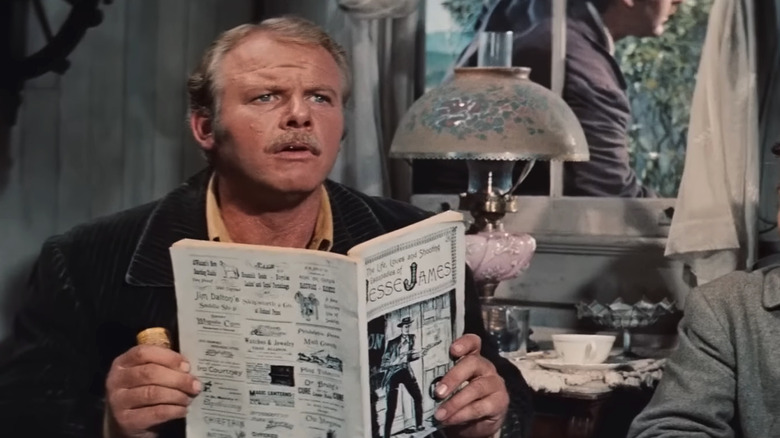
Though he played many fictional criminals in Westerns throughout the 1950s and '60s, Alan Hale Jr. played a real-life outlaw in 1957 Western "The True Story of Jesse James." The film, from director Nicholas Ray, sees him portray Cole Younger of the legendary Cole Younger gang alongside Robert Wagner as Jesse James. It wasn't a starring role, but "The True Story of Jesse James" was significant for Hale, who, by 1956, had appeared in his fair share of supporting roles that didn't really give him much to do.
The film didn't debut to unanimous praise because the titular outlaw had been revisited by Hollywood time and again, but it did receive several positive reviews. More importantly, Hale does a typically great job of portraying Younger, delivering a serious portrayal of the former Confederate guerrilla-turned-outlaw that contained little of the joviality that would characterize his performance as The Skipper. Hale's Younger is self-possessed and confident, and if you've only ever seen him as Captain Jonas Grumby, it's a real treat to see him in this mode.
What's more, Hale is arguably better than the stars of the film. Wagner does a solid job in the lead (though he was a little too refined to play the rugged criminal), as does Hunter as his on-screen brother, Frank James. But Hale's presence is refreshing and the man is clearly in complete control of his performance. For that, and the fact Ray actually gave Hale some significant scenes at a time when many directors underutilized his talents, "The True Story of Jesse James" remains one of the actor's best.
3. The Three Outlaws
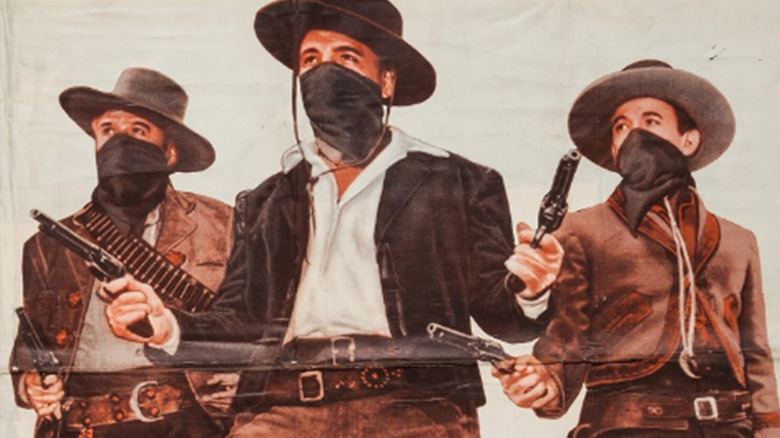
In 1950, Alan Hale Jr. worked with Gregory Peck in one of his best Westerns, "The Gunfighter." Amazingly, despite the fact he had several scenes with Peck and multiple lines of dialogue, Hale went uncredited for his contributions. Six years later, he didn't need to worry about being overlooked when he was cast as The Sundance Kid in "The Three Outlaws." His other projects of 1956 — Budd Boetticher's "The Killer is Loose" and Lew Landers' "The Cruel Tower" — featured him in supporting roles, but director Sam Newfield put him front and center alongside Neville Brand's Butch Cassidy.
The poster for "The Three Outlaws" proudly bore Hale's name, marking a rare example of the actor toplining a movie, even if it was a low-budget affair. He and Brand appeared alongside Robert Christopher, who isn't given much to do as the third member of their crew, Bill Carver. But that just gives Hale more time to showcase his talent. While he isn't entirely believable as the smooth talker who charms Lillian Molieri's Rita Aguilar, Hale doesn't seem to struggle in his starring role. He might not have had the star quality of a Clint Eastwood, but he helped immensely in making this B-Western feel like a much more prestigious picture.
The film follows Cassidy, The Sundance Kid, and Carver as they rob a train before absconding to Mexico. Bruce Bennett's detective Charlie Trenton follows them, eventually recruiting outlaw El Gallo (Rodolfo Hoyos Jr.) to help him capture the American fugitives. Newfield doesn't do much more than allow the action to carry the picture. But the performances — Hale's included — are better than you'd expect from this kind of movie, which, regardless of its overall quality, is notable for giving Hale a chance to shine.
2. Biff Baker, U.S.A.
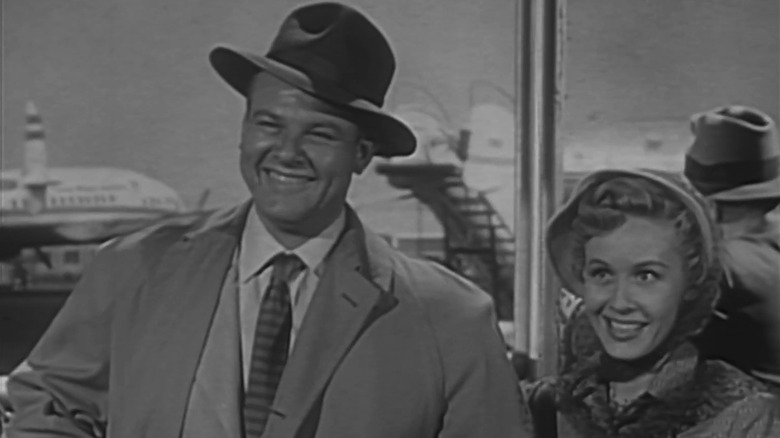
For a while, Alan Hale Jr. seemed to make his living guest-starring in Western shows of the 1950s and '60s. All the big series hosted him, from "Gunsmoke" to "Bonanza." Hale even appeared in Clint Eastwood's legendary "Rawhide" and the '50s Western series that completely changed television, "Cheyenne." But it wasn't just guest spots that allowed Hale to thrive on the small screen. More than a decade before he appeared as Captain Jonas Grumby, he was given his own series: "Biff Baker, U.S.A."
Like "Gilligan's Island," "Biff Baker, U.S.A" aired on CBS. Unlike that later sitcom, however, Hale's early-'50s show only lasted one season. Still, it was a major moment in his career. The lead in a CBS sitcom was a big deal for a man who had spent the prior decade in bit parts. His most significant role up until that point was a recurring part on "The Gene Autry Show," which saw him play the title character's sidekick in two episodes. Hale's CBS sitcom, however, had him playing the titular importing business agent alongside Randy Stuart as his wife, Louise.
"Biff Baker, U.S.A." follows Baker as he and his wife travel the world looking for merchandise, only to be drawn into international espionage. From Paris to Cairo, Baker and Louise manage to help thwart multiple schemes ranging from art theft to refugee smuggling and even terrorism. Though it was a serious show, Hale Jr. was a jovial leading man who never sought out trouble but always seemed to be at the center of it. He and Stuart have a charming rapport and even though "Biff Baker, U.S.A." lasted just one season, it's one of Hale's best TV roles.
1. Gilligan's Island
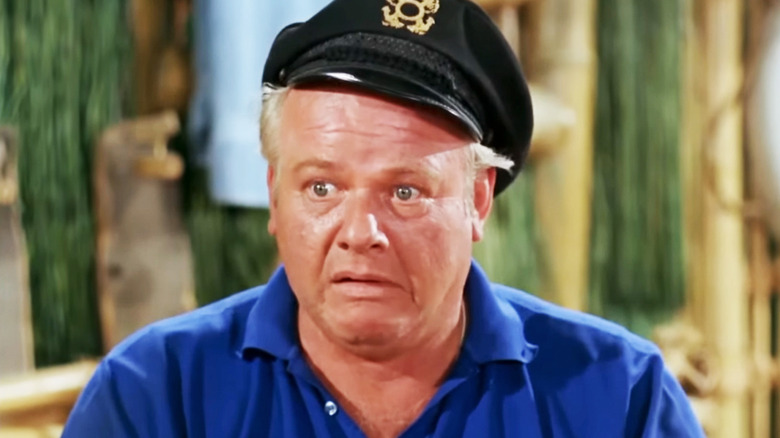
"Gilligan's Island" was much more than any one of its stars, but there's no doubt it wouldn't have been the same without Alan Hale Jr. As Captain Jonas Grumby, he provides the perfect foil to Bob Denver's lovable ineptitude, remaining hilariously bewildered by his first mate as he and the other castaways do their best to function as a unit after becoming stranded on a remote island.
Even if Hale hadn't been as charmingly brilliant as he was in the role, "Gilligan's Island" would top this list simply due to the fact it became part of the pop culture wallpaper for decades. An impressive syndication deal and multiple spin-offs/TV movies ensured the show remained in the public consciousness long after it went off the air in 1967, thereby etching Hale's performance in the minds of multiple generations. It was the show that made him a household name, but it was also the show that helped him maintain his relevance for years after the series proper came to a close.
Today, Hale is still best known as The Skipper, and unlike Russell Johnson, who came to regret his time as the Professor on "Gilligan's Island," the actor remained proud of that association right up until his death in 1990. He told The Sun (via MeTV) that The Skipper was his favorite role, and that he enjoyed being recognized for it. "It delights me to know that I will never be alone in the world," he said, "and the delight that shows on people's faces is a very gratifying thing." There's no doubt he brought tremendous joy to those who watched his escapades on the isle, which is why "Gilligan's Island" will always be Hale's best and most beloved project.