

Gregory Peck's Best Western Featured An Uncredited Appearance From Gilligan's Island Star Alan Hale Jr.
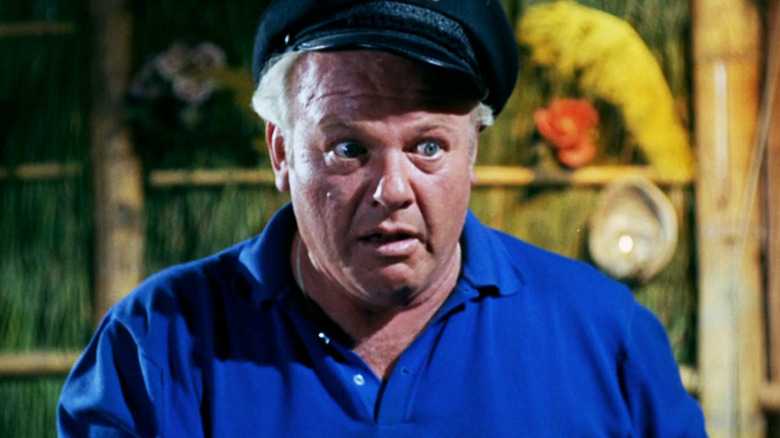
It must have been odd for an actor who had worked with the likes of James Cagney and Kirk Douglas to become best known for leading a campy sitcom. That was the experience of Alan Hale Jr., whose most famous role will always be that of Captain Jonas Grumby, aka The Skipper, on "Gilligan's Island." Before he was tolerating Bob Denver's antics, however, Hale Jr. amassed quite the filmography, appearing alongside his future "Gilligan's Island" star Russell Johnson in a Western and even landing a role in the overlooked 1955 John Wayne effort "The Sea Chase." Even before his seafaring adventure with the Duke, however, Hale Jr. was no stranger to working with screen legends, having had a small role in Gregory Peck's legendary Western "The Gunfighter."
The man who eventually went to great lengths to land the role of the Skipper on "Gilligan's Island" spent the decade prior to that CBS sitcom charting an impressive career in both TV and film. Between 1952 and '53, Hale Jr. starred in CBS adventure series "Biff Baker, U.S.A.," which debuted the same year he appeared alongside Douglas in 1952's "The Big Trees." More high-profile Westerns would come, with 1954's "Destry" providing the actor with a chance to form an alliance with Audie Murphy's Tom Destry as cattleman Jack Larson.
Prior to those considerable projects, Hale Jr. appeared in "The Gunfighter," the 1950 Oater that starred Peck as the titular outlaw and which has since become recognized as one of the great Westerns. Though he wasn't credited for his role, then, it was still an auspicious way to start the decade for Hale Jr.
Alan Hale Jr. had a small but significant role in The Gunfighter
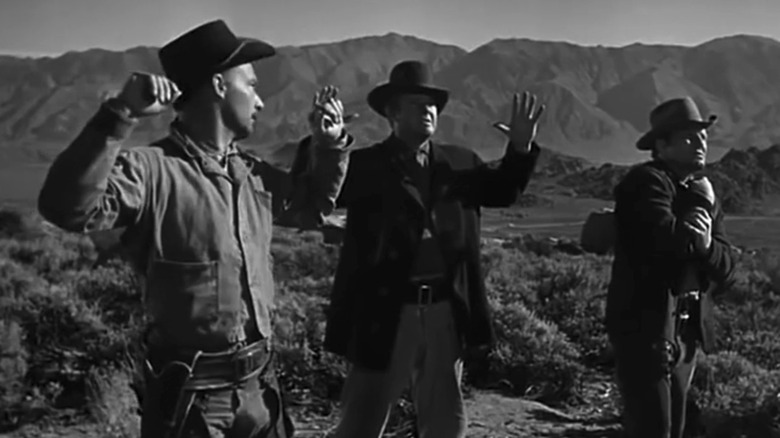
"The Gunfighter" was directed by Henry King, who collaborated with Gregory Peck on five other projects and had received two Best Director Oscar nominations in 1943 and 1944. With his Western, King oversaw Peck's portrayal of legendary gunslinger Jimmy Ringo, who after killing a cowboy named Eddie (Richard Jaeckel) travels to the town of Cayenne with Eddie's three brothers in hot pursuit. Alan Hale Jr., David Clarke, and John Pickard played the brothers, and all three of them went uncredited for their efforts. That's somewhat surprising seeing as they represent one of the main threats to Peck's sharpshooter and have several lines in the film even if they're not in it all that much. The trio, who share several scenes with Peck himself, didn't even get character names — just first, second, and third brother.
Perhaps it was due to the fact Eddie's vengeful siblings somewhat fade into the background after Ringo arrives in Cheyenne. There, Peck's outlaw tries to re-establish a relationship with his estranged wife, Helen Westcott's Peggy Walsh, and son. Meanwhile his presence in the town causes trouble as two residents decide they want to take out the "fastest gun in the West” for themselves. This ultimately leads to a tragic conclusion whereby Ringo is accosted by the three brothers, only for them to be taken into custody before a budding gunfighter named Hunt Bromley (Skip Homeier) finally takes down Peck's anti-hero.
As such, Hale Jr. and his fellow brothers only really appear in the film's opening and closing moments. But again, it's not as if they're merely background actors. Apparently, 20th Century Fox chief Darryl F. Zanuck was more concerned with shaving Peck's face than worrying about who was credited appropriately.
The Gunfighter is one of many distinguished entries in Alan Hale Jr.'s filmography
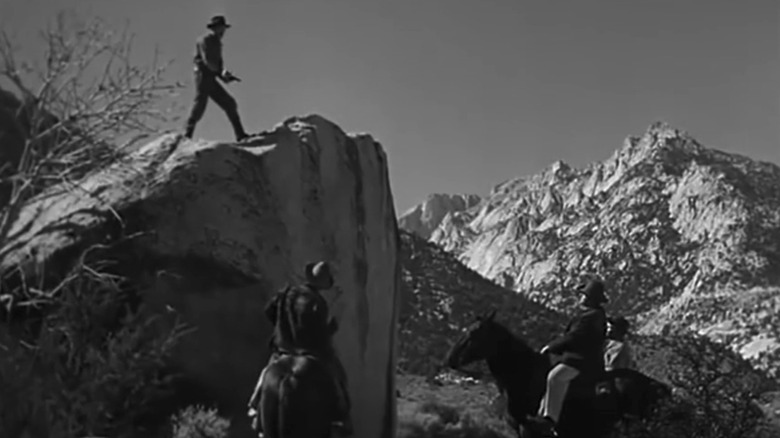
"The Gunfighter" might be one of those Westerns that isn't talked about as much as others, but it's notable for many reasons. Not only did it featuring an uncharacteristic performance from Gregory Peck as a man of questionable morality, its story also had all the lineaments of the revisionist Western movement that would come to prominence more than a decade later. "The Gunfighter" ultimately portrays outlaw life as a curse, one that Jimmy Ringo knows his own killer will never escape. A similar story formed the basis of John Wayne's final film, 1976's "The Shootist," in which the Duke himself — who had initially been interested in "The Gunfighter" — reckoned with the legacy of his gunslinging hero archetypes.
As such, Hale Jr. was no doubt proud to be a part of the film, though it wasn't as if this was his only time sharing the screen with a legend. The man's filmography gets more remarkable the more you look into it. The same year "The Gunfighter" bowed he appeared alongside James Cagney in "The West Point Story" and spent 1952 playing roles opposite Kirk Douglas and Gary Cooper. Even after "Gilligan's Island" Hale Jr. starred in one of Clint Eastwood's most important Westerns, and seems to have worked with almost every Western icon of his era throughout his career. While he might not have been credited for his performance in "The Gunfighter," it's undoubtedly an important entry on Hale Jr.'s surprisingly prolific and venerable filmography.