

After Gilligan's Island, Alan Hale Jr. Appeared In One Of Clint Eastwood's Most Important Westerns
We may receive a commission on purchases made from links.
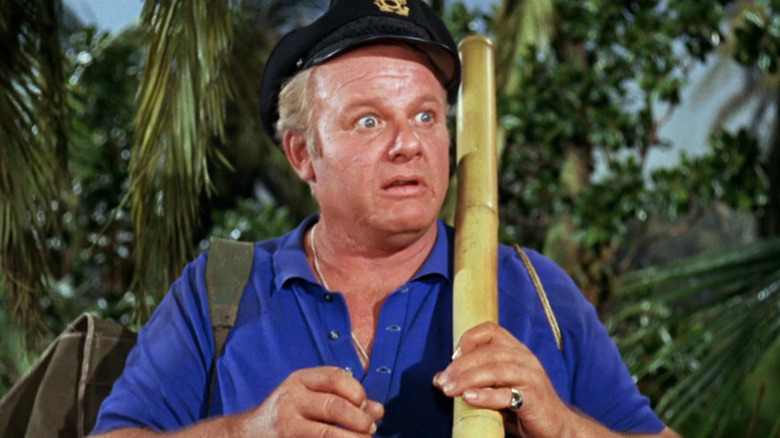
"Gilligan's Island" was Alan Hale Jr.'s most high-profile gig. The actor portrayed Captain Jonas Grumby, aka The Skipper, on the show, its three follow-up films, and the two animated spin-offs. Thanks to those projects and the original series' syndication deal, The Skipper and his fellow castaways ultimately became pop culture mainstays. That's part of the reason Hale Jr. felt good about his time on "Gilligan's Island," even if the show faced a critical drubbing during its initial run. But while he remains best known for his exploits on Gilligan's Isle, Hale Jr. worked solidly in the years after, even appearing in one of Clint Eastwood's most important Westerns: "Hang 'Em High."
Though he'd been acting since a young age, Hale Jr.'s acting career really started in the 1940s, landing multiple parts throughout the decade. His first lead role came in 1952 with the TV series "Biff Baker, U.S.A.," but Hale Jr. also secured roles in multiple Westerns, appearing alongside Kirk Douglas in 1952's "The Big Trees" and playing the Sundance Kid in 1956's "The Three Outlaws." He worked with Audie Murphy in "Destry," Robert Wagner in "The True Story of Jesse James," and even had an uncredited appearance in 1950's "The Gunfighter," which starred a mustachioed Gregory Peck much to the chagrin of a Fox exec who was willing to pay $25,000 to have Peck shave.
In 1964 Hale Jr. reunited with Murphy in "Bullet for a Badman," which was released while "Gilligan's Island" was still on the air. But none of Hale Jr.'s Westerns saw him working with quite as towering a figure as Eastwood, who by the late-'60s was on the verge of superstardom. "Hang 'Em High" was the film that established Eastwood stateside, and Hale Jr. witnessed it directly.
Alan Hale Jr. witnessed Clint Eastwood's first big Hollywood risk with Hang 'Em High
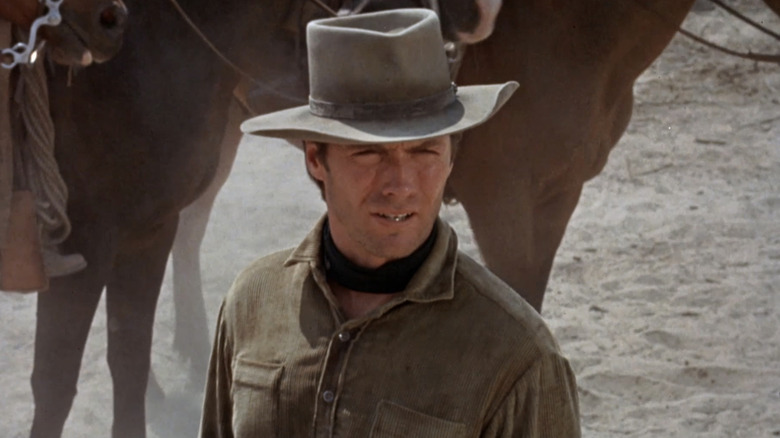
Clint Eastwood and Sergio Leone rewrote the rules of filmmaking with the "Dollars" trilogy. But the films took some time to become hits in the United States. Even after the trilogy built momentum outside of its native Europe, Eastwood struggled to progress. The actor spoke about his post-"Dollars" trilogy experience in "Conversations with Clint: Paul Nelson's Lost Interviews with Clint Eastwood, 1979-1983," saying, "Even after [the 'Dollars' films] came to America and did well, still I wasn't getting a tremendous amount of action. I wasn't getting the action that the trade magazine stars were getting."
As such, his first American film was pivotal. It would either prove he was a flash in the pan or a bankable star more than capable of leading a Hollywood feature. At the time he was under pressure to accept an offer to appear in the rote Gregory Peck and Omar Sharif Western "Mackenna's Gold." Instead, he chose to make a more modest feature in "Hang 'Em High." It was a gutsy move that paid off — "Hang 'Em High" became successful, especially after distributor United Artists attached it to showings of the original "Dollars" trilogy. Meanwhile, Alan Hale Jr. had left "Gilligan's Island" but was still working and suddenly found himself with a front-row seat to Eastwood's big American movie debut.
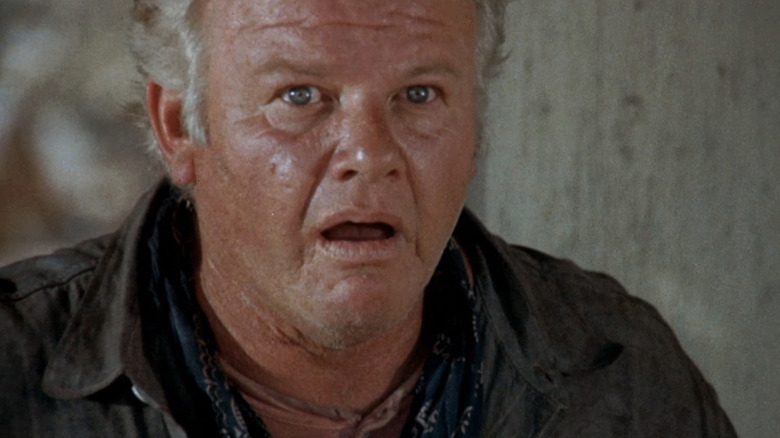
"Hang 'Em High" marked the first and only time Eastwood and Hale Jr. worked together. The former starred as retired lawman Jed Cooper who's hung by a gang of vigilantes after being falsely accused of cattle rustling. Hale Jr. played Matt Stone, one of the vigilantes. Unfortunately for Stone and the rest of his posse, however, Cooper is rescued and sets out to bring justice to his attackers.
Clint Eastwood brought Alan Hale Jr. to justice in Hang 'Em High
"Hang 'Em High" was not only Clint Eastwood's first big American Western movie (he'd fluked his way onto CBS' "Rawhide" prior to making the "Dollars" trilogy), but it was the first project produced by his Malpaso production company. As such, it was a truly significant project for Eastwood. It also happened to be the only time we saw Eastwood and Alan Hale Jr. come face to face.
In the film, after Jed Cooper survives his hanging and becomes a U.S. Marshal, he hunts down the posse responsible for his attempted lynching, finding Hale Jr.'s Matt Stone in the town of Red Creek where he works as a farrier. Stone immediately recognizes Cooper, who holds his would-be killer at gunpoint and slowly walks him into custody. Not a word is spoken between them, but the tension is palpable in what is a great little scene in a film that was more successful than anyone could have predicted. Anyone, that is, but Eastwood, who suddenly seemed remarkably prescient when he said yes to "Hang 'Em High" over "Mackenna's Gold."
"Hang 'Em High" was a box office success at a make or break moment for Eastwood, who even after proving his worth in an American feature continued to struggle to win approval. As the actor said in "Conversations with Clint:"
"I came out of European-produced films and some people didn't accept it. The Hollywood community didn't accept it, the press didn't accept it — with very few exceptions anyway. Finally I started doing a few American films, and even then they got used to not accepting it, because I wasn't the prediction."