

5 Forgotten '90s Sci-Fi TV Shows That Still Hold Up Today
A few trends in science fiction began to rise to the surface in the 1990s. Thanks to the advancement of digital special effects, a lot of sci-fi movies of the decade began to foreground imaginative spectacle. See: "Jurassic Park," "Terminator 2," and "Independence Day" for some examples. The VFX boom also, in turn, led to a movement of high-profile, world-destroying disaster movies. Americans clearly felt secure if blowing up the world was cause for a cheer. There was "Twister," "Volcano," "Outbreak," "Armageddon," "Deep Impact," and other speculative apocalypse movies.
The 1990s were also a post-Cold War period, recall, and a lot of America's free-floating paranoia began to leak into its sci-fi, like in "The X-Files," or "Gattaca." There was definitely some panic about the rise of the internet and the perceived dangers — or glories — of cyberspace. Such as in "The Net," "The Lawnmower Man," "Hackers," "Johnny Mnemonic," or "The Matrix."
And that's just barely scratching the surface. The themes explored throughout the decade revealed that there was a lot on our minds, and the entertainment landscape was shaped correctly to allow for a wide variety of entertainment. Genres were experimented with, and heterogeneity became the word of the day. The sameness of the 1980s crumbled before us. It was the end of the millennium, baby.
And out of that cultural stew came the following TV shows. The landscape was so varied, a lot of these shows were lost in the shuffle. I watched them, though, and I think they need to be revisited. Not just as cultural curios, but as legitimately great pieces of entertainment for a new generation to discover. When your Gen-X parents talk about the glory days, this is what they meant.
Mann & Machine (1992)
"Mann & Machine" belongs to a very proud tradition of TV shows about cops with robot partners. This is a subgenre that also includes "Holmes & Yoyo," "Future Cop" (which Harlan Ellison sued), "Almost Human" (which was too expensive to live) and "Total Recall 2070" (which takes place in a shared Philip K. Dick universe). It also includes "Star Trek: The Next Generation," if you count that one episode wherein Data (Brent Spiner) dressed up as Sherlock Holmes.
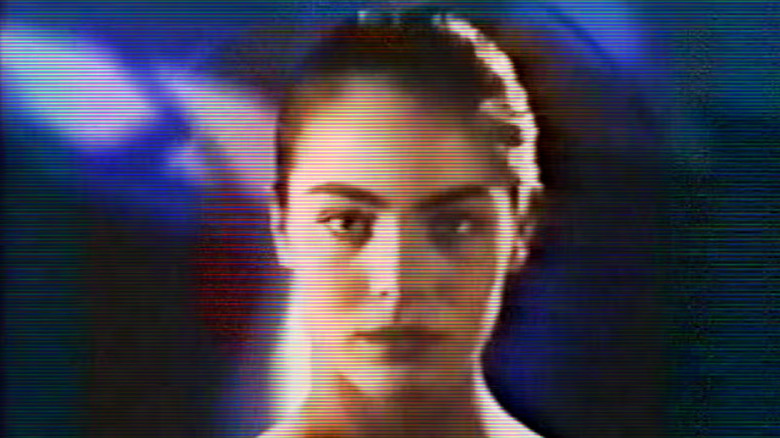
The Mann of "Mann & Machine" is Detective Bobby Mann (David Andrews), a slovenly, robot-hating cop in the near-future of Los Angeles. The machine is Detective Eve Edison (the incomparable Yancy Butler), a high-tech, super-observant, unemotional android who has been assigned as his partner. The detective stories were the stuff of typical noir, but with a sci-fi twist. In one episode, the detectives have to find a serial killer who is finding victims through an online dating service (which was incredibly novel in 1992). In another, the detectives have to locate and rescue a genetically altered baby. Other stories were more grounded. In one, Mann and Edison have to deal with a put-upon investigative journalist (Curtis Armstrong) who has to slum it as a food writer.
It was the relationship between Eve and Bobby that made the show interesting. Notably, Eve had the capacity to grow and develop emotions the more she interacted with humans, allowing her to become more human all the time. Yancy Butler managed to play both the mechanical and human parts of her personality perfectly, creating a memorable gynoid for the ages. I just wish she had done more android stuff. Like pulling wires from her forearm or plugging into a computer with a brain port.
Time Trax (1993)
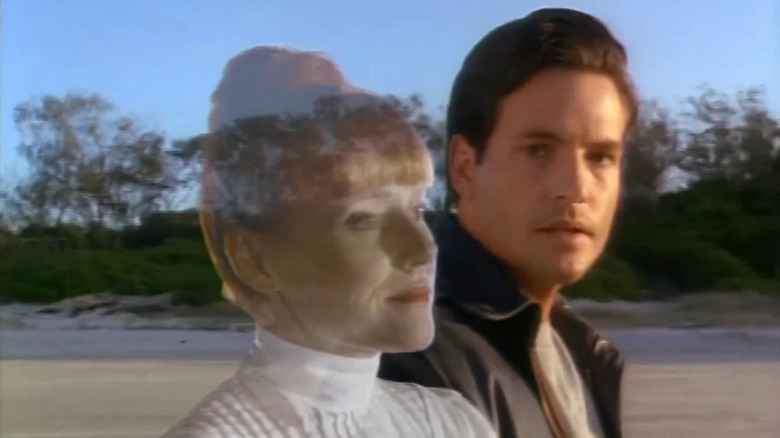
The premise of "Time Trax" is pretty damn perfect. Dale Midkiff from "Pet Sematary" (one of the scariest horror movies of the 1980s) plays Darien Lambert, a cop from 2193. An evil scientist named Dr. Mordecai Sahmbi (Peter Donat) has invented a time machine, and has been accepting payments from dangerous criminals to send them a century into the past to avoid capture. Lambert finds out about Sahmbi's schemes just as the mad scientist himself also goes back in time. Lambert is sent back to the year 1993 to find all the escaped convicts and teleport them back to the future.
In order to blend in, Lambert's futuristic devices are disguised. He is armed with a Miniature Pellet Projection Tube, or MPPT, which looks like a car alarm keychain. He is assisted by a high-tech, holographic schoolmarm, which is projected from a device the size of a credit card. The hologram is called the Specified Encapsulated Limitless Memory Archive, or SELMA (Elizabeth Alexander). Lambert can communicate with his superiors by taking our personal ads in 1993 newspapers, as they will be archived and retrieved in 2193.
The show's action comes from Lambert chasing and apprehending future criminals hiding out among the people of 1993. The show's humor comes from the culture shock of Lambert, with SELMA's snippy, ultra-formal archival assistance, trying to assimilate to life from about a century before his birth.
This premise allowed for creative "case of the week" stories, as well as the drama that arises from Lambert having to keep his identity a secret. Dale Midkiff is kind of a generic actor for the role, but he has the requisite heroism and Saturday matinee good looks. "Time Trax" lasted for 44 episodes over two seasons, so it was doing something right.
Nowhere Man (1995)
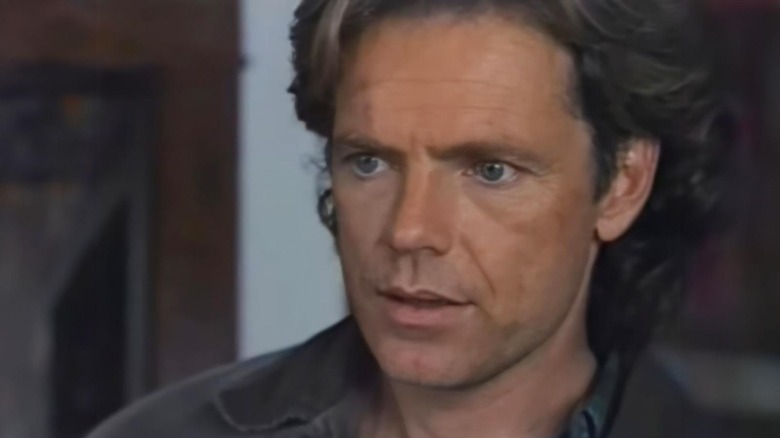
Dark conspiracies were in vogue following the successful debut of "The X-Files" in 1993, and the then-fledgling UPN network responded by producing "Nowhere Man," a semi-surreal series with a strange premise. Bruce Greenwood played war photographer Thomas Veil who wakes up one morning to find that he has been effectively erased from society. His bank accounts and social security number have been deleted, but even more strangely, no one, including his mother, seems to remember he ever existed. Thomas soon finds that he is being stalked by a shadowy cabal of spy-like goons who want to apprehend him for unknown reasons.
Thomas then has to go on the lam, and find out why his existence was erased. It all has something to do with a violent photograph he took in South America depicting a military figure lynching four victims. Reality has shifted under him, and the ordinary laws of the world no longer seem to apply. "Nowhere Man" was nightmarish in its tone, with each episode revealing deeper layers to the show's central mystery. And this was in 1995, many years before shows like "Lost" made "mystery box" plots popular.
"Nowhere Man" is like a combination of the 1963 man-on-the-run series "The Fugitive" and the surreal 1967 spy-adjacent series "The Prisoner" (one of the best TV shows of the 1960s). Indeed, there is an episode of "Nowhere Man" wherein Thomas falls in with a sealed-off community where he might be safe, and takes on the anonymous moniker of Number Six, the same name as the central character in "The Prisoner." The series lasted only one 25-episode season, but did explain a lot of its own mysteries by the end, revealing that ... well, I dare not tell you. But if you like heady mysteries, "Nowhere Man" can provide.
Spicy City (1997)

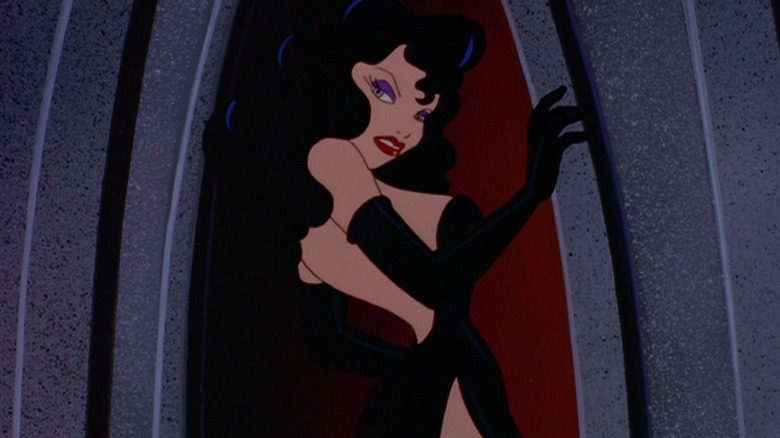
In 1997, star animator Ralph Bakshi ("Lord of the Rings") created a cyberpunk animated anthology series for HBO called "Spicy City," and it is something to behold. The series was hosted by a buxom, Bettie Page-like babe named Raven who addressed viewers from a futuristic nightclub full of sex and vice. She would introduce pointedly tawdry tales of technology run amok in a noir-like, oversexed future world. There was violence, nudity, and other things not traditionally seen in animated TV. "Spicy City" can claim to be the first ever major animated series for adults-only, having beaten "South Park" to air by a month.
The series is as silly as often as it is sexy. The first episode features two people falling in love when inside a virtual reality tech space where they only appear as avatars. The two lovers don't know what the other looks like in real life. Another episode involves a pair of living, disembodied hands. Quite progressive for 1997, one story features badass criminal lesbians on the run.
All the stories take place in the same city, and audiences only gradually begin to see what kind of future "Spicy City" inhabits. This is a bleak, dystopian world where technology has only served to enhance the less savory aspects of humankind, allowing cruelty and dehumanization to accelerate. Even human bodies are being mutilated and replaced with avatars, robots, or other "alternaceuticals." One also has to be on Ralph Bakshi's ultra-lascivious wavelength to appreciate his style. This was HBO, and the network often likes to make a point of being as lurid as possible, just because they can. And there's a weird integrity to that. If we're up late on HBO, there's something pure about finding a dirty cartoon show.
Harsh Realm (1999)
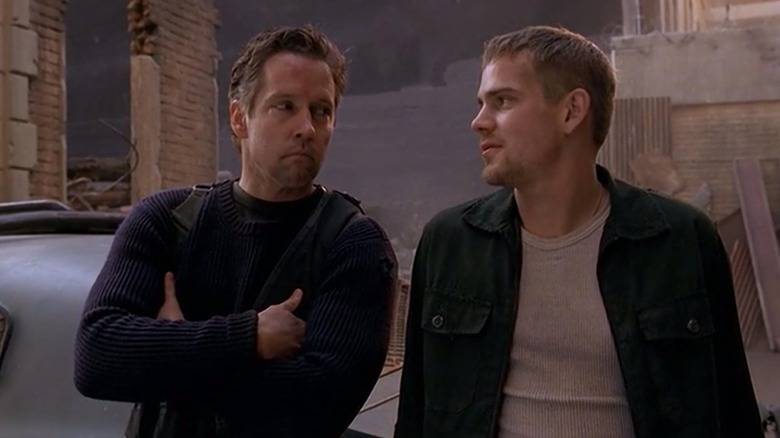
Chris Carter's "The X-Files," along with various "Star Trek" spinoffs, largely defines sci-fi TV of the 1990s. The bleak conspiratorial tone reflected what post-Cold War America was feeling at the time, carrying around a deep distrust of the government, and a nihilistic questioning of why everything before was so bad. In 1996, Carter expanded some of his paranoid ideas into "Millennium," a series about, well, end-of-the-millennium angst. There was a sense that everything might be coming to an end at the end of 1999, and "Millennium" geared us up for it.
In 1999, Carter pushed all his eerie, conspiratorial ideas into the world of high technology with "Harsh Realm," a TV series about the dangers of virtual reality (which were seen as a big issue at the time). The plot of the series is essentially a cyberspace version of "Heart of Darkness." The U.S. Army created a VR training simulator for its soldiers that was nearly 100% accurate to the real world. Inside the simulation, a nuclear bomb has dropped, and now hundreds of VR players are trapped in a virtual version of the post-apocalypse. Scott Bairstow plays an army lieutenant named Thomas Hobbes (after the philosopher) who is tasked with entering the harsh realm and apprehending a mad general who has appointed himself a dictator. The general, Omar Santiago, is played by Terry O'Quinn.
Hobbes has allies in the harsh realm (including D.B. Sweeney) who have found ways to manipulate the VR program from the inside. The series only lasted for nine episodes, with three airing on Fox and the remaining six on FX. The premise is intriguing and the tone mysterious. Although it did have the bad luck of airing after "The Matrix" was released in theaters, so its VR explorations might have seemed dated.