

10 Most Expensive Horror Movies Ever Made, Ranked

Horror is one of the most steadfast genres in Hollywood. Various trends come and go, and while that applies to horror to a certain degree, scary movies are always in demand whether they're more psychological or go all in on gore. The best part is that they're usually inexpensive to make. Plenty of low budget horror movies have made millions because you don't need a ton of money to create a terrifying monster design or necessarily hire big-name actors.
As long as it's scary, audiences will turn up. But just because something can be made cheaply in Hollywood doesn't mean that always happens. Not everything can be made as cheaply as "Obsession" for $750,000, which went on to make box office history. Even then, you may be shocked to learn that some horror movies have nine-figure budgets.
Was it worth the investment? That's up to entertainment industry accountants to decide. The most expensive horror movies ever made, not adjusted for inflation, are a mixture of riches. With some, you can see where the money went on the big screen. Others may leave you scratching your head a bit, but we'll try to examine why these horror movies budgets got out of control.
Here are the most expensive horror movies of all time.
10. Alien: Covenant - $97 million
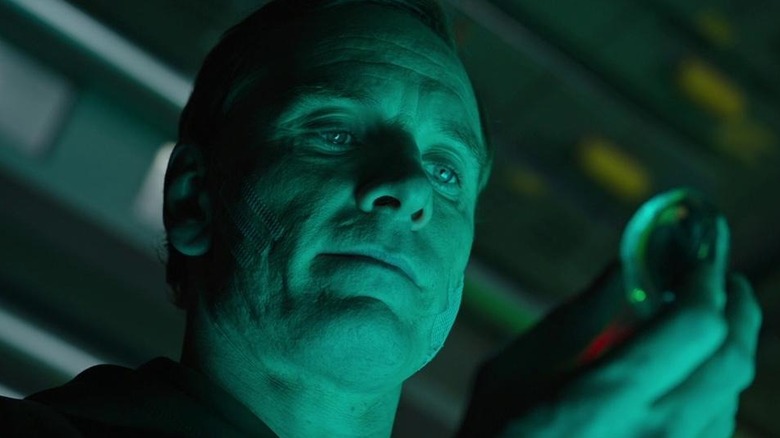
With "Prometheus," director Ridley Scott returned to the science-fiction franchise he helped launch with 1979's "Alien." It was a big swing that tried to tell a monster story while also ruminating on humanity's place within the cosmos. If that wasn't your bag, "Alien: Covenant" should've been a return to form where a space crew lands on a strange world where an android named David (Michael Fassbender) is experimenting with Xenomorphs to create the most perfect creature imaginable.
With a franchise as solid as "Alien," it's no wonder Scott could command a sizable budget. Most outlets report that "Alien: Covenant" was made for $97 million, but a report from Film L.A. suggests the budget could've been as high as $111 million. When it's all said and done, it can be tricky to determine how much a studio actually spent on a film after marketing, tax incentives and good, old-fashioned lying to make it seem like something was made for less than it actually was.
Either way, "Alien: Covenant" made $240 million at the box office, and the series would eventually return in the form of "Alien: Romulus" in 2024 that focuses on new characters. So we may never get a resolution to the cliffhanger ending of "Alien: Covenant."
9. Beetlejuice Beetlejuice - $100 million
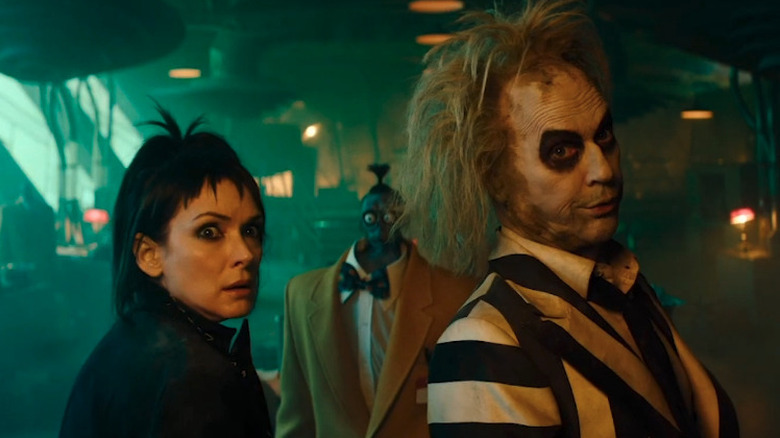
The first "Beetlejuice" movie in 1988 was effectively Tim Burton's attempt to make an anti-Steven Spielberg film. There was no sentimentality or typical story structure. Instead, you have a titular character who's a profane demon trying to marry a child. And the characters you think are going to be our leads — Adam (Alec Baldwin) and Barbara Maitland (Geena Davis) — end up dying in the first act. It was a film with modest ambitions but went on to become a bonafide classic among the Hot Topic crowd. It was no surprise to see it get a legacy sequel decades later, but the price tag changed immensely.
While "Beetlejuice" was made with a modest $15 million budget, that number intensified with the sequel, "Beetlejuice Beetlejuice," which was made for $100 million. What's even more astonishing is that "Beetlejuice Beetlejuice" originally had a far higher budget in the neighborhood of $147 million. The sequel was originally supposed to go straight to HBO Max, but in order to justify a theatrical release, Warner Bros. wanted reduced overhead to limit their risk. It paid off, as "Beetlejuice Beetlejuice" killed it at the box office with a global haul of $452 million.
The sequel's success proves people still love Burton's signature gothic aesthetic. Nostalgia is alive and well, and people must've really wanted to see Michael Keaton's Ghost with the Most annoy the ever-loving hell out of Winona Ryder's Lydia Deetz. Hopefully, this paves the way for a threequel that has to be titled "Beetlejuice Beetlejuice Beetlejuice," as long as they can keep the budget in check.
8. What Lies Beneath - $100 million
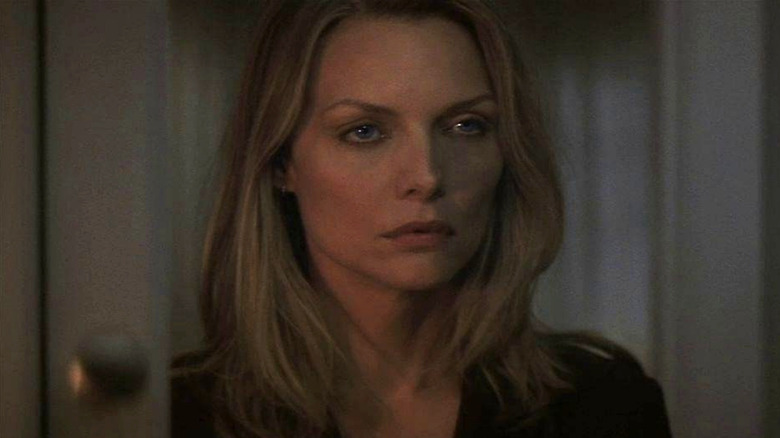
It makes sense that a sequel to a beloved property, like "Alien" and "Beetlejuice," would command a hefty budget. The same can't be said for the original ghost story "What Lies Beneath." The 2000 film was directed by Robert Zemeckis and involves a woman, Claire Spencer (Michelle Pfeiffer), noticing supernatural occurrences in her lake house as her relationship with her husband, Norman (Harrison Ford), becomes increasingly strained.
The whole thing was made for a reported budget of $100 million. That's a lot of dough for a fairly contained horror movie. I have to imagine the salaries of Zemeckis, Pfeiffer, and Ford probably shot it up quite a bit. But it's also probably worth paying attention to how Zemeckis uses the camera in the film. Regardless of what you think of the story, the camerawork is exceptional, especially one shot of a camera panning across a room before moving down the floorboards. It's a film that has no reason to go as hard as it does, but I'm glad Zemeckis put in the effort.
"What Lies Beneath" was really just a side gig for Zemeckis. He famously had to take a year off from filming "Cast Away" so that Tom Hanks could lose enough weight to appear as someone who's been stranded on an island. He shot "What Lies Beneath" during that hiatus and was clearly given enough money and confidence to do whatever he wanted. Sadly, it's now one of many horror movies nobody talks about anymore.
7. Frankenstein (2025) - $120 million
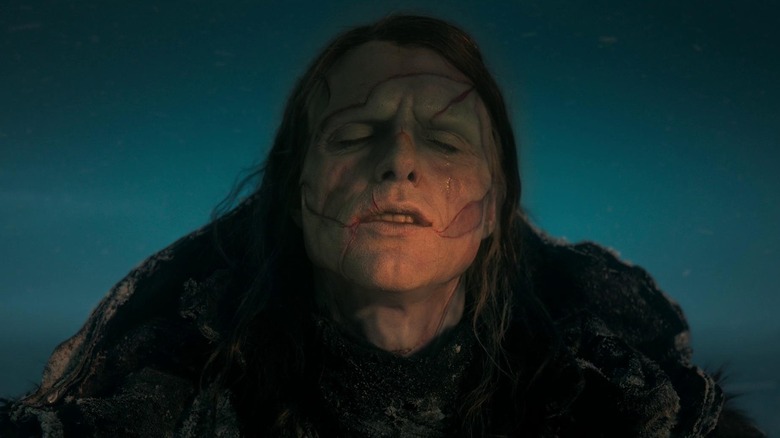
Given Guillermo del Toro's gothic sensibilities, as showcased in films like "The Devil's Backbone" and "Crimson Peak," him making a "Frankenstein" film feels like a natural evolution. The filmmaker got a lofty budget from Netflix, $120 million to be exact, to put his own spin on Mary Shelley's seminal novel.
It was surely a dream come true, and all the money is up there on the screen. There are a ton of practical prosthetics and effects, particularly when it comes to the design of Frankenstein's creature, played by Jacob Elordi. Of course, Elordi wasn't the original pick for the monster. That distinction goes to Andrew Garfield, who dropped out of the project in January 2024 due to scheduling conflicts from the previous year's SAG-AFTRA strike. This last-minute change-up, which necessitated new makeup and prosthetics for Elordi's creature, surely increased the budget, even if it was relatively minor.
Due to Netflix's limited theatrical release model, "Frankenstein" made less than $1 million at the box office. But Netflix probably doesn't care about that. They have a del Toro film that was nominated for Best Picture at that year's Oscars, so for the streaming service, it was probably an investment worth making.
6. The Mummy (2017) - $125 million
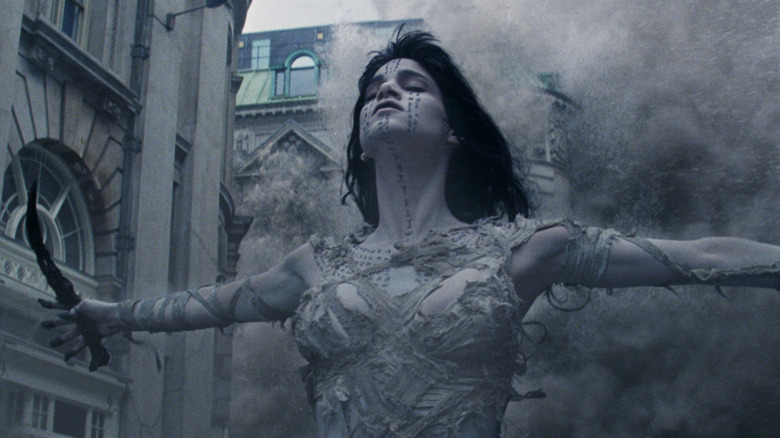
Universal's planned Dark Universe deserved so much better. There was real potential there in the aftermath of the overwhelming success of the Marvel Cinematic Universe for Universal to craft its own interconnected franchise with its Universal monsters. They went all in on the budding franchise's first outing — "The Mummy." The film went all in on action and had Tom Cruise as its lead star. All of that costs a pretty penny, and at the end of the day, "The Mummy" cost Universal an estimated $125 million.
However, an asterisk may need to go by that number since one source claims "The Mummy" had total production costs of $195 million with even more going toward advertising. It's hard to know exactly where the film landed, but let's give it the benefit of the doubt. The film cost a lot of money and wound up making $410 million at the box office. That number wouldn't be terrible, but the film also suffered from largely negative reviews. It's a far cry from 2008's "Iron Man" that received near-unanimous praise and launched the MCU.
A cinematic universe where the likes of Wolfman, the Creature from the Black Lagoon, and all the other Universal Monsters still sounds like a great idea. Perhaps Universal just needs to reign in the budgets a bit to keep them profitable.
5. Prometheus - $130 million
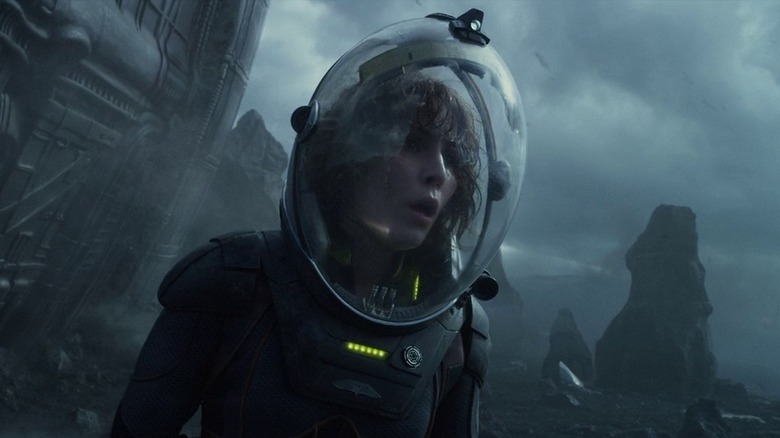
If you thought the budget for "Alien: Covenant" was high, just wait until you see what Ridley Scott originally wanted for "Prometheus." There were many reasons to be excited over Scott's grand return to the "Alien" franchise, but there were conflicts when he came aboard. Reportedly, Scott went to 20th Century Fox and asked for $250 million for the sci-fi/horror prequel. If it was granted, that easily would've made the film the most expensive horror movie ever made.
Of course, Fox pushed back, reluctant in part due to the film also carrying a more restrictive R rating. Eventually, the budget was brought down to roughly $130 million. And a good chunk of that went into ensuring the film looked great in 3D.
"Prometheus" came out in 2012 in the aftermath of "Avatar" changing the game and becoming the highest-grossing movie of all time, in part thanks to the added ticket price associated with 3D films. An extra $10 million went into the budget to ensure "Prometheus" looked good in three dimensions.
4. The Wolfman - $150 million
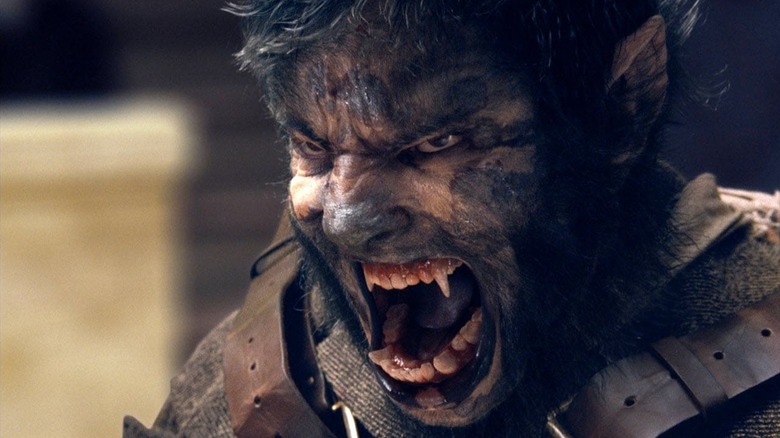
It may sound odd that Universal would invest $150 million in a "Wolfman" movie in 2010. It turns out that sort of happened by accident, and the initial plan wasn't for "The Wolfman" to wind up as one of the most expensive horror movies of all time.
The story is simple: Lawrence (Benicio del Toro) learns of his brother's death and returns to England to pay respects. While there, he gets bitten by a werewolf, transforming him into the titular Wolfman. It all sounds fairly straightforward, but "The Wolfman" is the film that just couldn't catch a break. Mark Romanek was originally attached to direct, but he dropped out and was eventually replaced with Joe Johnston. The movie was also initially only supposed to cost $85 million to make, but extensive reshoots quickly made that number balloon.
A major component of the reshoots was to alter the design of the Wolfman. During initial production, the Wolfman stood on its two hind legs, but they altered it to where he was more animalistic and walked on four legs. Apparently, a fight scene between the Wolfman and another werewolf also got thrown into the mix. Universal even redid Danny Elfman's original score by bringing in Paul Haslinger to do something different. Even after all that, the studio still went with what Elfman did. All this confusion and going back and forth inevitably led to a bloated budget where it would be near-impossible for it to recoup its losses. Behind-the-scenes drama on film productions are sometimes scarier than any horror movie.
3. I Am Legend - $150 million
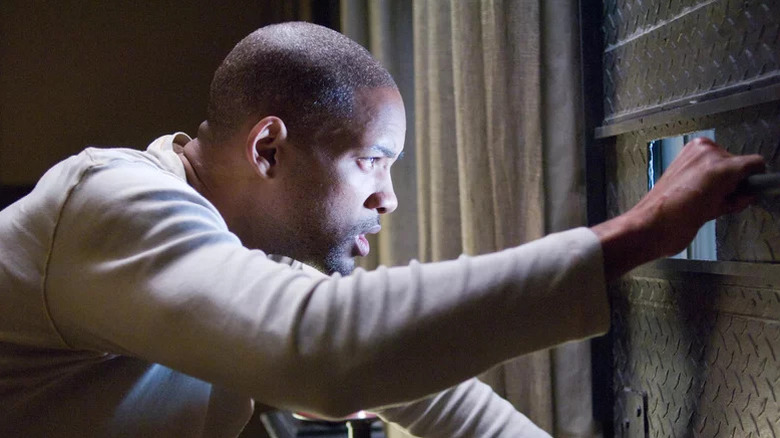
Reshoots can be the bane of any film production's existence. On the day a certain scene's shot, everything may look fine, but then the director realizes later that something just seems off. Even adding a few extra days of filming can add millions to a movie's budget, and "I Am Legend" is one of the more infamous examples of this.
The classic Richard Matheson story has been adapted several times, including 2007's "I Am Legend." Dr. Robert Neville (Will Smith) is one of the few remaining humans after a virus wiped out most of humanity and turned most everyone else into nightmarish mutants. That's already a lot of components that add up, from Smith's salary to getting the look of the mutants just right. The infected were originally supposed to be brought to life using prosthetics, which actually didn't look half bad. But director Francis Lawrence wanted to change the look in post-production using CGI, which likely increased the cost.
Easily, the most expensive single sequence in "I Am Legend" was the evacuation flashback on the Brooklyn Bridge, which required 1,000 extras and a lot of expensive vehicles on hand. When it's all said and done, "I Am Legend" carried a price tag of $150 million but still managed to earn $585 million at the box office. It was enough to make "I Am Legend 2" a possibility, but hopefully, the team has learned how to scale things back.
2. Van Helsing - $160 million
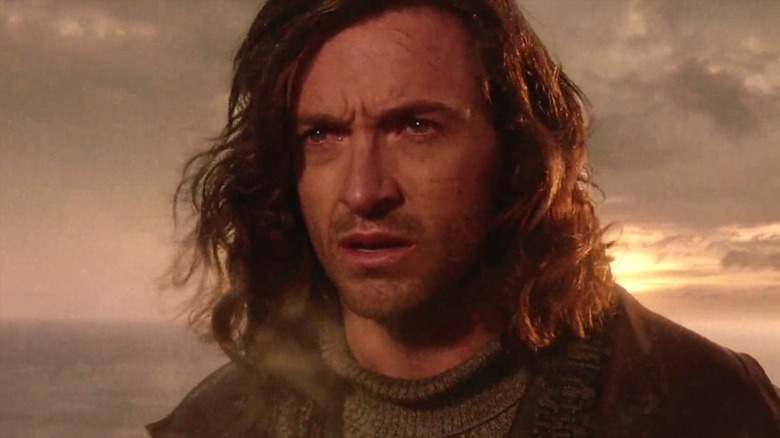
The year is 2004. Hugh Jackman and Kate Beckinsale are incredibly bankable stars riding high on the success of "X-Men" and "Underworld," respectively. Universal Pictures saw the potential with 1999's "The Mummy" to take its classic monsters and put them in a more action-oriented setting. Making Van Helsing a butt-kicking monster hunter feels like a no-brainer, yet the 2004 flick feels like a total letdown.
The film carries a 24% critics' rating on Rotten Tomatoes and failed to ignite any kind of monster crossover franchise, which was clearly the hope. The disappointing returns may not have been that bad if the film didn't cost around $160 million to make. And that's with director Stephen Sommers waving his initial upfront fee and shooting in Czech Republic as opposed to more expensive areas.
Despite all that, "Van Helsing" is reliant on extensive CGI. And considering this was the early 2000s, it doesn't exactly look great. Sure, great CGI exists from the time, but it just didn't come into play here for whatever reason. Between "Van Helsing" and "The Mummy," Universal keeps trying to invest in these big Universal monster stories when the key perhaps lies in aiming a little lower. 2020's "The Invisible Man" is a great reintroduction of the character and only cost $7 million, so sometimes, less truly is more.
1. World War Z - $190 million
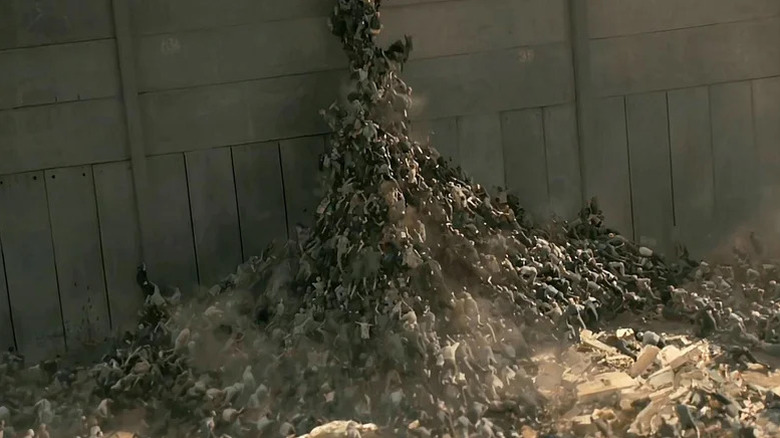
After reading the "World War Z" book, you probably wouldn't think it would need to cost close to $200 million to turn into a film. The book's mostly an oral history from different perspectives of a zombie outbreak plaguing the planet. But the movie turns that basic premise into a full-scale action thriller that once again had an over-inflated budget due to reshoots.
"World War Z" originally went into production with a budget of $125 million. It's a lot for a horror movie, but most horror projects don't have the kind of global scale as seen here. Once production wrapped, the team realized the story, particularly the ending, just didn't work. Pretty much everything from when Gerry (Brad Pitt) leaves Jerusalem had to be swapped out, and in the movie's original ending, no vaccine for the zombie virus is found. It was a massive undertaking, with both Damon Lindelof and Drew Goddard contributing to the script changes.
Were the changes that brought the budget to $190 million worth it? That probably depends on who you ask. The film garnered an okay 67% critics' score on Rotten Tomatoes. But the film still made $540 million at the box office. That was enough to create sequel talk for a little bit, but "World War Z 2" is now officially dead and buried for good. Maybe Paramount doesn't want to run the risk of paying even more the second time around.