

House Of The Dragon Season 3 Review: Bigger And Darker - With Mixed Results
It ain't easy waging a civil war between a dynastic family that just so happens to wield dragons of mass destruction, but you know what's even more difficult? Actually adapting a story as sprawling and complex and morally grey as this, especially for a fanbase still reeling from the way that "Game of Thrones" came to a controversial end. "House of the Dragon" showrunner and co-creator Ryan Condal learned this the hard way. Despite a very promising first season that frequently elevated its source material, the rather divisive sophomore effort brought us crashing back down to earth ... to the point that even George R.R. Martin, author of the original novel "Fire & Blood," went public with his misgivings for that season and beyond.
So how best to move forward with a legacy as complicated and contradictory as this? Through the first four episodes made available to review (out of eight total), this subtext becomes one of the main themes the flawed figures at the heart of the show wrestle with more than ever before. Ultimately, "House of the Dragon" Season 3 is less a response to its biggest criticisms and more a doubling down on its own unique identity — a mixed-bag approach that will please some fans while further inflaming others.
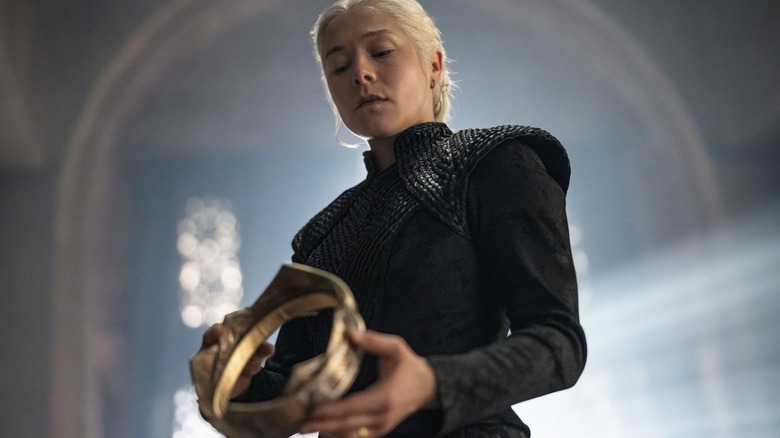
For better or worse, this finally feels like the turning point where "House of the Dragon" plants its flag and unapologetically sets its course in service of Condal's vision. As a darker exploration of Rhaenyra Targaryen's (Emma D'Arcy) all-consuming quest for the Iron Throne and the true costs of rulership, the season soars and evokes the best of the franchise. As an adaptation, well, it's fair to say diehards may find themselves understanding exactly where Martin was coming from.
House of the Dragon puts spectacle at the forefront early on, but bigger doesn't mean better
Just how different does "House of the Dragon" feel in Season 3, you ask? It's made abundantly clear as soon as the freshly-reworked opening credits, featuring a subtle new arrangement of the classic "Game of Thrones" theme by composer Ramin Djawadi — who will undoubtedly go down as one of the season's MVPs with his dizzying mix of old and new motifs — and imagery that emphasizes the fabric of the Targaryen empire literally being torn apart in fire and blood. As for the plot itself, the premiere wastes no time making up for Season 2's somewhat anticlimactic end and sets the stage for the long-awaited battle(s) we were previously denied.
This is a bolder and more decisive take on Westeros, Ryan Condal and his writing team seem to be announcing, and viewers can expect the action in the early going to follow suit. The initial setback we face, however, stems directly from that understandable (but misguided) choice. Considering how the second season was kneecapped by pacing flaws and having a proper finale lopped off at the end, that issue can't help but follow "House of the Dragon" from one season to the next.
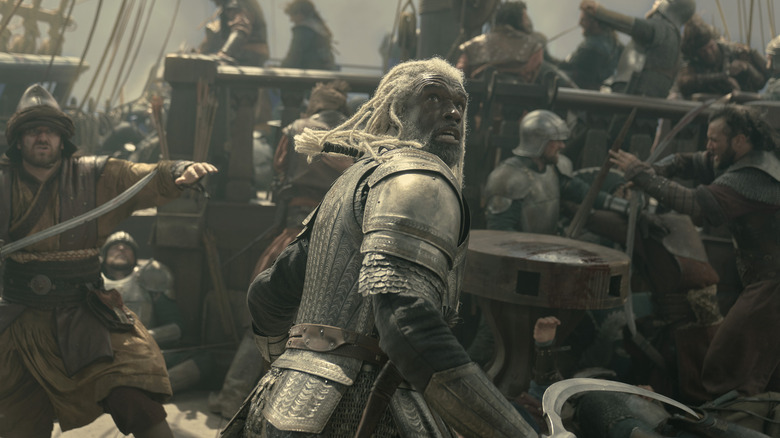
It's no spoiler to say the first two episodes inevitably deal with the blockbuster-sized Battle of the Gullet and its aftermath. The only problem is that the tension and narrative stakes are almost nowhere to be found. It's one thing to stage easily the most technically-impressive battle sequence in "Game of Thrones" history. But putting supporting players we hardly care about in mortal danger, amid a spectacle that mostly feels like action for the sake of it, simply isn't a winning proposition. This is, by far, the biggest letdown.
Season 3 finally embraces its central conflict -- once the story gets going
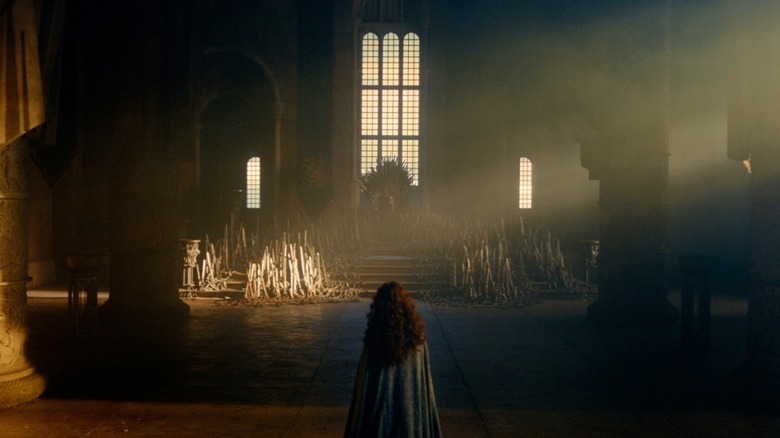
It stands to reason, then, that the structural disarray from Season 2 means that this next chapter of "House of the Dragon" has to begin with one hand tied behind its back. Episode 3 is the one that feels like an actual premiere, effectively setting the table for the new status quo that sees the conflict finally reach a boiling point ... if only this inciting action didn't go down almost a third of the way through the season. Although revisiting the show down the line ought to alleviate this shortcoming and help make the wonkiness between seasons go down much more smoothly — when every episode will be available and viewers are free to watch at their own pace — there's no ignoring the dragon in the room here and now. The writers clearly weren't able to actually map this out as they intended, and that's to the detriment of the overall story.
But once these nagging leftovers are dealt with, the real fun of "House of the Dragon" begins. After years of complaints about far too much passive behavior to avoid war at all costs, we dig deep into the fracturing psyches of both Rhaenyra and Alicent Hightower (Olivia Cooke). The two leaders truly get their hands dirty (sometimes quite literally) and make decisions that leave them teetering on the point of no return. For those concerned about how this show might pivot to reflect the darker, more disturbing aspects of George R.R. Martin's "Fire & Blood," the creative team find new and inventive ways to lead these characters closer to the abyss.
Make no mistake: This is a bloodbath of epic proportions.
Emma D'Arcy is Emmy-worthy as Rhaenyra Targaryen, the biggest highlight of House of the Dragon
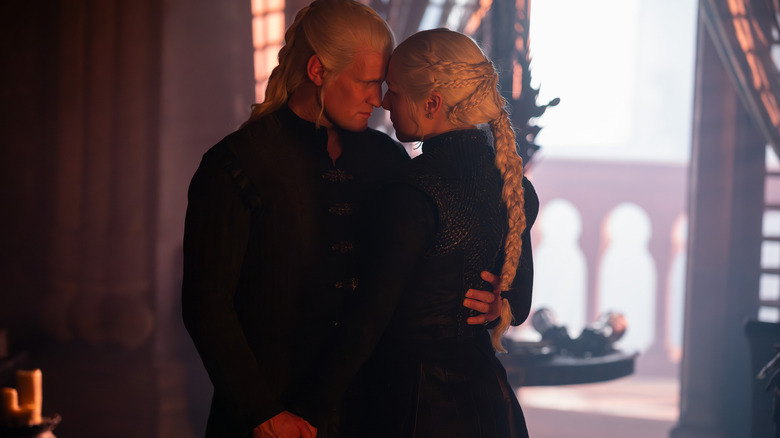
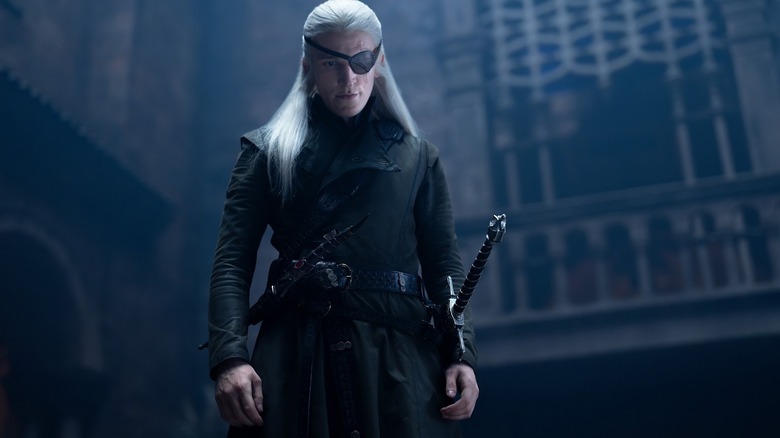
In true "Game of Thrones" fashion, the epic world-building and operatic stakes continue to be the main appeal behind "House of the Dragon" — but one crucial element stands above the rest. To its credit, Season 3 actually expands on its already-formidable ensemble and somehow makes enough room to service the most significant players on the board. Admittedly, character has never been a key strength of this series. But familiar faces like Matt Smith as the ever-stubborn Daemon Targaryen, Ewan Mitchell's one-eyed Aemond, Steve Toussaint as Corlys Velaryon, and Tom Glynn-Carney's deposed King Aegon all imbue these archetypes with flavor and charisma to spare. New additions James Norton (as Ormund Hightower), Dan Fogler (Ser Torrhen Manderly), and Annie Shapero (Aly Blackwood) show plenty of potential to become new fan-favorites. Talent fills every nook and cranny of this cast.
But let it be known that this season belongs to Emma D'Arcy. The actor has remained a standout since their first appearance as adult Rhaenyra partway through the first season, but it's here where their ferocity, brittle emotions, and shear strength of craft fully comes to the fore. The would-be Queen has spent all this time desperately grasping for what's rightfully hers, but Season 3 suggests that the possibility of actually achieving this goal might be an even worse fate. Though the writing takes some leaps in logic to get there, D'Arcy keeps audiences completely invested and able to track every step of Rhaenyra's tumultuous journey. With a scene partner as brilliant as Olivia Cooke to frequently bounce off of, D'Arcy's Emmy-worthy performance further emphasizes that building this show around both stars was the only way to go.
House of the Dragon Season 3 is a mixed bag so far, but shows room for improvement
The unenviable task of reviewing half a season of television means that any conclusions drawn here will necessarily be incomplete, but "House of the Dragon" understands this essential truth more than most: Nothing is ever ideal. Those behind the HBO series would surely have preferred a far less bumpy road to this point, a slightly more forgiving fandom, and certainly no falling-out whatsoever between the showrunner and the author who created this whole world in the first place. That's not the reality we live in, however, and that leaves us to sift through these imperfections as best we can.
The third season of "House of the Dragon" is undeniably imperfect, but is that the final word? These first four episodes might as well be an encapsulation of the series as a whole – disjointed, thrilling and maddening at any given moment, yet inescapably compelling. Where this ranks among the prior two seasons is impossible to say for now, but there's reason to believe that the latter half can and will solidify this as the show's most distinctive effort to date. Unlike when "Game of Thrones" showrunners David Benioff and D.B. Weiss were forced to go off-script and come up with their own ending (albeit with knowledge of George R.R. Martin's plans), these circumstances more naturally lend themselves to Ryan Condal's interpretation of events.
Thus far, at least, this installment of "House of the Dragon" is a tale of two seasons. How it ends should be worth sticking around to see. War is messy, after all, so why shouldn't this be?
/Film Rating: 6 out of 10
"House of the Dragon" Season 3 premieres on HBO and HBO Max on June 21, 2026.