

Masters Of The Universe Is So Much More Than A Nostalgia Play – And Some People Will Miss The Message Entirely
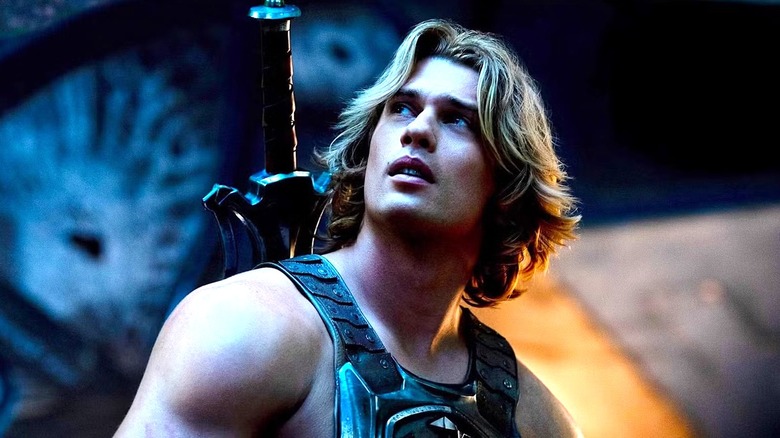
Given Hollywood's current obsession with mining beloved IP from over four decades ago in an attempt to capitalize on an existing fanbase with (hopefully) enough disposable income to stuff the box office, it's hard not to be cynical about the current blockbuster du jour. The fact that independent horror movies like "Obsession" and "Backrooms" managed to take down a Star War certainly has folks gleefully cheering for the death of prioritized nostalgia, which — to be clear — I welcome with open arms. However, when it comes to a film like "Masters of the Universe," the long-awaited live-action adaptation of all things He-Man, I fear that the bloodlust for the death of nostalgia is overshadowing the important message at the film's center.
The initial reactions from critics following the premiere of "Masters of the Universe" were overwhelmingly positive, and it's currently Certified Fresh on Rotten Tomatoes, but there are still those who have immediately painted the film with the same "uninspired cash grab" brush reserved for other films based on recognizable IP. Because when we look at the casting of Nicholas Galitzine as Prince Adam/He-Man and the history of director Travis Knight, it becomes obvious that the cynicism shouldn't apply here.
"Barbie" is no longer the only movie to break the rules when it comes to toy movies, because if you accept in good faith that the themes of "Masters of the Universe" are being presented in earnest, it's impossible not to add Mattel's other flagship character to the roster. The way "Barbie" unpacked the unrealistic standards of womanhood through pop culture's most controversial role model for women, "Masters of the Universe" does the same for masculinity. But if you assume the film is not being sincere, you'll miss it.
Masters of the Universe is about empathy
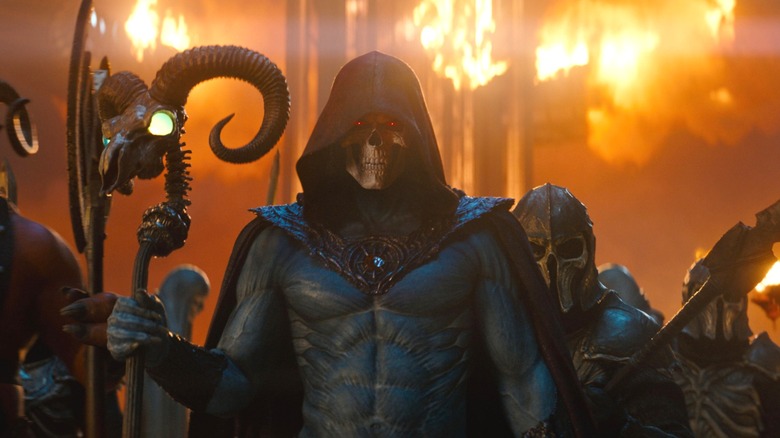
During a conversation I had with director Travis Knight, he emphasized that the core of "Masters of the Universe" is believing we can be better versions of ourselves, and helping the people around us get there, too. "We are telling a story about these men, and they're at various different places in their journey, and they were raised [with] different generational perspectives," Knight told me. "I wanted to make sure that as a filmmaker, even anything I disagree with, that I approach these things with empathy, that I try to understand where these people are coming from."
Knight has firsthand experience in this arena. He's a filmmaker and animator, but he's also the son of the man who founded the athletics empire Nike. He's spoken about how he'd much rather "play with dolls" than play sports, which gives him a fascinating perspective on the spectrum of masculinity. It's clearly on display in "Masters of the Universe," where men have different views on what determines acceptable masculine behavior, and realize there is no one-size-fits-all approach to dealing with "bad guys." Well-meaning platitudes like "fight with your words, not with your fists" can only go so far when you're dealing with a supernatural force like Skeletor who has no interest in talking things through, and punching everything instead of regulating your emotions is a recipe for self-destruction.
"You've got Duncan (Idris Elba), and you've got Adam, who look at the world very, very differently, but they affect each other. They help each other," Knight explains. "They're not perfect by the end of the movie, but they've grown because of their relationship and their openness to each other. And I think that's a beautiful thing. I hope that more dudes can do that."
Nicholas Galitzine is the perfect He-Man
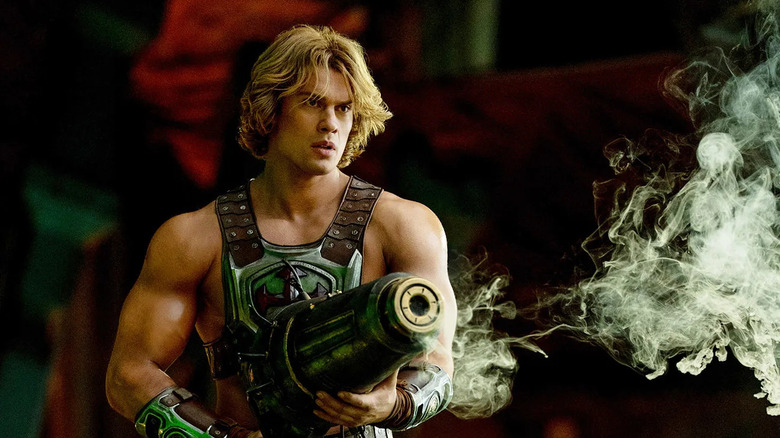
There's also a metatextual layer to casting Nicholas Galitzine as Prince Adam/He-Man, as the English actor has portrayed just about every "type" of man. "Purple Hearts" saw him play a Marine, "Cinderella" made him a fairytale prince, "Red, White, & Royal Blue" made him a gay royal, "The Craft: Legacy," gave him the space to play a closeted bisexual boy overcompensating with misogynistic behavior, "Bottoms" allowed him to satarize toxic football players, and "The Idea of You" turned him into a pop icon who falls in love with a woman 15 years (or so) his senior. His entire filmography is an exploration of masculinity, and he channeled that into this film.
"Masculinity, femininity by nature, these are things that are not singular and all-consuming," Galitzine told me during our interview. "As people, we all contain these multitudes and light and shade. I think that what Adam really learns is that he obviously aspires to be these muscle-bound heroes that he grew up admiring, but that they don't really solve, certainly, a lot of the issues in his life." Galitzine thinks that Adam's true superpower is being able to empathize with people, even if you don't always see eye-to-eye with them, to find a way to collaborate. "Creating that nuance is something I've always been really fascinated in pursuing throughout my career," he says.
Assuming that there's nothing of greater substance to be found in this live-action He-Man movie than surface-level nostalgia is not only a disingenuous read of the film, but also of the people who brought it to life. Engaging with explorations of masculinity is not always fun, but the patriarchy hurts everyone, and "Masters of the Universe" successfully acknowledges that while giving the audience a good time.
"Masters of the Universe" is in theaters now.