

10 Best '70s Movies Nobody Talks About Anymore

Coming off the rapidly changing social mores prevalent in the 1960s, the 1970s felt like a generally darker and more cynical decade in terms of artistic output. A lot of the best movies of the 1970s featured iconic antiheroes and underdogs against overwhelming opposition, subverting expectations around genres. The decade also saw an increase in graphic content on-screen, most saliently demonstrated within horror and crime movies throughout the '70s. Additionally, foreign cinema become more readily available to wider audiences, expanding and influencing the industry.
With so many memorable movies released throughout the '70s, there are countless flicks that have fallen through the cracks of our collective consciousness. This isn't an indictment on their individual quality but an observation that the passage of time inevitably causes movies to fade into obscurity like any other piece of pop culture. With that in mind, we're highlighting movies that need more modern love or a reappraisal.
These are the 10 best '70s movies nobody talks about anymore, each deserving wider recognition among audiences today.
Silent Running
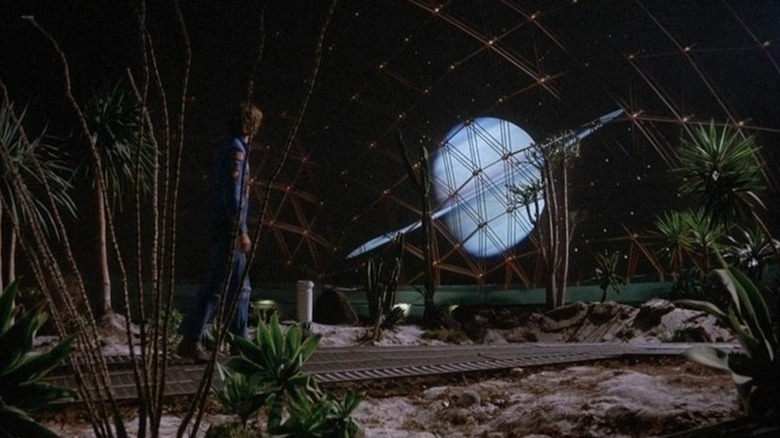
Coming off 1968's "2001: A Space Odyssey," headier sci-fi films brought their own philosophical takes to the genre in '70s. Among the most underrated of these is 1972's "Silent Running," which takes place in a future where Earth is unable to support plant life. The remaining plants are grown in biomes in large spaceships around Saturn, cared for by botanist Freeman Lowell (Bruce Dern). When Freeman learns that the biomes are set to be destroyed, he fiercely defends them, killing his crew mates and trying to maintain his precious plants.
"Silent Running" has the lone antihero against a corrupt system narrative that so many '70s movies memorably employed, with a solitary spacefaring backdrop. As such, Dern carries much of the movie on his own, bringing a wild-eyed intensity to his performance. This approach sells the mounting desperation experienced by Freeman, instilling a deep-seated urgency that elevates the whole movie. A moody film perfectly poised to make a lifelong sci-fi fan of anyone, "Silent Running" deserves far more credit for its proto-environmentalist themes and heightened stakes.
The Long Goodbye
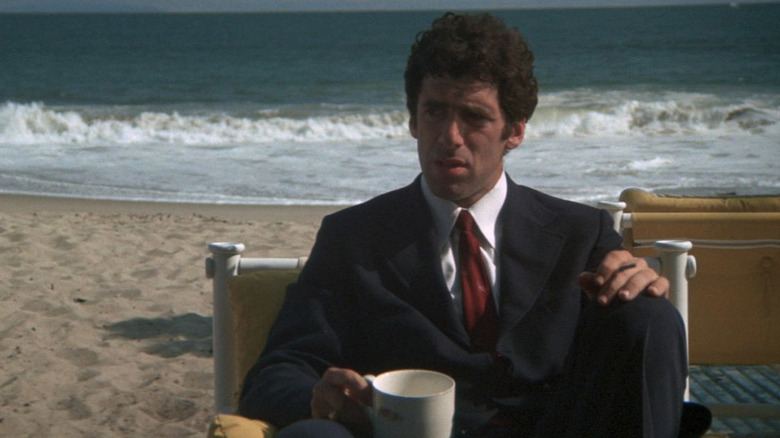
Author Raymond Chandler's pulp private detective hero Philip Marlowe had been depicted on the silver screen by everyone from Humphrey Bogart to James Garner. Elliott Gould puts his own deconstructive spin on the world-weary detective in 1973's "The Long Goodbye," directed by Robert Altman. Marlowe finds himself embroiled in a case involving his close friend Terry Lennox (Jim Bouton) that upends his life. As Marlowe tries to get to the bottom of what happened, he becomes involved with shady figures linked to Lennox's dealings in Los Angeles.
Reuniting Gould and Altman after their work on the seminal "M*A*S*H," "The Long Goodbye" features the director's usual penchant for postmodern storytelling. This time, the entire noir genre is ripe for dissection, guided along by Gould's unkemptly cool performance as Marlowe, playing him as a hardboiled man out of time. In this neo-noir story, the mystery is just the set dressing, with the movie functioning best as a character study of Marlowe within contemporary Los Angeles. Humphrey Bogart's legacy made Altman hesitant to tackle "The Long Goodbye," but the movie retains the spirit of the pulp protagonist while placing him in a modern adventure.
Battles Without Honor and Humanity
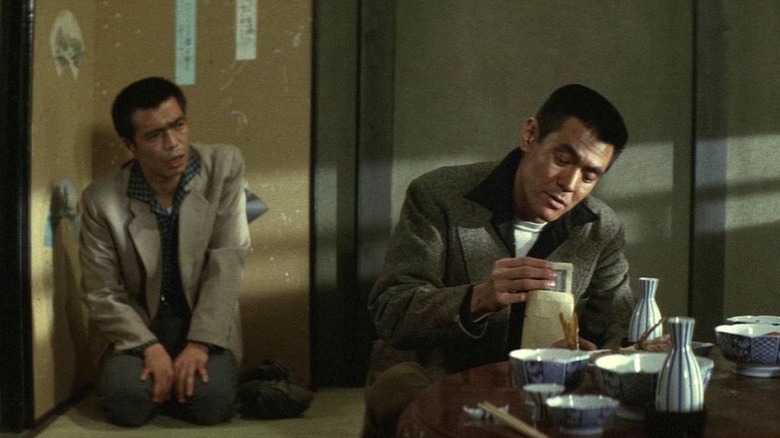
Yakuza movies took a much more morally ambiguous direction in the '70s, far from the noble crooks that populated the genre in prior decades. Among the most prominent, at least in Japan, is "Battles Without Honor and Humanity," which spawned four direct sequels released across two years. The 1973 original movie follows yakuza enforcer Shozo Hirono (Bunta Sugawara) from postwar Japan in 1946 to the country's economic recovery in the '50s. As Hirono rises through the ranks of the Yamamori yakuza clan, the syndicate faces internal strife heightened by its increased drug trafficking activities.
"Battles Without Honor and Humanity" offers an expansive saga chronicling organized crime throughout Japan's 20th century history. This is apparent right from the first movie and its roughly decade-long narrative, with the sequels only adding to the story's sheer breadth. In contrast to other Japanese crime movies of the era, there is a verisimilitude to the presentation, almost presented like a true crime documentary. One of the best Japanese action movies of all time, "Battles Without Honor and Humanity" lives up to its title with a bleak exploration of the country's criminal underworld.
Don't Look Now
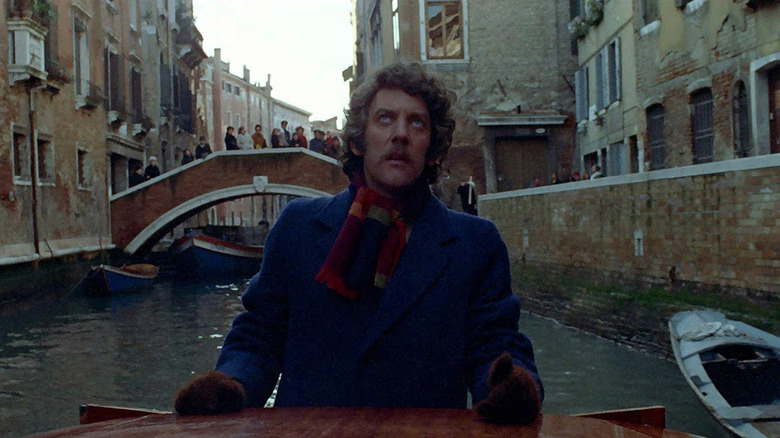
Nicolas Roeg directed the delightfully surreal 1973 thriller "Don't Look Now," starring Julie Christie and Donald Sutherland as married couple Laura and John Baxter. Grieving the recent accidental death of their young daughter, the Baxters travel to Venice when John accepts a job to restore an ancient church. After arriving in the Italian city, Laura and John receive disturbing messages that John is in danger while a serial killer remains at large in the area. This comes as John begins experiencing strange visions, including a diminutive figure walking around Venice in an identical red raincoat worn by his daughter during her death.
"Don't Look Now" plays out like a slow-burn supernatural thriller, but not in the ways one might expect as it progresses. At once, the movie is a meditation on grief but also about the dangers of how being bound to a traumatic past can blind one to perils of the future. Sutherland and Christie play those themes beautifully, with the movie gradually becoming more unsettling as its bloody truth comes into focus. One of the best horror movies about grief, "Don't Look Now" is a moody mystery with an unforgettable twist ending that'll stick with viewers.
Deep Red
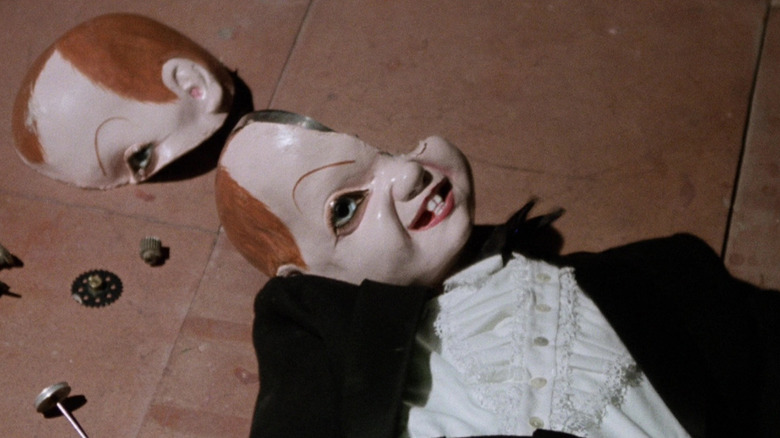
Before helming giallo classics like "Suspiria" and "Tenebrae," Italian filmmaker Dario Argento directed and co-wrote the 1975 slasher "Deep Red." The movie features a black-gloved figure brutally murdering people around an Italian city, starting with a psychic who senses uncontrollably violent thoughts. This murder is witnessed by visiting pianist Marcus Daly (David Hemmings), who finds himself at the center of a gruesome killing spree by the gloved perpetrator. As Marcus and the police try to identify the serial killer, they discover it's linked to the unresolved trauma of a deranged mother and son.
Ranked among Dario Argento's best movies, "Deep Red" tends to get largely overshadowed by his later work in the genre. The movie contains many of Argento's usual themes and certainly features his signature flair for sanguine on-screen violence. This includes some of the most over-the-top killings Argento has ever staged, with a particularly atmospheric emphasis on the mentally scarring effects of violence. Deserving of wider recognition in Argento's extensive filmography, "Deep Red" is another giallo triumph from Italy's master of the macabre.
Rolling Thunder
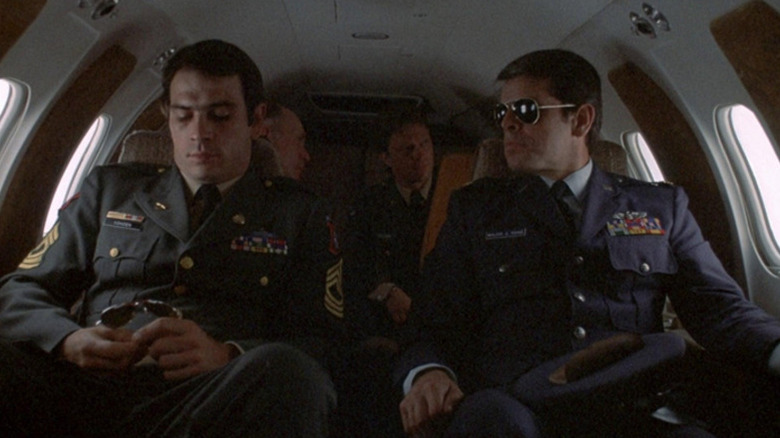
With the nation still reeling from the divisive trauma of the Vietnam War, the 1977 movie "Rolling Thunder" used these elements as its backdrop. The movie opens with Charles Rane (William Devane) returning home to Texas after a lengthy imprisonment in Vietnam, with his wife and son having moved on without him. Rane is attacked by a local gang for the money he received as part of his hero's welcome, with Rane viciously maimed and his wife and son murdered. Teaming up with his old war buddy Johnny Vohden (Tommy Lee Jones), Rane sets out for revenge, heading south of the border for a final showdown.
Running at a tight 100 minutes, "Rolling Thunder" is one of those movies that never lets up the gas once it gets moving. Guiding audiences through this brutal odyssey are laser-focused performances from Devane and Jones, ready to answer the call to arms on their own terms. And the violence does absolutely get brutal throughout the movie, right from Rane getting graphically tortured in the opening home invasion sequence. A cathartic look at a community in transition in the aftermath of the Vietnam War, "Rolling Thunder" packs a punch nearly 50 years later.
The Driver
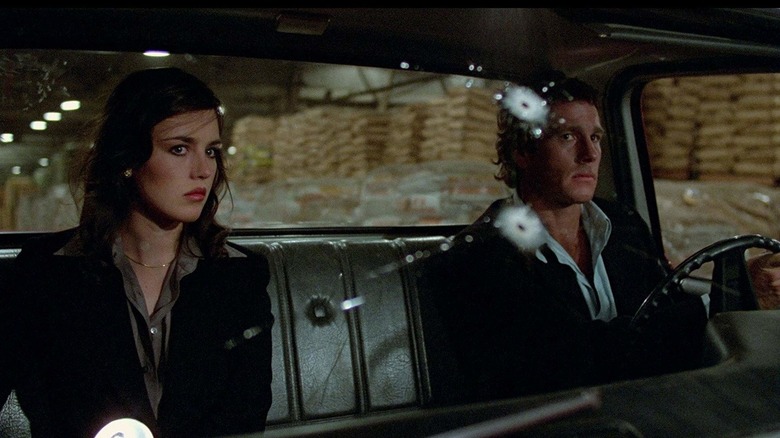
Filmmaker Walter Hill really hit his stride in the '70s, helming projects like "Hard Times" and "The Warriors" while producing "Alien." Hill's most underrated directorial effort from the decade is 1978's "The Driver," a neo-noir crime film which he also wrote. The movie's protagonist is a nameless driver, played by Ryan O'Neal, who uses his unmatched expertise behind the wheel to serve as a getaway driver around Los Angeles. The driver knowingly accepts a sting job set up by an obsessive police detective (Bruce Dern), seeing the gig as another challenge to demonstrate his automotive prowess.
Hill brings an engagingly stylized look to Los Angeles, similar to his later depiction of New York City in "The Warriors," making it moodily suited to become a neo-noir playground. Fitting this approach are main characters who are more archetypes than figures with full, nuanced arcs throughout the main narrative. Given the premise, the driving sequences are excitingly staged, including a perfect climactic car duel filmed in a single take. Walter Hill's stripped-down crime thriller classic, "The Driver" deserves as much recognition as much of his other work.
Vengeance Is Mine (1979)
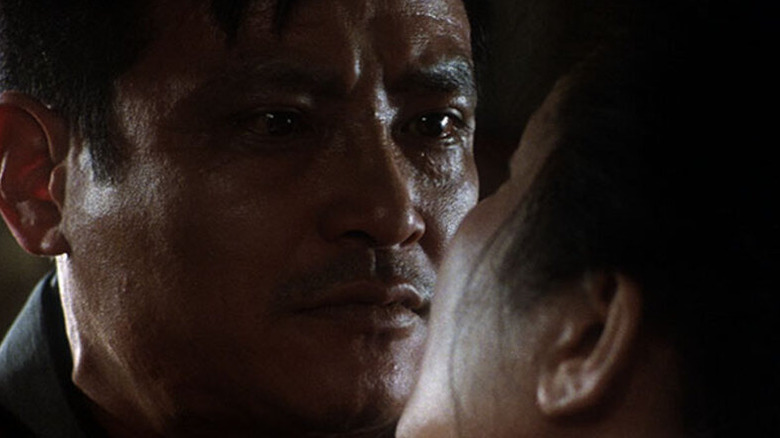
There are many excellent Japanese horror movies, with the '70s seeing the release of "House" and "The Vampire Doll," but one thriller not mentioned nearly enough is "Vengeance Is Mine." Released in 1979, the movie dramatizes the gruesome exploits of real-life serial killer Akira Nishiguchi, who terrorized 1963 Japan, albeit changing the murderer's name to Iwao Enokizu for the movie. Played by Ken Ogata, the movie opens with Enokizu's capture, with his life told in a series of flashbacks dating back to his violent childhood. These flashbacks include murders committed by Enokizu, leading to his eventual arrest after he's noticed by a woman (Toshie Negishi) from his past.
In a way, "Vengeance Is Mine" feels like the unofficial template for "Henry: Portrait of a Serial Killer" seven years later. Both movies offer a grounded and unflinching look at multiple murderers and the tragic stories of those caught in their orbit. In contrast, Shōhei Imamura offers more dark humor and a clear visual style to the Japanese thriller, including an ambiguous final scene. Certainly not for the faint of heart, "Vengeance Is Mine" is a haunting crime story from the perspective of its remorseless killer.
The China Syndrome
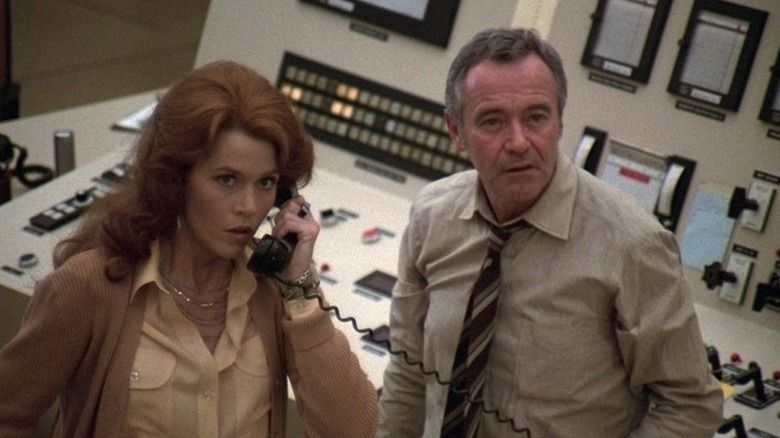
Before "Chernobyl," there was "The China Syndrome," which revolved around anxieties concerning the proliferation of domestic nuclear power. The movie has California nuclear power plant supervisor Jack Godell (Jack Lemmon) notice warning signs of a complete meltdown due to faulty water pumps. This incident happens to be captured by visiting journalist Kimberly Wells (Jane Fonda) and her cameraman Richard Adams (Michael Douglas). However, when Godell tries to warn his superiors and Wells tries to broadcast her report, both are stonewalled to keep the nuclear plant resuming activities as planned.
"The China Syndrome" is part conspiracy thriller and part disaster movie boasting three lead actors at the height of their respective powers. The movie's stakes play as something of a slow-burn before matters turn inescapably desperate in the face of a bureaucratic cover-up. Lemmon is particularly good, playing a specialist who is painfully aware of the full implications of the impending crisis. One of the best '70s disaster movies, "The China Syndrome" brings a classier approach to the genre than "The Poseidon Adventure" or "The Towering Inferno."
...And Justice for All
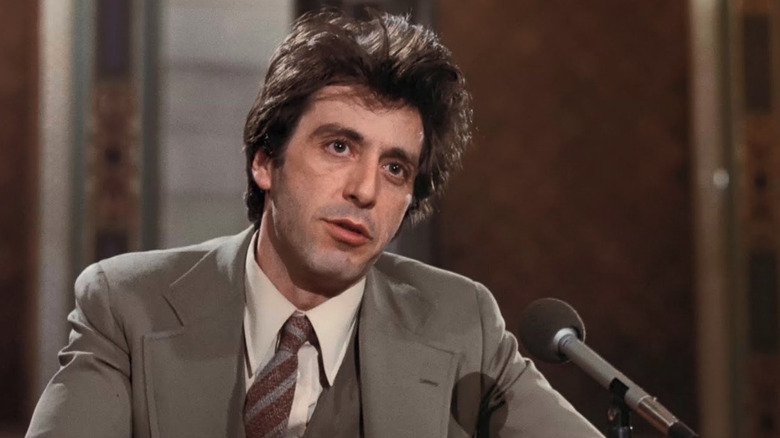
Al Pacino was nominated for Academy Awards for five different performances throughout the '70s, the last being for "...And Justice for All." Pacino stars as Baltimore criminal defense attorney Arthur Kirkland in the 1979 courtroom drama, perpetually frustrated by the flawed legal system. Kirkland is strong-armed into defending corrupt Judge Henry T. Fleming (John Forsythe), who is accused of committing sexual assault. With his career on the line, Kirkland weighs between formulating a legal defense or doing what he knows is right.
As far as the best Al Pacino screaming scenes, the climactic courtroom scene in "...And Justice for All" ranks highly across the celebrated actor's extensive career. Observations about Pacino's penchant for passionate performances aside, the movie is one of the best legal dramas of the '70s. The courtroom outcome isn't so much the point as it is the character study surrounding Pacino's protagonist and the moral conundrum that he finds himself in. Another fantastic showcase for Pacino that proves he ruled the silver screen's dramatic pieces in the '70s, "...And Justice for All" is an emotionally searing courtroom picture.