

Backrooms And Obsession Are Very Different Horror Movies (And It's Okay To Like Both)
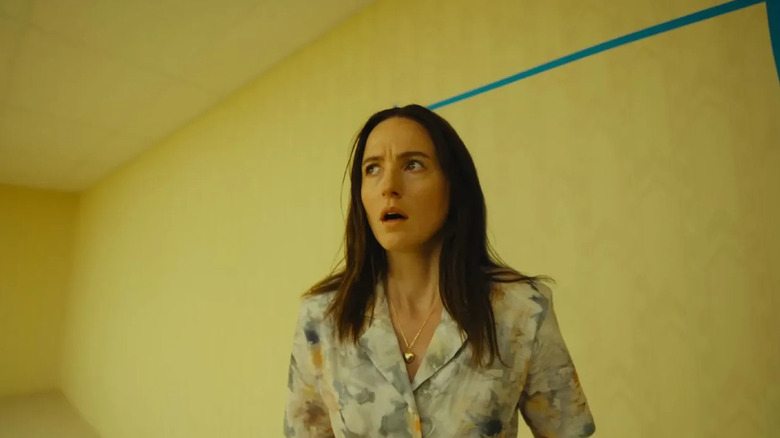
Horror movies are having a moment. Then again, it seems like horror movies are always having a moment: horror remains one of the most popular, dependable genres. I won't get into all the reasons for this, but I think it boils down to the fact that people like to be scared, and that the genre itself is so malleable — you can bend and warp and twist almost anything into a horror story. I suppose you could also theorize that horror is thriving right now because the real world has become so increasingly horrifying, but I'll sidestep that because I don't want to make everyone depressed.
Right now, two horror movies are maintaining dominance in our pop culture consciousness. One is "Obsession," Curry Barker's wonderfully twisted riff on WW Jacobs' "The Monkey's Paw." That film has become a smash hit at the box office, defying all expectations by drawing in more audience members in its second week in theaters, something that's pretty much unheard of. The other horror movie on everyone's minds is "Backrooms," Kane Parsons' liminal nightmare based on his webseries. The box office numbers aren't in for "Backrooms" yet, but all indications are that it's going to be big.
"Obsession" and "Backrooms" have a lot in common. Both of their directors are young newcomers (Barker is 26 while Parsons is 20) who taught themselves filmmaking via YouTube videos. Neither film is a "major" studio release and they're both low-budget affairs. But "Possession" and "Backrooms" are also very different, and I think that's an important detail. Fans are competitive by nature, and I'm already seeing hints of the "Obsession" vs "Backrooms" war to come. The first question I got from someone who learned I'd seen both movies was, "Which was better?" That question is almost impossible to answer.
The horror of Obsession and Backrooms is quite different

In my humble opinion, both "Obsession" and "Backrooms" are excellent films. But despite all the things they have in common, they're much different movies in terms of tone, themes, and what their overall goals are. Between the two films, I'd say that "Obsession" is more "fun." I put fun in quotes there because "Obsession" is actually quite disturbing and unsettling. But there's a macabre sense of humor to the film that enhances the horror. Barker, who has a background in comedy, finds absurdity in the film's scenarios, and you can't help but laugh at some of the nightmarish stuff unfolding.
"Backrooms," in contrast, has almost no sense of humor. Between the two movies, it feels like the more existential. While "Obsession" grows increasingly unhinged from one scene to the next, building towards shocking bursts of horror, "Backrooms" moves at a slower pace, building dread and discomfort. It gets under your skin in a way "Obsession" does not. I've seen some call "Obsession" a "crowd-pleaser," and while that might seem like an odd distinction for such a dark movie, I think it's accurate. Watching "Obsession" with a packed audience and feeding off the collective shock sweeping through the room makes the experience extra enjoyable.
The differences between Obsession and Backrooms are what makes them each so good
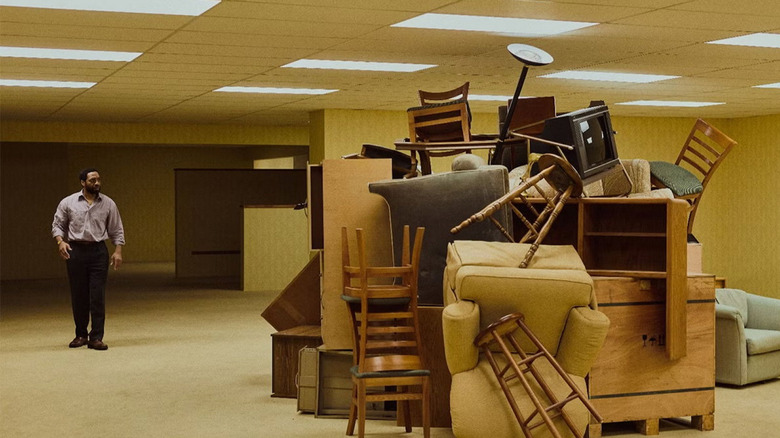
"Backrooms" plays much differently. While there are traditional scares layered throughout the film, the horror from "Backrooms" comes from an almost intangible place. "Obsession" shocks us for obvious reasons, whereas "Backrooms" makes us feel uncomfortable for reasons we can't quite describe.
"Obsession" dabbles in the supernatural, presenting us with a "be careful what you wish for" story mixed with the prevailing myth of the "nice guy" who is anything but. The supernatural, while abnormal by definition, still seems somehow rooted in our own reality. The demonic magic at work in "Obsession" is something that we can "explain," at least on some familiar level. "Backrooms," though, borders on tipping over into cosmic horror territory. The Backrooms themselves are literally impossible spaces; they defy all logic and reason and explanation. They have no basis in our understanding of reality.
And here's the thing: Both of these approaches are great! Like I said, horror is a malleable genre. There's room to do so many different things within a horror movie classification, and that's something worth celebrating, not turning into some kind of contest. You may prefer one type of horror to another, but as far as I'm concerned, the more flavors of horror the better. "Obsession" and "Backrooms" aren't in competition. There's enough horror for everyone.