

The Controversy Over Christopher Nolan's The Odyssey Is Just Manufactured Hot Air
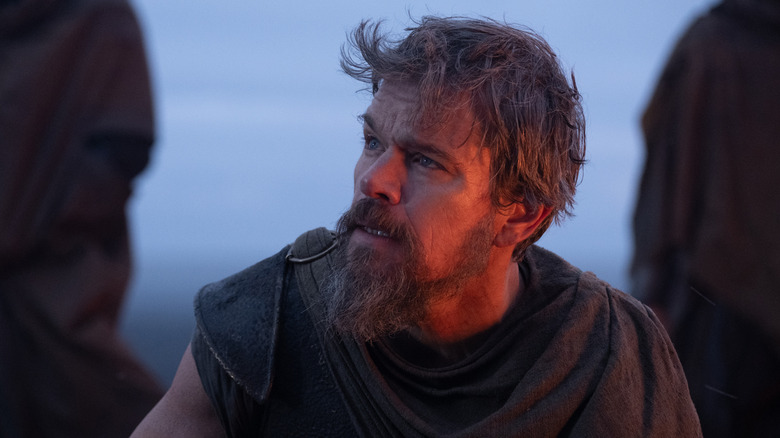
Here we go again, folks. From the same bad-faith grifters that brought you "Why doesn't Damien Chazelle's 'First Man' depict the U.S. flag on the moon???" (spoiler alert: it did) and "How dare a remake of 'The Little Mermaid' cast Halle Bailey as a singing mermaid???" (she's literally a Grammy-nominated performer and, importantly, mermaids aren't real), comes the next installment in this sorry series of pearl-clutching angst and manufactured outrage. In fact, not since that lady "Ghostbusters" reboot whipped up thousands of grown adults into a GamerGate-sized frenzy in 2016 has one blockbuster seemed cursed to bear the combined insecurities of all of Western civilization.
10 years later and, well, not much has changed. Christopher Nolan's "The Odyssey" now finds itself in the crosshairs of a good ol' fashioned firestorm for the oddest of reasons. It'd be one thing to raise a skeptical eyebrow or two at the choice to put jarringly modern dialogue/accents at the forefront of the marketing or, more obviously, cast Massachusetts native Matt Damon as famed mythological hero Odysseus rather than any actual Greek actors (to say nothing of the rest of the ensemble). But, instead, only the easiest of targets are bearing the brunt of criticism: Lupita N'yongo in a dual role that includes Helen of Troy or Elliot Page in a role that hasn't yet been confirmed ... though social media aggregator accounts certainly were eager to spread unverified rumors without any actual sourcing.
And that's the crux of the whole issue, isn't it? It doesn't take much critical thinking to realize that those with a financial incentive to stir up anger and clicks have simply found another way to do just that. This, like the vast majority of other internet non-troversies, is nothing more than a lot of hot air.
Almost every major criticism of The Odyssey is selective and hypocritical
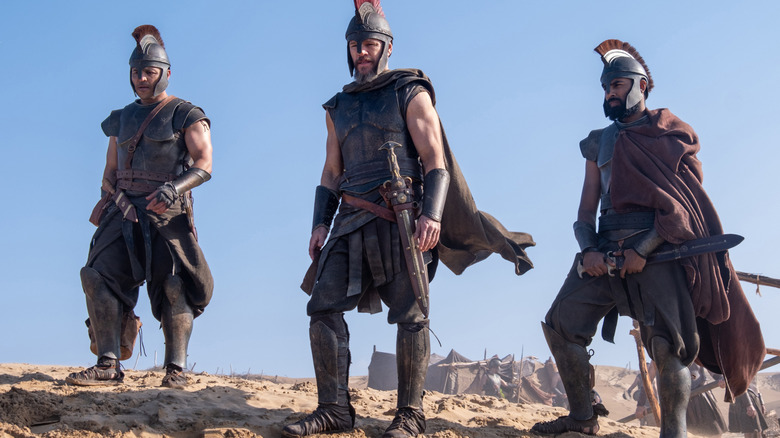
If there's anything "The Odyssey" has already proven, it's that lots of people have lots of hot takes about how Greek mythology should be adapted — despite having very little knowledge of the source material. For instance, an alarming amount of the general public erroneously believe that "The Iliad" and "The Odyssey," two epics clearly depicting fictional events, are somehow based on real-world history. (One noteworthy fallacy being that, despite what Elon Musk claims about disrespecting "Homer's grave," many researchers doubt any one individual named Homer actually authored these stories.) Call me naïve, but shouldn't engaging in a topic of conversation require some fundamental understanding of what we're even talking about, at the bare minimum?
As a result, hardly any of the most widespread critiques stand up to even the slightest amount of scrutiny. Look no further than the 2004 "Troy" film becoming the unexpected beneficiary of some serious historical revisionism; how quickly we forget (or conveniently ignore) its most glaring flaws and complete bastardization of its own subject matter. (Just ask star Brad Pitt.) Or take the laughable notion that Christopher Nolan, who earned Oscars love as recently as "Oppenheimer," is suddenly pivoting to diverse casting simply to chase awards. (This racist narrative was emphatically disproven by Variety.) And let's not even get started on all the various examples of "inaccurate casting" that the current Mad Online crowd never made a peep about before this: from "Cleopatra" (no, Elizabeth Taylor wasn't Macedonian Greek) to "The Ten Commandments" (Charlton Heston, famously neither Hebrew nor Egyptian) to more modern examples like "Clash of the Titans" and Marvel's "Thor" films.
There's no other conclusion to make: Practically every major criticism of "The Odyssey" is selective and hypocritical to the extreme.
Christopher Nolan's The Odyssey is a reminder that the internet is not real life
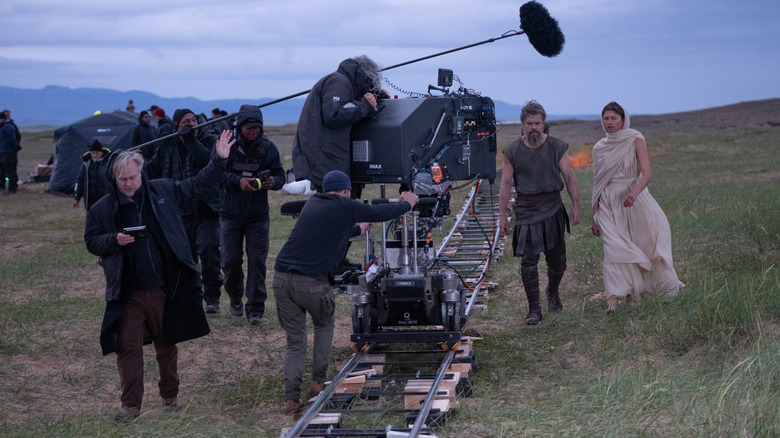
Honestly, it's hard to wrap one's mind around the fact that Christopher Nolan, the prim-and-proper British man who doesn't even own a smartphone and is responsible for directing the beloved "Dark Knight" trilogy, is now a lightning rod for largely American culture-war nonsense. But the fact that this is happening over an intentionally throwback adaptation of Greek mythology (with an emphasis on myth) adds an extra layer of incredulity to all of this. What happened to actually watching a movie first before disowning it?
While this particular "controversy" has managed to break containment and spill out into the real world, it's worth reminding ourselves that the root of all this noise comes from the loudest voices on the internet. Just because our algorithm feeds us a steady drip of "The Odyssey" content designed to rile us up (whether it be angry YouTubers with hyperbolic thumbnails talking out of their you-know-whats or Instagram accounts touting the latest fabricated casting rumor and plot twist or Fox News attempting to co-opt this as gristle for their political mill), that doesn't mean we need to obediently go along with it. There's no Trojan Horse-sized conspiracy or dark agenda here beyond a very commercially-minded filmmaker (no, a movie that started selling tickets a whole year in advance isn't at risk of "go woke, go broke," you weirdos) who's simply telling the story he's always wanted to tell in the way he wants to tell it.
If nothing else resonates, please internalize this: "The Odyssey" can't hurt you. Chill out, read a book (ideally this translation of the story), and make up your own mind. You'll be much happier, I promise.
"The Odyssey" hits theaters on July 17, 2026.