

15 Best Classic Western TV Shows, Ranked
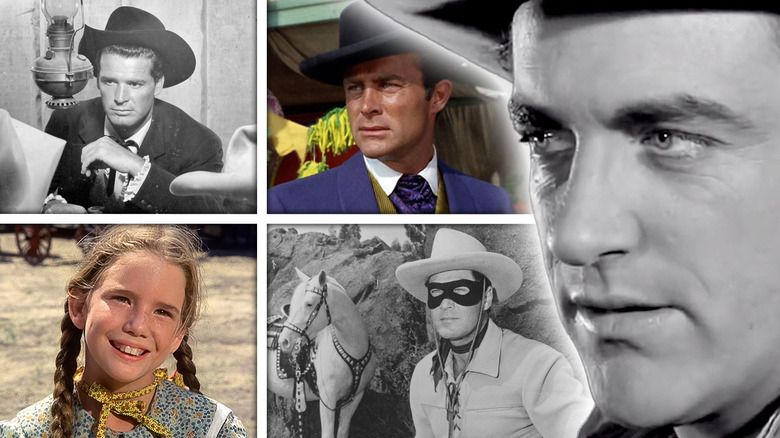
There was a time when Westerns absolutely ruled American television, with each of the major networks boasting their own fan-favorite genre shows. The Wild West was alive and well on TV for decades, mirroring the genre's concurrently enduring popularity on the silver screen. However, as the 1970s drew to a close, Westerns began to fade in pop culture relevance both on the big and small screens. What was once a staple in the United States' entertainment output became a shadow of itself as studios turned to different genres.
With that in mind, Westerns still have a vocal fan base who hold special reverence for the series that maintained the genre's television heyday. With dozens of shows produced in the medium's first several decades, there are shows from this era that still retain their appeal today. To clarify, we're focusing on series that premiered before 1980 when the genre was still enjoying widespread popularity on television. These are the 15 best classic Western TV shows ranked, each bringing their own enduring vision to the genre.
15. Daniel Boone
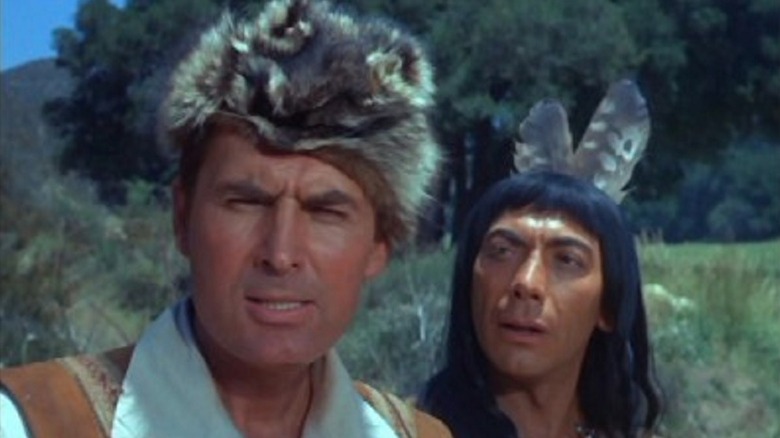
Real-life frontiersman Daniel Boone was the subject of a Western series that ran for six seasons from 1964 to 1970. Fess Parker stars as Boone, dramatizing his exploits throughout the 18th century in the Kentucky area. Accompanied by his Native American friend Mingo (Jeff Ames), Boone faces everything from traitors to the fledgling U.S. to helping settlers in the region. Boone also raises a family with his wife Rebecca (Patricia Blair), with the show particularly emphasizing his relationship with his son Israel (Darby Hinton).
Parker had previously played Davy Crockett in his own series, complete with a similar coonskin hat and leather outfit, but took a subtly different approach to Boone. While still a man of action, Parker's Boone was a bit more reserved and maintained a stronger emphasis on family. After transitioning to color with its second season onward, the show really took advantage of its verdant filming locations to give a sense of the wilderness. With a more mature and measured Parker front and center, "Daniel Boone" improved upon the "Davy Crockett" formula.
14. Death Valley Days
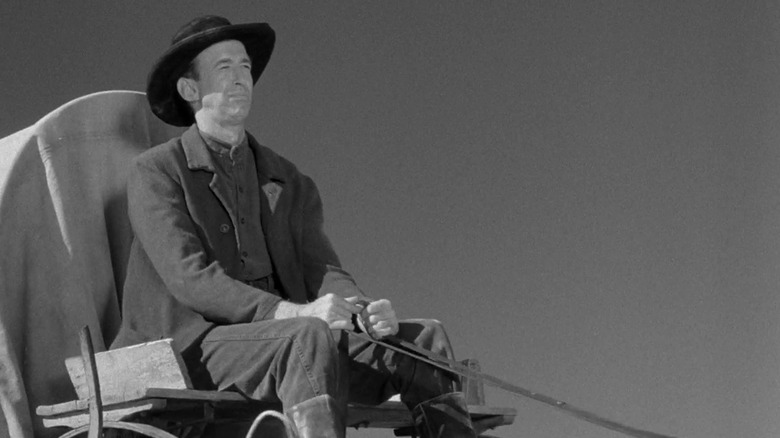
An early anthology television series, the show "Death Valley Days" told different standalone stories following its premiere in 1952. Airing for 18 seasons until 1970, the series, true to its title, centers on Wild West tales based in and around California's treacherous Death Valley. Due to its anthology design, the show's individual episodes affected a wide range of tones, with some leaning into overt comedy while others were deadly serious. Episodes are initially introduced by Old Ranger (Stanley Andrews) as the series' host, although other hosts stepped in during the 1960s.
Thanks to its format, "Death Valley Days" winds up covering a wide breadth of what was possible for the genre on television at the time. This includes intense survivalist narratives set in the unforgiving desert to daring heists in the region, all using Death Valley as a backdrop. The show also holds the distinction of being the last on screen acting role for Ronald Reagan, who left the series to run as Governor of California. "Death Valley Days" doesn't get much recognition nowadays, but it proved how malleable the Western genre was.
13. The Rifleman
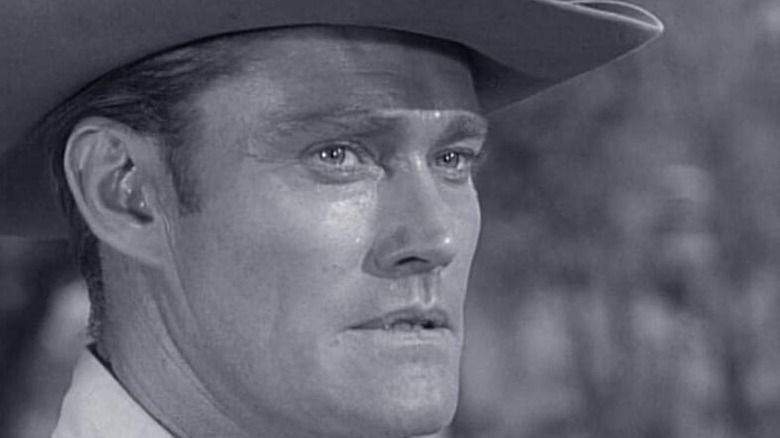
Chuck Connors stars as a one-man army and single father all at once in the series "The Rifleman," which debuted in 1958. Connors plays Lucas McCain, a Union Civil War veteran and widower raising his young son Mark (Johnny Crawford) in the New Mexico Territory. In addition to defending his homestead, Lucas frequently puts his skills to use helping the nearby town of North Fork and people passing through. Lucas' nickname comes from his custom Winchester rifle, which he expertly spins one-handed to get it ready for action.
With its father-son dynamic providing the show with its emotional core across all five of its seasons, "The Rifleman" brings a single parent family dynamic to the genre that was unique for its time. But beyond Lucas raising his son, the show delivers plenty of action as well, and the sight of the veteran rancher spinning his rifle never loses its cool factor, making the Chuck Connors series a must-watch for Western fans. It even counted Soviet leader Leonid Brezhnev among its viewers from behind the Iron Curtain during the Cold War.
12. The High Chaparral
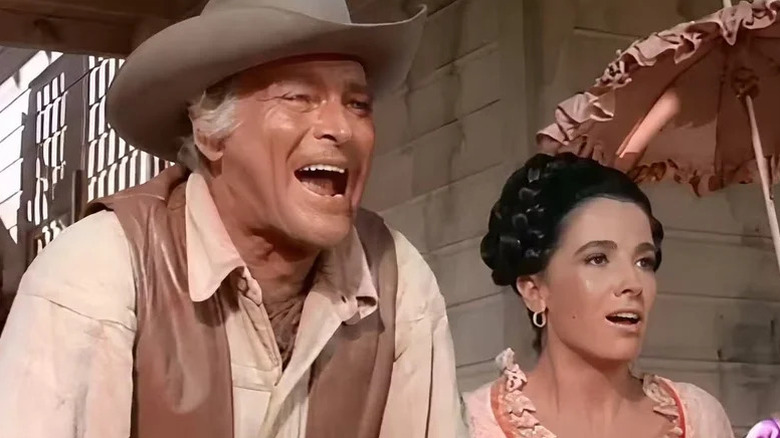
David Dortort had created an unconventional Western family dynamic with the long-running series "Bonanza" and changed things up again with "The High Chaparral." The show centers on recently widowed rancher John Cannon (Leif Erickson), who runs a large border homestead in the Arizona Territory. John marries Victoria Montoya (Linda Cristal), the much younger daughter of a neighboring Mexican rancher as a mutually beneficial union. Despite this arranged marriage, the couple grows to genuinely love each other as they face threats to their family together.
More than just being a show that hinges its premise on a problematic age gap, "The High Chaparral" retains Dortort's penchant for crafting engaging family dramas. The emotional stakes feel strikingly realized, and the rapport between Erickson and Cristal is a strong one from the start. The character dynamics are more complexly developed, including the rival factions around Cannon's ranch, adding nuance to the conflicts. An underrated Western show everyone should watch at least once, "The High Chaparral" gives audiences an offbeat core couple to ground its frontier tale.
11. Wagon Train
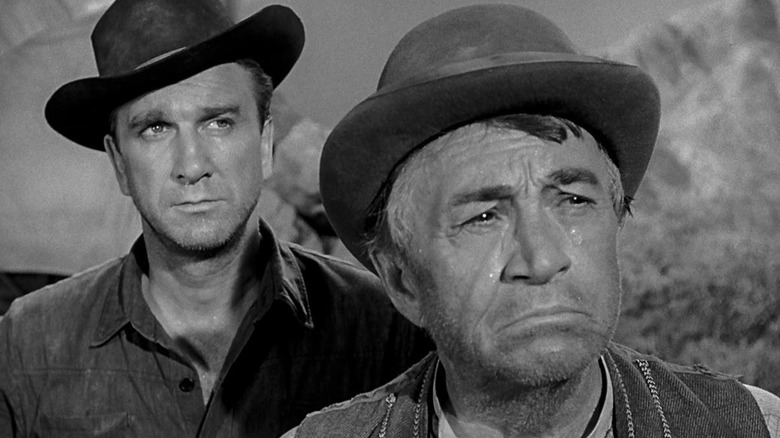
John Wayne's old friend and frequent co-star Ward Bond took center stage for the long-running Western series "Wagon Train." Bond plays Seth Adams, who guides multiple parties from Missouri to California in the post-Civil War 19th century. Most seasons concluded with the wagon train reaching its final destination along the frontier, with its characters reflecting on their grueling journey together. After Bond's death during the fourth season, his character was replaced by new wagon master Christopher Hale (John McIntire) for the remainder of the eight-season series.
"Wagon Train" and its season-long expedition premise got the opportunity to subtly reinvent itself regularly. New characters would join the titular ensemble, each with their own backstories and motives for trying to gain a new start westward, guided by the main characters' sage wisdom. John Wayne even played an uncredited role on the series, along with director John Ford, as a favor to Bond. A look at the constant hardship experienced by settlers traversing the frontier, "Wagon Train" forged its own path in the crowded genre landscape.
10. The Lone Ranger
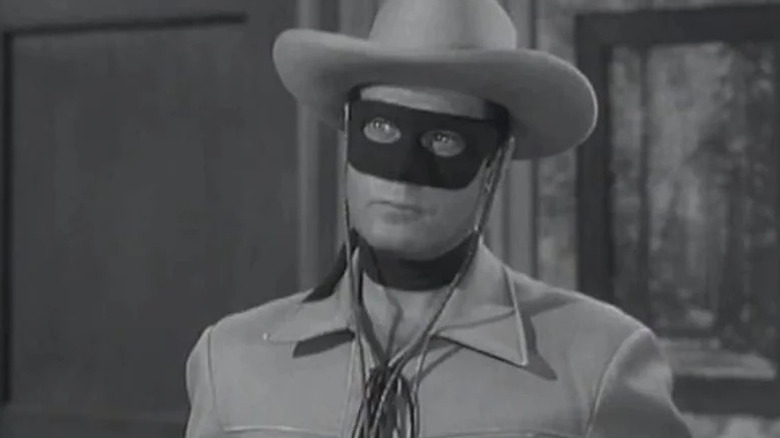
The classic pulp hero the Lone Ranger made the leap to television with an eponymous television series that ran from 1949 to 1957. Initially starring Clayton Moore as the titular masked gunslinger, the hero is a former Texas Ranger who survives being ambushed by outlaws. Saved by a Native American man named Tonto (Jay Silverheels), the lawman becomes a masked vigilante who rides a pale horse and arms himself with silver bullets. The duo face evil-doers across the frontier, dispensing Wild West justice and protecting the vulnerable from harm.
"The Lone Ranger" stands as a proto-superhero story, albeit in a period piece setting, complete with secret identities, costumes, and catchphrases. With its 1940s premiere, the show is one of the earliest television Westerns and a timeless success that extended the franchise to new audiences. John Hart replaced Clayton Moore as the Lone Ranger for the third season, but Moore reprised his role for the final two seasons, sticking the show's landing. A pop culture icon and early success for the genre on television, "The Lone Ranger" still holds up nearly 70 years after its conclusion.
9. Rawhide
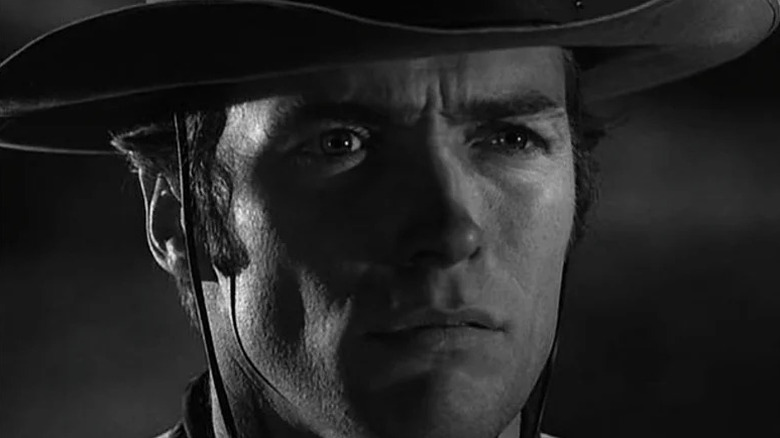
Many popular movie actors got their start starring in classic Western TV shows, including Clint Eastwood, who appeared in "Rawhide." Premiering in 1959 and ending in 1965, the show cast Eastwood as cattle drover Rowdy Yates alongside Eric Fleming, who headlined the first seven seasons as trail boss Gil Favor. The series detailed the perils of escorting large cattle herds from Texas to Missouri, enduring everything from outlaws to natural hazards on the trail. Yates was initially a more hot-headed figure and was prone to getting into situations over his head before being helped by Favor.
For as iconic an actor as he became, Clint Eastwood's "Rawhide" casting was a fluke that saved his acting career, landing an audition by pure kismet. Eastwood quickly proved his leading man chops over his tenure on the show as the fiery Rowdy Yates. "Rawhide" even started Eastwood down the path of becoming a director, as he observed how the show's production was staged and how it could be improved. Beyond its impact on Eastwood's career, the series provided audiences with an exciting look at life on the Wild West trail for eight seasons.
8. Little House on the Prairie
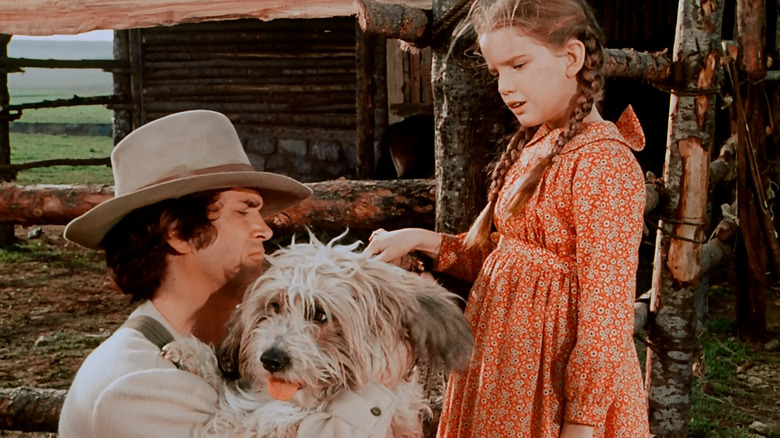
Fresh off starring in "Bonanza," Michael Landon set his sights on adapting Laura Ingalls Wilder's autobiographical children's book series "Little House on the Prairie." The show follows the Ingalls family as they settle into the frontier town of Walnut Grove, Minnesota, starting in the 1870s. Landon plays patriarch Charles, who, along with his wife Karen (Karen Grassle), raises a family on a farm near town. The Ingalls' experiences are largely seen through the perspective of their second daughter Laura (Melissa Gilbert) as she grows up.
"Little House on the Prairie" doubled down on the familial aspects from "Bonanza," presenting audiences with a gentler and more wholesome story. Though the stakes occasionally turned dangerous, the series was really a period piece coming-of-age tale, with its nine-season run helping solidify those themes. The major filming locations underscore this pastoral tone, serving as an often serene backdrop to the Ingalls family saga. A bucolic and earnest antidote to more violent and cynical approaches to the genre, "Little House on the Prairie" represents a purity in its frontier community.
7. Wanted Dead or Alive
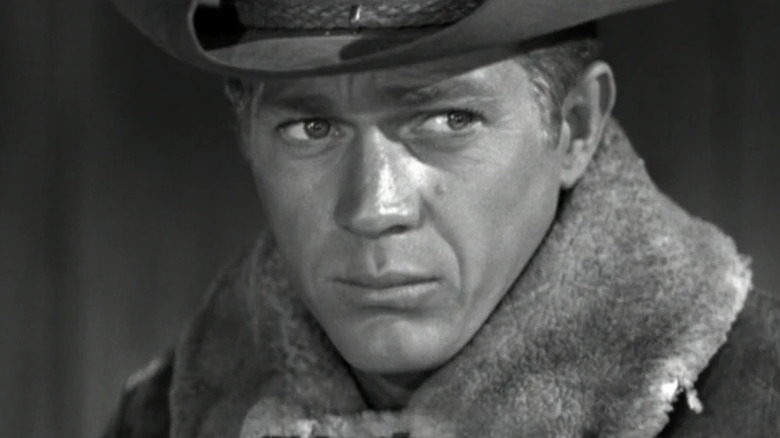
Before he was the king of cool on the big screen, Steve McQueen first became a household presence starring in the series "Wanted Dead or Alive." Running for three seasons from 1958 to 1961, McQueen played bounty hunter Josh Randall, a Confederate Civil War veteran. Though Randall's line of work often pits him against deadly figures across the Wild West, he also shows a clear compassionate side. This includes helping individuals who have been falsely accused of various crimes or taking on jobs pro bono outside of his usual frontier justice expertise.
Even this early in his career, McQueen maintains an absolutely magnetic presence on-screen throughout all 94 episodes of "Wanted Dead or Alive." Rather than brandishing a standard period piece firearm, Randall favored a custom shortened rifle, signaling that this wouldn't be like any other Western on the air. The series also saw a myriad of major guest stars opposite McQueen, including genre mainstays Clint Eastwood and James Coburn. Steve McQueen went on to have a celebrated movie career, but the roots of his commanding charisma can be traced directly to "Wanted Dead or Alive."
6. Maverick
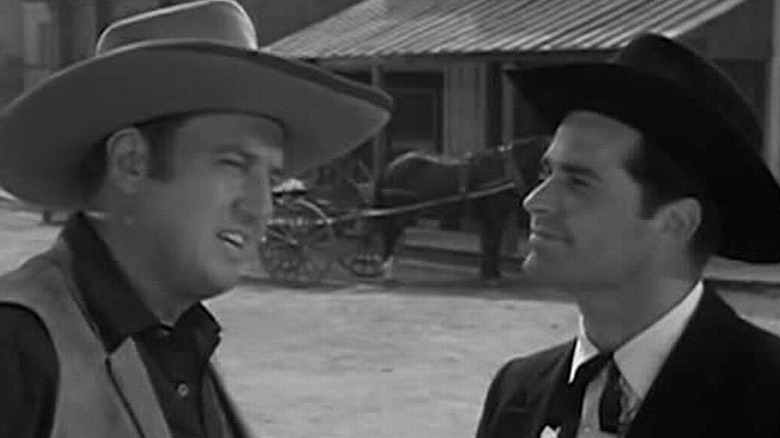
James Garner's career truly took off thanks to his starring role on the Western series "Maverick" (which premiered in 1957). Garner plays Bret Maverick, a 19th century card shark who constantly finds himself getting into trouble across the Wild West. Bret is often joined by his brother Bart Maverick (Jack Kelly), with both siblings invariably stepping up in heroic roles despite their best efforts to avoid conflict. After Garner's departure, Roger Moore played the brothers' British cousin Beau, while the fourth season also introduced the third Maverick brother, Brent (Robert Colbert).
Although the main characters of "Maverick" certainly were heroic in their own way, they subverted genre expectations by frequently trying to dodge fights. In that sense, "Maverick" is a light spoof, but one more reliant on Garner and Kelly's charms than outright skewering the genre. That said, James Arness thought the show's "Gunsmoke" parody was in poor taste, even if it sharply sent-up the genre juggernaut. Capitalizing on Garner's self-effacing wry wit, "Maverick" received a solid movie adaptation in 1994 and several revival attempts decades after its debut as a testament to its enduring appeal.
5. Have Gun - Will Travel
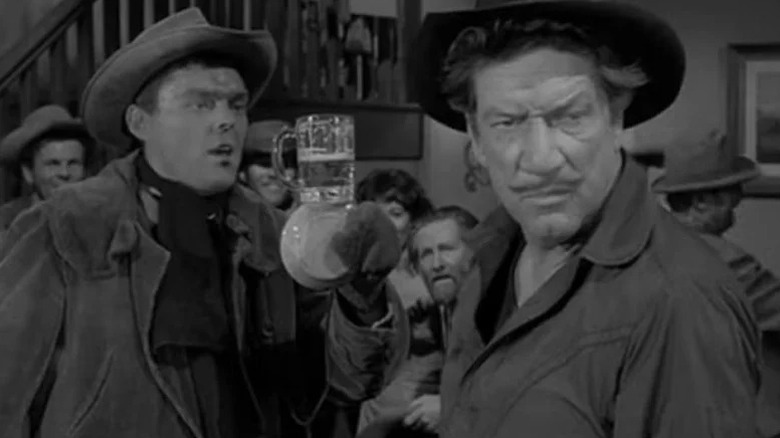
Richard Boone played a very different kind of professional gunslinger in "Have Gun — Will Travel," another multi-season series that launched in 1957. Boone stars as a mercenary known simply as Paladin, a gentleman problem-solver based out of San Francisco. Though normally charging clients exorbitant fees to support his expensive lifestyle, Paladin often takes on jobs for free for individuals who are legitimately struggling and in need of his help. An educated man, Paladin is skilled in martial arts, speaks multiple languages, and possesses keen knowledge on a multitude of subjects.
Boone's Paladin was unlike any other Western show protagonist of his era, both in striking appearance and methodology. In lesser hands, such a character could come off as eye-rolling for the wide range of convenient expertise that they displayed. But Boone consistently made Paladin an interesting figure that helped bring a touch of sophistication to the Wild West. Running for six seasons until 1963, "Have Gun — Will Travel" was, like its protagonist, one of a kind.
4. The Wild Wild West
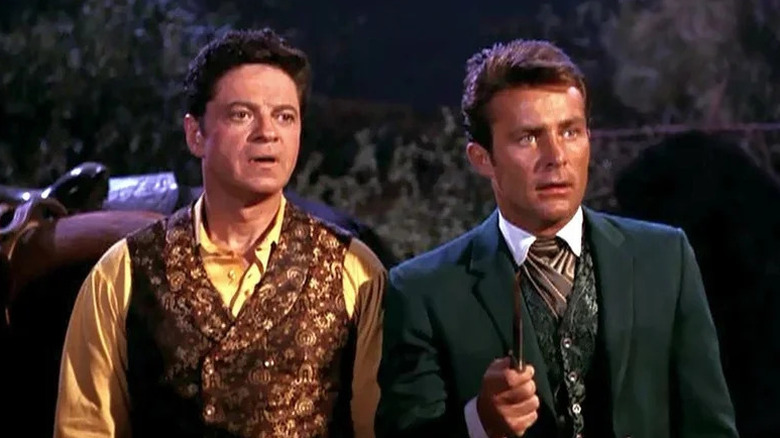
By the time that "The Wild Wild West" premiered in 1965, the James Bond franchise had kicked off a global surge in popularity of gadget-laden spy stories. As a result, the series blended period piece Western tropes with early steampunk secret agent flair in crafting its own memorable take on the genre. On the show itself, Secret Service agents James West (Robert Conrad) and Artemus Gordon (Ross Martin) were tasked by the Grant Administration to take on particularly nefarious threats along the frontier. West and Gordon faced all manner of period-appropriate supervillains, each with their own conniving schemes, including the recurring twisted scientist Miguelito Quixote Loveless (Michael Dunn).
"The Wild Wild West" has all the pulp appeal of a comic book, reflected clearly in the show's stylized opening credit sequence. Conrad brings plenty of two-fisted, quick-drawing action as West, while Martin clearly relishes leaning into Gordon's master of disguise expertise. Interestingly, the show didn't end because of waning popularity but was canceled to appease Congress over federal concerns regarding violence on television. Ignore the disastrous 1990s movie adaptation and, instead, stick with the classic TV iteration of "The Wild Wild West" for the true genre-bending thrill ride.
3. The Virginian
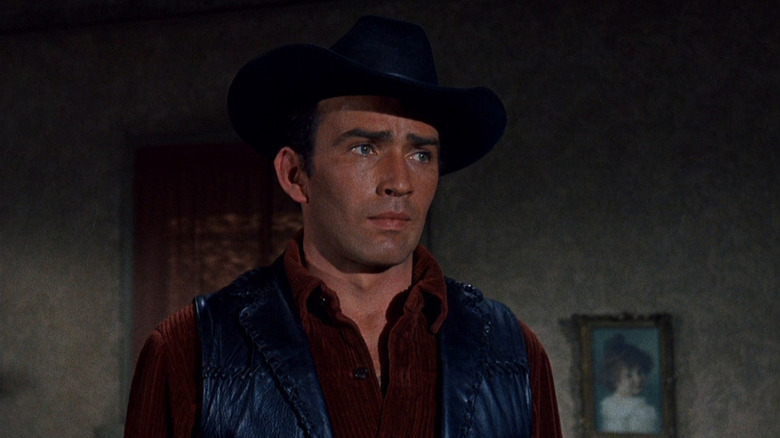
As Westerns moved beyond the 30-minute format for a full hour-long programming block, "The Virginian" upped the ante by running in a 90-minute slot. The show stars James Drury as the unnamed foreman of the Shiloh Ranch in Wyoming in the late 19th century. As the Virginian tries to keep the peace around the ranch and the nearby town of Medicine Bow, he contends with changes in ownership of the property. While often willing to leap into action, the mysterious rancher brings a soft-spoken approach to addressing various issues with a firm hand.
"The Virginian" took full advantage of its 90-minute time slot, using the added real estate to weave more complex and deep stories. This includes strong character work, particularly between the titular rancher and the rambunctious Trampas (Doug McClure). Much of the show revolved around the dynamic between the more serious Virginian and freewheeling Trampas, forming an appealing contrasting buddy-relationship. One of the most thoughtfully written Westerns of the 1960s, "The Virginian" took a more dramatic approach with the genre than its contemporaries.
2. Bonanza
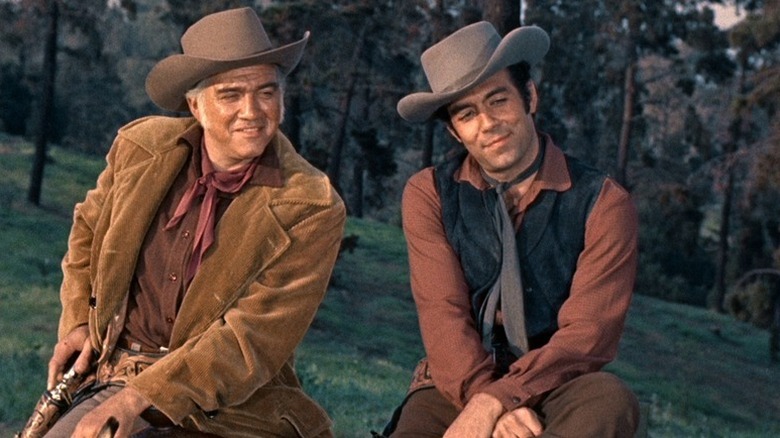
The second longest-running continuous Western story in television history is "Bonanza," lasting for 14 seasons from 1959 to 1973. The show is centered on a family ranch in Nevada bordering Lake Tahoe run by patriarch Ben Cartwright (Lorne Greene). Widowed three times, Ben has three different adult sons from three different late wives, with the show exploring the unusual family dynamics between him and his children. Because of the nearby silver rush, the region sees a constant influx of visitors, including unsavory types that threaten Ben and his family's interests.
"Bonanza" helped bridge the gap from the more routine Westerns in the 1950s and early '60s to the more nuanced and complex shows in the late '60s and '70s. One major constant was the deeply developed dynamic between Ben and his sons, each bringing their own distinct perspectives to the overarching series. This infused the usual Wild West action with resonant familial stakes and emotional investment from the audience. A constant genre presence for well over a decade, "Bonanza" and its focus on family helped elevate it above the competition.
1. Gunsmoke
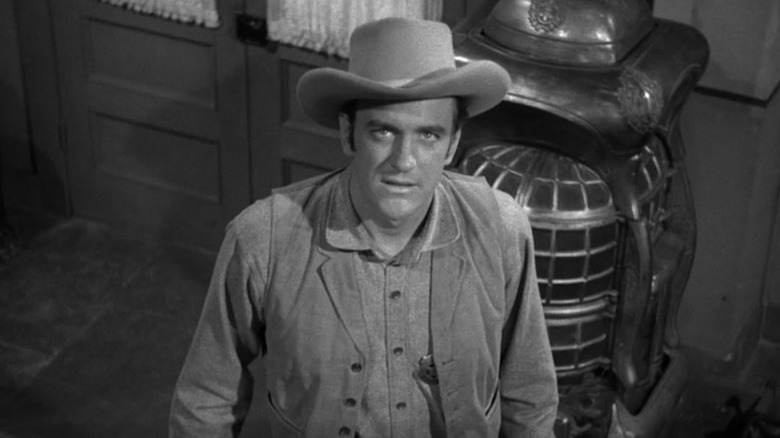
At the end of the day, there really is no substitute when it comes to classic Western television shows: "Gunsmoke" is king. Airing from 1955 to 1975 until it was abruptly canceled after a 20-year run, the show is set in 19th century Dodge City. The town is protected by U.S. Marshal Matt Dillon (James Arness) and his deputies, often taking on notorious outlaws passing through the area. As the series progresses, the wider supporting cast are steadily developed, giving the show a real sense of evolving community.
Co-creator John Meston claimed the secret weapon for "Gunsmoke" was its underlying sense of honesty and earnestness, qualities that endeared it to millions of fans for a full generation. Regardless of these esoteric aesthetics, the show offered a steady stream of Western action and enduringly likable characters for much of its run. Since its start, the show expanded into an hour-long format and successfully made the leap from black-and-white cinematography to vibrant color. Buoyed by a parade of memorable guest stars under the reliably longstanding presence of Arness, "Gunsmoke" is a defining staple in the Western genre, no matter the medium.