

The Harry Potter TV Series Has A Major Problem That HBO Still Has Time To Fix
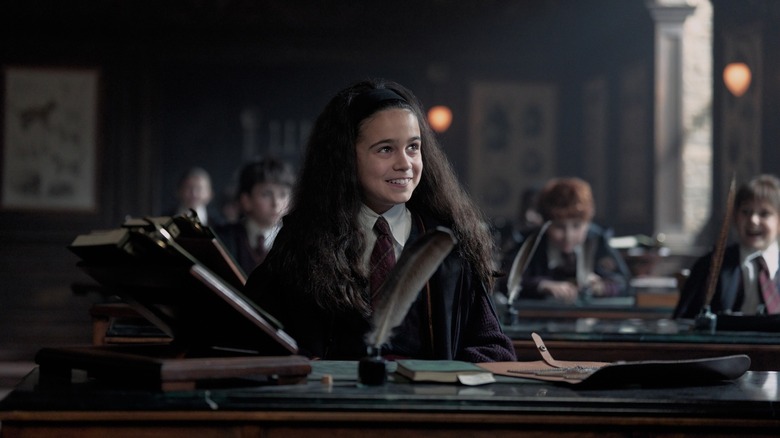
When the first trailer for "Harry Potter and the Philosopher's Stone" dropped, fans clocked a few things. First of all, it looks almost identical, especially in terms of its sets, to the "Harry Potter" movie franchise — which is something that one of that property's directors, Chris Columbus, pointed out before that trailer even surfaced. One thing does feel different from those films, though, and that's the "Harry Potter" TV series' color grading. So, will HBO brighten up the show, so to speak, before it actually premieres?
I don't know, but let me also go over what color grading is, exactly. Much like you might slap a filter on an Instagram or TikTok post, color grading is just a really advanced filter used by TV and movie professionals. After the scene is actually shot, you can tweak the colors in post-production to make the scene in question brighter or darker. This is pure conjecture on my part, but it sure does seem like the team behind "Harry Potter and the Philosopher's Stone" either color-graded the trailer's scenes to be darker or they shot them in strangely dim lighting. (Remember the kerfuffle over the color grading for the "Wicked" movies?)
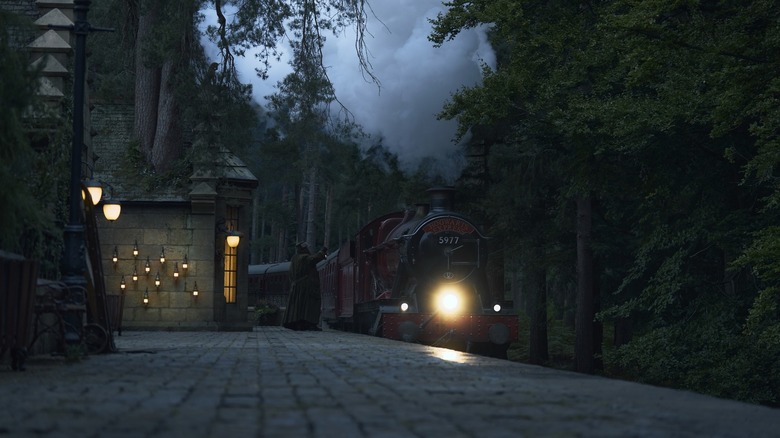
A lot of fans noticed this, myself included. Granted, the original movies, which used four different directors across its 10-year run, got literally darker as the subject material got increasingly scary and serious, but this is an adaptation of the very first book. So, will HBO change course? It certainly has time; like I said, a lot of the work that goes into a project's color-grading happens in post-production. What worries me, though, is that this seems like a clear message and an indicator of the tone, which doesn't really mesh with the source material.
A literally dark take on the first Harry Potter book seems like a strange approach to the material
If you, like me, got to see the first "Harry Potter" movie (retitled "Harry Potter and the Sorcerer's Stone" for American audiences) when it came out back in 2001, you know exactly how magical it felt to see those beloved "Harry Potter" visuals play out on the big screen. With Daniel Radcliffe, Rupert Grint, and Emma Watson originating the roles of Harry Potter, Ron Weasley, and Hermione Granger and "Home Alone" director Chris Columbus behind the camera, "Harry Potter and the Sorcerer's Stone" felt like a wonderful fantasy, albeit one where Radcliffe's Harry is an orphan and still being hunted by his parents' murderer, Lord Voldemort. Everything has a sense of whimsy and wonder, whether Harry is receiving endless acceptance letters to Hogwarts School of Witchcraft and Wizardry — much to the chagrin of his Muggle relatives the Dursleys — or arriving at Hogwarts with Ron and Hermione for the very first time. Even "dangerous" moments, like when the trio meets a three-headed dog named Fluffy guarding a mysterious trap door in Hogwarts, feel light and wondrous, like a fun adventure rather than anything frightening or dire.
This is important because the first two "Harry Potter" books are for young children. There's no getting around this. Starting in the third book, things get a little darker (you've got a wizard wrongfully convicted for mass murder, as well as the senseless death of a teenager, and that's just the tip of the iceberg), but the first story, at least, should be whimsical. It doesn't need to be a "gritty reboot" of a story about a young boy wizard who learns to turns teacups into rats. So, for the millionth time: Who is this series for?
We ask again: Who is this Harry Potter series for, exactly?
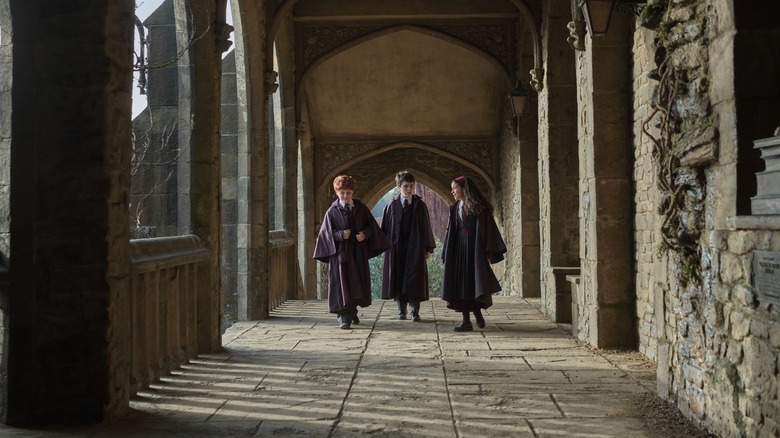
Let's turn our attention back to that trailer, which showed off murky, gloomy visuals that don't seem to offer one iota of whimsy like "Harry Potter and the Sorcerer's Stone" did when it hit theaters in November 2001. Honestly, the trailer seems like everything we feared — some attempt at a gritty re-telling of a story that should start out as pretty sweet and wholesome before veering into straight-up darkness as Harry, Ron, and Hermione age. Dominic McLaughlin, Alastair Stout, and Arabella Stanton are set to take over the lead roles in the HBO series, and even though we can see moments where their characters actually enjoy their time at Hogwarts in that trailer, the color grading is a problem because color grading informs a story's mood and tone. You can include as much laughter and intended whimsy as you want, but if your color grading makes your show look like "Ozark," it's going to leave the audience feeling confused and weird about the entire enterprise.
Despite my numerous misgivings about this entire series, I can't help but hope that showrunner Francesca Gardiner and her team literally brighten up this joint before it actually comes out. Here's the thing, though. As an elder millennial fan, my love for "Harry Potter" has been tarnished by Joanne "J.K." Rowling's bigoted crusade against the transgender community, and while I understand why HBO wants to remake this story for a new generation, what kid is going to tune into a show with the visuals of a crime thriller? I'm not an executive, nor am I an expert on color grading ... but even I know HBO should consider righting this wrong.
"Harry Potter and the Philosopher's Stone" premieres on HBO on Christmas.