

10 Strongest Alien Races In Star Trek, Ranked
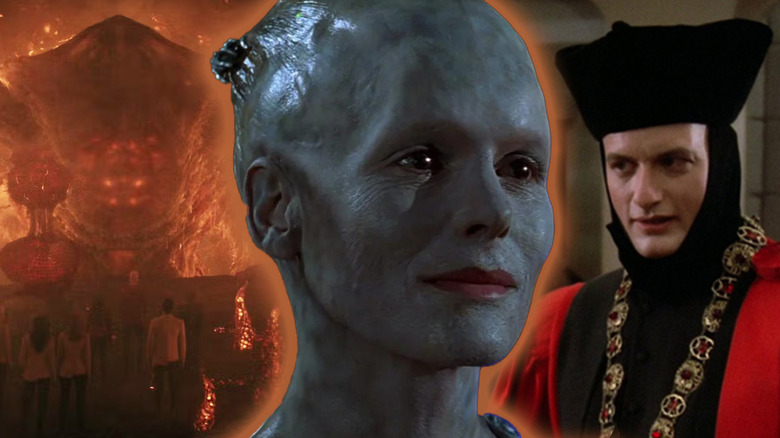
Across the expansive history of the "Star Trek" franchise, humanity has encountered a growing number of alien races, many of whom that are exceedingly formidable when crossed. These are civilizations that can be physically more overpowering or possess technological advances that give them overwhelming potential. Throughout both television and film projects, these cultures can either be powerful allies to Starfleet and the United Federation of Planets or pose an extinction-level threat. Whenever one of these races appears on-screen, it's all hands on-deck to make sure that hostilities don't erupt or any enemy presence is outmaneuvered or contained.
To clarify, we're not talking about the best "Star Trek" alien races, though several of them could certainly apply. This list also covers full-on civilizations and cultures, not just standalone omnipotent figures in the universe that surface in one-and-done television and film stories. There have to be multiple individuals of the same race or collective to qualify for a spot on this list.
Let's dig into the 10 strongest alien races in "Star Trek" ranked to the most powerful, capable of altering the balance of power in the galaxy.
10. The Hirogen
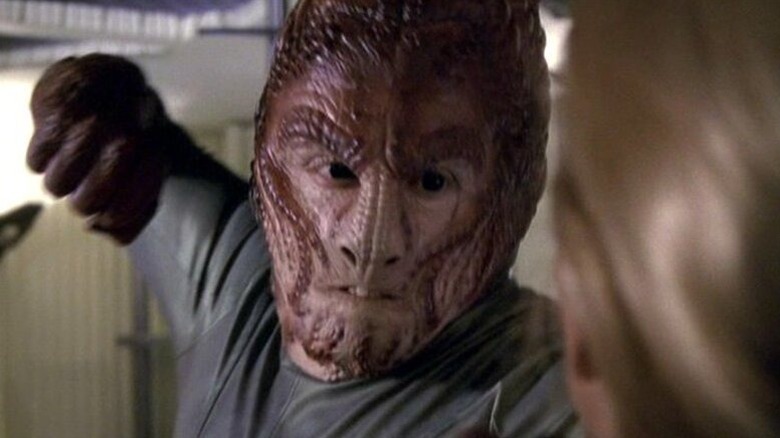
"Star Trek: Voyager" introduces the franchise's take on the Predator with its nomadic hunter-warrior race, the Hirogen, debuting in the fourth season episode "Hunters." Like Predators, the Hirogen hunt the most formidable quarry that they can find for sport. To facilitate this big game hunting, the Hirogen possess advanced weapons, gadgets, and starships which are at least considerably more powerful than Voyager. The Voyager crew crosses paths with the Hirogen several times during their journey back from the Delta Quadrant, with each occasion a harrowing experience.
Any race that has the gumption of trying to solo an enemy like Species 8472 may be delusional, but the Hirogen can back up their ambitious goals. At least 1-versus-1, the Hirogen can hunt an individual from Species 8472, something an individual Borg drone couldn't do. While a Hirogen fleet would likely struggle against the might of the Borg Collective or Species 8472's unique armada, they are at least more powerful than many Starfleet vessels. That makes the Hirogen one of the more underrated races in "Star Trek," at least in terms of sheer combat strength.
9. The Changelings
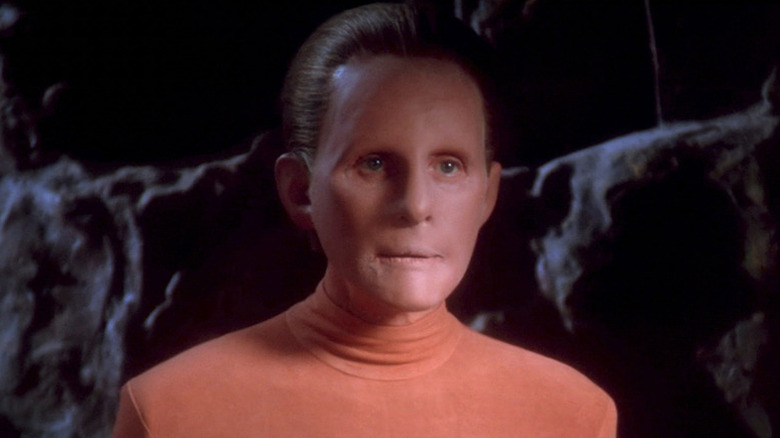
Though the Cardassian Union may be the most prominent antagonistic faction in "Star Trek: Deep Space Nine," they're not the true orchestrators of the series' tension-inducing Dominion War storyline. The conflict is staged by the Changelings, also known in-universe as the Founders, a shape-shifting race living in the galaxy's Gamma Quadrant. Fueled by xenophobia against the Alpha Quadrant races and an obsession with imposing order, the Changelings produce an army of Jem'Hadar and create a formidable alliance. The Changelings team up with the Borg in "Star Trek: Picard," making one last joint bid to destroy the Federation, albeit unsuccessfully.
Through their shape-shifting abilities and sheer cunning, the Changelings are one of the most deadly enemies that the Federation has ever faced. In addition to their cloned army of Jem'Hadar, the Changelings expertly manipulate others to carry out their dirty work for them. The race's liquid form makes them difficult to destroy physically, with the Federation resorting to a biotoxin to force them into an armistice. This intelligent method to approach conflict and deceptive qualities make the Changelings a force that shouldn't be underestimated in the galaxy.
8. The Kelvans
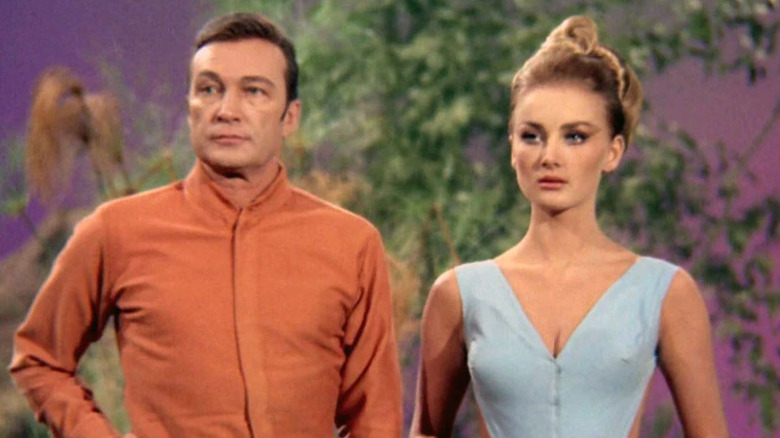
The second season episode "By Any Other Name" in "Star Trek: The Original Series" centers on the Kelvans, an invasive race from another galaxy. In order to communicate with Captain Kirk (William Shatner) and his crew, the Kelvans take on human form before commandeering the Enterprise. With their advanced technology, the Kelvans immobilize the crew easily and transform most of them into chalky dehydrated blocks, taking away Kirk's numerical advantage in a show of force. The Kelvans significantly upgrade the Enterprise to withstand a voyage outside of the galaxy, including improving its speed far beyond what it was normally capable of.
The Kelvans are one of the most mysterious races in "Star Trek," with even their true physical form never revealed on-screen. While mind-melding with a Kelvan, Spock (Leonard Nimoy) telepathically discovers that their actual form is a multi-tentacled monster, though this is never seen. Kirk is able to get the Kelvans to relinquish control of the Enterprise by appealing to their burgeoning humanity, but the Kelvans have yet to be overpowered in battle. A shape-shifting Lovecraftian horror from beyond the galaxy, the Kelvans have yet to make a return to "Star Trek" since "TOS" but they'd be a formidable presence if they do.
7. The Borg Collective
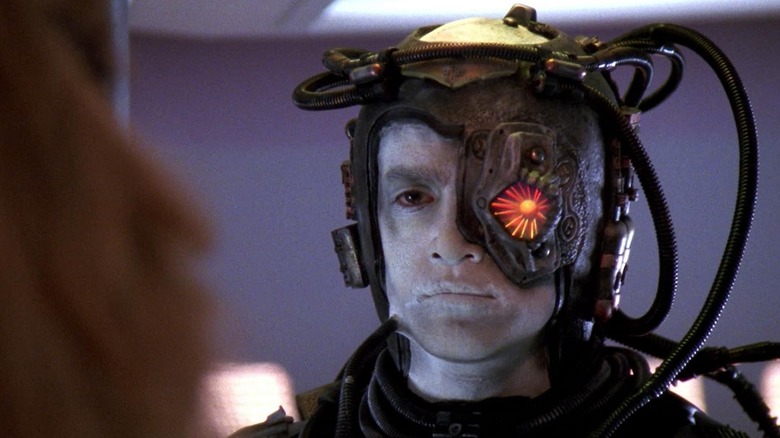
"Star Trek: The Next Generation" formally unveiled the Borg Collective in the memorable second season episode "Q Who." A technorganic collective, the Borg forcibly assimilate organic beings through nanobots that can be transmitted from their touch or specially designed weapons. The collective is led by the sinister Borg Queen, who is connected with and commands the Borg's hive mind. The Borg are noticeably more technologically advanced than the Federation, with weapons that can devastate multiple star systems at once and vessels capable of traveling through time.
On at least two occasions, the combined might of Starfleet's armada couldn't slow the advance of a sole Borg Cube, with only the Enterprise crew's quick-thinking saving the day. The collective felt virtually unstoppable in their first several appearances and brought Jean-Luc Picard (Patrick Stewart) to his lowest period. For a prolonged period after their introduction, the Borg were the best "Star Trek" villains, until middling storylines mitigated their menace. But even with their mystique diminished, the Borg Collective stands as a formidable presence in the galaxy that is not to be crossed.
6. Species 8472
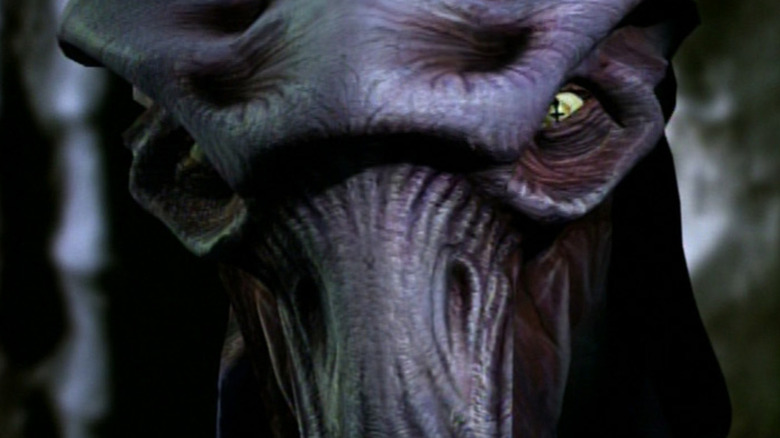
Though the Borg Collective was arguably the most terrifying recurring threat in "TNG," "Voyager" introduced a race that made the Borg look completely outclassed. The two-part episode "Scorpion" reveals entire fleets of Borg Cubes reduced to space debris by the memorable "Star Trek" race Species 8472. Rather than conventionally constructed structures and spacecraft, Species 8472 relies on bio-organic constructs, including for their powerful armada. A single concentrated blast from one of this new race's starships is capable of destroying a Borg Cube, while their fleet can work in tandem to destroy entire planets.
Species 8472 come from a dimension known as fluidic space which is filled with organic matter like the protoplasmic interior of a cell. This gives the race its own unique properties aside from their vessels, including rapid cellular regeneration and an immunity to Borg assimilation. Only by combining Starfleet and Borg technology is the Voyager able to force a truce with the strange race. One of the most bizarre and interesting concepts introduced in "Voyager," Species 8472 represents an advancement of a very different kind of technology.
5. The Progenitors
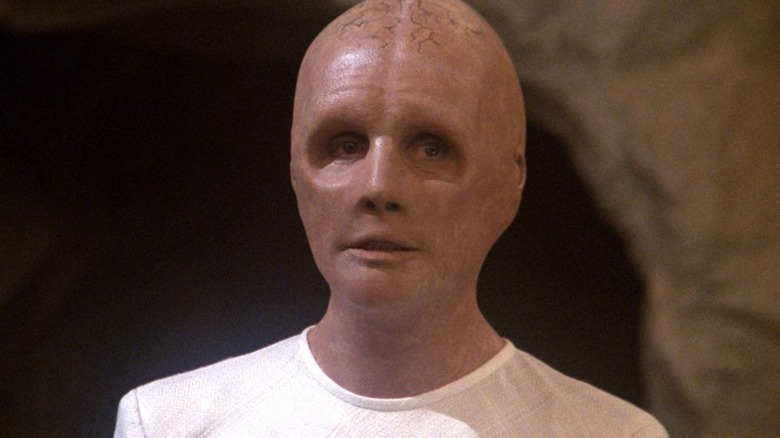
The reasoning behind the multitude of humanoid species in the "Star Trek" universe is explored in the "TNG" episode "The Chase." A coalition informally led by the Enterprise discovers that humanoid species throughout the galaxy were seeded by an ancient race known as the Progenitors. Though it's unclear what became of the Progenitors themselves, the technology that they possessed was far beyond what current civilizations in the Milky Way Galaxy were capable of. This kicks off a race between Starfleet and the Breen in the 31st century to recover lost Progenitor technology, though it's ultimately deemed too dangerous for either faction to obtain.
There is still a significant amount that's unknown about the Progenitors and what their technology can do. Starfleet consistently alludes to this advanced tech as being revolutionary and status quo-altering, without specifying the full extent of its possibilities. What is known is that the Progenitors can design and create various forms of intelligent life, making them cosmic demigods, or the closest that "Star Trek" gets. Another mysterious, fully unknowable presence in the universe, the Progenitors cast a long legacy in the galaxy long after their apparent departure.
4. Species 10-C
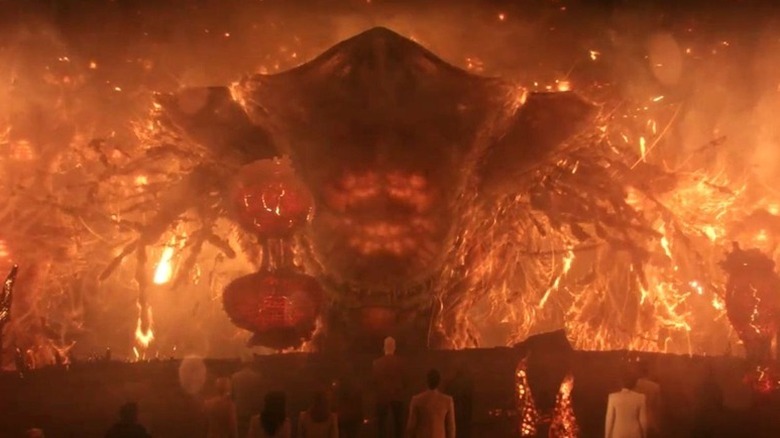
"Star Trek: Discovery" season 4 features galactic challenges in the form of a mysterious race known simply as Species 10-C. Hailing from a neighboring galaxy, Species 10-C creates dark matter anomalies to mine boron from star systems. This has the unfortunate and unintended side effect of destroying any planets that happen to be caught up in the singularity formed by the DMA. To avoid further devastation, the Discovery travels outside the galaxy to contact and communicate with Species 10-C, the designation that the Federation gives the extra-galactic race.
So much about Species 10-C is still shrouded in mystery, though the politician T'Rina (Tara Rosling) is able to learn some details when mind-melds with them. Species 10-C is telepathically connected through a sort of collective consciousness in harmony with one another. Given that their routine mining devices can wipe out an entire solar system without a second thought, Species 10-C is immensely powerful. Fortunately, in line with many of the concepts and themes in the latter seasons of "Discovery," a diplomatic solution is achieved, avoiding any additional destruction.
3. The Metrons
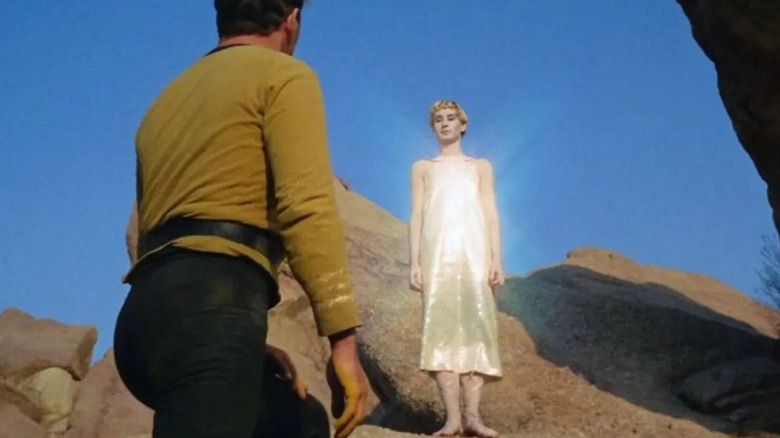
Of all the omnipotent beings that the Enterprise encounters in "The Original Series," one of the more notable races are the Metrons. Debuting in the first season episode "Arena," the Metrons force Kirk and the captain of a Gorn vessel to fight to the death on a remote planet. When Kirk spares the enemy commander, the Metrons appear, visibly impressed, returning Kirk to the Enterprise and healing his wounds in an instant. The Metrons later resurface in the "Star Trek: Strange New Worlds" episode "Terrarium," staging a similar challenge between the Gorn and Erica Ortegas (Melissa Navia).
So much about the Metrons is still unknown, but they appear to have a level of omnipotence that can clearly bend the rules of reality. The race is capable of holding starships traveling at warp speed in place without visible strain as well as teleporting individuals and manipulating matter, as evidenced by them healing Kirk. "Strange New Worlds" reveals that the Metrons can also telepathically alter the memories and perception of those around them, making Ortegas and the Gorn forget their presence. A force to be reckoned with, it's still unclear what the Metrons are fully capable of, but they at least appear to be nominally benevolent if manipulative.
2. The Organians
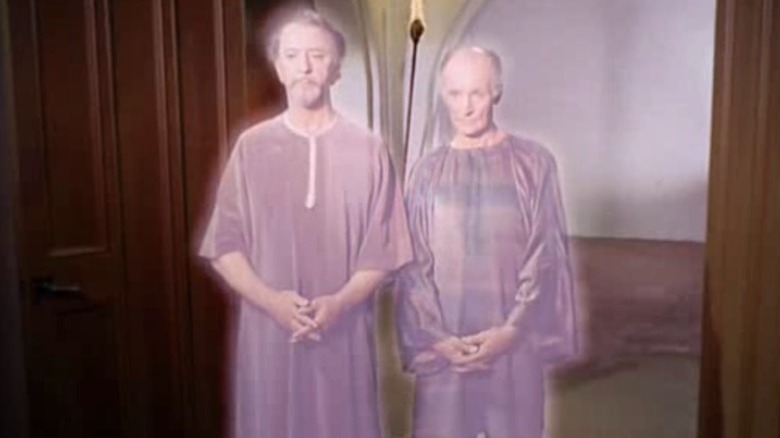
The Klingon Empire was introduced in the "TOS" episode "Errand of Mercy," with the Klingons and Federation on the brink of renewed hostilities. The epicenter of this standoff occurs around the peaceful planet of Organia, with Kirk and Spock staging a resistance against the Klingon occupation of its indigenous population. As armadas from the two factions assemble near the planet, poised to attack each other in a full-blown war, the Organians reveal their true form as beings of pure energy. Using their vast powers, the Organians force both sides to stand down and agree to an armistice in the face of the Organians' overwhelming potential.
Like many of the omnipotent races on this list, the full extent of the Organians' powers is still unclear. The race can rewrite the rules of reality, possess organic beings, telepathically erase memories, and possess a supreme intelligence that helps them accurately predict the future. Being made of pure energy, the Organians hint at being, if not outright immortal, than extraordinarily long-living to the point of existing for millennia. A mystery presence in the "Star Trek" universe, whenever the Organians resurface, it's always a pivotal moment for Starfleet.
1. The Q Continuum
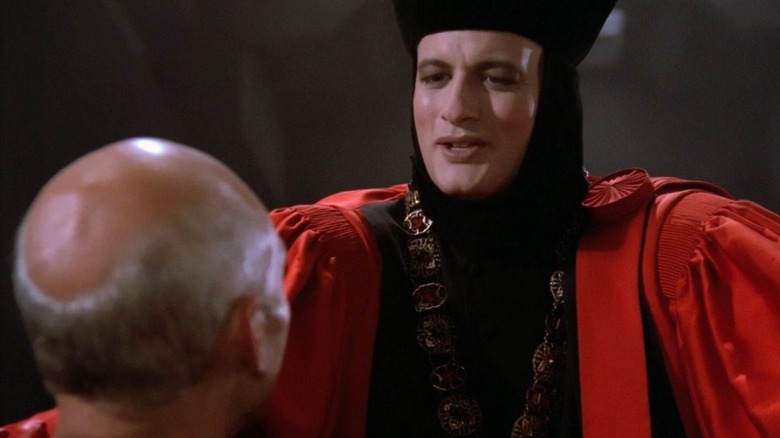
With John de Lancie masterfully playing its most prominent member, the Q Continuum are among the most powerful "Star Trek" characters. With a snap of their fingers, the omnipotent beings in the Continuum can completely alter reality without a second thought. Using this power, Q is shown traveling through time and changing historical events, resulting in divergent timelines forming from the temporal tampering. By "Voyager," other members of the Continuum are introduced, including Q's romantic partner (Suzie Plakson) and their son (Keegan de Lancie).
Initially introduced as one of the best "Star Trek" villains, Q has become something of a frenemy for several "Star Trek" characters, particularly Picard and Janeway. But the "Voyager" episode "The Q and the Enemy" offers a stark reminder just how powerful the Continuum can be when unleashed. When a civil war breaks out within the Continuum, the seemingly small arms used are capable of creating supernovae with each shot. Whether it's tearing apart swathes of outer space with handheld weapons or capable of changing history, the Q Continuum represents true cosmic power in "Star Trek."