

4 Producers Tell Us The Single Biggest Challenge Of Making Movies Today
There's a saying that every movie is a miracle. Good or bad, making movies is hard. Always. But what's the hardest part of getting a movie made in the modern era? We asked four producers from across the industry that very question. Without getting into what a producer does, exactly, as it's cinema's most confusing job, it all really boiled down to one thing: money. Or, to put a finer point on it, a lack of money.
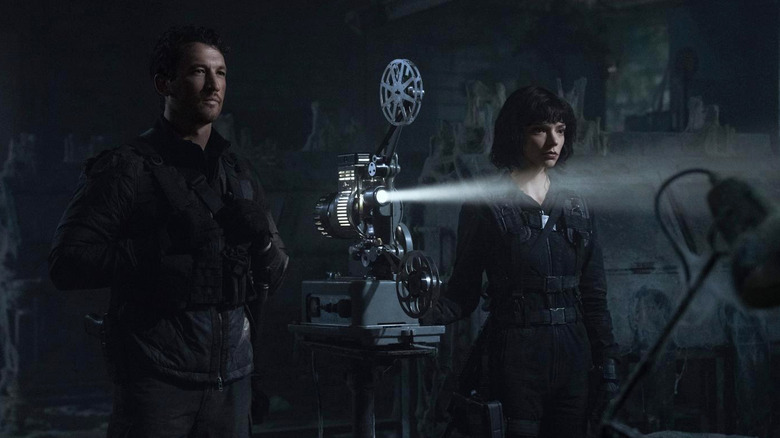
"Everything has shrunk," said Aaron B. Koontz, the founder of Paper Street Pictures and producer of movies like "Shelby Oaks," the most successful horror movie in Kickstarter history. "Budgets have shrunk. The time in which you need to make the movies has shrunk as a result of that."
In 2026, for all sorts of movies, money is harder to come by. Joel Roodman, the President and Head of Studio at MUS Immersive and one of the original senior executives at Miramax Films, spoke about what he called "uncertainty across the entire value chain." Elaborating on that, he explained:
"The traditional system where studios financed films, theatrical runs drive revenue, and downstream windows like home entertainment and TV created predictable returns, has largely broken down. Financing is harder to assemble, distribution pathways are less certain, and the economics of recoupment are far murkier. At the same time, producers are navigating rising production costs, shifting audience behavior, and a fragmented marketplace where success is harder to predict."
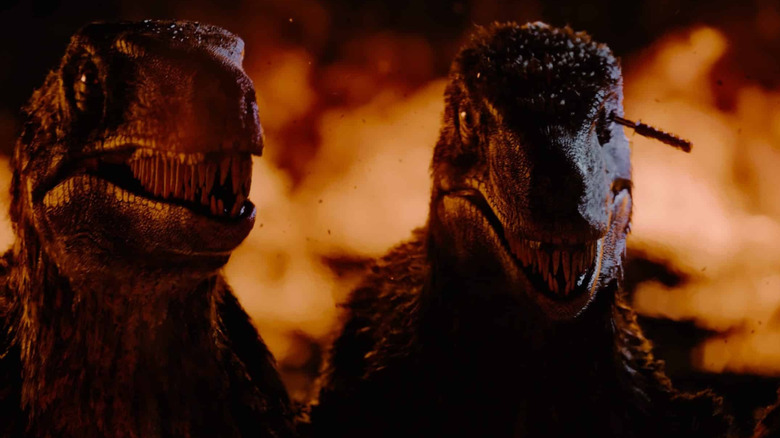
"It's a loaded question," said Luke Sparke, the head of Sparke Films and director of "Primitive War," aka the best dinosaur movie of 2025. "The systems that producers used to have in place, and like everything else in the industry, they're changing. They're bottoming out and it's really turned everything onto its head."
Getting money to make movies is harder than it's ever been
The answers from those I spoke to for this piece varied, but money was at the root of it all.
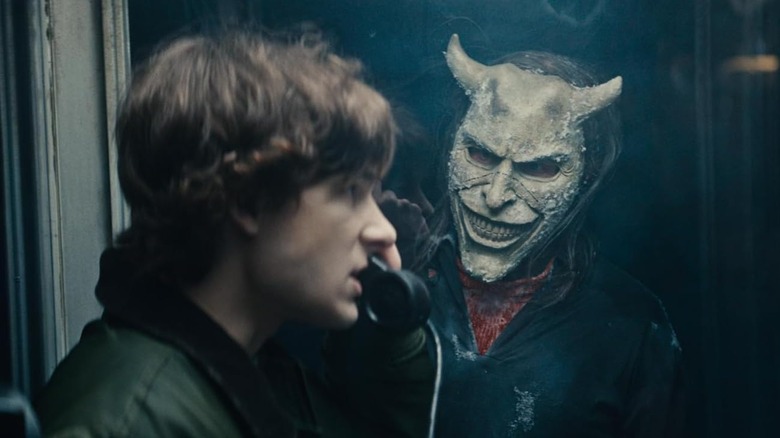
"The biggest challenge right now is the shrinking number of feature films being made," said C. Robert Cargill, writer/producer of scary movies like "The Black Phone" and "Sinister," as well as the co-founder of the production company Crooked Highway. "The pandemic, consolidation, and streaming has shrunk that [number] dramatically."
Fewer movies being made equals less money to go around. "They're getting pickier about what types of films are getting made and who gets to make them," Cargill said. "The big challenge is making sure that you're one of those films."
"The amount [financiers are] giving you is less," Aaron B. Koontz said. "It becomes really hard to piecemeal together the money."
As a result, people are simply trying to make movies for less money. That causes more problems, as one can imagine. Luke Sparke made "Primitive War" independently after it was rejected by Hollywood. That meant making a large-scale dinosaur movie for less than the catering budget of a "Jurassic World" movie.
Financing is also often contingent on casting, and there are fewer stars with meaningful power in that regard, which only further complicates matters. "Everybody's going after the same people," Koontz said. "It just becomes very difficult." Sparke also lamented the shrinking list of actors who could help a filmmaker get a movie made. "That system's basically gone now, too," Sparke said. "You have these systems in place, but the systems don't work anymore."
"It's left independent filmmakers really wondering how to move forward," Sparke said. "All of this applies to [Hollywood] as well," he added. It isn't just an issue for indie filmmakers.
The streaming wars have cooled down
Luke Sparke noted that streaming can be a positive, but the safety net the DVD market provided is gone. Oscar-winner Kevin Costner has said that DVD isn't as dead as you think, but that market isn't what it used to be. Streaming is the dominant force. However, the heyday of the streaming wars has cooled down, meaning less money there, too.
"Streaming became huge because they knew they needed to have a big library to make people interested," C. Robert Cargill said. "Now, the focus is on the new. You don't see Netflix promoting the older stuff."
"There is still a healthy appetite for purchasing finished films," Aaron B. Koontz noted. "People still need content." It's just harder to get funding to finish those films.
"They have cut their streaming by a full third," Cargill added. "So a third of everyone working in streaming, they're all out of work."
"In the past, producers could benefit from multiple revenue windows such as box office, home video, pay TV, international licensing," Joel Roodman said. "Streaming platforms often replace that model with a single licensing payment that caps upside but removes long-term participation." To Roodman's point, studies suggest that the global box office may never fully recover from the pandemic.
The box office functions as advertising for other revenue streams, Koontz explained. "Your VOD, your streamer deals, your AVOD deals, that is where we make the majority of our money," he said.
The consolidation of companies was brought up multiple times with the producers I spoke with. Paramount acquired Warner Bros. after Netflix backed out. Amazon also bought MGM in 2022. Along with that, consolidation reduces the number of buyers in the marketplace. "It's just less options that filmmakers have to go to," Koontz concluded.
There's more competition in the most profitable movie genres
Most of these producers have a heavy focus on genre filmmaking, namely horror and sci-fi. There's a good reason for that. Those movies tend to work, even in a challenging marketplace. Even low-budget horror movies can make millions if they break out. The problem? There's more competition than ever in this space.
Paper Street focuses mainly on genre films. Not only that, but the very low-budget genre films are in the $1 to $3 million range. "The reason for that is because I'm a horror fanatic," Aaron B. Koontz said. "Also, horror works internationally, and the star of horror is typically the genre.
"Genre films still work, but the offers are so low," Luke Sparke said. It used to be that if you kept your budget tight, you could make your money back. Now? Not so much. "They're literally offering cents on the dollar," he said. "You just have to stay your course," Sparke added of the recent influx into the genre space. "I've definitely seen that, and it's because genres do work."
"Because all of those out-of-work people have pivoted, they're being told by their managers and agents, 'Pivot to horror.' Now we're getting people who have never written horror who are writing horror," C. Robert Cargill explained. "We're not gatekeepers," Cargill added. "Horror is very open." The problem, however, is that these new voices don't always functionally understand how the genre operates.
"Those people are becoming stumbling blocks for the people out there who do love horror who are trying to get their thing out there," Cargill said. "We've got some new voices coming into horror, which is exciting, but you're also finding people who are talented, talented TV writers, but they don't know how horror is structured."
Sequels make it easier to get a movie made - but it's still not easy
One thing that can help is a pre-existing franchise. "Black Phone 2" killed it at the box office last year. It's something that established filmmakers can lean on. That doesn't mean it's easy.
"As a creative, you give the audience what they're craving rather than following the market, so to speak," C. Robert Cargill said. As for the market, Joel Roodman compared the situation in 2026 to a decade ago, laying out the shift succinctly, saying the following:
"Audiences have more entertainment options competing for their attention than ever before. As a result, getting a film financed, produced, and meaningfully seen by audiences requires far more creativity, strategic partnerships, and alternative distribution thinking than it did a decade ago."
"Everyone just wants sequels," Luke Sparke said. Hence, "Primitive War 2" was announced in January. Spake made it clear he's very happy to be making the movie because he loves the world, but he has other motivations as well.
"The reason I'm doing that is only because I'm trying to help my other original projects," Sparke said. "Hopefully, having a Primitive War franchise can help other up-and-coming scripts that I have, that are original."
A sequel in an established franchise can be an easier sell. "It's a little easier," Sparke said. "Everyone said, 'You've got an IP now.' Which is nice. That doesn't mean people still just sign checks straight away. It's still very disappointing to have to go into meetings and have to hear all of the positives of 'Primitive War,' but then there's the 'But...'"
There is a "But..." even after success. That's the reality of making movies in 2026. The money is harder to find, even when there's proof that there's money to be made.