

10 Best True Crime Documentaries Of 2025, Ranked
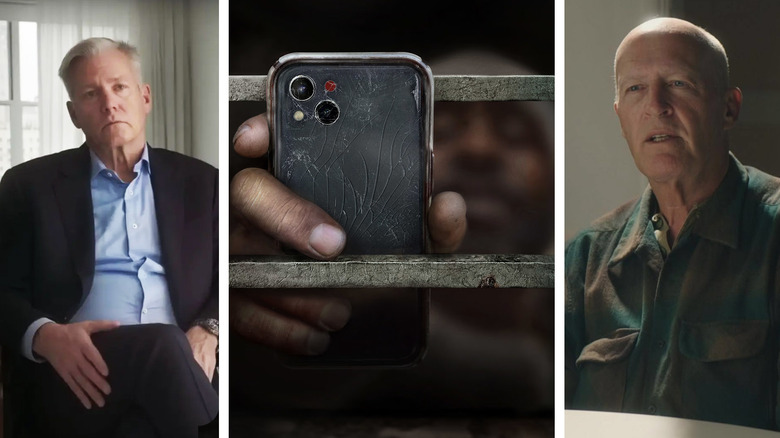
2025 was a deceptively quiet year for the true crime genre. Yes, the usual suspects came along as expected — another look into the psychology of an overexposed serial killer from a fresh angle ("Chaos: The Manson Murders"); a retread of a case that went viral several years ago, now in a glossy, uncomfortably franchised package for the streaming landscape ("American Murder: Gabby Petito"); salacious celebrity stories that have to compete with YouTubers for immediacy and breadth of coverage ("Devil in the Family: The Fall of Ruby Franke"; "The Fall of Diddy"). Amidst a sea of these generic, search-engine-optimized titles, however, we risk overlooking a handful of truly great documentaries that genuinely seem to be moving the true crime genre toward something more worthy of our time.
Through the 10 best true crime documentaries of 2025, a few trends emerge. Filmmaking that subverts the genre's stock visuals through unconventional use and sourcing of footage; storytelling that centers the experiences of the victims and their families instead of turning killers into mythologized monsters; subjects that challenge our preconceived notions of who the "heroes" and "villains" of true crime normally are. The true crime genre has long been at a crossroad between evolution and exploitation — as for what direction it's moving toward as a whole, take a look at our evidence and decide for yourself.
10. Unknown Number: The High School Catfish
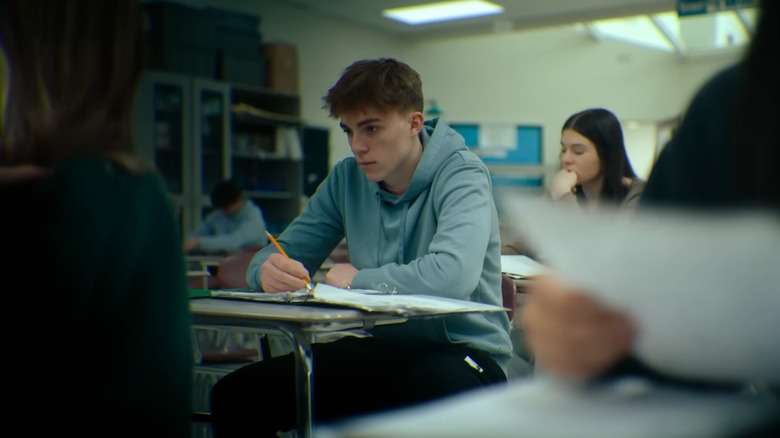
At first glance, "Unknown Number" is the kind of documentary more discerning true crime fans might understandably gloss over. It looks like the kind of hysterical, "do you know where your children are?" stories that network news churns out with almost procedural efficiency. But this tight, 90-minute doc sharply renders what might be the most purely unbelievable story on this list.
At the height of the pandemic in the close-knit community of Beal City, Michigan, 13-year-old Lauryn Licari begins receiving dozens of harassing and disturbingly intimate messages from an unknown number. Not long after, her boyfriend Owen McKenny starts to receive them as well. The attacks continue for over a year, and they don't merely target them in the usual, hurtful ways cyberbullies attack their victims — the messages often skew sexual in nature and betray a frightening level of familiarity with Lauryn's life. The truly mind-blowing details come in the reveal of who is behind the other screen.oh, f
Director Skye Borgman ("Abducted in Plain Sight") takes viewers inside both the investigation and the experiences of Lauryn, Owen, and their parents, as this catfish installs distrust amongst their friends, family, and even themselves. It's a story best experienced without Googling it first, especially since it still won't prepare you for the scene in which a police bodycam captures the genuinely devastating moment Lauryn's stalker is unmasked.
9. Cold Case: The Tylenol Murders
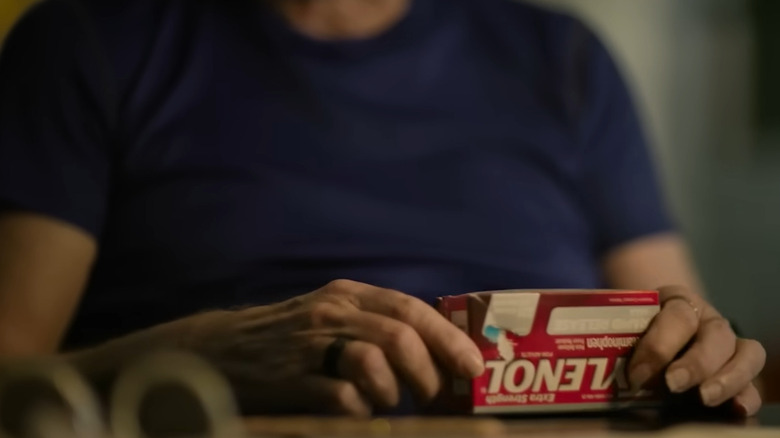
On a macro scale, the 1982 Tylenol murders are mostly talked through two dominant narratives: its enduring, banal impact on the everyday lives of consumers today (if you've ever been frustrated by a pill bottle's tamper-proof seal, you need only study this case to understand why we have them) and its place in the corporate history of the behemoth pharmaceutical company Johnson & Johnson. It's eerie how little the actual victims of this apparent, unorthodox killing spree are ever centered in this conversation — not to mention the fact that the killer themself has never been caught, despite being the target of an exhaustive, high-profile investigation.
Directors Yotam Guendelman and Ari Pines (the team behind the controversial true crime docuseries "Shadow of Truth") venture into dangerous territory in Netflix's "Cold Case: The Tylenol Murders," as they attempt to expand the scope of understanding surrounding the as-yet-unexplained deaths of seven Chicagoans who unknowingly took Extra-Strength Tylenol contaminated with cyanide. It has an unmistakable edge to it, not least of all because it manages to secure the final on-camera interview of James W. Lewis, the convicted extortionist who seemingly claimed to be the killer back in 1982, when he told Johnson & Johnson he would stop the killing spree if he received $1 million. He died in 2023.
The directors also once more show a willingness to engage with theories popularly dismissed to the realm of conspiracy. In this case, their comprehensive breakdown of the factory contamination theory (which alleges that someone within the company is responsible) provides an alternative angle to the case rarely considered.
8. One Night in Idaho: The College Murders
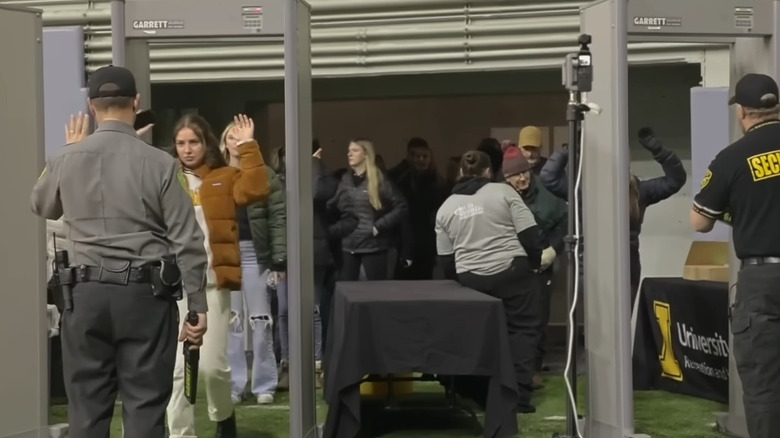
What makes "One Night in Idaho" so remarkable is how the evolving nature of the case ultimately and dramatically recontextualized the documentary itself. As a result of the necessary time taken to capture and produce this story — and the careful, compassionate lens of filmmakers Liz Garbus ("What Happened, Miss Simone?") and Matthew Galkin ("Murder in the Bayou") — a potentially deflating development allows this documentary to become something more than a mere whodunnit.
On November 13, 2022, four University of Idaho students — Ethan Chapin, Kaylee Goncalves, Maddie Mogen, and Xana Kernodle — were killed in a house located off-campus. Garbus and Galkin reached out to the victims' families the following April to begin documenting the ongoing investigation. A suspect had already been apprehended by authorities in 2022 — in July of 2025, just over a week before the documentary was released, he pleaded guilty to the murders.
Because of this, both in its conception and consumption, "One Night in Idaho" is allowed to focus almost entirely on the victims. The killer's background, motivations, and methods are only important in the context of the film's core exploration of the impact the crime had on the victims and their families. In the documentary's best moments, this dynamic gives it the feel of an almost anti-true-crime story. It naturally subverts the genre's worst impulses and strives to offer something genuinely constructive to the audience.
7. The Mortician
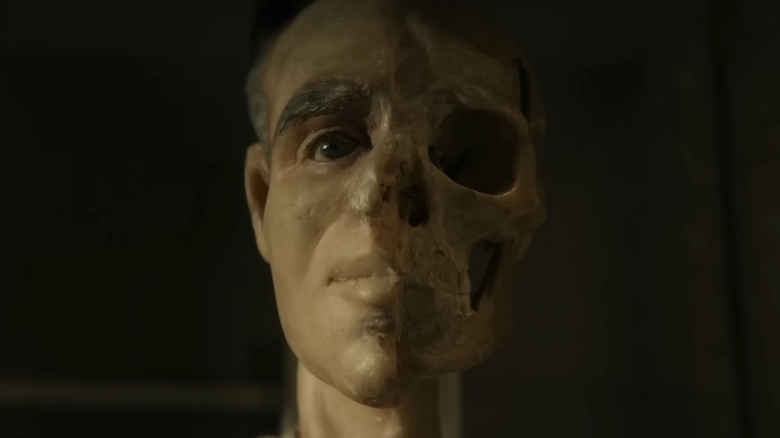
Despite its isolated scope, "The Mortician" feels socially and culturally diagnostic in a way that will haunt viewers more than most sensational serial killer stories. Though there are no ransom notes or bloody crime scenes (and the piles of bodies are more or less where they should be), this story of one man's greed, corruption, and professional ruthlessness is uniquely disturbing — think "Tiger King" with corpses instead of cats. But rather than the charismatic country charm of Joe Exotic, viewers are forced to confront the cold and calculating mortician David Sconce.
David Sconce is no murderer, at least not successfully. What this HBO miniseries (from executive producer Jonah Hill and "Sasquatch" director Joshua Rofé) paints him as is a lethally detached businessman who ultimately brought down his family's funeral home in a gruesome scandal in the 1980s. Spending his days cremating the loved ones of those in his community while lacking the emotional sensitivity that should be necessary to work in this industry (at his core, Sconce professes throughout the documentary that people are essentially just meaningless matter once they've died), he introduces an inhumane level of efficiency into his system by attempting to cremate dozens — and at times hundreds — of bodies at once.
Sconce and his victims are interviewed at length for this series, with the man himself uncomfortably eager to share all the nasty details of his side of the story. It often feels reminiscent of "The Jinx," another massively popular HBO docuseries, as Sconce seems almost as self-incriminating as Robert Durst. At the end of 2025, we ranked "The Mortician" as one of our favorite HBO Max series of the year.
6. Gone Girls: The Long Island Serial Killer
Speaking of "The Jinx," the HBO series had a very similar journey of development as "Gone Girls: The Long Island Serial Killer." Both projects saw a filmmaker go from dramatizing a long unsolved crime to exposing audiences to the true story, as well as the contemporary movement to provide justice for the victims' families. Once again, director Liz Garbus (the same director who helped tell the stories of those impacted by the University of Idaho killings in "One Night in Idaho") manages to accomplish this narrative feat while keeping the story focused on the figures that actually matter.
In 2020, Garbus directed the Netflix film "Lost Girls," which was based on the Gilgo Beach serial killings. In what appears to be (at least through the lens of "Gone Girls") an example of gross institutional corruption and police malpractice, authorities failed to coordinate with the FBI and allowed the case to go cold for over a decade. The documentary primarily focuses on the families of the so-called "Gilgo Four" — Melissa Barthelemy, Maureen Brainard-Barnes, Amber Lynn Costello, and Megan Waterman. All four of the women were making a living as sex workers when they were killed, which the documentary explores as part of the reason authorities were so sluggish to act. At the same time, it strives to de-stigmatize their profession and expand the record of their humanity beyond their tragic fate.
Two years after "Lost Girls" was released, a new task force was formed to find the killer. A year after that, a suspect was finally arrested, though not yet proven guilty. Part of what makes "Gone Girls" so compelling is that the story is simultaneously long overdue in its telling and as-of-yet impossible to complete. New victims are still being found to this day.
5. Zodiac Killer Project
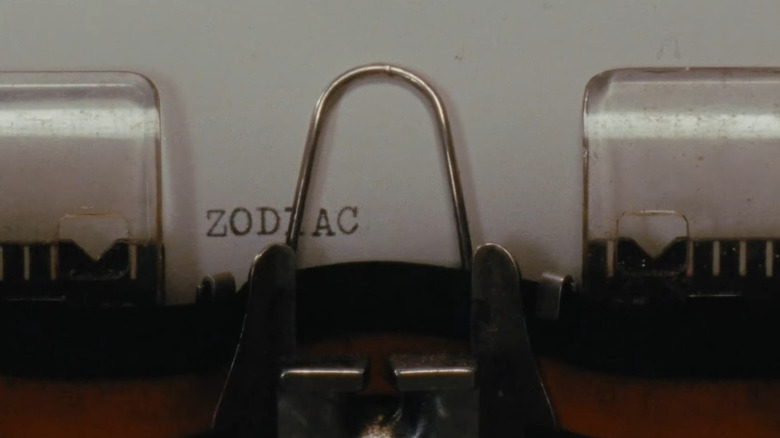
Those going into Charlie Shackleton's "Zodiac Killer Project" blind and hoping for a fresh look at the case of the most notorious serial killer in American history might be a little disappointed. Those dreading yet another documentary retread of the unsolved mystery — so well-worn that a separate Zodiac Killer doc ("This Is the Zodiac Speaking") was released just a year prior — will be a little relieved. Both of these viewers will have an excellent time.
"Zodiac Killer Project" is not a documentary about the Zodiac Killer, but instead, it's a fascinating and often hilariously self-aware autopsy of a documentary that might've been. Shackleton devoted years of his life to telling the story of the late California Highway Patrol officer Lyndon Lafferty, who alleged (in his 2012 memoir "The Zodiac Killer Cover-Up: The Silenced Badge") that a group of seven law enforcement officials had uncovered and fought to protect the killer's true identity. Unfortunately, Lafferty's estate denied him the rights, leaving Shackleton with a film's worth of ideas, images, and narrative tricks that would now go to waste.
Instead, he uses "Zodiac Killer Project" to engage a professional failure head on without ego, and in the process finds himself deconstructing the true crime genre entirely. Its strange, deadpan sense of humor belies a filmmaking feat of extraordinary effort, vulnerability, and risk. No, it certainly won't satisfy the bloody appetites of devout Zodiac sleuths or diehard true crime fans. But those with the right mindset and even a casual understanding of the case and/or the tropes of true crime documentaries will find it hard not to laugh with (and occasionally at) Shackleton, and they might just leave with a deeper understanding of their own relationship to the genre at large.
4. The Perfect Neighbor
While Charles Shackleton's "Zodiac Killer Project" asks us to consider whether or not the true crime genre has descended into a hodgepodge of remixed images and rote, emotionally exploitative storytelling, Geeta Gandbhir offers a vision of what documentaries about real crimes could be outside the genre as we currently recognize it.
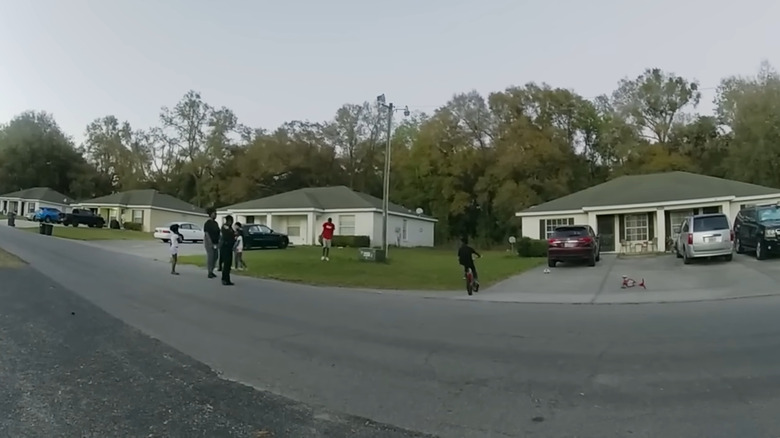
In 2023, the filmmaker (at the time best known as a producer on docu-projects like "Black and Missing" and "Katrina: Come Hell or High Water") was horrified to learn that her family friend — a 35-year-old Black woman named Ajike Owens — was murdered in her Florida neighborhood, in front of one of her four young children. The killer, Owens' 58-year-old white neighbor Susan Lorincz, initially claimed the killing was self-defense, invoking Florida's controversial "Stand Your Ground" law.
Using police bodycam footage to reconstruct a timeline of harassment, paranoia, and structural violence, Gandbhir essentially turns this crime into a visceral horror story about systemic failure and the weaponization of hysteria against vulnerable communities. It's a very difficult film to witness, and some may righteously have a more complicated, critical opinion about someone making a movie out of this murder. On the other hand, at a time when Black Americans still struggle to make the world understand the outrageous yet socially normalized threats they experience in their day-to-day lives, "The Perfect Neighbor" confronts viewers with a reality they can't dismiss.
At the end of the year, /Film ranked "The Perfect Neighbor" as one of the best streaming movies of 2025. It earned Gandbhir an Academy Award nomination for Best Documentary Feature in 2026 (she was also nominated for Best Documentary Short for her film "The Devil Is Busy").
3. Predators
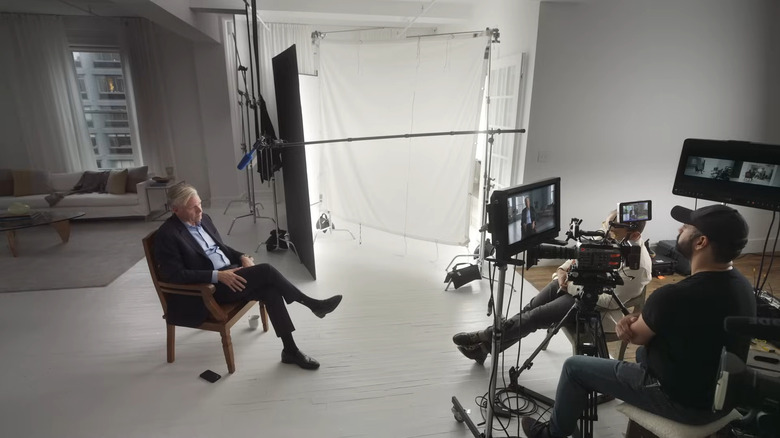
From Charles Shackleton's meta "Zodiac Killer Project" to the victim-centered work of Geeta Gandbhir's "The Perfect Neighbor" and Liz Garbus and Matthew Galkin's "One Night in Idaho," 2025 felt like it was heralding a reckoning for the true crime genre. Of all the films on this list trying to come to terms with its legacy and future, none are as direct, incisive, and disquieting in their discoveries as David Osit's "Predators."
Throughout the 2000s, "To Catch a Predator" was one of the most-watched true crime series on air, giving millions of viewers a front-row seat to what were, at the time, exciting sting operations that brought down the most disgusting and reprehensible villains in society. The climactic moment at the end of each episode, in which Chris Hansen would insist that these cornered criminals "take a seat" and answer questions about their obvious intentions for the evening, were framed as moments of clear procedural, intellectual, and moral triumph. It's such simple, easily digestible entertainment that many of these moments have even enjoyed a second life on YouTube — though they now have to compete with legions of amateur, self-described "predator-hunters" inspired by Hansen's methods (and, no doubt, his fame).
The question Osit posits through "Predators," however, is the long-term social and moral cost of this entertainment (which, in hindsight, seems like fast-food criminal justice at the absolute best and spiritually corrosive poison at worst). He daringly — and at times uncomfortably — challenges the audience's perception of crime storytelling, television investigations, and even the alleged predators themselves. These subversions would make necessary viewing on their own, but what makes "Predators" vital is Osit's own climactic moment of dubious "triumph," in which he invites none other than Chris Hansen himself to "take a seat" and discuss the impact of his life's work.
2. The Yogurt Shop Murders
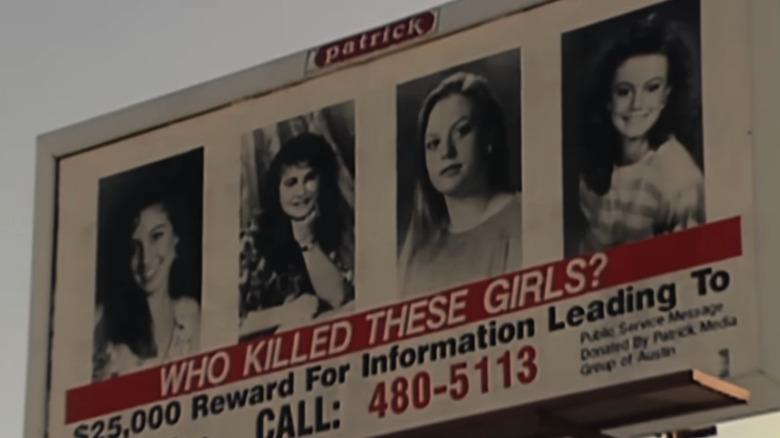
True crime aficionados have likely already come across the Austin yogurt shop murders before. Countless YouTube channels and podcasts have gone "in-depth" into the background of this deeply upsetting unsolved mystery, and "48 Hours" provided a more traditionally journalistic breakdown themselves. Where most of these projects fail, however, is a focus on exploring — and in some cases even attempting to solve — the mystery surrounding the killer's identity. What was far more interesting to filmmaker Margaret Brown, however, was what happens to a community when a righteous yet ravenous hunger for justice goes unsated for decades, leaving the victims' families and loved ones in a suspended state of grief.
Here, the case itself is framed not as a puzzle to be solved but as a central point of trauma for an entire community. In 1991, four teenage girls — Amy Ayers, Jennifer and Sarah Harbison, and Eliza Thomas — were murdered in a frozen yogurt shop in Austin, Texas. The details of the crime are genuinely too horrible to discuss here, but suffice it to say, it left the city in a state of shock that has lasted three decades. The production crew themselves had such a difficult time processing what they learned throughout the process of interviewing families and investigators that A24 offered additional stipends to cover the cost of therapy. Yet, despite the magnitude of the pain captured in this documentary, "The Yogurt Shop Murders" makes a stunning case for the profound, healing power storytelling can offer when closure is otherwise out of reach.
1. The Alabama Solution
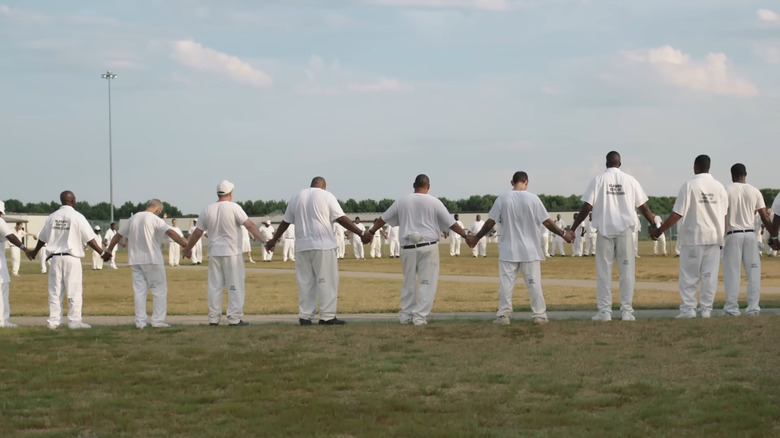
In 2015, documentary filmmaker Andrew Jarecki made national headlines when he sat face-to-face with a killer for his peerless HBO miniseries "The Jinx," a docuseries that helped finally close a decades-old mystery and put a once-powerful man behind bars. A decade later, Jarecki is doing something arguably even more daring: pointing his camera at the very people true crime documentaries normally demonize.
Filmed over the course of six years, "The Alabama Solution" is a collaboration between Jarecki and Charlotte Kaufman, the pair having previously worked together on the follow-up season to "The Jinx." The stakes are immediate and the pacing simply masterful. While observing a religious ceremony at Alabama's Easterling Correctional Facility during what was originally supposed to be an innocuous, one-off visit, the prison's inmates risked their safety in an effort to inform the filmmakers about their horrifying experiences within its walls. The subsequent investigation (captured through guerrilla camera work and FaceTime interviews on smuggled phones) reveals a shocking pattern of systemic abuse, dangerous mismanagement, and institutional corruption so calcified that not even someone with Jarecki's platform can penetrate it. The true heroes of the story are the prisoners themselves, who have spent years fighting for their lives inside one of the deadliest prisons in the country.
On January 22, 2026, "The Alabama Solution" was nominated for Best Documentary Feature at the 98th Academy Awards. Less than a week later, Robert Earl Council, Raoul Poole, and Melvin Ray — all three of whom put their lives on the line to contribute to the documentary — were transferred to solitary confinement. It frankly feels impossible to overstate the urgency of "The Alabama Solution." These men risked everything to show the world what's happening to them right now. If true crime has any meaningful power as a genre, their story must transcend awards and lead to direct action.