

10 Best Movies Directed By Clint Eastwood, Ranked
We may receive a commission on purchases made from links.
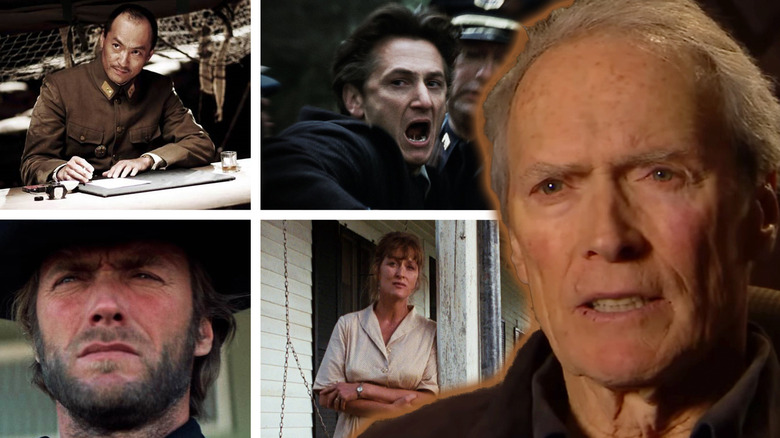
Clint Eastwood is one of cinema's greatest icons, delivering an inestimable number of performances in classic films across genre, especially Westerns, that have earned him a spot among the all-timers of movie star renown. The only thing more formidable than his work in front of the camera is the time he's spent behind it.
When he moved into directing with the 1971 psychological thriller "Play Misty For Me," Eastwood immediately announced himself as a multi-hyphenate of the highest order. His aptitude would immediately grow from there, producing some of his finest masterpieces early on in his behind-the-scenes capacity and keeping pace well into his 5th working decade (and 8th living one) with cinematic jewels littered throughout. On set, he's known as an amenable and efficient operator, with working days often ending at lunch time because of his streamlined approach. His films represent this as well, frequently encapsulating a minimalist ambiance that elevates any given genre to a practical, unfussy form of affecting artistry.
Like any prolific director, he's put out his share of more underwhelming fare, but Eastwood is a director who always seems to reorient himself back to something more meaningful. His films often explore the knotty complexities of the human and societal spirit, complicating the controversial popular perceptions of his occasionally outspoken jumble of political views. For Eastwood, the movies speak for themselves.
Here are the 10 best movies directed by Clint Eastwood, ranked.
10. Million Dollar Baby
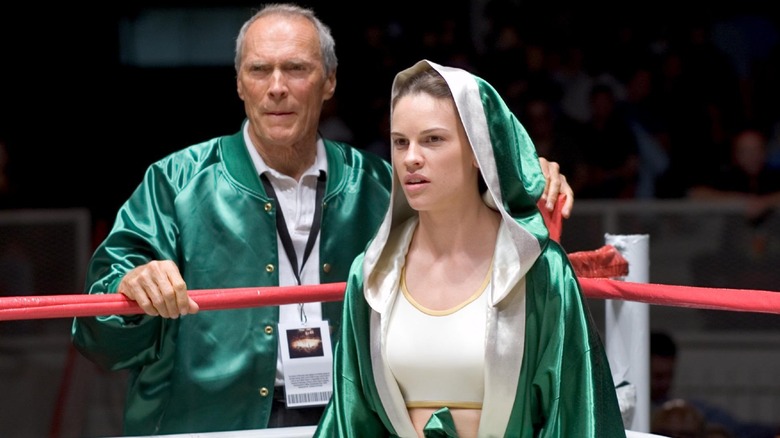
Eastwood's Academy Award-winning 2004 sports melodrama is a feat of depressing the hell out of an audience. Hilary Swank plays amateur boxer Maggie Fitzgerald, who approaches the jaded, hardened, old-fashioned coach Frankie Dunn (Eastwood). "Million Dollar Baby" could have easily been a film of modest ambitions that doesn't try to reach beyond a classically entertaining Hollywood drama with characters triumphantly overcoming the odds.
But that is decidedly not what happens in "Million Dollar Baby," transitioning to a tragic, occasionally even morbid treatise on the evaporation of dreams. This is made all the more effective by its surprising materialization, and by Eastwood's reliably sturdy direction of both ends of this dual-sided tableau, effortlessly moving from underdog sports movie to devastating weepy.
"Million Dollar Baby" is also an effective case study in how Eastwood fleshes out his characters. Working from a script by Paul Haggis, Eastwood magnifies the core beats of the screenplay by drawing an impressive performance out of Swank and himself. The two form a believable, close-knit bond as performers, guided along the fatalistic and emotional aspects of the screenplay. "Million Dollar Baby" holds your feet to the fire of emotional devastation, but Eastwood locates the true humanity and love behind the heartbreak.
9. The Outlaw Josey Wales
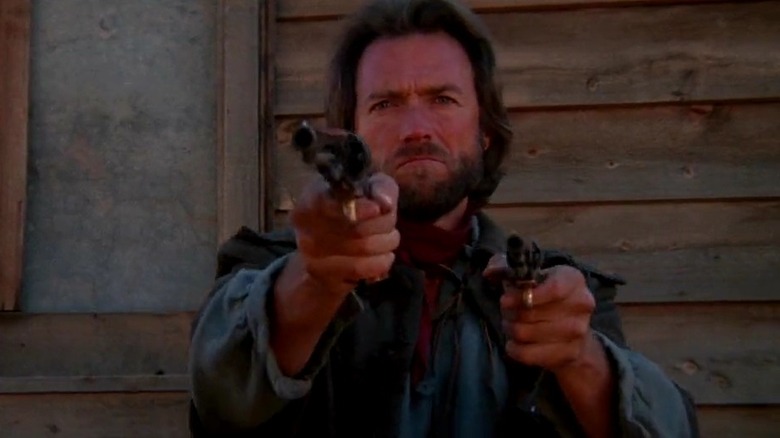
"The Outlaw Josey Wales" is a film that Eastwood himself looks back on as a career high point – and for good reason. This subversive 1976 Western catches the director and star still in the opening decade of his career working behind the camera, helping to solidify his status as a multi-hyphenate creative force.
Written by Sonia Chernus and Philip Kaufman based on controversial novelist Asa Earl "Forrest" Carter's 1972 book "The Rebel Outlaw: Josey Wales," the film sees Eastwood picking up the mantle of another fabled Western legend in Wales, a Southern farmer who joins the Confederate Army during the Civil War to get revenge on the Union soldiers who murder his family early in the film. As the war reaches its inevitable conclusion and Wales once again escapes his own demise at the hands of deceitful leaders, he discovers a found family in the abandoned corners of an America being cultivated by imperialism.
"The Outlaw Josey Wales" is a troubled project from multiple angles — it famously suffered major behind-the-scenes tensions that ultimately led Eastwood to fire Kaufman, who was originally meant to direct. On the surface, the optics of vilifying Union soldiers in a story written by a former Ku Klux Klan organizer suggest a deeply problematic prospect. But Eastwood finds the story's rewarding heart, depicting a world not just of North versus South but of a moral battle between man and expansionism and colonialism. The only way to truly find yourself is to withdraw from the entire project of conquering and killing.
8. The Mule
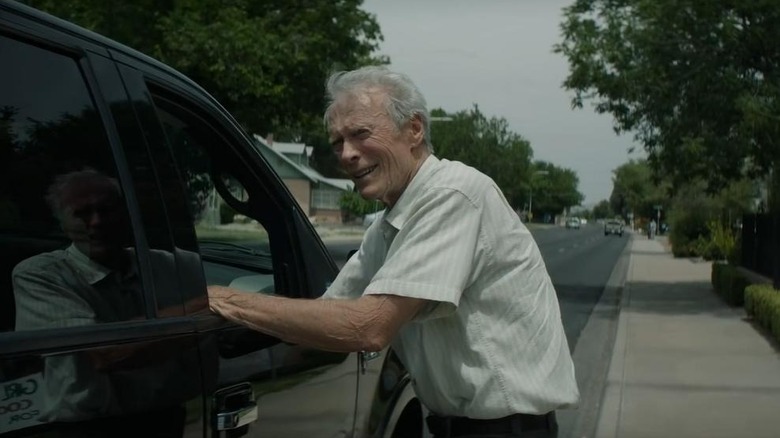
The pinnacle of Eastwood's late-period, somewhat self-aware "old man" era, "The Mule" is both affectingly somber and playfully funny. In what other film could you hope to see Eastwood winkingly portraying an antiquated octogenarian who complains about kids and their phones these days? He even has suggested relations with women seemingly half his age.
Those are the kinds of touches that writer Nick Schenk (who also wrote "Gran Torino and "Cry Macho") brings to this story of the over-the-hill senior veteran Earl Stone, who becomes an unwitting drug smuggler for some extra cash. Taking regular trips across the country and back again, his trafficking overseers and the DEA, with Bradley Cooper as the leading officer, are consistently caught off guard by the amiable, blithe geniality of Earl, whose criminal escapades are undercut by his accidentally recusant demeanor.
So much of what makes the film work is Eastwood's work in front of the camera, which is why it's surprising to learn he had to be convinced to star in "The Mule." Earl becomes an avatar for Eastwood himself, as he reckons with the twilight years of his life that he seemingly isn't sure he made the most of, or of one that he's still actively seeking meaning from. As Earl navigates the minutiae of a world that has seemingly left him behind, Eastwood probes the modern conditions of America, and where he and those surrounding him fit into its fissures.
7. Changeling
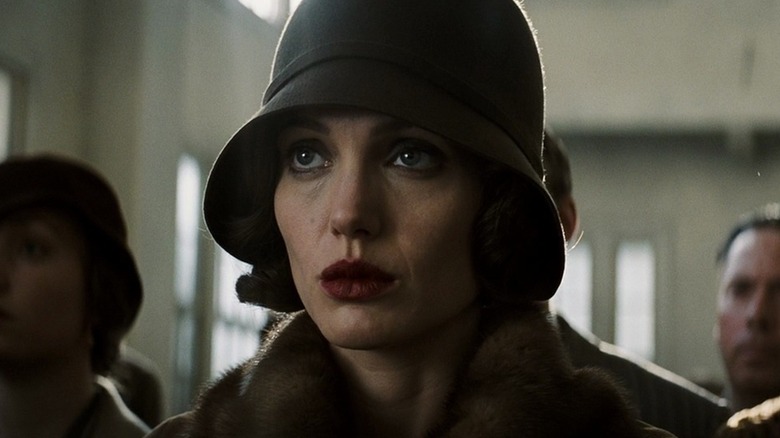
Eastwood is well-known as a man of complicated politics, exhibiting a veneer of Libertarianism while offering nuanced explorations of social issues within his actual movies. Take "Changeling," whose through line speaks to the fact that the core foundations of our law enforcement apparatus are underpinned by violent deception and misogyny.
Eastwood takes these customary societal reckonings of his into a setting and scenario atypical of his directing work. A prestige period-piece drama set in 1930s Los Angeles, "Changeling" stars Angelina Jolie as single mother Christine Collins, whose son Walter goes suddenly missing. When he's found and returned to Christine, she immediately realizes the boy is not Walter, much to the tumult of a police division attempting to uphold their reputation, to the point of having Christine committed to an insane asylum when she continues to insist that the boy in her home is not her son.
"Babylon 5" and "Sense8" creator J. Michael Straczynski's script proved so distressing that Angelina Jolie almost turned down the project. Based on the real 1928 Wineville Chicken Coop murders, "Changeling" works as a handsome costume drama as much as it does a psychological horror movie, blending thriller and melodrama into something that feels classical and scary. It's an undersold film in Eastwood's filmography, but it's exquisitely made and penetrates long-standing, vile truths about achieving legitimate justice in America.
6. Mystic River
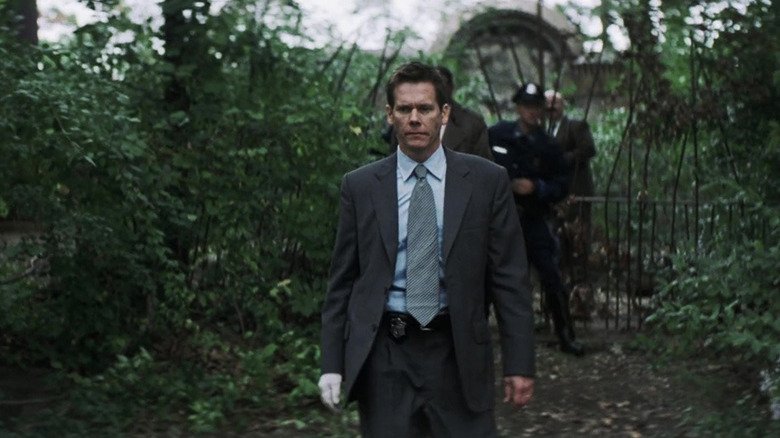
Based on author Dennis Lehane's novel of the same name, which also directly inspired the author of "Gone Girl," "Mystic River" is prime material for Eastwood to bring his trademark sense of sturdy backbone to. With this tragic American crime drama about cycles of violence in a world of senseless cruelty, Eastwood captures the novelistic qualities of the source material but transmits them in a potent, elegant, prestige drama.
Set in the working-class suburbs of Boston, Massachusetts, "Mystic River" follows a group of three men all still living in the shadow of childhood friendships splintered and snarled in the unfair inhumanities of life. When they were boys, Jimmy Markum (Sean Penn) and Sean Devine (Kevin Bacon) watched as their friend Dave Boyle (Tim Robbins) was kidnapped off the street by child predators. The three, still tormented in their own ways, become caught in each other's crosshairs in adulthood after Jimmy's daughter is suddenly murdered, and it seems that Dave may have blood on his hands. With Sean working as a local detective and Jimmy trying to maintain a sense of normalcy as an ex-convict, the methods used to uncover the truth yield uneasy, harrowing conclusions.
With six Academy Award nominations and two wins (Penn for Best Actor and Robbins for Best Supporting Actor), "Mystic River" hosts a trio of performances that ably support the film's notions of the haunting nature of the past seeping into the present. It also proves Eastwood's unflinching, dignified command over the core essentials of filmic drama.
5. Letters from Iwo Jima
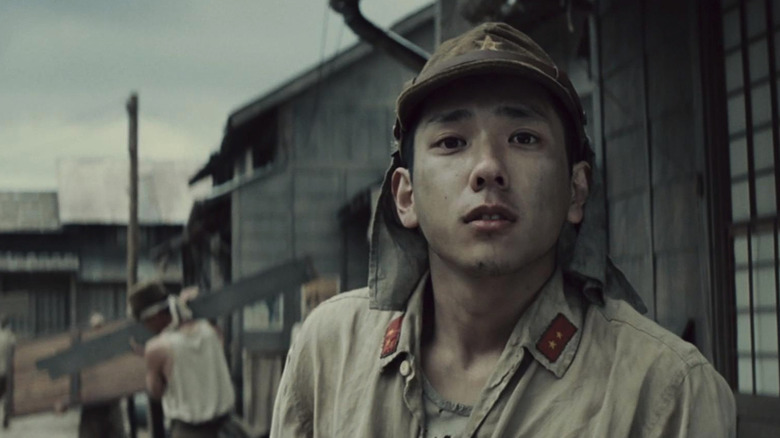
The B-side of Eastwood's diptych about the U.S. Marines' invasion of the Japanese island of Iwo Jima in the midst of World War II, "Letters From Iwo Jima," sees the director at once his most brutal and his most humanistic. A counterpoint to the American perspective of the war in "Flags of Our Fathers," "Letters From Iwo Jima" follows the Japanese soldiers as they submit themselves to bloody battle, conscripted and stripped away from their lives and families.
Whereas "Flags of Our Fathers" explores the lingering ramifications and trauma of being dubbed a hero in warfare, "Letters From Iwo Jima" is more concerned with the immediate viscerality of boots-on-the-ground battle. Still, Iris Yamashita's screenplay has an existential rumination, exploring the humanity behind soldiers that history lessons and reenactments can render faceless.
Eastwood conveys the dread of this unbounded violence through his unfussy depiction of the conflict and more deliberate stylistic choices, such as color-grading "Letters From Iwo Jima" with a leaden gray palette meant to make audiences uncomfortable.He's aided by an impeccable cast of Japanese performers, led by Ken Watanabe as General Tadamichi Kuribayashi, who portrays the commander as a determined but humane leader, offering a contrast of sympathetic humanity amid gratuitous domination and violence. For the man who once portrayed the likes of Dirty Harry, "Letters From Iwo Jima" represents Eastwood's refined maturity in realistically reckoning with violence.
4. High Plains Drifter
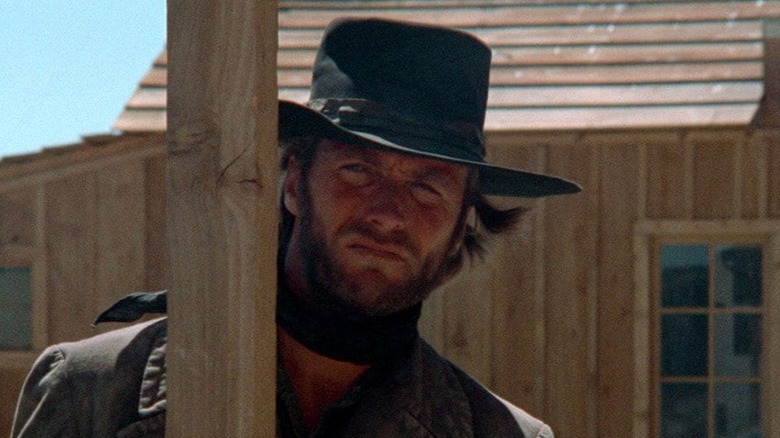
Eastwood's sophomore directorial effort, "High Plains Drifter," finds him in modes both familiar and boundary-pushing. A peculiar hybrid of existentialist horror and classical Western, Eastwood stars as The Stranger. Arriving in a small town and immediately killing its gunmen, the small band of locals opt to recruit the skilled Stranger to help them fend off an approaching group of outlaws.
"High Plains Drifter" sounds like it should be a rip-roaring opportunity for Eastwood to transpose his newfound directorial skills onto a straightforward tale of Western heroism. Writer Ernest Tidyman, who also penned "The French Connection" and "Shaft," ensures there will be no such easy gratification. This is a film that is infused with a hefty dose of sustained nihilism, starting with The Stranger assaulting a woman in the opening minutes of the film and ending with a fatalistic, supernaturally-charged climax that contemplates the weight of fate, death, and consequence.
"High Plains Drifter" is a little bit like if Satan himself were the hero in "Seven Samurai." Eastwood plays an antihero of the most unambiguous order in "High Plains Drifter," carrying a palpable sense of wrath and eventually manifesting something close to Hell on Earth. The film's overarching narrative of the cyclical nature of violence is deliberately antagonistic, and it even got John Wayne to write Eastwood an angry letter over the film's supposed sacrilege of American history. But it also makes for what is now an all-time classic of the genre, one with a darker, bleaker bite than other mainstays.
3. A Perfect World
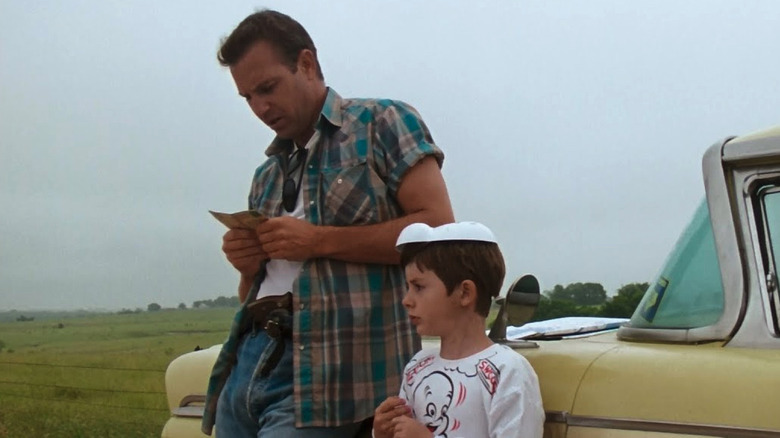
"A Perfect World" may deserve the title of Eastwood's most purely underrated movie. This sensitive 1993 crime drama stars Kevin Costner as escaped convict Butch Haynes, who forms a paternal relationship with the kidnapped young boy Phillip. The film is heartfelt in its blend of breezy comedy and poignant melancholy, offering the type of two-hander character drama befitting a director so skilled at extracting the subtle intricacies of his characters.
"A Perfect World" takes the broadly commercial, "Paper Moon"-type premise of a mismatched adult-child pairing and analyzes it through the lens of Eastwood's unadorned directing style and his penchant for exploring moral ambiguities in relationship dynamics and violence. It's both a portrait of cyclical criminality within the American carceral apparatus and of how broken childhoods lead to hapless futures, in which Butch recognizes the potential to break a pattern as the father figure he himself never had.
True, "A Perfect World" situates itself as a potentially hackneyed fathers-and-sons tragedy. But John Lee Hancock's screenplay is given an extra dose of verisimilitude by Eastwood's typical measured pacing, observational mannerisms, and a true-to-life sense of comedy, sorrow, and simplicity that yield a budding emotional reckoning. It's also a career-best performance from Costner, whose buddy-movie relationship with his young co-star T.J. Lowther affords "A Perfect World" the type of American myth-making life that defines Eastwood's greatest pictures.
2. The Bridges of Madison County
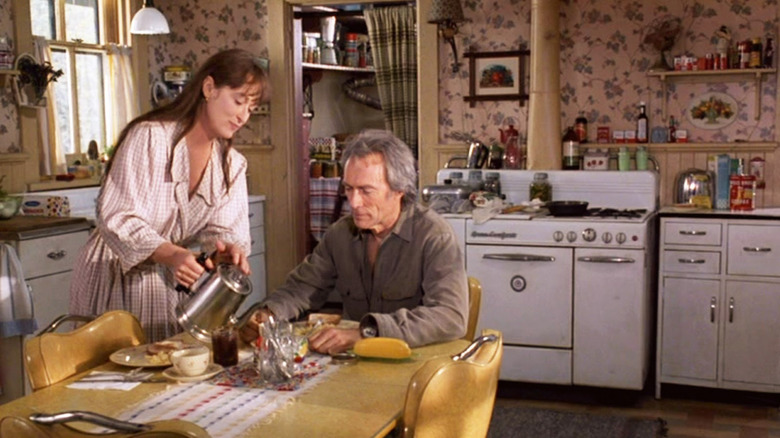
Any copies of "The Bridges of Madison County" should be affixed with a standard-issue warning that you should only watch the movie when you're prepared for your heart to be ripped straight out of your chest. Eastwood's visage may have calcified as a stoic tough guy of the American West, but movies like this prove his mastery of passionate, tender emotion.
Based on the 1992 novel of the same name by Robert James Waller, "The Bridges of Madison County" is told in flashback as two siblings learn that their deceased mother had requested that her ashes be scattered around a nearby bridge rather than being buried with her late husband. The film becomes an inquiry into the past, flashing back to the mother in question, Francesca Johnson (Meryl Streep), as she engages in a burning affair with visiting photographer Robert Kincaid (Eastwood) while her family is out of town.
Eastwood elevates the source material to significant degrees — Streep had even once referred to the original "The Bridges of Madison County" novel as a "crime against literature." While the book was a popular commercial success, it was critically dismissed as a banal airport read weepy. But Eastwood strips the story down to its essence and uses his reliable observational style to intensify the core dynamic of the fate between two lovers whose paths may have been meant only to be temporary.
1. Unforgiven
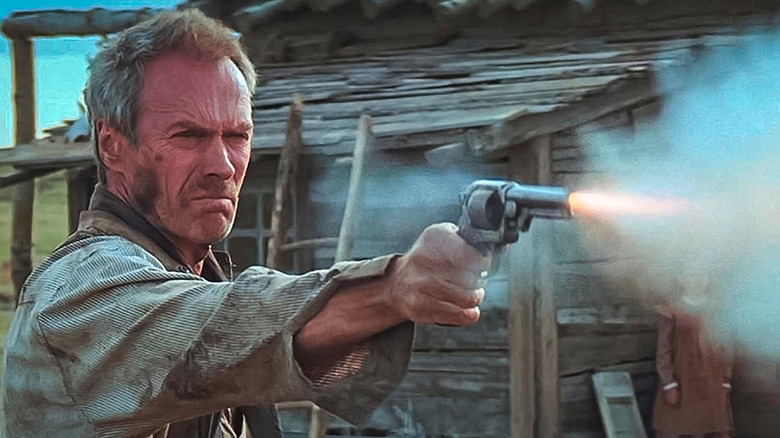
"Unforgiven" is the type of film you can only make when you have a specific kind of experience under your belt. It's a direct reaction to being a generation-defining icon, and what it means to mature into an artist of your own definition. The eternal icon of the Western atomizes the genre that made him a star, breaking it down to its most essential parts and building it back into something wholly new: somber, critical, and an essential entry into understanding the genre and the artist.
Indeed, it's no secret that "Unforgiven" is, in essence, a spiritual sequel to Eastwood's time spent as The Man With No Name. But more than that, it sees the director and star reckoning with his role in the forging of American legend. Starring as the aged, murderous outlaw William Munny, now quietly mourning as a widower living on a farm, Eastwood grapples with a history defined by death as he reluctantly embarks on one last task as a bounty hunter, hoping it will ensure a secure future for his children.
"Unforgiven" depicts a cowboy defined by a more regretful motivation than his immediate counterparts. It refutes the classical notions of easily discerned good and evil by depicting Munny as something more ambiguous than either — he is a product of a turbulent environment in which killing is necessary to survive. Munny's actions that should brand him a hero instead cement him as a tragic recipient of violent circumstances that he controls the only way he can: behind the trigger of a gun. With "Unforgiven," cinema's greatest cowboy offers the genre's most trenchant critique.