

12 Best Nickelodeon Movies, Ranked
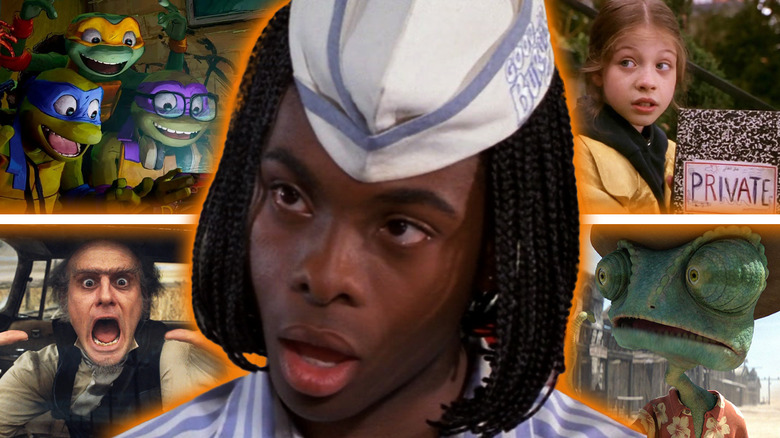
Among the major production companies making films for young audiences, Nickelodeon Movies is often the unsung hero — the younger sibling of Disney, Pixar, and DreamWorks, always caught in the shadow of genre-defining hits like "Frozen," "Toy Story," or "Shrek." And yet, it might just be this scrappy, underdog status that makes so many Nickelodeon Movies distinct in our memory.
Since its inception in the mid-'90s, the studio has told stories that reflect a less perfect, yet arguably more honest view of adolescence. Their animated adventures attempt to outthink the aesthetics and techniques perfected by their peers, creating visuals that are compellingly unique and a little chaotic. Their comedies are messier, appealing to a silly sense of humor we forget to cherish before we become too smart or too cool in adulthood. The coming-of-age stories have an edge to them, featuring protagonists who make the complicated, human mistakes many do while trying to grow up.
Having matured itself beyond its 30th anniversary milestone, we've gone back to the very beginning to highlight our favorite Nickelodeon movies of all time.
Good Burger
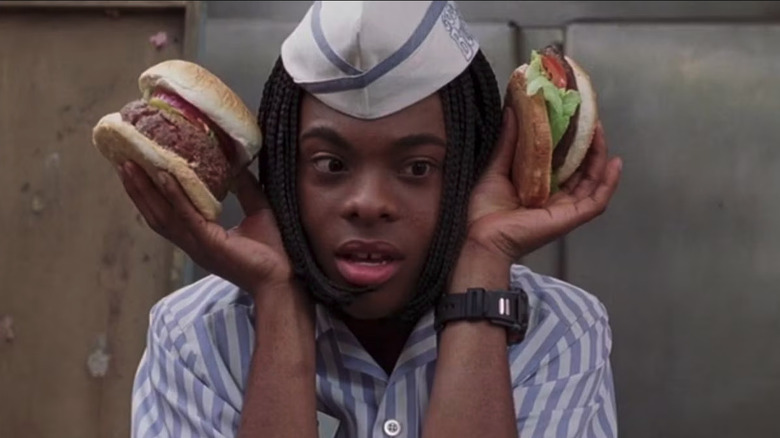
Though it's undoubtedly one of the most iconic and culturally enduring Nickelodeon movies ever made, "Good Burger" was no critical darling when it was first released. The 1997 comedy starred Kenan Thompson and Kel Mitchell as aimless teenagers working a summer job at a local fast food joint. Admittedly, it's a loud, unabashedly immature kind of movie with a premise as thin as a Good Burger patty. It was described by critics at the time as dumb, alienatingly juvenile, and agonizingly overanimated in its execution. In hindsight, we'd argue those critics are thinking a little too hard — and the film's many fans would agree.
Against a budget of $8.5 million, "Good Burger" grossed a whopping $23.7 million. The major names involved had effectively cemented themselves as defining creators — perhaps even disruptors — in children's film and TV. Director Brian Robbins (who also co-created "All That") went on to direct an even bigger hit in "Varsity Blues" two years later, while infamous co-screenwriter Dan Schneider went on to shape Nickelodeon's next decade of programming. Thompson and Mitchell were immortalized as '90s heroes through the film as well. As older readers are likely aware, Thompson ultimately became a longstanding cast member of "Saturday Night Live."
"Good Burger" had such an impact on the kids it was made for that, now in adulthood, many have argued the film is not merely a powerful '90s time capsule, but a genuine cult classic. When the long-awaited sequel "Good Burger 2" debuted on Paramount+ in 2023, it was the most-watched movie premiere in the streamer's history.
Jimmy Neutron: Boy Genius
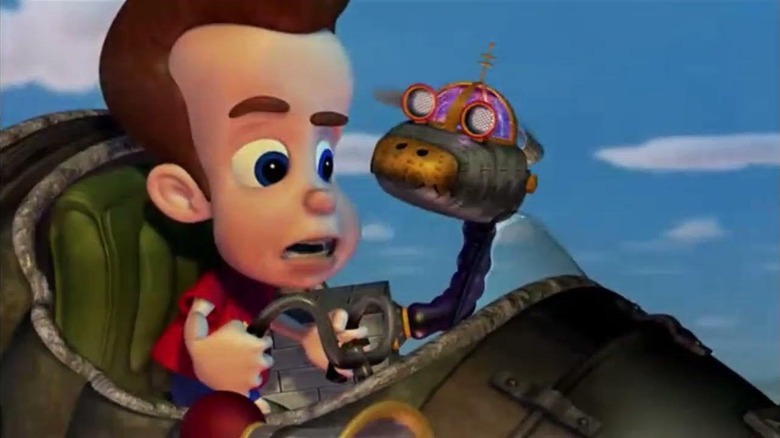
Outside of Disney and Pixar, it's hard to remember many early-aughts CGI animated movies being half as creative as "Jimmy Neutron: Boy Genius." Released just over five years after the aforementioned studio had shaken up the animation medium with "Toy Story," Nickelodeon and John A. Davis took young audiences to the strange yet remarkably thrilling town of Retroville, where the titular boy genius (voiced by Debi Derryberry) must rally his estranged classmates to rescue the day from sure destruction.
From a storytelling perspective, the movie works because Jimmy feels like such a well-meaning outsider from the first scene. He's every bit as endearing and tragic as Tobey Maguire's Peter Parker. Derryberry's vocal performance is impossible to forget — the entire main voice cast (particularly Rob Paulsen and the late Jeffrey Garcia as Jimmy's friends Carl and Sheen, and Mark DeCarlo as Jimmy's father Hugh Neutron) creates such distinct, irreplaceable voices for their characters that it's easier to recall their work than, say, that of Patrick Stewart or Martin Short, who are nonetheless perfectly entertaining as the film's villains.
The real treat of the film is its overall design. The clash of Retroville's retrofuturistic vibe, the junkyard aesthetic of Jimmy's inventions, and the opulently alien design of the Yolkians works shockingly well, creating an appropriately chaotic and disparate visual world that underlines the film's spirit of boundless imagination.
"Jimmy Neutron: Boy Genius" grossed over $102 million worldwide against a budget of $30 million and was the first Nickelodeon movie to earn an Academy Award nomination (for Best Animated Feature, which it lost to "Shrek"). Its sequel series "The Adventures of Jimmy Neutron, Boy Genius" ran for three seasons on Nickelodeon.
Dora and the Lost City of Gold
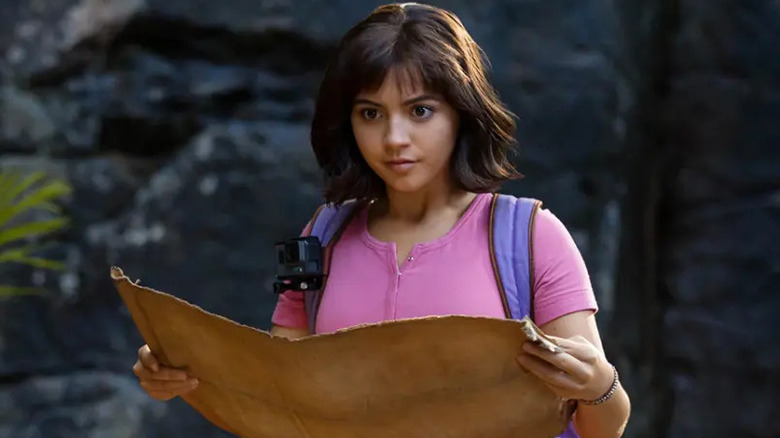
"Dora and the Lost City of Gold" threads an impressive needle. On paper, there isn't a particularly strong reason to turn the massively popular animated children's series (the target audience of which is for the most part toddlers too young to go to school) into a live-action young adult adventure film. It sounds like the premise of a Cracked YouTube short: "What if Michael Bay produced a gritty update of 'Explorer' where the monkey is played by Danny Trejo?" This isn't exactly what came to pass (Bay's involvement wound up being misreported), but it's close enough that the final product still feels like everyone involved got away with something — and that's very much to the movie's benefit.
Starring future "Superman" actor Isabela Merced (née Isabela Moner), "Dora and the Lost City of Gold" is a hilarious and surprisingly exciting film that succeeds by treating its source material in the same way "Barbie" and "The LEGO Movie" treated theirs. Dora, now a teenager, is thrown into a Los Angeles high school, where the character's trademark bright personality and childlike wonder clash with what is essentially the real world (comparative to her upbringing in the jungle). It isn't merely comedic fodder, however. Throughout her journey — from trying to fit in with her cousin Diego (Jeff Wahlberg) and their peers to leading them all through the Peruvian jungle — the film uses that clash to explore how uncomfortable and disorienting growing up can be. It's an insightful way to make meaning out of forcing Dora, the character, to grow up for an audience that hasn't spent much time with her since they were in preschool.
Angus, Thongs and Perfect Snogging
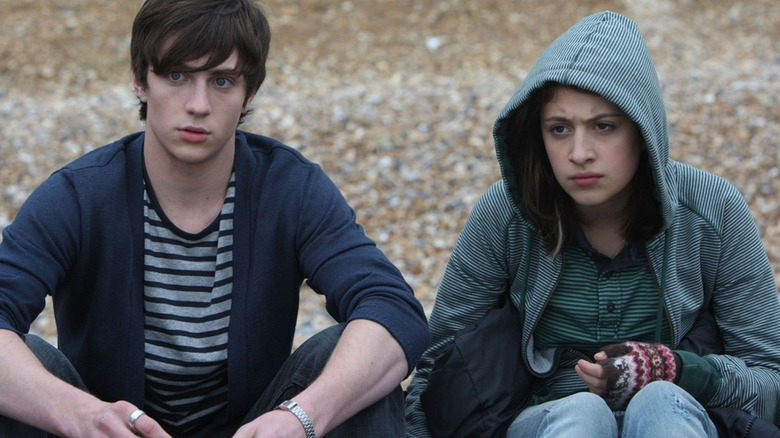
Speaking of adolescent awkwardness, few films capture the humiliation ritual that is high school quite like "Angus, Thongs and Perfect Snogging." Released in 2008, the film follows a 14-year-old girl named Georgia (Georgia Groome) who is intent on growing up as fast as possible — while also, of course, having the time of her life as a goofy teenager. Much of the story revolves around her and her friends' attempts at talking to, dating, and generally understanding high school boys — in particular Robbie Jennings, who is played by a young Aaron Taylor-Johnson. Both Groome and Taylor-Johnson are remarkable in the film given how early they are in their respective careers.
As its title might suggest, "Angus, Thongs and Perfect Snogging" is slightly more suggestive and, in some cases, outright explicit than one might expect a Nickelodeon movie to be, especially in 2008. That's arguably the film's greatest strength. It isn't sensational, scandalous, or exploitative, but rather a brutally honest, earnest depiction of what being young is actually like. Thanks to this refreshing bluntness and its equally credible sense of humor (characters are allowed to swear and tell the kind of jokes you actually told your friends in high school), it's elevated far above the kinds of coming-of-age stories normally aimed at young teenagers. "Angus, Thongs and Perfect Snogging" is a solid romantic comedy that rests comfortably alongside its contemporaries.
Lemony Snicket's A Series of Unfortunate Events
For fans of the book series, Netflix's "A Series of Unfortunate Events" was nothing short of a gift, a painstakingly fidelitous and well-produced adaptation made all the more necessary after the release of the film in 2004. Indeed, the film has a significant drawback in that it opted to condense the first three novels into a single story — and though there were discussions about a potential sequel, the story ends with a strange sense of finality and without the dark forward momentum that propels each novel. Certainly, these qualities would make for an underwhelming book-to-screen translation — but, now that we do have a definitive adaptation, it's time to reappraise "Lemony Snicket's A Series of Unfortunate Events."
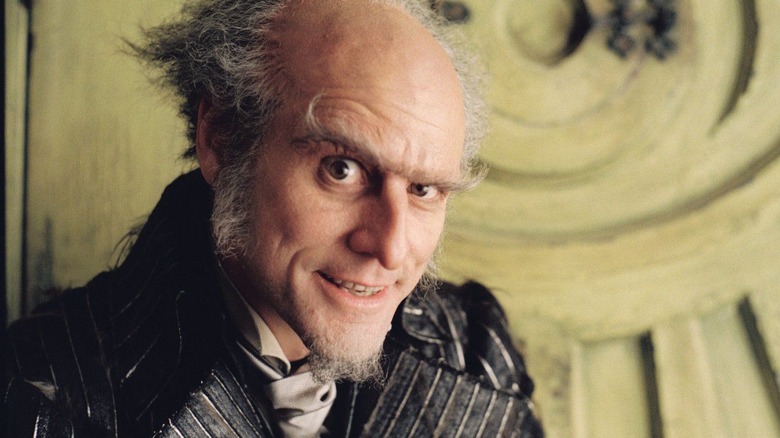
For the uninitiated, the books, series, and film all follow a trio of orphans — the Baudelaire children — who are forced to live with a malicious distant relative known as Count Olaf after the mysterious deaths of their parents. When it becomes clear that Olaf is an unsuitable guardian, the children are taken to other homes, where they are stalked by Olaf (adopting an elaborate disguise and alter ego at each). The film is all but a showcase for Jim Carrey, who disappears into Olaf and each of his personas in a way that's as hilarious as it is unsettling. In a story that is essentially about the dangers of being a child in a world where adults can't be trusted, his brilliant performance makes his effective deception all the more frustrating.
Overall, it's a striking, uniquely moody film that doesn't sacrifice the sardonic bite of the novels. In hindsight, its narrative completeness is a huge plus given no sequel ever materialized.
Rugrats in Paris: The Movie
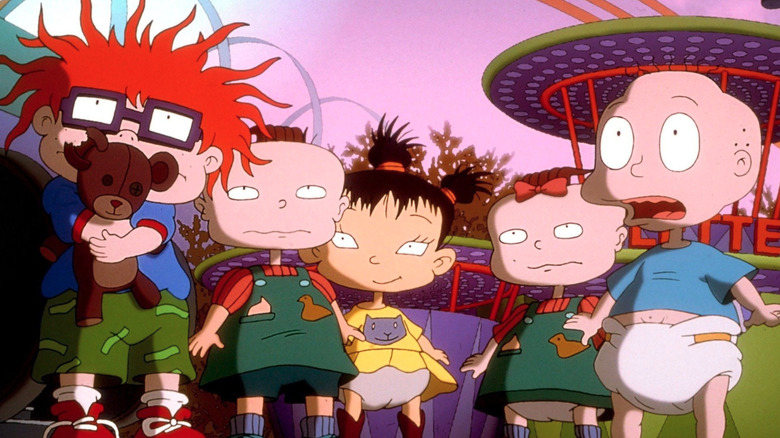
Though they don't have the same cultural staying power as Dora the Explorer or SpongeBob SquarePants (at least until they make that unavoidably nightmarish live-action movie), the "Rugrats" were once one of the most popular and oft-revisited pieces of IP at Nickelodeon. If you need a reminder of why, we recommend giving "Rugrats in Paris: The Movie" another watch.
Clever, thematically bold, and as zany as the series itself (but with an impressively cinematic upgrade in its visual and narrative style), the 2000 film presents these talking babies at their best. When the entire "Rugrats" crew are whisked away on an impromptu working vacation, the kids are left, as they often are, to babble to each other with surprising humor and profundity about the absurdity of the adult world. The most compelling aspect of the narrative is Chuckie Finster (Christine Cavanaugh), who spends much of the film trying to navigate complicated feelings about his late mother. "Rugrats in Paris" strikes a satisfying balance between goofy cartoon antics and emotional exploration that's further buoyed by a sense of humor that doesn't leave the big kids feeling left out.
The Wild Thornberrys Movie
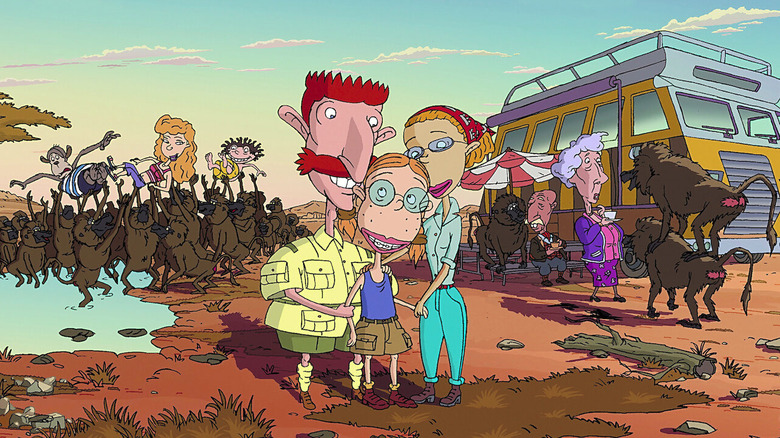
It requires a fair bit of hair-splitting to determine which film is better between "Rugrats in Paris" and "The Wild Thornberrys Movie." Both are equally entertaining theatrical adventures for shows that, in today's climate, wouldn't have a hope of escaping the small screen (the theatrically released crossover "Rugrats Go Wild" seems unimaginable). But where "Rugrats" excels in sheer energy and fun, "The Wild Thornberrys" successfully tells a much more focused, mature story about the titular family struggling to stay true to the wildlife they've chosen. (It also doesn't hurt that the latter is one of Tim Curry's best movies of all time.)
Released in 2002, "The Wild Thornberrys Movie" sees Eliza (Lacey Chabert) risk it all — including the very powers that allow her to communicate with the animal kingdom she calls family — in order to stop a gang of ruthless poachers. To add even more tension to the narrative, she is separated from her family and forced to adventure on with few resources, following their attempt to ship her off to boarding school in England. Appropriately dangerous and fairly unpredictable, it's far and away the greatest "Wild Thornberrys" story ever told.
The SpongeBob SquarePants Movie
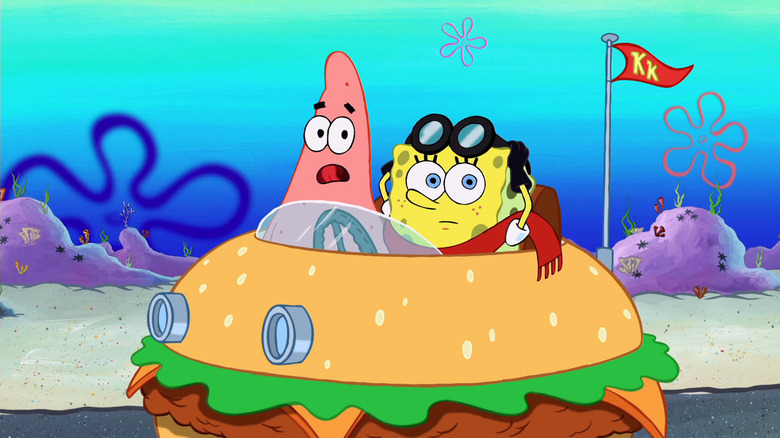
Stand down Christopher Nolan — there's only room in this town for one adaptation of "The Odyssey," and "The SpongeBob SquarePants Movie" can't be beat.
Kidding aside, this 2004 animated epic is easily the best of Nickelodeon's TV-to-film adaptations, capturing the singular energy of the entire "SpongeBob SquarePants" series in a single iconic movie. Charged with recovering the crown of King Neptune (Jeffrey Tambor) after Mr. Krabs (Clancy Brown) is framed for its theft, SpongeBob (Tom Kenny) and Patrick (Bill Fagerbakke) embark on a dangerous journey that takes them from the darkest depths of the ocean to the bright beaches of the surface world.
The movie has everything fans remember from the best episodes of the "SpongeBob" series. Catchy, face-melting musical numbers? Check. An uncanny injection of real human beings? Check. (This might be our favorite David Hasselhoff performance of all time, but don't quote us on that.) A winning mixture of dumb humor and defiantly positive vibes? Check. It's the sort of film you can only despise if you actively try. And while critics have broadly been more receptive of the subsequent CGI features Nickelodeon has produced sporadically over the past two decades, only the original "SpongeBob SquarePants Movie" comes close to the series itself.
Harriet the Spy
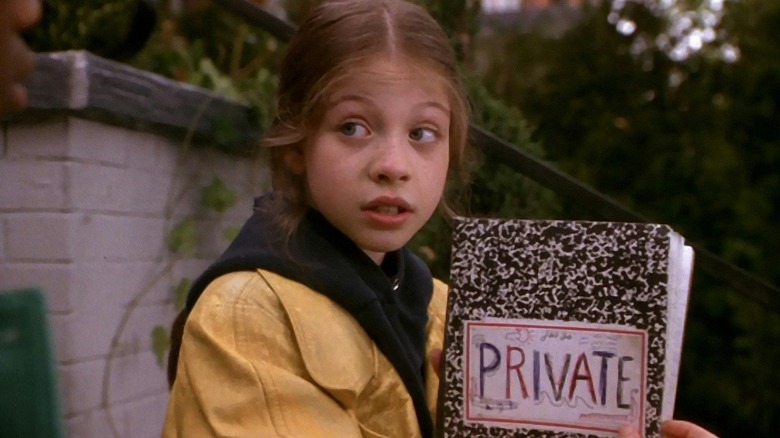
Released in 1996, "Harriet the Spy" was actually the first film produced by Nickelodeon Movies. It stars the late "Buffy the Vampire Slayer" actor Michelle Trachtenberg as the titular character from Louise Fitzhugh's novels. Fancying herself something of a citizen sleuth, Harriet has made it her mission to closely watch her community — friends, family, and schoolmates included — and record any findings or thoughts that come out of her "investigations." Unfortunately, this means she essentially keeps a notebook of embarrassing secrets and candid opinions about everyone she knows. What could possibly go wrong?
Harriet Welsch isn't one of our favorite fictional detectives because she has particularly good judgment (she's in middle school, after all). Rather, it's that her age belies a complex, mature story about purpose, accountability, and community that actually challenges young audiences to put themselves in the shoes of someone who makes a pretty heavy mistake. Trachtenberg shows incredible range for a young actor throughout the film, making it a bittersweet watch in the wake of her passing in 2025. It's hard to imagine how difficult it must've been to navigate a script that shifted between adult drama and sillier hijinks. That she did so seemingly effortlessly in her first credited film role earns "Harriet the Spy" a special place in her filmography.
Teenage Mutant Ninja Turtles: Mutant Mayhem
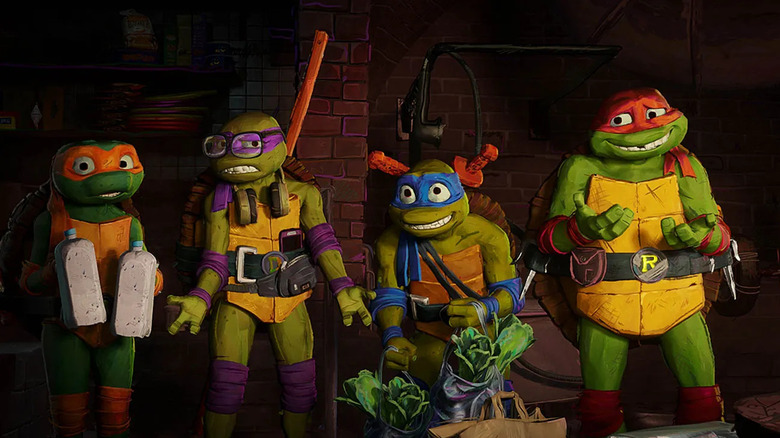
"Teenage Mutant Ninja Turtles: Mutant Mayhem" succeeds where the most recent adaptations of the classic comic book characters failed by finally emphasizing the first "T" in "TMNT." Yes, there's still an exciting, action-packed storyline to satisfy the basic premise of the franchise — with the help of their new friend April O'Neil (Ayo Edebiri), the turtles must stop a league of mutants (led by Ice Cube's Superfly) set on taking over a world that's rejected them.
But the film's true charm is not its bombastic fight sequences, the endearing character design, or even the embarrassment of A-list actors who fill out its voice cast. What makes "Mutant Mayhem" stand out as one of the best "TMNT" movies of all time is its authentically and amusingly youthful energy. From its sense of humor and characterization to its action set pieces and thematic identity, the film consistently centers the experience of being a kid again. For younger, contemporary audiences, it's one of very few movies to depict late-Gen Z/early-Gen Alpha kids accurately, and for adults, the energy driving the experience matches the inherent nostalgia of revisiting the turtles again. Plus, the animation is just plain cool.
The Adventures of Tintin
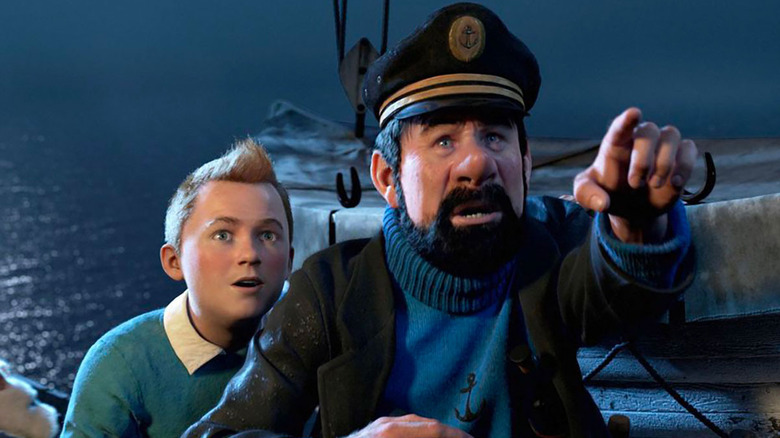
Rediscovering "The Adventures of Tintin" after all these years is like finding buried treasure. Despite having a startling amount of popular, respected creative talent at its back — Peter Jackson and Kathleen Kennedy as producers; Edgar Wright, Steven Moffat, and Joe Cornish as contributing writers; Steven Spielberg as director — the 2011 film is rarely talked about in the same breath as any of their other work. (In fairness, its $374 million global haul hides a disappointing $77 million domestic return — U.S. audiences have never been passionate about the film.)
Nevertheless, "The Adventures of Tintin" remains arguably the most artistically ambitious project Nickelodeon Movies has ever produced. This adaptation of the Hergé comics combines a globe-trotting treasure hunt with a swashbuckling thriller, in which the titular intrepid journalist (Jamie Bell) braves untold peril (and the drunken moods of Andy Serkis' Captain Haddock) to find a life-changing fortune thought to be long lost at sea. It's a film so dazzling and breathlessly paced that it's hard to even register that it ends on something of a cliffhanger (which will, sadly, never be resolved). On its own, it's a bewilderingly transportive Spielberg adventure that deserves to be remembered as more than an underrated hidden gem.
Rango
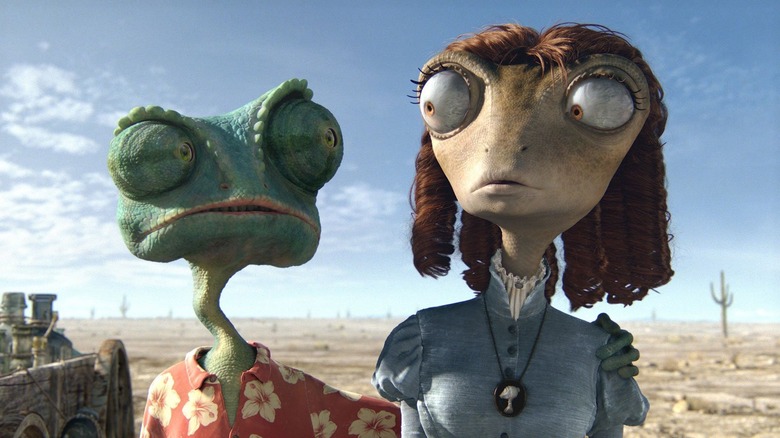
Released just one year into the decade, "Rango" remains one of the best animated films of the 2010s. It's an unconventional reunion for "Pirates of the Caribbean" director Gore Verbinski and star Johnny Depp, the latter of whom ditches the swagger and confidence of Jack Sparrow to play this film's unlikely hero.
Aside from Depp's unsurprisingly infectious and committed performance as a scared, domesticated lizard trying to play-act as the sheriff of an old-west-inspired community of animals, "Rango" thrives on Verbinski's particular command of the animation medium. He crafts each scene as though it were live-action, eschewing the risky motion capture business of "Tintin" or "The Polar Express" for a process referred to as "E-motion capture," in which the voice actors would record their lines while performing the scene full-out physically on a set. This process — in concert with Industrial Light and Magic's incredible animation work — marries the most effective elements of live-action and animation.
"Rango" ultimately grossed a respectable $246 million worldwide, and gave Nickelodeon Movies their first and only Academy Award for Best Animated Feature Film (poetically, they won against the "Shrek" spin-off "Puss in Boots"). Today, it still stands tall as an exceptional all-ages animated western, as well as a prime example of the kind of distinct, youthful excitement Nickelodeon was able to capture at their best.