

15 Best Netflix Original Movies Of All Time, Ranked
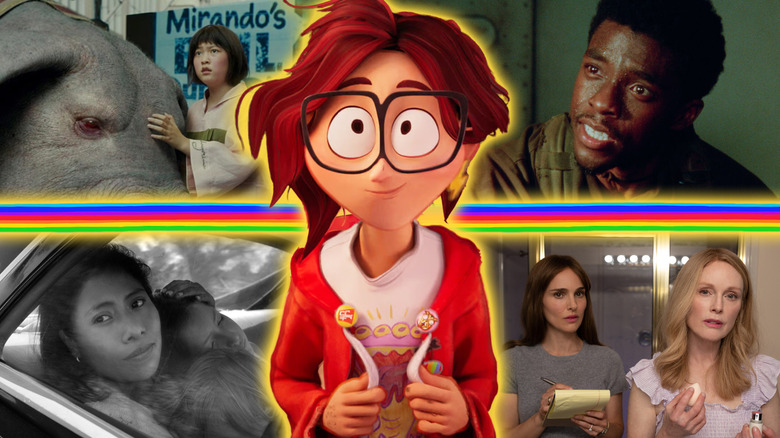
Netflix has a complicated relationship with the concept of quality. As a production and distribution company, they are uniquely skilled at churning out content at a rapid speed. But with countless original movies and television shows to their name, are they all winners? Certainly not, and wading through that vast library can seem daunting at times.
Despite its commitment to quantity, Netflix has also worked to prove itself as a purveyor of quality entertainment in recent years. They've fought to be recognized at the Oscars and other awards shows, soliciting work from acclaimed directors like Martin Scorsese, Spike Lee, and Todd Haynes to beef up their massive catalogue. Their original content proves that they are just as capable of cultivating critical darlings as their contemporaries.
Still, if you're searching through Netflix's catalogue today, it can be difficult to separate the mediocre background noise from the gems. Thankfully, we've done the work for you by compiling a list of the best films the platform has to offer. Keep reading for our ranking of the best Netflix original movies.
15. Fear Street Trilogy
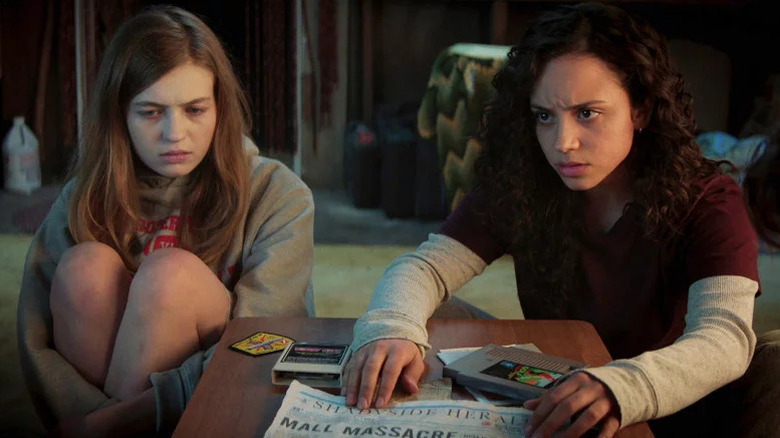
With the "Fear Street" trilogy, Netflix engineered a unique distribution strategy. The three films in the trilogy were released on consecutive weekends in July, making the series feel like a sort of televised event. (A disappointing fourth film, "Fear Street: Prom Queen," was released in 2025.)
Based on R. L. Stine's book series, the films take place during three different eras: 1994, 1978, and 1666. In "1994," we meet teenager Deena (Kiana Madeira), who lives in the downtrodden town of Shadyside. When several teens are murdered at the local mall, Deena and her friends, including her recently ex-girlfriend Sam (Olivia Scott Welch), become embroiled in the mystery of an ancient curse put on their town by a vengeful witch. In "1978," we watch the consequences of the curse play out at a bloody summer camp, while "1666" tells the story of the curse's origins.
Though the trilogy doesn't exactly break new ground within the slasher genre, the films weave a compelling mythology and introduce engaging protagonists. Many fans celebrated the series' effort to bury its gays, giving the films' queer characters a fighting chance in a genre where they don't often survive.
14. The Mitchells vs. the Machines
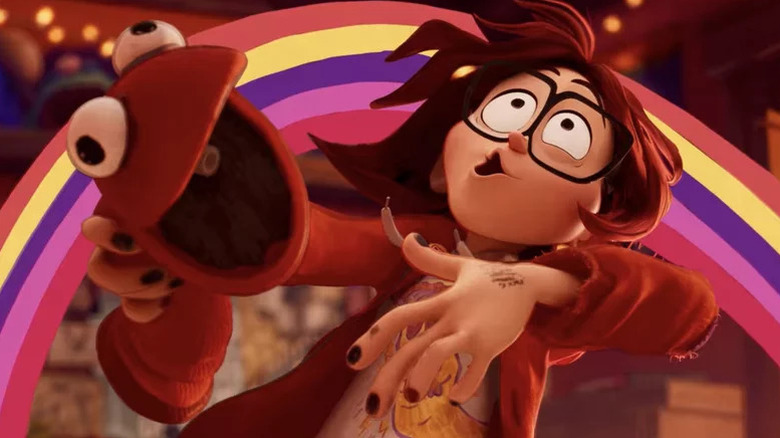
A brilliant and uproarious take on the slim distinction between techno utopia and dystopia, "The Mitchells vs. the Machines" is a feel-good family story for all ages. The animated film follows Katie (voiced by Abbi Jacobson), a kooky, filmmaking-obsessed teenager preparing to leave for college. She struggles to see eye to eye with her father, Rick (Danny McBride). In an effort to repair their relationship before she leaves the house, Rick decides to drive Katie to college in California and take one last Mitchell family road trip. Unfortunately, their grand plans are cut short when AI-powered robots take over the world.
"The Mitchells vs. the Machines" is about a family of weirdos, and the filmmaking style reflects that. Indebted to 2010-era internet culture (think Nyan Cat), the film makes liberal use of memes and faux-viral videos in telling this tech-focused story. It's loud and colorful in ways that will certainly appeal to kids, but the humor, which includes an army of Furbies saying things like "behold, the twilight of man," will tickle the funny bones of adults just as much. More than pure farce, the film succeeds in pulling at the heartstrings, reminding viewers that being normal is so overrated.
13. Da 5 Bloods
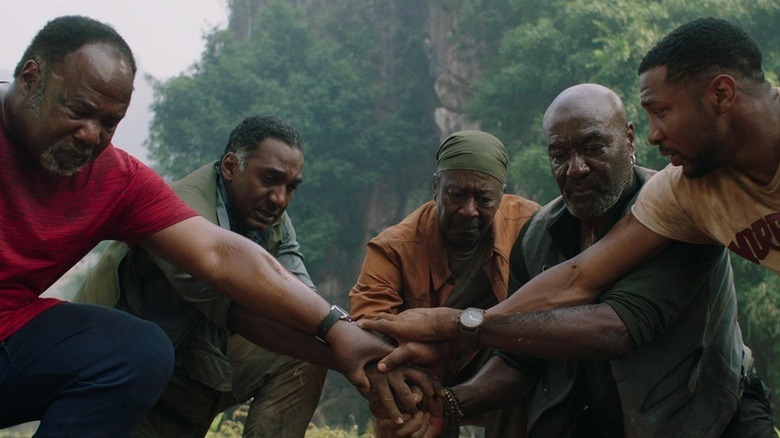
Spike Lee's "Da 5 Bloods" (read our review here) is a war film that takes a different approach to the subject. The movie follows four Black Vietnam War veterans: Paul (Delroy Lindo), Otis (Clarke Peters), Eddie (Norm Lewis), and Melvin (Isiah Whitlock Jr). The former soldiers, who called themselves the "Bloods" during the war, return to Vietnam to recover the body of their slain squad leader, Norman (Chadwick Boseman), along with the treasure they buried deep within the jungle.
"Da 5 Bloods" makes it clear that the past is ever-present. In flashback sequences of the war, the older actors play their younger selves, as Lee refuses to depict a hard break between what's present and what's history. He makes this continuity clear through his use of archival footage at the beginning of the film, telling the story of struggle through images of the Civil Rights movement in America and the war in Vietnam. Indeed, the film argues that there is no separation between the Civil Rights Movement of the past and the Black Lives Matter movement today. These forceful political messages are buoyed by outstanding performances, particularly from Lindo, playing a tough, bitter character who nonetheless wears his pain on his sleeve.
12. All Quiet on the Western Front
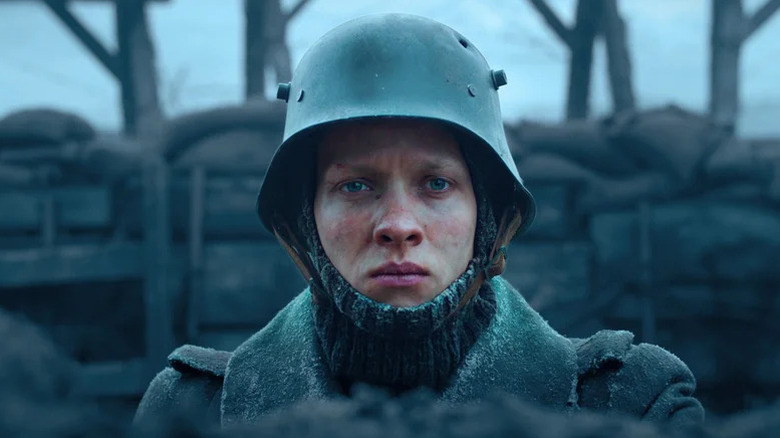
Forgive us for stating the obvious, but "All Quiet on the Western Front" is not a fun film to watch. That, of course, is the point, and as an anti-war film, it succeeds by forcing us to sit with the unrelenting horror of warfare. Based on the famed Erich Maria Remarque novel from 1929, the film follows Paul Bäumer (Felix Kammerer), a 17-year-old German boy who enlists in the army during World War I. His wide-eyed ideas about being a soldier are abruptly demolished when he faces the harsh realities of war.
Edward Berger's 2022 adaptation updates the 1930 film while retaining the same narrative and emotional impact. Notably, Berger ramps up the violence considerably, and the amount of bloodshed on screen can be difficult to stomach. The film uses striking visuals to tell the story of war on a vast scale, but it succeeds emotionally because we follow these events through young Paul's eyes. For an audience used to watching American war films, it is significant that we witness the circumstances that led these young boys to march gladly to their deaths.
11. Marriage Story

More than a source of memes, "Marriage Story" captures a powerful snapshot of two people coming apart. The film follows a couple going through a divorce. Adam Driver, in one of his best performances, plays Charlie, a New York City theatre director. Charlie is struggling through a divorce with his actress wife, Nicole (Scarlett Johansson). When Nicole moves to Los Angeles for a job, taking their son, Henry (Azhy Robertson), their separation becomes more complicated. Nicole hires famed divorce lawyer Nora Fanshaw (Laura Dern), and Charlie is forced to seek representation of his own.
Rather than retelling the story of their relationship, the film puts us right in the middle of their breakup. We watch as two people who once had a happy relationship lose the ability to communicate. "Marriage Story" relies on the immense talent of its actors to pull off this complex character study, and they're more than up to the task. Theatrical monologues give the film its memorable moments of climax and catharsis, while more nuanced segments allow us to sit with these characters and their painful predicament.
10. Dick Johnson Is Dead
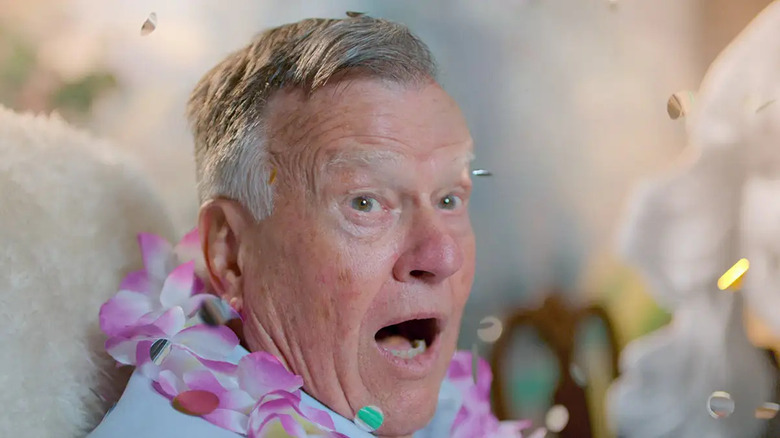
We doubt you've ever seen a film quite like "Dick Johnson Is Dead." One of many great documentaries on Netflix, Kirsten Johnson's film focuses on her father, Dick Johnson, who was very much alive at the time of filming. After having a dream of her father sitting up in a casket, Kirsten came up with the idea of a film in which she and her father, a retired psychiatrist dealing with dementia, would act out all the different ways he might die. Her father gamely agreed, and together, the two Johnsons created a striking piece of black humor about the inevitability of death.
"Dick Johnson Is Dead" is an intensely personal project. Kirsten's mother died of complications from Alzheimer's, so both she and Dick know what's to come as the disease progresses. They grieve Kirsten's mother and Dick's inevitable decline, while celebrating the time they have left together as a loving family unit. Kirsten gives Dick a chance to live out his fantasies — dancing with his late wife in heaven, attending his own funeral — while reckoning with the end of his life. It's a profound depiction of love, loss, and all those messy moments in between.
9. Okja
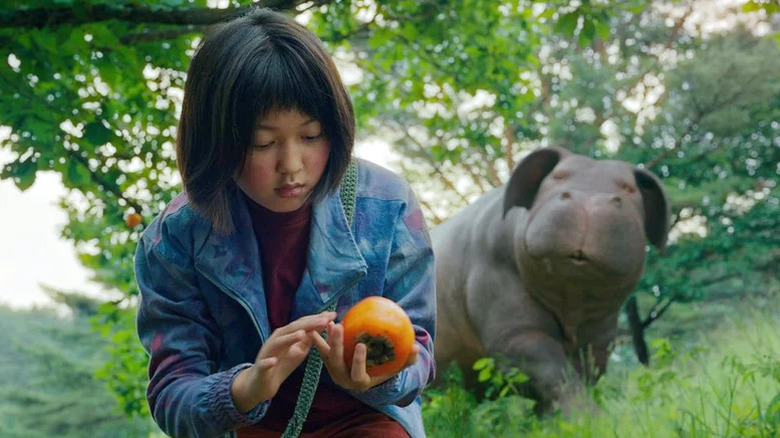
If you're looking for the motivation to become a vegetarian, watching "Okja" might do the trick. An underseen masterwork by acclaimed director Bong Joon Ho, "Okja" is a Korean/American co-production featuring an incredible cast of actors. Ahn Seo-hyun, in her first film role, plays Mija, a teen girl who grew up in the mountains of South Korea with Okja, an enormous "super pig." When the nefarious Mirando Corporation, headed by megoloanican CEO Lucy Mirando (a demented Tilda Swinton), take Okja, Mija embarks on a cross-continental journey to save her dearest friend.
Director Bong threw subtlety out the window with this one, but the hit-you-over-the-head messaging works thanks to committed performances and a CGI pig you can't help but love. Swinton's evil CEO is over-the-top in the best way, and the fact that there are two of her is the cherry on top. Jake Gyllenhaal is perfectly unhinged, and Paul Dano is the film's most nuanced element. Ahn Seo-hyun's Mija and her relationship with Okja is the film's heart, and Bong manages to pull off this tonal gamble with the sheer force of his directorial prowess.
8. The Power of the Dog
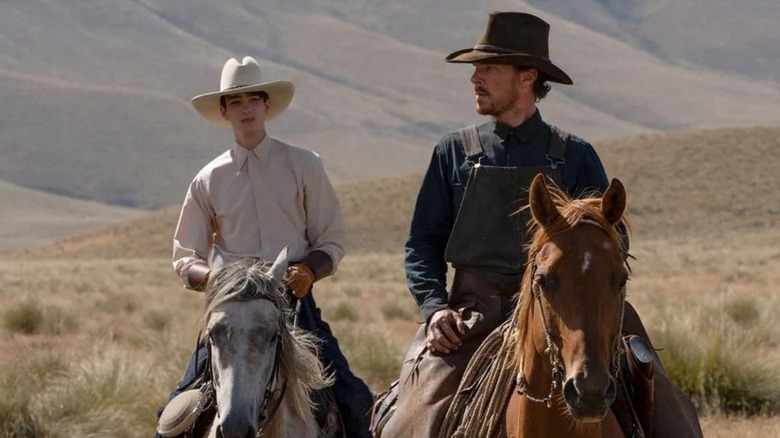
Jane Campion made history when she was nominated and won Best Director in 2022, though it was the only award "The Power of the Dog" won out of a whopping 12 nominations. An adaptation of Thomas Savage's 1967 novel, Campion's film tells the story of two brothers: Phil (Benedict Cumberbatch) and George (Jesse Plemons), who run a ranch in 1925 Montana.
When George marries Rose (Kirsten Dunst), tensions arise. The cantankerous Phil believes Rose only wants George for his money, and he belittles Rose's son, Peter (Kodi Smit-McPhee), whom he sees as weak and effeminate. Phil and Peter's relationship grows complicated, especially when Peter learns of Phil's deep feelings for his mentor, Bronco Henry.
Though styled as a Western, "The Power of the Dog" is more of a gripping psychological character study and gothic drama than it is a story about men on the range. Cumberbatch gives a career-best performance that keeps you guessing as to his intentions and the backstory behind his cruel behaviour. Smit-McPhee's Peter is just as mysterious, and together, they paint a riveting story, whose contours don't become clear until the very end.
7. Passing
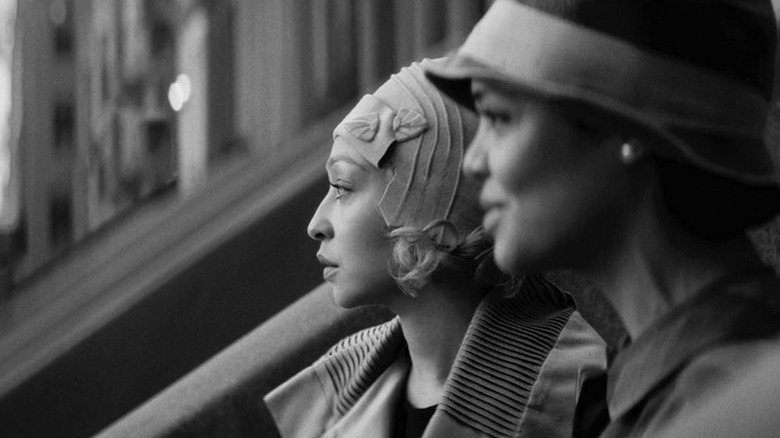
The directorial debut of brilliant actor Rebecca Hall, "Passing" is a deep, dazzling take on a classic. Based on the novel by Nella Larsen, "Passing" takes place in 1920s New York City. Irene (Tessa Thompson) and Clare (Ruth Negga) are two light-skinned Black women and childhood friends. Irene is married to a Black doctor (André Holland) and lives in Harlem, while Clare, passing as white, is married to a wealthy white man (Alexander Skarsgård) who is openly racist. As the two women reconnect after years apart, their disparate lives prove to be incompatible.
Gorgeous to look at, the black and white film brings the rich and layered text of the novel to life with graceful dexterity. Though its themes are clear, Hall tells the story with subtlety, and ultimately, there are no answers to the questions the film poses. Thompson and Negga give astounding performances, and their simmering chemistry crackles like a fire. Attraction and repulsion, beauty and ugliness — "Passing" embodies these dichotomies with total grace.
6. Guillermo del Toro's Pinocchio
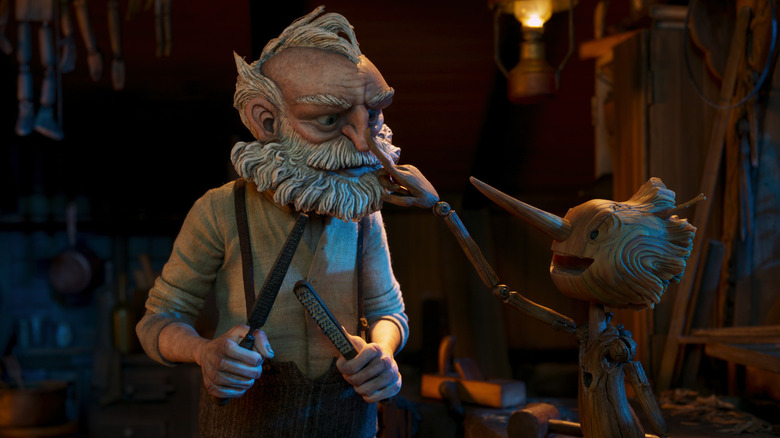
Did you know that "Pinocchio" is a story about fascism? In Guillermo del Toro's breathtaking version of "Pinocchio," which is different than other versions of the tale, he doesn't let you forget that fact. Set in 1930s Italy, we meet Geppetto (voiced by David Bradley) twenty years after he lost his son in the war. After he constructs Pinocchio (Gregory Mann) through his grief, the Wood Sprite (Tilda Swinton, who also voices Death) brings him to life. Geppetto sends Pinocchio into the world, where he learns not everyone has good intentions. He's captured by an evil circus leader, sent to a military youth camp, and swallowed by a fish.
Both whimsical and surprisingly dark, "Pinocchio" has most in common with del Toro's 2006 masterpiece "Pan's Labyrinth," mixing fairytales with fascism. The director opts for dramatic flourishes and dark humor to tell this story. Pinocchio is made to dance for Mussolini, and Cate Blanchett voices a monkey named Spazzatura, who has no lines and only speaks in non-verbal squeaks. Told through dazzling stop-motion animation, the story follows Pinocchio as he learns that to be alive is to suffer, but also that love and compassion make life worth living.
5. The Irishman
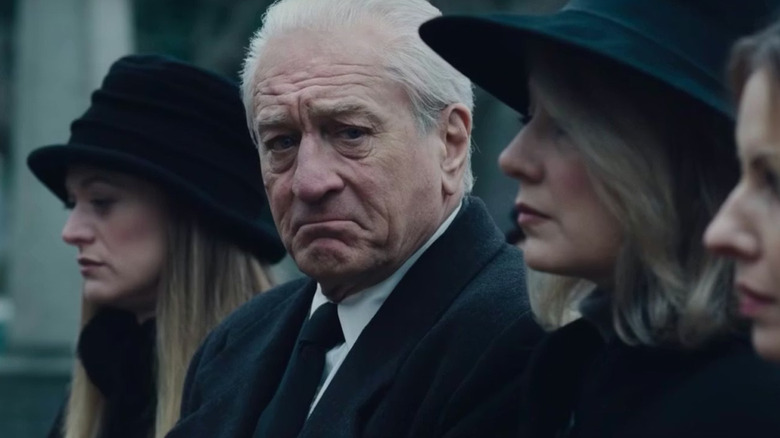
Though they're both about mobsters, "Goodfellas" and "The Irishman" couldn't be more different. While "Goodfellas" is loud, dramatic and features criminals reaping the fruits of their labor, "The Irishman" tells a quieter story without the bombast or bravura. Martin Scorsese mainstay Robert De Niro plays Frank Sheeran, who spends his life painting houses. Well, not really. "Painting houses" is mob slang for being a hitman. When Frank meets mobster Russell Bufalino (Joe Pesci) in the 1950s, his career as a contract killer begins. Later, he becomes acquainted with famous Teamsters boss Jimmy Hoffa (Al Pacino).
Decades of killing pass, as Frank fades away from family and friends, and everyone he once knew winds up six feet under. "The Irishman" is three and a half hours long, allowing Scorsese to take his time telling a story that's both epic and very small. Unlike the mobsters in Scorsese's other films, Sheeran doesn't take pleasure in his work. It's devoid of passion, or really any feeling at all, which only makes the film's constant violence more unsettling. With masterful performances from Hollywood veterans, "The Irishman" is one of Scorsese's most melancholic works, and the film's quiet power will stay with you.
4. Society of Snow
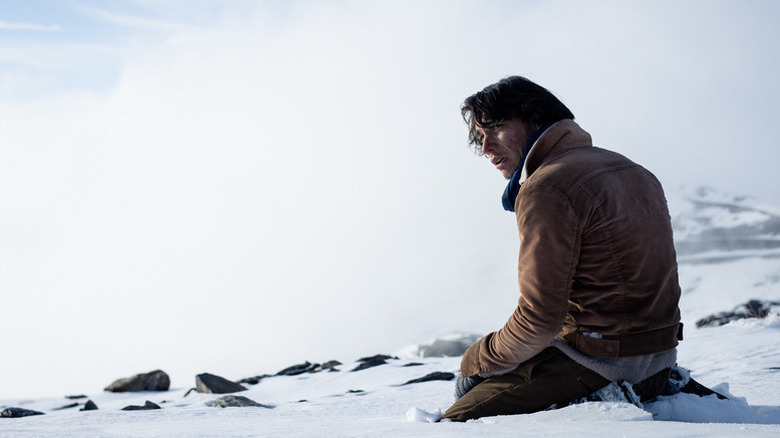
Netflix has plenty of disaster movies on offer, but none quite like "Society of Snow." Directed by J. A. Bayona, the film tells the story of the 1972 Uruguayan plane crash in the Andes mountains, in which survivors were forced to resort to cannibalism to survive. Passengers on the flight included a Uruguayan rugby team, who used their teamwork skills and Catholic faith as a means to survive. The film's impressive cast is comprised mainly of up–and-coming Uruguayan and Argentine actors.
Unlike previous adaptations of the story (it was previously told in the film "Alive"), "Society of Snow" focuses not on spectacle and inspiration, but on brotherhood, faith, and tragedy. Indeed, the film centers on the men who didn't survive just as much as those who did. Our narrator, Numa (Enzo Vogrincic), isn't a heroic leader of the pack, but rather one of the men who didn't make it out alive. All the deaths in the film are treated with reverence, and the act of cannibalism is framed within the context of faith and philosophy rather than exploitation. Though the crash sequence and ensuing gore are harrowing, the film's introspective moments give it just as much power.
3. The Hand of God

It's a shame not many people saw Italy's submission for the 2022 Oscars, because it's an amazing movie. "The Hand of God" is a semi-autobiographical drama from director Paolo Sorrentino. A mesmerising coming-of-age film, it follows teenager Fabietto (Filippo Scotti) in 1980s Naples. Fabietto comes from a close but eclectic family suffering from various personal problems. Fabietto's world implodes when tragedy strikes, though his life is inadvertently saved by soccer star Diego Maradona. Faced with the prospect that God has chosen him for something, Fabietto searches for meaning and explores his love of filmmaking.
"The Hand of God" might not sound like anything new, but Sorrentino's beautiful, tragic tale finds profound meaning in the coming-of-age story. Inspired by neorealist filmmakers like Federico Fellini, whom Fabietto idolises, the film speaks in a poetic tongue, bringing Sorrentino's memories to life with a painterly flourish. These characters and this world feel intimately lived in, and though striking in its unique tragedy, the details of Sorrentino's young life provide universal inspiration.
2. May December
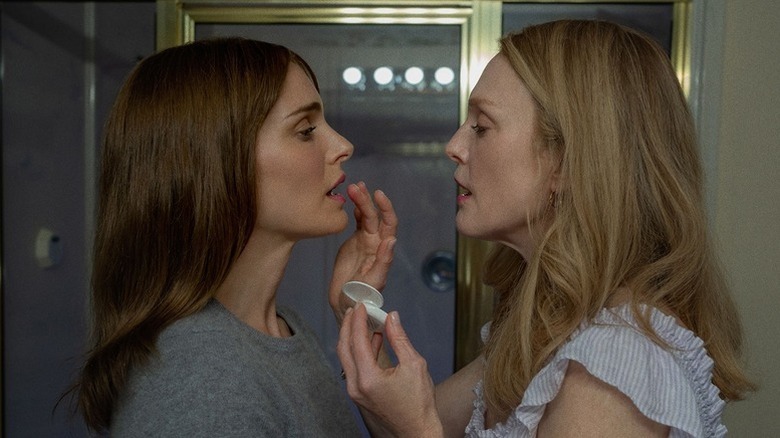
"May December" tells a tabloid story without sensationalising its subject matter. It's a film about filmmaking that indicts our obsession with the truth while denying us any easy answers. Natalie Portman plays Elizabeth, a Hollywood actress dispatched to shadow Gracie (Julianne Moore), who began an illicit "relationship" with her now-husband, Joe (Charles Melton), when he was 13, and she was 36. Elizabeth wants to get to know the couple so she can portray them accurately in the film, but Grace keeps her at arm's length, and Joe just wants someone to talk to.
Todd Haynes' film is a masterpiece that keeps you guessing. The score and some of the cinematography suggest melodrama and even camp, but those stylistic flourishes are red herrings. This is a story about the lives we pretend we live, the lives we actually live, and the chasm in between. Moore and Portman are incredible in their roles, and they engage in a sort of "diva-off" without ever taking things too far. But it's Charles Melton who delivers the film's most important performance, as his loneliness reveals this story's existential stakes.
1. Roma
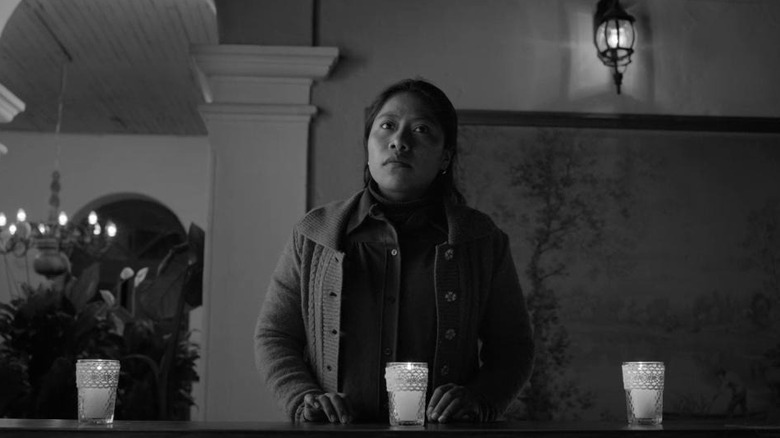
"Roma" may be the most important film Netflix has ever released, at least as far as their standing in the industry is concerned. Alfonso Cuarón's 2018 film earned Netflix its first Oscar nomination for Best Picture after the company spent millions on the campaign. Though it didn't win, "Roma" deserved all the buzz it got, and remains the pinnacle of Netflix's cinematic offerings.
A semi-autobiographical re-telling of Cuarón's youth, the film follows Cleo (Yalitza Aparicio), a live-in maid for a well-off family in 1970s Mexico City. Though Cleo has a good relationship with the family, things grow complicated in the face of personal crisis, and class/racial disparities are brought to the fore. "Roma" is a resplendent film, composed using wide, tracking shots that capture the world as an object in motion. The slow-moving film emphasizes the inner world of these characters but also the cyclical nature of time and growth, resulting in a dazzling treatise on empathy, solidarity, and love.