

12 Best Movies Like One Battle After Another
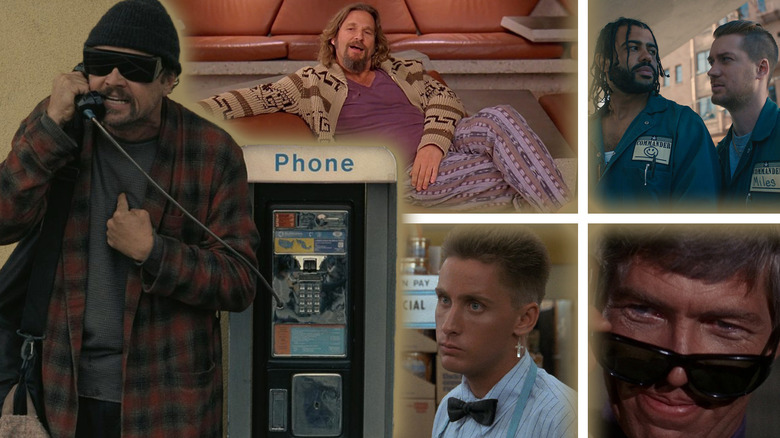
Paul Thomas Anderson's "One Battle After Another" hit theatres in 2025, and despite being a box office bomb, it is considered by many to be the best movie of the year. Anderson adapted the screenplay from Thomas Pynchon's 1990 novel, "Vineland." The film follows Pat Calhoun, AKA Bob Ferguson (Leonardo DiCaprio), an ex-revolutionary and current stoner who is forced back into his former lifestyle when a corrupt military officer named Colonel Steven J. Lockjaw (Sean Penn) pursues Bob's teenage daughter, Willa (Chase Infiniti). The film also stars Benicio del Toro, Regina Hall, and Teyana Taylor.
"One Battle After Another" is unique for many reasons. It balances multiple genres to tell an epic tale, and it is filled with laughs, thrills, and deep emotional moments. It was also the first film to be shot and projected in VistaVision since the 1960s. There are truly no movies out there that could be called a complete 1:1 to "One Battle After Another," but there are plenty of films that are just as satirical or similar in tone, and there are even more that follow revolutionaries and freedom fighters.
From films Anderson has personally recommended to projects that evoke the spirit of "One Battle After Another," here's a list of the best films like "One Battle After Another."
Dr. Strangelove or: How I Learned to Stop Worrying and Love the Bomb
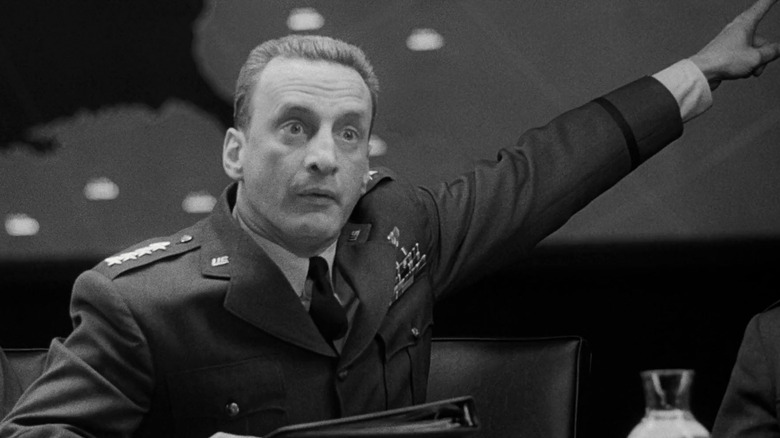
Stanley Kubrick's 1964 classic, "Dr. Strangelove or: How I Learned to Stop Worrying and Love the Bomb," is considered one of the greatest political satires and most influential movies ever made. The film parodies the United States' panic during the Cold War and showcases how badly things can escalate when one unstable person is given too much power. Peter Sellers leads the film as multiple characters, including the titular Dr. Strangelove, a nuclear war expert. It also stars George C. Scott, Sterling Hayden, Keenan Wynn, Jack Creley, Slim Pickens, and James Earl Jones in his feature film debut.
Just like "One Battle After Another," "Dr. Strangelove" is a satirical unmasking of the American government that does not pull any punches. Dark comedies such as these are a brilliant way to absorb distressing realities. Multiple characters in "Dr. Strangelove" can be compared to Penn's Lockjaw. Scott's General Buck Turgidson has a high military status and a nasty disposition, along with a narrow-minded view of the world. Meanwhile, Hayden's Brigadier General Jack D. Ripper is unhinged and paranoid, and he ultimately escalates situations to the extreme. Roll those two personalities together, and you've got a Lockjaw.
In 1965, "Dr. Strangelove" was nominated for five Academy Awards. It was up for Best Picture, Best Actor in a Leading Role (Sellers), Best Director, and Best Adapted Screenplay (Kubrick, Peter George, and Terry Southern). The film won four BAFTAs, including Best Film From Any Source and the UN Award, which is given to the best film embodying one or more of the principles of the United Nations charter.
The Battle of Algiers
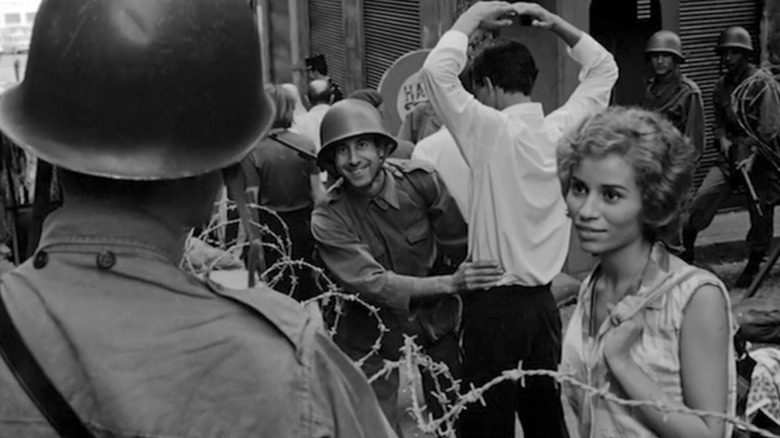
"The Battle of Algiers" is a 1966 Italian-Algerian war film co-written and directed by Gillo Pontecorvo. While the film is a narrative feature, it feels more like a documentary as it explores the rebel action taken against the French government during the occupation of Algeria. Paul Thomas Anderson cited the film as an inspiration for "One Battle After Another," and the movie was also a favorite of renowned critic Roger Ebert.
The similarities between "One Battle After Another" and "The Battle of Algiers" lie in their exploration of extremism against tyranny. The rebels in both films take bold, dangerous actions against their oppressors. Neither film glorifies violence, but they also do not condemn it. They are not afraid to shine a light on the harsh and illegal tactics taken by a guerrilla movement. The films are designed to make you uncomfortable and question your own view of morality. The main difference between the two films is their tone. There are no laughs to be had during "The Battle of Algiers." It is a dark exploration of a real moment in history, and once you have seen the film, you will not be quick to forget it.
"The Battle of Algiers" won the Golden Lion at the 27th Venice Film Festival. It is also one of the only films to get nominated for Oscars in different years. In 1967, it was nominated for Best Foreign Language Film (Italy), and in 1969, it was nominated again for Best Director and Best Original Screenplay (Pontecorvo and Franco Solinas). Oh, and you can see DiCaprio watching it in "One Battle After Another."
Inherent Vice
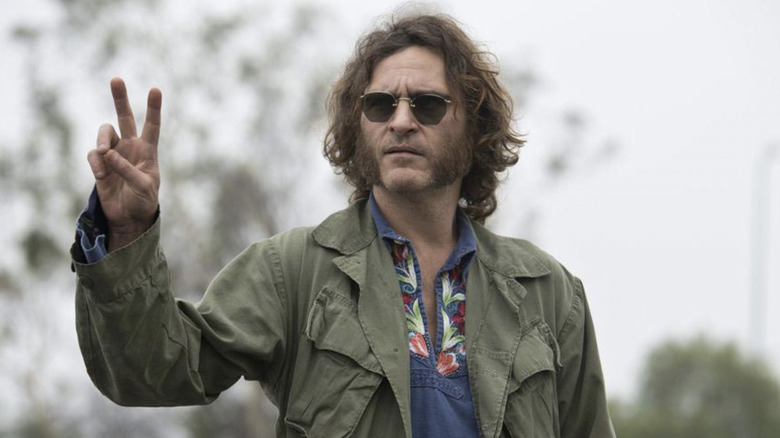
"Inherent Vice" was Paul Thomas Anderson's first film adaptation of a Thomas Pynchon novel. That creative combination makes it the spiritual predecessor to "One Battle After Another." The 2014 film follows Larry "Doc" Sportello (Joaquin Phoenix), a private investigator and stoner who sets out to find his missing ex-girlfriend. Doc is similar to DiCaprio's Bob in that both characters embark on a journey that pulls them from their burnout lifestyle and puts them in extreme situations. Both men are well-meaning but struggle with the tasks at hand. Interestingly, Phoenix was originally cast in "One Battle After Another," but there is some debate as to whether or not he was going to play Bob.
While "Inherent Vice" can be compared to "One Battle After Another," it is also a great mystery film that made our list of the 20 Best Movies Like "Knives Out." The movie has a stacked cast that includes Josh Brolin, Owen Wilson, Katherine Waterston, Eric Roberts, Reese Witherspoon, Benicio del Toro, Jena Malone, Maya Rudolph, Martin Short, and Joanna Newsom.
"Inherent Vice" was nominated for two Academy Awards, with Anderson earning a Best Adapted Screenplay nod, and Mark Bridges landing a Best Costume Design nod.
The President's Analyst
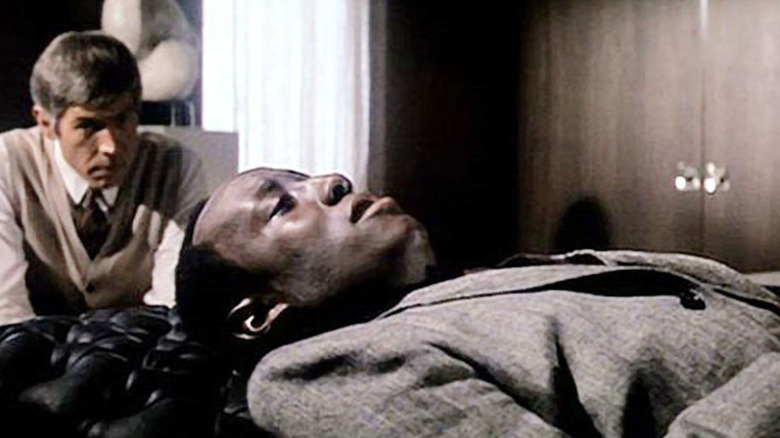
Ted Flicker's 1967 comedy, "The President's Analyst," is an underrated satire. The film stars James Coburn as Dr. Sidney Schaefer, a psychiatrist who is recruited by a Central Enquiries Agency (an obvious play on the CIA) assassin named Don (Godfrey Cambridge) to be the president's top-secret personal psychoanalyst. At first, Sidney is honored, but he quickly begins to spiral. He is not allowed to have an analyst of his own because he knows too much, and his stress begins to manifest into paranoia. He escapes his position and is soon hunted by various agencies and countries.
"The President's Analyst" begins with an incredibly intense and well-acted monologue from Cambridge about racism. You think the movie is setting up a very different tone, but it very quickly becomes a hilarious farce. There are so many delightful, goofy bits throughout the film. The conspiracies uncovered in this movie are a bit sillier than what you would see in "One Battle After Another," but both movies are witty and irreverent.
In 2021, it was announced that former "The Daily Show" host Trevor Noah would be teaming up with Obama White House Deputy Director of Messaging, Pat Cunnane, to remake "The President's Analyst." However, no news about the project has been reported since.
Dog Day Afternoon
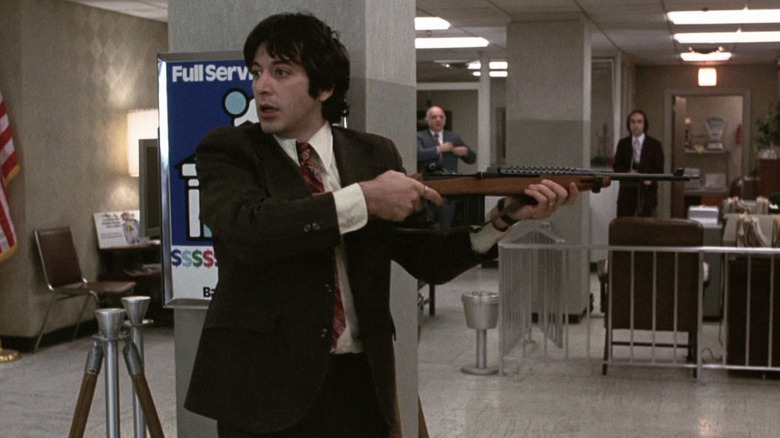
"Dog Day Afternoon" is one of the best cinematic examples of blending comedy and drama. Sidney Lumet's 1975 film is based on the true story of John Wojtowicz, a man who robbed a New York City bank to pay for his transgender girlfriend's gender-affirming surgery. Pacino plays the lead, renamed Sonny Wortzik, and gives one of the best performances of his career. Similar to Bob from "One Battle After Another," Sonny is in way over his head, but his intentions are noble.
In addition to being based on a true story, "Dog Day Afternoon" also tackles important topics of the time. One of the most famous moments in the film occurs after a crowd starts to form around the bank Sonny is robbing. He screams "Attica" to the crowd, referring to the infamous prison riot that occurred in 1971 and saw the death of 43 men. Pacino later revealed that the iconic moment in the film was improvised.
"Dog Day Afternoon" also starred John Cazale, Chris Sarandon, and Charles Durning. The film was nominated for six Academy Awards, and Frank Pierson won the Oscar for Best Original Screenplay. It was also nominated for Best Picture, Best Actor (Pacino), Best Supporting Actor (Sarandon), Best Director, and Best Editing (Dede Allen).
Running on Empty
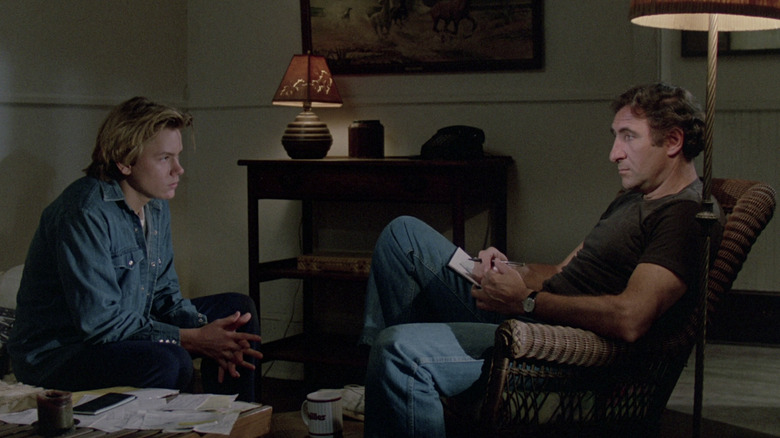
"Running on Empty" is another film that Paul Thomas Anderson recommended before watching "One Battle After Another." The second Sidney Lumet project to make the list, the 1988 drama follows a counterculture couple trying to raise two sons while on the run from the FBI. They rely on an underground network to stay afloat, but things get complicated when their talented teenage son wants to audition for Juilliard. The film stars River Phoenix, Judd Hirsch, Christine Lahti, and Martha Plimpton.
The family dynamic in "Running on Empty" is similar to the relationship between Bob and Willa in "One Battle After Another." What happens when radicals and revolutionaries have kids? In both films, parents do dangerous and illegal things in the name of a greater cause, and it eventually affects their children's lives. "Running on Empty" is not as intense or funny as "One Battle After Another," but they share an emotional core.
"Running on Empty" was nominated for two Academy Awards, one for Best Actor (Phoenix) and one for Best Original Screenplay (Naomi Foner). Sadly, Phoenix died five years after "Running on Empty" was released at the age of 23. At his young age, he had an impressive filmography, and "Running on Empty" was considered one of his best movies.
Repo Man
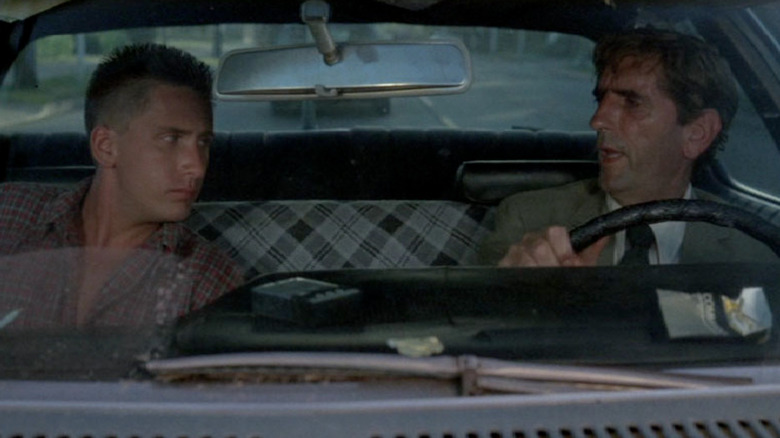
"Repo Man" is a 1984 cult classic that was written and directed by Alex Cox. This American satire and sci-fi black comedy starred Harry Dean Stanton and Emilio Estevez as car repossession agents during the Reagan administration. The movie dives into consumerism and the Atomic Age, and the result is both comical and unconventional. "One Battle After Another" director Paul Thomas Anderson once cited "Repo Man" as one of his favorite films of the '80s (via Far Out Magazine).
In addition to Stanton and Estevez, "Repo Man" starred Tracey Walter, Olivia Barash, Sy Richardson, Vonetta McGee, Fox Harris, and Dick Rude. If you pay close attention, you can also spot a cameo from Jimmy Buffett, but this was not the only unexpected sci-fi cameo from the beloved singer.
"Repo Man" was not a big awards season contender in 1985, but it did earn three Saturn Award nominations, with Walter winning the award for Best Supporting Actor.
The Spook Who Sat by the Door
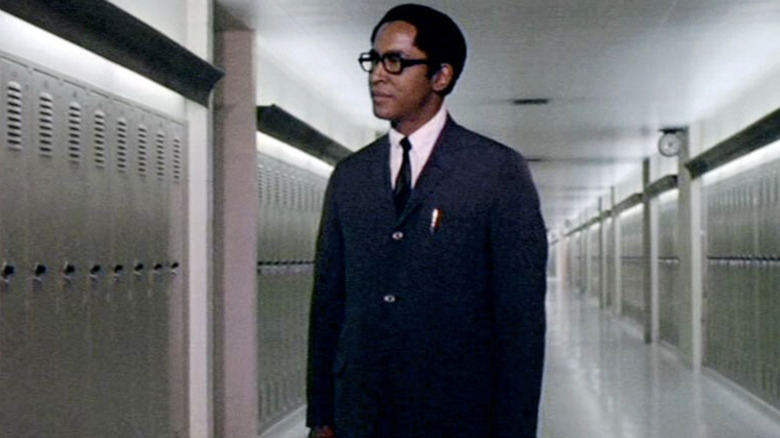
"The Spook Who Sat by the Door" is one of the best movies you have never seen from a Black director. Helmed by Ivan Dixon, the 1973 action/drama film was based on the novel of the same name by Sam Greenlee. The film tells the story of Dan Freeman (Lawrence Cook), who becomes the first Black man hired by the CIA. He presents himself as the "ideal Black man" to the American government, but is secretly a Black nationalist. He takes what he learns from the CIA, forms his own group of "Freedom Fighters," and starts a revolt in Chicago.
Much like "One Battle After Another," "The Spook Who Sat by the Door" showcases empowered Black revolutionaries who take extreme measures. It is incredible that a movie showcasing a premeditated Black revolt was made at the time, and has lived on despite previous attempts to bury it. Cook is also captivating in the role and earned an Image Award nomination for Outstanding Actor in 1974.
A documentary about the film titled "Infiltrating Hollywood: The Rise and Fall of the Spook Who Sat By the Door" was released in 2011 and won the Black Reel Award for Outstanding Independent Documentary. "The Spook Who Sat by the Door" was added to the National Film Registry in 2012.
The French Connection
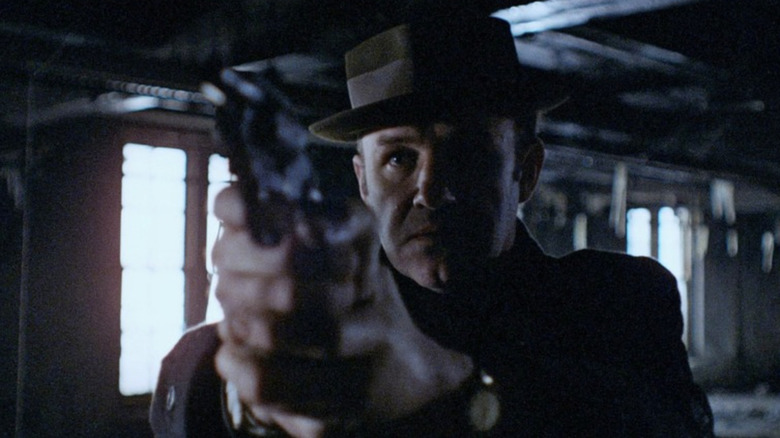
William Friedkin's 1971 neo-noir film "The French Connection" is yet another project Paul Thomas Anderson recommended for fans of "One Battle After Another." The movie starred Gene Hackman, Roy Scheider, and Fernando Rey, and it followed two detectives attempting to catch a French heroin smuggler. Hackman's Jimmy "Popeye" Doyle continually pushes boundaries and blurs the lines between cop and criminal.
Both "The French Connection" and "One Battle After Another" perfectly encapsulate a specific time in America, but they also feature some of the fiercest car chases ever put to screen. Although in the case of "The French Connection," its iconic chase scene was filmed in an extremely reckless way.
"The French Connection" was nominated for eight Academy Awards and won five. It earned Oscars for Best Picture (Philip D'Antoni), Best Actor (Hackman), Best Director, Best Film Editing (Gerald B. Greenberg), and Best Adapted Screenplay (Ernest Tidyman). It was also nominated for Best Supporting Actor (Scheider), Best Cinematography (Owen Roizman), and Best Sound (Theodore Soderberg and Christopher Newman). It goes down in history as the first Rated-R film to win Best Picture.
Underground
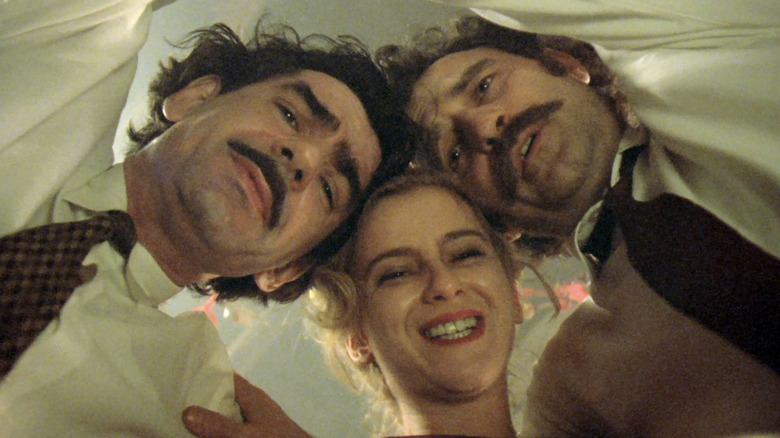
"Underground" is a 1995 Serbian film from director Emir Kusturica that spans decades. It follows Yugoslav history from the beginning of World War II until the Yugoslav Wars that began in 1991. It starred Miki Manojlović and Lazar Ristovski as Communist Party activists and guerrilla resistance fighters, both vying for the love of one woman, an opportunistic actress played by Mirjana Joković.
Just like "One Battle After Another," "Underground" is an epic satire that demonstrates the importance of spirit. It is enthralling to see an absurdist comedy dive into such dark moments in history. Living a lifetime of war is bleak, but beauty and humor are still everywhere. If you are unfamiliar with the history of Serbia, "Underground" is the perfect starting point.
"Underground" won the Palme d'Or at the 1995 Cannes Film Festival. There is also a five-hour cut titled "Once Upon a Time There Was One Country" that was released as a miniseries on Serbian RTS television.
The Big Lebowski
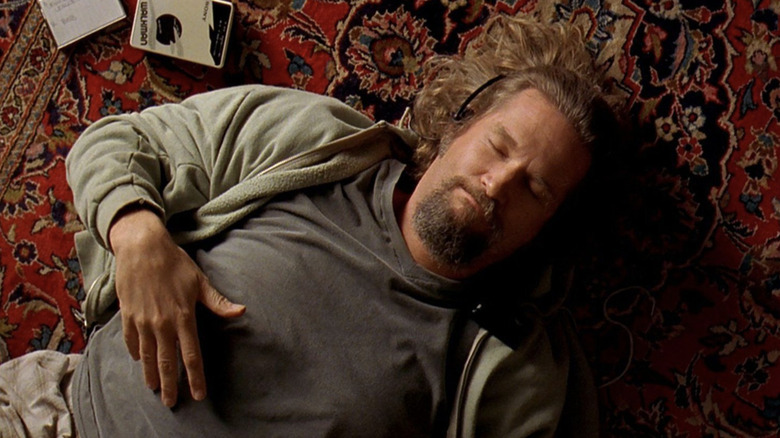
Multiple Coen Brothers movies could have ended up on this list, but none feel as connected to "One Battle After Another" as "The Big Lebowski." There is just something so delightful about watching a stoner get caught up in extreme situations. Released in 1998, this satirical crime comedy follows Jeff Bridges as Jeffrey "The Dude" Lebowski, a slacker who gets mistaken for a millionaire with the same name. This leads him on a hilarious Los Angeles adventure.
"The Big Lebowski" also starred John Goodman, Julianne Moore, Steve Buscemi, David Huddleston, John Turturro, Philip Seymour Hoffman, Sam Elliott, and Ben Gazzara. Unfortunately, the film was not an instant success. It was a box office bomb before it became a cult classic, and was completely ignored during awards season. It remains baffling that John Goodman has never been nominated for an Academy Award, especially when he deserved to win Best Supporting Actor for playing Walter Sobchak in "The Big Lebowski."
It's been over 25 years since "The Big Lewboski" was released, and The Dude remains one of the coolest characters of all time.
Blindspotting
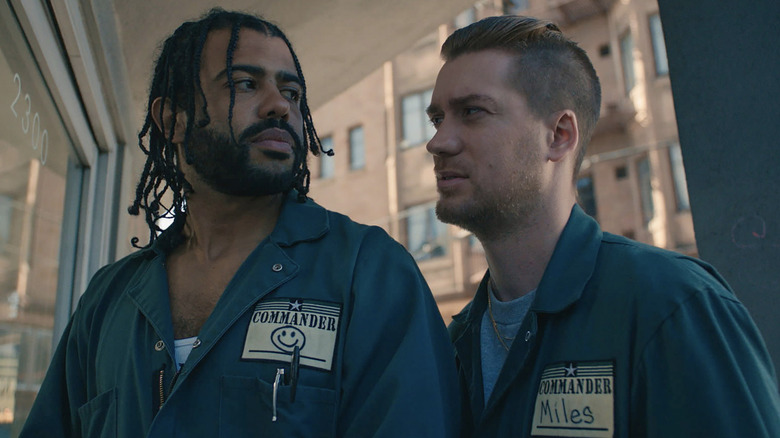
The newest film to make the list is "Blindspotting," Carlos López Estrada's sobering portrait of privilege. The 2018 movie stars Daveed Diggs and Rafael Casal, who co-wrote the script together. Diggs plays Collin Hoskins, a former convicted felon who has three days left of probation. Casal plays Miles Turner, Collin's short-tempered best friend. Both born and raised Oaklanders, Collin is a Black man who faces the realities of racial profiling, while Miles is a white man struggling with his identity as more "transplants" take over their neighborhood.
"Blindspotting" explores topics such as gentrification, police brutality, and cultural appropriation. Just like "One Battle After Another," it is full of laughs despite the heavy subject matter. Diggs's performance earned him an Independent Spirit Award nomination for Best Male Lead.
The film also stars Jasmine Cephas Jones as Ashley, Miles' partner and the mother of his son. In 2021, a TV spinoff titled "Blindspotting" debuted on Starz and followed Ashley during Miles' unexpected imprisonment. Diggs and Casal served as executive producers and writers on the series, with Casal working as the showrunner. They also reprised their roles in the show, which was cancelled after two seasons.