

Five Nights At Freddy's 2 Was Panned By Critics - Here's Why That Doesn't Matter
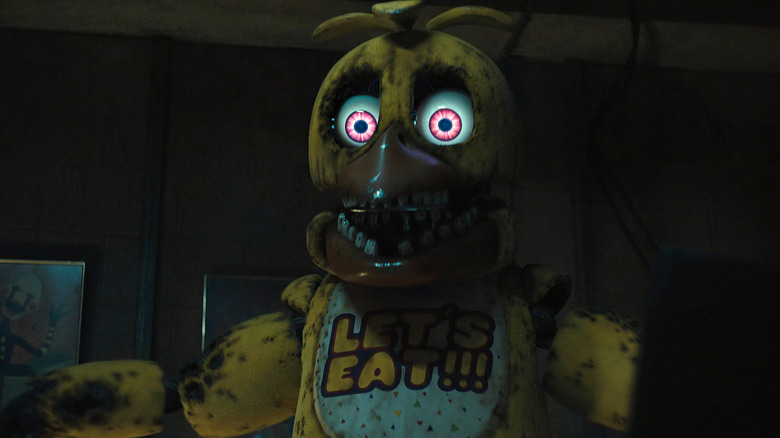
It's no secret that the "Five Nights at Freddy's" franchise is popular. Created by Scott Cawthon, the original indie game of the same name became a sensation after its release in 2014 — not just because it was clever and scary, but because people became sort of obsessed with it conceptually. That only continued as the sequels rolled out and the lore of Freddy Fazbear's Pizza deepened. So, it's not terribly surprising that the "Five Nights at Freddy's" movies have, in turn, become big hits.
Most recently, director Emma Tammi's "Five Nights at Freddy's 2" defied expectations at the box office, opening to $110 million globally. That was well above pre-release projections and, against a reported budget no more than $51 million and possibly as low as $36 million, it's an instant win for Blumhouse and Universal Pictures.
What is surprising, however, is that the sequel thrived despite earning terrible reviews. The film, as of this writing, holds a dreadful 15% critical approval rating on Rotten Tomatoes. That's far lower than the first "Five Nights at Freddy's" movie, which itself only has a 33% score. Such a response would be a death sentence for other films nowadays, encouraging audiences to wait to stream the movie rather than risk paying money to go see it in a theater, only to end up disappointed. In this case, though, the critical thrashing didn't matter a bit.
The sequel, in stark contrast, holds a stellar 87% audience rating to go with a not-bad-for-a-horror-movie B CinemaScore. So, while "Five Nights at Freddy's 2" may have left many critics baffled, that clearly didn't remove any of the intended luster for hardcore fans. They remain on board and, in all likelihood, we're going to get at least one more of these movies to conclude the trilogy.
Five Nights at Freddy's 2 worked very well for its intended audience
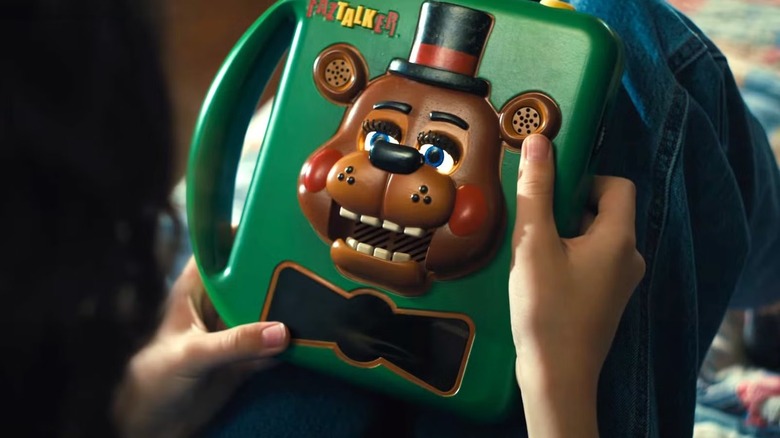
At the end of the day, it's a rare case where critical opinion just doesn't matter that much, if at all. The fans of this franchise are particularly rabid. YouTubers and Twitch streamers have made cottage industries out of streaming the "Five Nights at Freddy's" games and breaking down their shockingly rich lore. Younger people, in particular, are deeply invested in this property.
While there is certainly a larger discussion to be had about making movies so squarely aimed at people who're already fans of something rather than attempting to welcome in a wider audience, it's crystal clear that "Five Nights at Freddy's 2" and its predecessor work very well for its target demographic. In today's day and age, one doesn't blow past tracking and post a $110 million global opening by accident. "Five Nights at Freddy's" made nearly $300 million at the box office and is Blumhouse's biggest movie ever. Again, not an accident.
In crafting the film sequel, Cawthon was brought in to write the script. He leaned heavily into the lore and didn't over-explain anything for casual viewers, which is probably where most critics lie. It's not as though critics and audiences never disagree, but on this scale? It's almost unheard of. There's a clear disconnect here, one that suggests Blumhouse's approach to the franchise is working despite critical opinion.
We've had other examples of Gen Z audiences and critics not seeing eye-to-eye. "A Minecraft Movie" is one of the year's biggest hits. Critic score? 48%. Audience score? 85%. Is it that critics are out of touch with what is "good" to younger viewers? Or is it that Hollywood caters so infrequently to Gen Z audiences that they're simply thrilled to have something for themselves?
For better or worse, the Five Nights at Freddy's movies are strictly for the fans
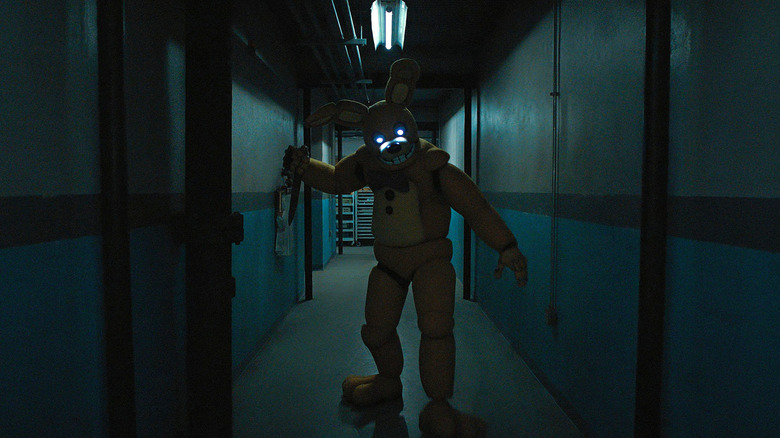
The answer to that question is undoubtedly worth consideration on all sides, particularly as Hollywood continues to try and make older franchises like "Transformers" relevant again when audiences, particularly younger audiences, have made it clear that they don't care about such things. Critics, meanwhile, practically beg people to see what they perceive to be underrated gems, only for audiences to flock to stuff they loathe like "Five Nights at Freddy's 2," broadly speaking.
At the same time, at least in the short term, the answer to what is driving this divide hardly matters to the bottom line for Blumhouse and Universal. These movies are making great money, and "Five Nights at Freddy's 3" is all but a guarantee at this point. To that end, Matthew Lillard, who plays franchise villain William Afton, has told ComingSoon that the third movie will be where things truly come together for hardcore fans:
"Our hope is that we get to do three films. That's always been the plan. Everything is dependent on how the movie does in theaters. We'll get that final Harry Potter vs. Voldemort or Luke Skywalker vs. Darth Vader [in 'Five Nights at Freddy's 3']. That's our hope. Within that, we'll get to do that and explore more."
Indeed, the credits scene attached to "Five Nights at Freddy's 2" does help set up a third movie. But it's also the sort of stuff aimed more specifically at hardcore fans, as opposed to simply seeing Thanos at the end of "The Avengers" or something along those lines. At this point, Blumhouse only needs to ask the question: If it ain't broke, why fix it?
"Five Nights at Freddy's 2" is in theaters now.