

12 Best Vampire TV Shows Of All Time, Ranked
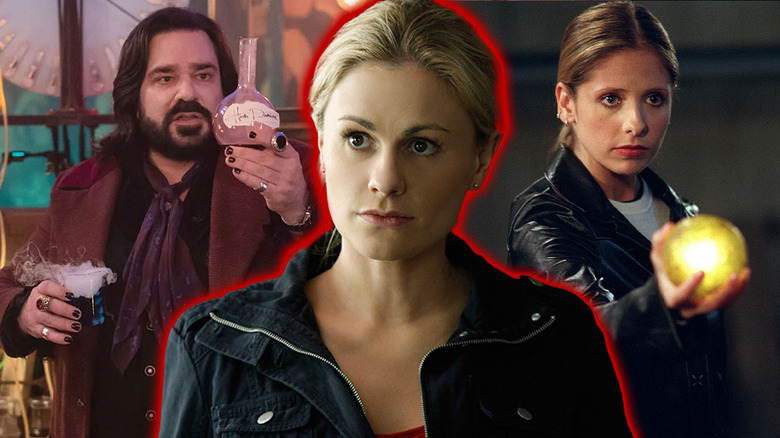
A staple in fiction for hundreds of years, vampire stories are eternal. They can be romantic ("Twilight") or terrifying ("Nosferatu"), but either way, they tap into both our deepest fears and hidden desires. Vampires have appeared on television since at least the 1960s and have been captured on the small screen in many different forms. We've seen vampires in sitcoms ("The Munsters"), horror shows ("NOS4A2"), anime series ("JoJo's Bizarre Adventure"), and even crime procedurals ("Moonlight").
This means that there is a vampire show out there for everyone. Though not all of them are gems, the best vampire series achieve transcendence, leaning into familiar themes while creating singular undead identities for themselves. These shows don't just depict cool or scary creatures of the night — they also feature memorable characters and dramatic relationships that stand the test of time. So, what makes up the cream of the vampire crop, you ask? Here are our picks from the 12 greatest vampire series of all time.
12. Being Human
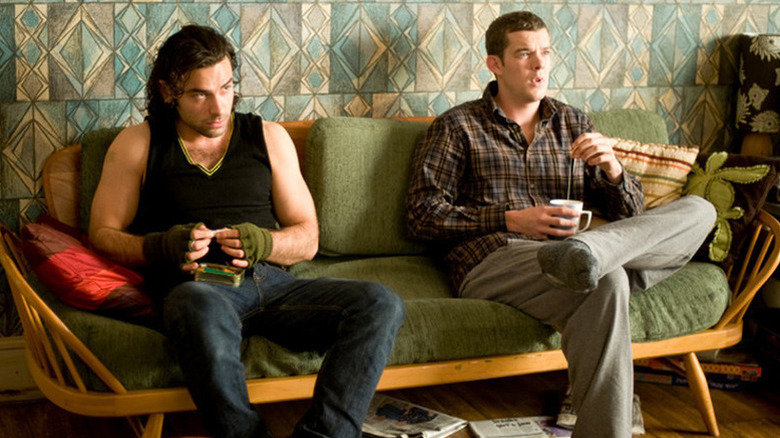
It sounds like the start of a joke: a werewolf, a vampire, and a ghost walk into an apartment... "Being Human" takes this supernatural roommates premise and mines it for humor, yes, but also existential angst and some pretty relatable human problems. In the U.S. version of the series, we follow vampire Aidan (Sam Witwer), werewolf Josh (Sam Huntington), and ghost Sally (Meaghan Rath) as they help each other navigate a world where they don't fit in. The cast has great chemistry, and compelling character development makes it a nicely sentimental watch.
The British version, which came first, tells a similar story with a different tone. The BBC series stars Andrea Riseborough as Annie, a ghost, Russell Tovey as George, a werewolf, and Guy Flanagan as John, a vampire. While the U.S. version is more dramatic and falls into the brooding vampire trope at times, the British series takes more of a slice-of-life approach to the concept and features a witty sense of humor.
Both shows are good, and your preference will likely come down to which storytelling style you go for. Notably, the British series starts strong but falls off in quality after cast changes, while the U.S. series has a more even run. Either way, the shows tell a charming story about cross-species supernatural friends, a rarity in the world of fantasy.
11. The Strain
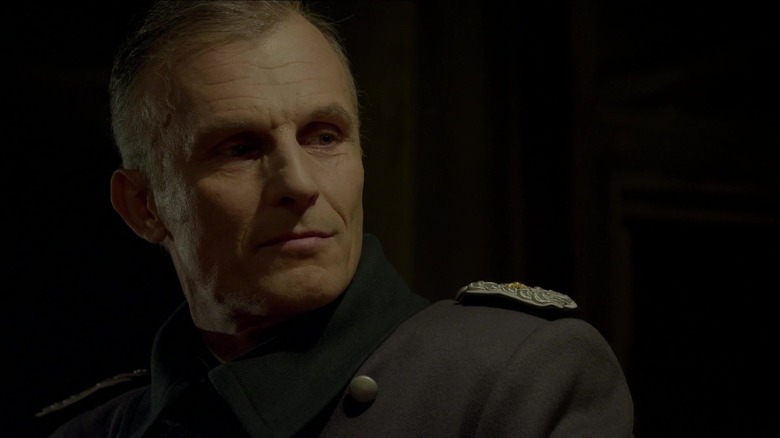
The vampires in the FX series "The Strain" aren't sexy or romantic. They're terrifying monsters who want to take over the world. The show centers on Ephraim Goodweather (Corey Stoll), a CDC doctor who is called to investigate after a plane lands in New York with almost all the passengers dead. But they don't stay dead, instead transforming into grotesque undead creatures. The CDC doctors are at a loss, but Professor Abraham Setrakian (David Bradley), a Holocaust survivor, has seen this kind of thing before.
"The Strain" owes a lot to classic horror movies like "Nosferatu" and "Eyes Without a Face," itself a major inspiration for co-creator Guillermo del Toro's work. What distinguishes "The Strain" from other vampire shows is how creepy its makes its vampires. They've got pointy teeth, bald heads, slithery tongues, and the ability to regrow limbs. These reptilian creatures don't have redeeming qualities or complicated morals — they're just plain evil.
Created by del Toro and Chuck Hogan, the series features del Toro's signature earnest appreciation for monsters and their fictional origins. It doesn't tread new ground; rather, it injects many familiar tropes with a gleeful and gory flair. Ephraim plays the role of the brilliant scientist whose home life is in shambles, while Abraham is a vampire hunter whose nemesis is an old school fascist. You've never seen vampires quite like this before.
10. Preacher
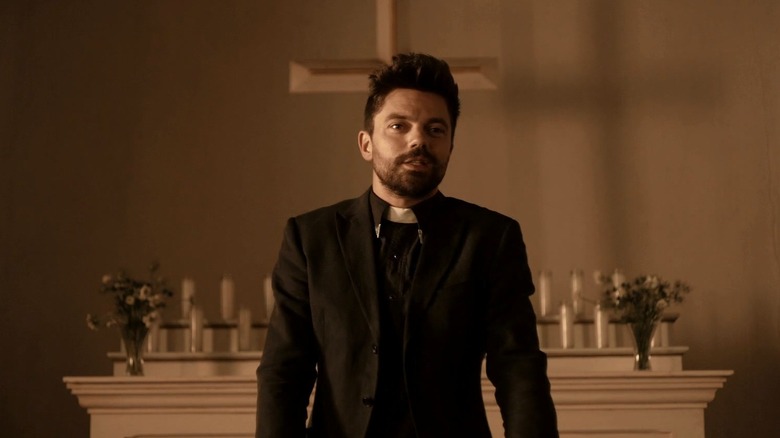
The AMC series "Preacher" takes blasphemy to the next level. Based on Garth Ennis and Steve Dillon's comic book series, "Preacher" follows Jesse Custer (Dominic Cooper), a bad boy criminal who becomes a preacher to fulfill a promise to his dad. But despite his pious appearance, Jesse struggles to be a good guy. Everything changes when he's then infused with God-like powers, a supernatural force that's blown up — literally, and in a very bloody fashion — many preachers before him.
Where do the vampires come in? They appear in the form of Cassidy (Joseph Gilgun), an Irish vampire and lover of debauchery. In his introductory scene, he murders an entire airplane of religious vampire hunters before escaping mid-air without a parachute. Gilgun nails the role, imbuing Cassidy with a devilish charm that disguises his violent nature. Jesse is also joined by Tulip (Ruth Negga), a delightfully twisted assassin and Jesse's ex.
The trio embarks on a road trip to find God, each with their own reasons for doing so. While their search starts right away in the comics, AMC's "Preacher" takes its time, idling in Jesse's hometown of Annville, Texas, before its leads hit the road. This gives viewers time to better understand the characters' backstories and develop a real sense of place. Created by "Breaking Bad" writer Sam Catlin, the show is dark, funny, sexy, and strange all at once.
9. Forever Knight
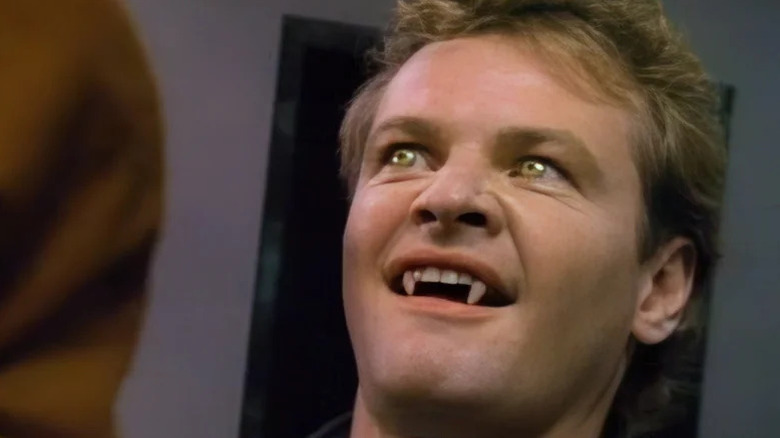
Before there was the "Buffy the Vampire Slayer" spin-off "Angel" or the short-lived CBS series "Moonlight," there was "Forever Knight," the father of all vampire detective shows. Set in Toronto, the series follows Nick Knight (Geraint Wyn Davies), a police detective who works the night shift. Nick has one big secret: he's actually an 800-year-old vampire trying to atone for centuries of sin by serving the public and catching bad guys. He often uses his vampire powers to solve cases, and most episodes include flashbacks to events in his previous life.
On the surface, "Forever Knight" falls pretty squarely into the tortured, brooding vampire trope. And while Nick does have a few things in common with Angel (David Boreanaz), the show around him has a wonderfully snappy cadence, a lot of wit, and a frequently campy tone. Still, Nick's existential struggle is compelling. He longs to find a way to become human again, but his quest grows more difficult with the arrival of his former companions (who are committed to bringing him back to the dark side).
Nick's banter with his colleagues is another highlight. Davies has great chemistry with co-star Catherine Disher, who plays Natalie Lambert, a medical examiner and the only person who knows Nick's true identity. You'll find some great twists in "Forever Knight" as well, but be warned: the final season is a bit of a disappointment.
8. The Vampire Diaries
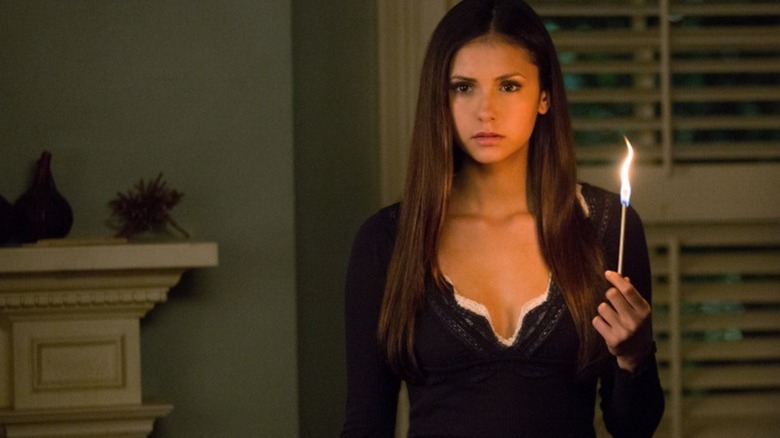
"The Vampire Diaries" is the closest thing the 2010s had to "Buffy the Vampire Slayer," though to compare the two shows isn't exactly fair. Significantly less bright and snappy than its predecessor, "The Vampire Diaries" has a darker, more moody tone that defined other vampire stories of the era, most notably "Twilight." To showrunners Kevin Williamson and Julie Plec's credit, they created a memorable series with a wonderful sense of place and charming characters that shine despite the dark and spooky atmosphere of their small town.
Indeed, "The Vampire Diaries" is significantly more witty than the self-serious "Twilight," and all the characters are well-cast. Nina Dobrev delivers an outstanding performance as both Elena Gilbert and her evil doppelganger, Katherine Pierce, and the show wouldn't work without her. But we can't forget the boys, either. As Stefan Salvatore, Paul Wesley embodies the familiar sexy, brooding kind of vampire we've seen many times before. Meanwhile, Ian Somerhalder plays his older brother, Damon, the Spike to Stefan's Angel.
While the show suffers a huge drop in quality after Dobrev leaves at the end of season 6, "The Vampire Diaries" explores a surprisingly interesting and complex mythology that can get soapy at times, but it's never dull. One of the great CW shows of its era, "The Vampire Diaries" told a rich enough story to generate two successful spin-offs: "The Originals" and "Legacies." Still, nothing beats the OG.
7. Dark Shadows
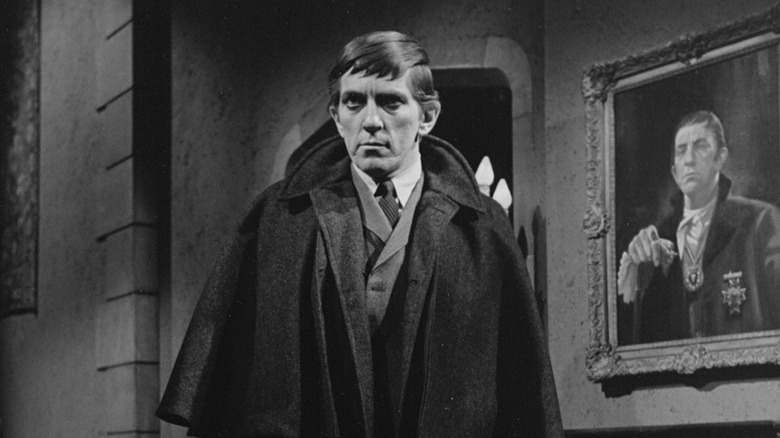
"Dark Shadows" is arguably the most influential vampire show of all time, initiating many of the common vampire themes and tropes we know today. The gothic soap opera aired from 1966 to 1971 on ABC, running an impressive 1,225 episodes. "Dark Shadows" follows the Collinses, a prominent family in Collinsport, Maine. The Collinses have several ties to the supernatural, most notably Barnabas Collins (Jonathan Frid), a 200-year-old vampire.
Frid, a Shakespearean actor, singlehandedly changed the image of the vampire in popular culture with his soulful performance. You can trace a direct line from his role as Barnabas to more contemporary brooding vampires and tortured souls, including Edward from "Twilight," Bill from "True Blood," and Angel from "Buffy the Vampire Slayer."
"Dark Shadows" was also an early example of cult television. Following Barnabas' first appearance, the series became increasingly popular with teenagers, who raced home to watch the show after school. It developed a loyal following both while it aired and in the years after, thanks to syndication, and even if you didn't grow up watching it, it makes for a charming time capsule. The series has been re-imagined several times since then, including as a 1990s show (featuring a 10-year-old Joseph Gordon-Levitt as a member of the Collins family) and as a Tim Burton-directed, Johnny Depp-starring movie in 2012, but the original beats them all by a mile.
6. Castlevania
The second season of "Castlevania: Nocturne" pulled off a rare feat for Netflix: it lasted beyond its first or second season. Indeed, if you include both the original "Castlevania" series and the "Castlevania: Nocturne" spin-off, the show ran for an impressive six seasons. What's more, every season of "Castlevania" is great, and it can hold its own against the best vampire shows ever made.
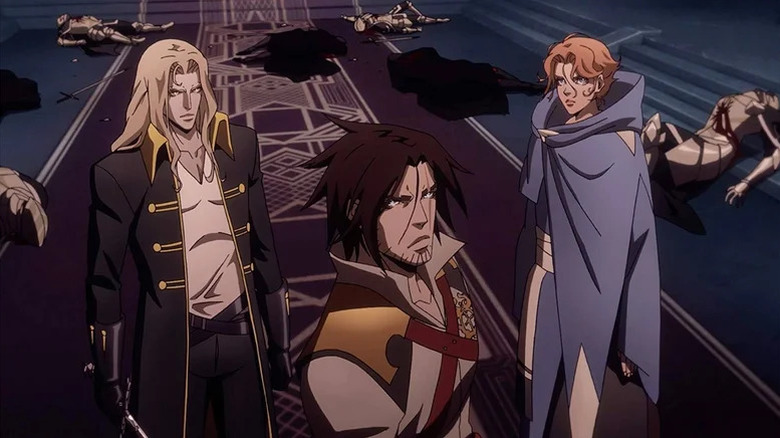
Based on the video game series of the same name, "Castlevania" offers a new take on the Dracula story. Graham McTavish voices Vlad Dracula Țepeș, a grief-stricken vampire who slaughters the residents of his country, Wallachia, after his wife is burned at the stake. This, in turn, leads to him facing off against a formidable foe in the form of Trevor Belmont (Richard Armitage), the last surviving member of a family of monster hunters. Joining Trevor in his war against Dracula's reign of terror are a powerful witch named Sypha Belnades (Alejandra Reynoso) and Alucard (James Callis), Dracula's dhampir (i.e. human-vampire hybrid) son.
"Castlevania" captures the dazzling visuals and rich lore from the game and heightens the emotional stakes to a powerful degree. Inspired by the work of artist Ayami Kojima, who's worked on the video game series and gothic art, "Castlevania" is often bathed in deep reds, blues, and grays. The fight scenes are gory, explosive, and well-choreographed, while the characters slowly reveal their complex backstories. A breathtaking blend of action and epic storytelling, you don't want to miss "Castlevania."
5. Angel
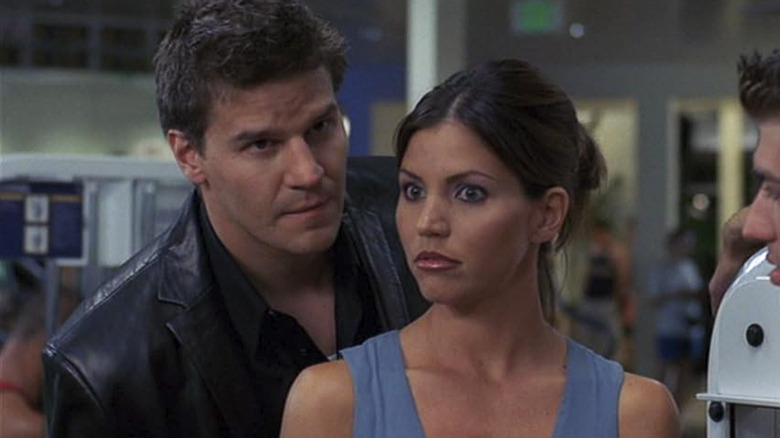
In the TV series "Buffy the Vampire Slayer," Angel (David Boreanaz) is a divisive character. Loved by some, hated by others, the broody vampire spends most of his time looking pained (but hot) and hating himself. In the spin-off that shares his name, though, Angel becomes a much more likable character, which is one of the reasons why the show works. "Angel" embraces a different format than "Buffy," and at its core, it's a detective series.
After breaking up with Buffy (Sarah Michelle Gellar) at the end of "Buffy" season 3, Angel heads to Los Angeles and forms a private detective agency. He's joined by "Buffy" alum Cordelia Chase (Charisma Carpenter) and wayward watcher Wesley Wyndam-Pryce (Alexis Denisof), along with several new characters. Each episode sees the team solving a supernatural case, while the overarching "Big Bad" is the series-long conflict between the Powers That Be and an evil law firm called Wolfram & Hart.
Angel is as serious in "Angel" as he is in "Buffy," but in this context, his solemn personality is played for laughs, and the dynamic within his team is incredibly fun. Though "Angel" has a darker tone than "Buffy," its silly sense of humor lightens the mood. The series also contains some of the best character development in the Buffyverse, most notably Cordelia, who grows into a mature, heroic leader. Though its final two seasons contain some questionable storylines (which appear to reflect creator Joss Whedon's lack of respect for women), the writing is strong overall.
4. Interview With the Vampire
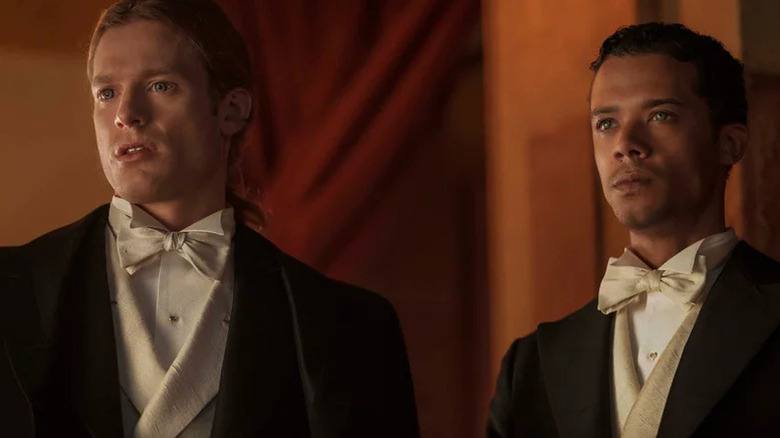
An updated version of a tale set centuries ago, AMC's "Interview With the Vampire" tells a sumptuous love story driven by the pleasures and pains of living as a member of the undead. The "Interview With the Vampire" series begins in 1910 New Orleans (rather than 1791 like in Anne Rice's original novel), when Lestat (Sam Reid) turns Louis (Jacob Anderson) into a vampire. The show also turns the book's subtext into text, as Louis and Lestat have an explicitly romantic and sexual relationship, with all the ups and downs one might expect from a decades-long romance.
Louis and Lestat form a queer vampire family, adopting the eternally 14-year-old Claudia (Bailey Bass) into their family unit. Both intelligent and unabashedly fun, "Interview With the Vampire" takes its characters seriously while also reveling in the gothic melodrama of the source material. In this version of the tale, Louis is a closeted gay Black man who's desperate to become a respected member of his community in the early 1900s, yet he's pushed to the margins in a world that doesn't accept him. This makes his complicated relationship with Lestat particularly thorny, as their power dynamic doesn't fall along familiar lines.
The show also mines the interview portions of its narrative for all they're worth, as the interviewer, Daniel (Eric Bogosian), spoke to Louis once before, back in the 1970s and has now returned to get the full story. Ultimately, the series captures the best elements of Rice's book while carving out its own identity and adding new dimensions to the plot.
3. What We Do in the Shadows
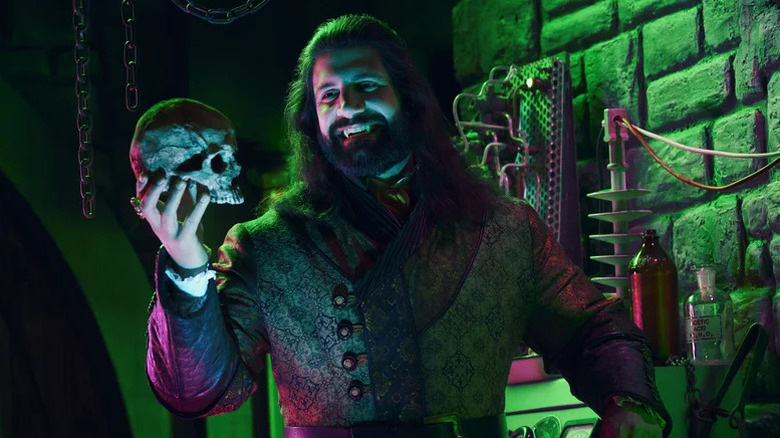
The only sitcom on this list, "What We Do in the Shadows" is a pretty peculiar vampire show. Based on creator Jemaine Clement and executive producer Taika Waititi's movie of the same name, the mockumentary series follows four vampires who share an apartment on Staten Island.
Nandor the Relentless (Kayvan Novak), a former warrior in the Ottoman Empire, sees himself as the leader of the group. Laszlo (Matt Berry) is a Renaissance man who loves sex, science, art, and making fashion statements. He's married to Nadja (Natasia Demetriou), a sharp-tongued seductress. Colin (Mark Proksch) is an energy vampire who drains the life force of his office mates by being boring or annoying. Finally, there's Nandor's human familiar Guillermo (Harvey Guillén), who longs to become a vampire one day.
Much of the show's absurdist sense of humor comes from the apparent contradiction between the characters' vampirism and the banal events of their lives. They have stark-white faces and dress in centuries-old clothing, but they also ride the subway. They feed on the blood of humans, yet they get involved in city council politics. These gags never get old across all six seasons of "What We Do in the Shadows," as its writers consistently come up with the silliest ideas they can muster.
2. True Blood
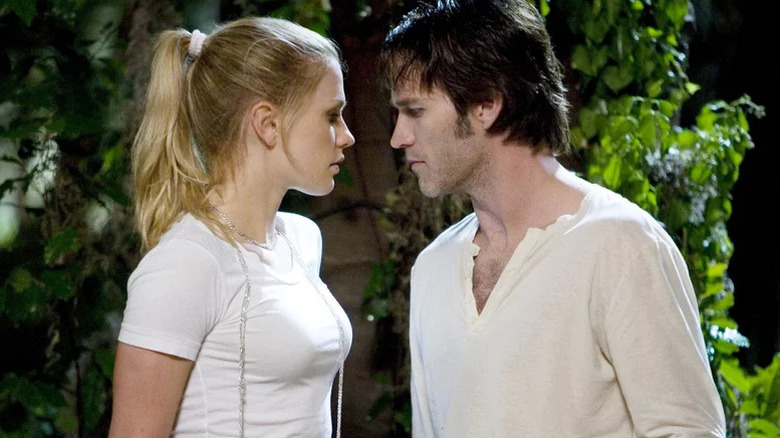
"True Blood" isn't for everyone. It's gory, horny, absurd, emotional, action-packed, and melodramatic. But when it's good, it's great, and when it's just okay ... it's still pretty great. Based on Charlaine Harris' "Southern Vampire Mysteries" books, the HBO series handled vampires in a way that no other show had before. Anna Paquin plays Sookie Stackhouse, a mind-reading waitress in the small town of Bon Temps, Louisiana. Her abilities prevent her from having any intimate or romantic relationships, but that changes when she meets Bill Compton (Stephen Moyer), a 174-year-old vampire and southern gentleman.
Sookie can't use her telepathic powers on vampires, which means she has a unique connection to the undead. She also meets Eric Northman (Alexander Skarsgård), a philandering vampire and owner of the "Fangtasia" nightclub. The series takes place two years after the invention of "Tru Blood," a synthetic blood that inspired vampires everywhere to "come out of the coffin." However, Bon Temps' conservative residents aren't happy about having vampires in their town, so Sookie faces a lot of resentment from her neighbors.
"True Blood" revels in its portrayals of sex and violence, which often occur simultaneously. An unapologetically excessive show, the series utilized the freedom HBO afforded at every turn. Featuring tons of incredible actors and enough melodrama to keep viewers more than satiated, "True Blood" redefined vampiric indulgence for the 21st century.
1. Buffy the Vampire Slayer
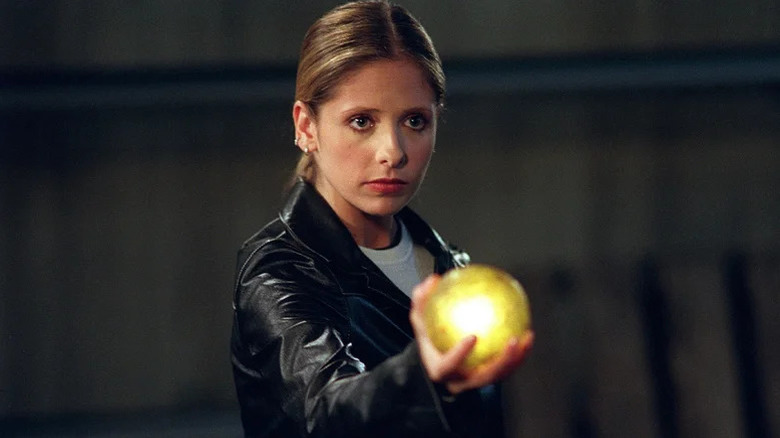
There was no way we were going to put another show at the top of this list. "Buffy the Vampire Slayer" is not only the most iconic vampire show of all time, it's also one of the most influential and oft-referenced shows of the last few decades. The series, which premiered in 1997, follows Buffy Summers (Sarah Michelle Gellar), a 16-year-old California girl with a destiny she can't outrun. She's a vampire slayer, which means she has special powers, and it's her duty to stop vampires and demons from wreaking havoc on the world.
Thankfully, Buffy doesn't have to fight alone. She has her librarian watcher, Giles (Anthony Head), to guide her, along with her friends: nerdy witch Willow (Alyson Hannigan), class clown Xander (Nicholas Brendon), and popular girl Cordelia (Charisma Carpenter). Buffy wants to live a normal teen life, but she's forced to keep saving the world (and keeps falling in love with vampires who don't deserve her in the process).
"Buffy" stands the test of time because of its witty dialogue, lovable characters, and the brilliant way it combines genre tropes. The show is a high school drama where trivial high school concerns overlap with more life-threatening problems. The monster-of-the-week format pioneered by "The X-Files" grounds "Buffy" in its dark, demonic world, but we never forget its namesake is a teenager, and this seeming contradiction is the show's beating, bleeding heart.