

One Variant Of Marvel's Doctor Doom Is A Descendant Of A Brutal Historical Villain
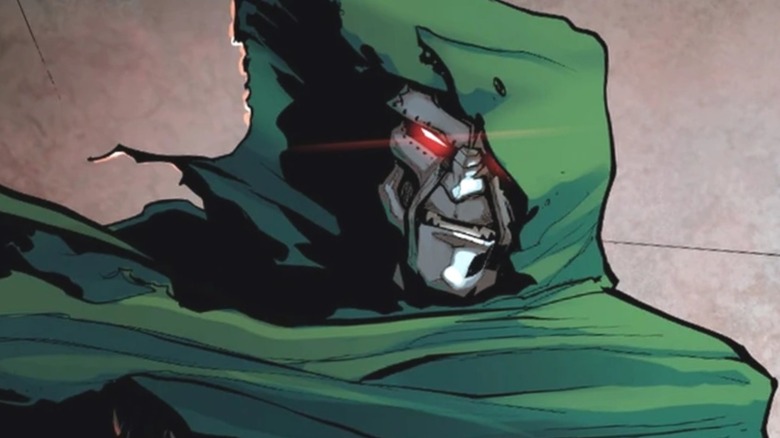
In the 2000s, Marvel Comics launched "Ultimate Marvel," a reboot that brought its lead characters into the 21st century. "Ultimate Fantastic Four" pivoted from from the classic "astronauts bathed in cosmic rays" origin (which is so 1960s). Instead, the "Ultimate" FF were teen geniuses transformed in a teleportation experiment.
"Ultimate Fantastic Four" also reimagined the FF's nemesis, Doctor Doom. Renamed Victor Van Damme, this Doom was part of the Baxter Building think tank and was also transformed in the Four's accident. This Doom has no armor, but literal metal skin. (You can see that both the 2005 and 2015 "Fantastic Four" films took from "Ultimate Fantastic Four" for their Dooms, to their detriment.)
"Ultimate Fantastic Four" #7 (by Warren Ellis and Stuart Immonen) depicts Victor's childhood. On his tenth birthday, Victor's father revealed to him that they are descendants of Vlad Țepeș, or Vlad the Impaler/Vlad Dracula, the infamous 15th century king of Wallachia. Van Damme Sr. explains to his boy:
"Vlad Dracula understood that truth is inborn. That men of greatness must bend an ignorant world to their truth by any means necessary. And so he bent Wallachia to his will. He was cruel, but cruelty is no vice. It is a tool of necessity."
From that moment, Victor was told he must be a man who bends the world to his will. His father instructs him to memorize his family line from Vlad down, beating him whenever he fails. Doom being the descendant of royalty, coming from money, and being imparted from childhood with lessons that a great leader is a ruthless one are all big changes to his character. Victor von Doom acts like an aristocrat, but unlike Victor Van Damme, he came from nothing.
Ultimate Fantastic Four's Doctor Doom descends from Vlad the Impaler
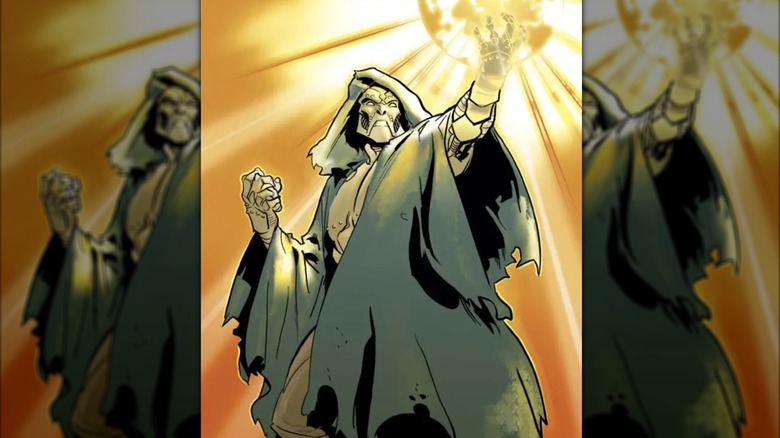
Doctor Doom is an Eastern European king, beloved by his own people but seen as monstrous by outsiders. He's a monarch in Vlad the Impaler's image, so making Doom a literal descendant of Vlad fits. But "Ultimate" Doom does not live up to his family legacy.
His first "kingdom" is a camp of squatters in Copenhagen. Clad in green rags (instead of a regal cloak), Doom compares his new skin to "Wallachian armor," but he didn't forge it himself. His metal body can form sharp spikes, like the kind on which Vlad impaled his enemies. Reed Richards, much pettier and hotheaded than his classic self, scratches Victor with one of those spikes and leaves a scar: "Impaled on your own sword, Victor."
Vlad is associated with dragons; his father, Vlad II, was a member of the Order of the Dragon knighthood, and known as Vlad Dracul, or "Vlad the Dragon." (Vlad III's infamous moniker can mean "son of the dragon.") "Ultimate" Doom brands his followers with dragon tattoos made up of mind-controlling microfibers.
Dracula can also mean "son of the Devil." Doom's metallic body has cloven hoof legs, echoing goatlike depictions of Satan. But "Dracula" or not, Doom doesn't drink blood — and neither did the real Vlad the Impaler. Pop culture has reforged Vlad into the historical basis for Bram Stoker's "Dracula" and its vampiric villain. Later "Dracula" adaptations like Francis Ford Coppola's 1992 "Dracula" film or the action-horror manga "Hellsing" explicitly depict Dracula as the same person as the historical Vlad.
"Ultimate Fantastic Four" indulges this, too. Victor's father tells his son that Vlad let his enemies believe he drank blood. As Doom, Victor brands his subjects on their necks, and controls them like vampires do familiars.
Doctor Doom is Vlad Dracula by way of Victor Frankenstein
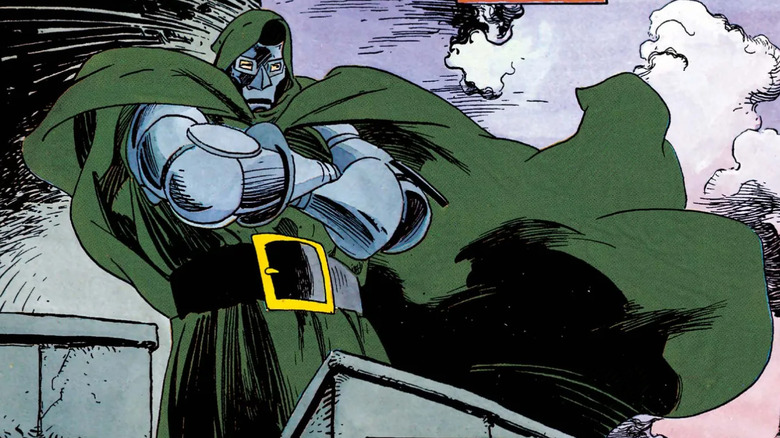
Dotor Doom echoes both the historical Vlad and the literary Dracula; his fictional nation, Latveria, is a pastiche of the gothic Transylvania seen in "Dracula" movies. (Many "Fantastic Four" adaptations also insert Doom having an infatuation with Sue Storm that he never has had in the comics, like how many "Dracula" films make the Count and Mina Harker lovers, not monster and victim.)
"Dracula" is often paired with Mary Shelley's "Frankenstein," especially thanks to Universal and Hammer's films of both. Doom melds "Dracula" with "Frankenstein." He shares Dr. Frankenstein's name, Victor, and both men's lives are defined by the death of their respective mothers. Victor Frankenstein tried to create life in grief over his mother's death, while the machine that blew up in Doom's face was an attempt to contact the "nether world" and his mother's soul.
As the classic Doom stands in the shadow of these villains, historical and literary, Victor Van Damme in "Ultimate Fantastic Four" stands in Doom's. "Ultimate Doom" almost feels like a purposefully-inverted villain, taking Doom down a peg yet only highlighting the strengths of the original.
Classic Doom was born into a poor Roma tribe. The world told him he was lesser and he made himself into a king to prove it wrong. "Ultimate" Doom was taught from childhood that the world was his birthright, but he isn't strong enough to carry it — like Kendall Roy if he was a Eurotrash super-villain. Classic Doom created an armored second skin to hide himself and his supposedly scarred face from the world. "Ultimate" Doom's flesh hardened like a chrysalis, turned brittle, and cracked off, leaving only metal — as if a heartless tin man with the features of the Devil is all he ever was.