

All 10 James Bond Movies Not Based On Ian Fleming's Books, Ranked
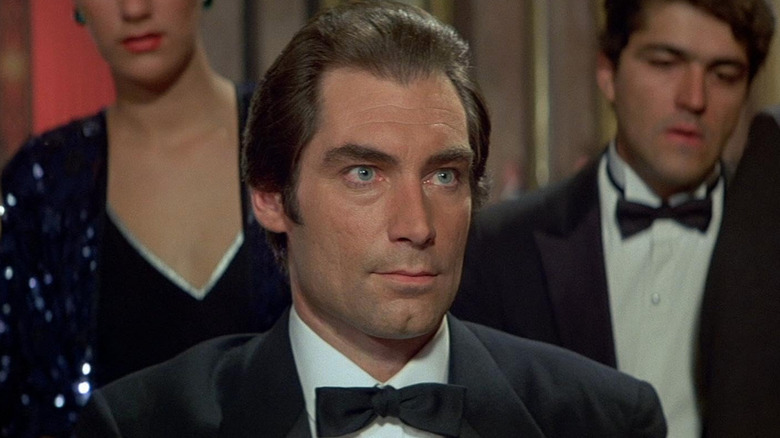
Though James Bond creator Ian Fleming's influence is still acutely felt with the long-running movie series adapting his literary character, the films have taken considerable creative liberties for decades. Adaptations of Fleming's work had grown significantly looser as early as the Sean Connery era, while many of the movies named after them still contained elements from the stories. A prime example is, despite "The Spy Who Loved Me" being plagued by copyright troubles, it still retained a villain with metal-capped teeth. But by the end of Roger Moore's lengthy tenure, the movies had largely ditched incorporating any of Fleming's elements, though that wasn't true of 2006's "Casino Royale."
We're taking a look back at the James Bond movies that are not based on Ian Fleming's books and short stories. Some of the entries here take their titles from short stories written by Ian Fleming but, frankly, nothing else. Outside of the inclusion of Bond and his usual allies and enemies, these cinematic narratives really strike out on their own creatively.
Here are all 10 James Bond movies not based on Ian Fleming's books ranked, going in their own direction with the super-spy.
10. Die Another Day
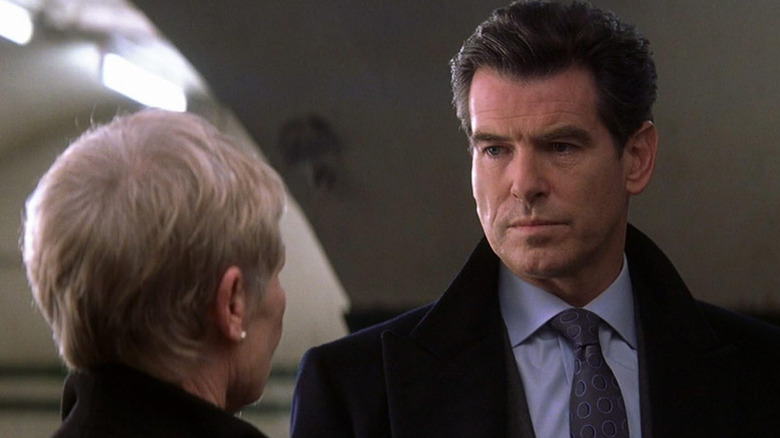
Pierce Brosnan currently remains the only actor whose entire run as James Bond featured original narratives for his movies, rather than drawing directly from a specific Fleming story. In taking Bond out of the Cold War setting in which he originated, this led to an uneven tenure, despite Brosnan's best efforts. However, nothing could quite save Brosnan's last turn as 007 in 2002's "Die Another Day," opening with a title track by Madonna that sounded dated when it was released. The movie has Bond square off with a rogue North Korean general while trying to identify who betrayed him on a mission that led to a prolonged torturous imprisonment.
IMDb names "Die Another Day" as the worst James Bond movie, a dubious distinction that is, unfortunately, well-deserved. The movie opens with Bond infiltrating North Korea by surfing, because that's clearly what the kids are still into, and it only gets worse from there. This backslide into mediocrity spreads to the cinematography, complete with shoddy CG effects and random slow-motion sequences for no discernible reason other than an attempt to look cool. An absolute travesty and an embarrassing way for Brosnan to end his time as Bond, "Die Another Day" is a grating viewing experience.
9. A View to a Kill
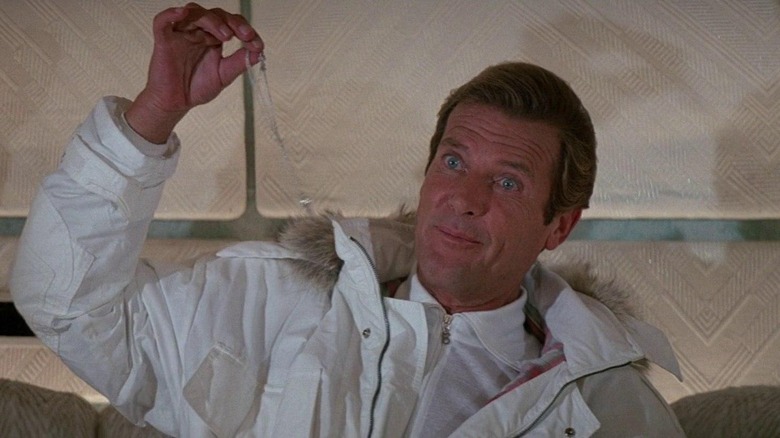
Yes, "A View to a Kill," Moore's swan song to the franchise, takes its title from the 1960 Fleming short story "From a View to a Kill." But whereas the literary namesake features Bond hunting a motorcycle-driving assassin in France, the 1985 movie pits 007 against an immoral tech tycoon before it was cool. The tycoon in question is Max Zorin (Christopher Walken), a sadistic figure looking to corner the microchip market by destroying Silicon Valley. But outside of Walken chewing the scenery, joined by Grace Jones playing his enforcer, and a memorable title track by Duran Duran, the movie falls flat.
Roger Moore was horrified by "A View to a Kill," particularly the widespread casual violence, as Zorin mercilessly murders many of his associates. We're personally horrified by how rough around the edges the overall movie is, from its lackluster stunts to its abrupt finale. To make matters worse, when the movie's filming wrapped, at 57 years old, Moore looks visibly aged out of playing a spry secret agent. A half-hearted end to Moore's celebrated run playing James Bond, "A View to a Kill" feels as tired as its lead actor.
8. Quantum of Solace
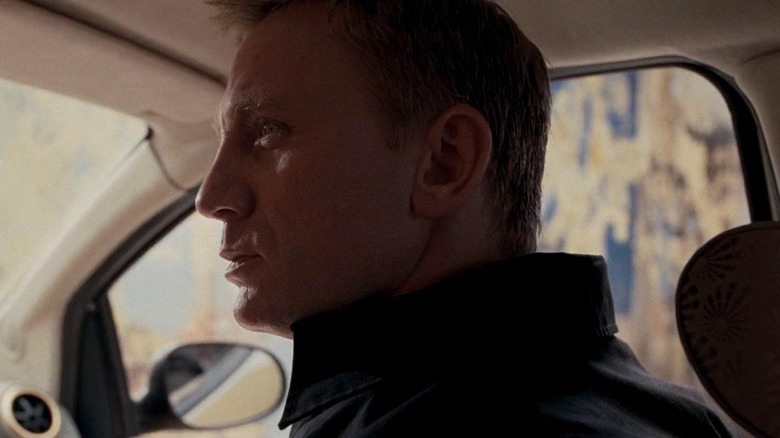
Daniel Craig's sophomore outing as Bond in 2008's "Quantum of Solace" also takes its title from a 1960 short story written by Fleming. But the literary tale simply follows Bond as he attends a dinner party in Nassau where he hears a story about an unhappy marriage. With that certainly not enough for an action movie to go off of, the film instead functions as a direct sequel to "Casino Royale," opening minutes later. Bond uncovers a global network that's infiltrated government organizations worldwide, including MI6, while contending with his own unresolved grief over his recently deceased lover Vesper Lynd (Eva Green).
For as much grief as "Quantum of Solace" gets, constantly existing in the shadow of "Casino Royale," it's a perfectly watchable Bond movie. The shortest in the series to date, the film does feel like a parade of action set pieces, but Craig's performance grounds the spectacle. The movie's themes about water scarcity and a cabal of affluent influencers trying to manipulate international governments does feel prescient. Coming off as an extended epilogue to "Casino Royale" rather than its own standalone experience, "Quantum of Solace" really works best watched in concert with its immediate predecessor.
7. The World Is Not Enough
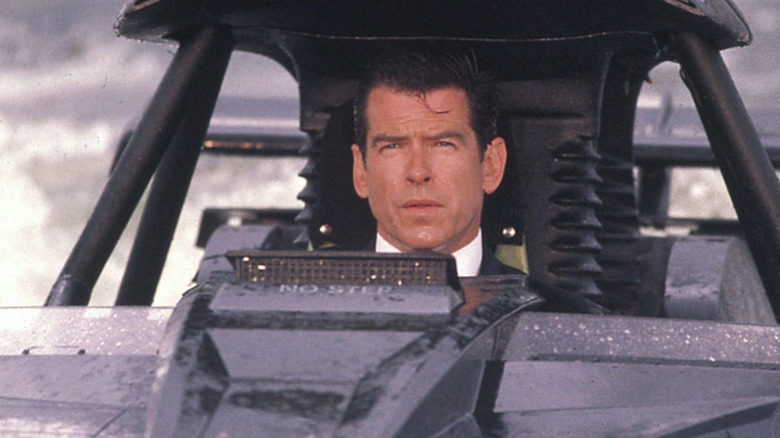
Compared to its more action-oriented predecessor, "The World Is Not Enough" tried to lean more into dramatic territory. The 1999 movie opens with Bond (Brosnan) tricked into delivering a bomb to MI6 related to a kidnapping plot involving oil heiress Elektra King (Sophie Marceau). After being assigned to protect Elektra, Bond hunts down the terrorist responsible for the explosive incident, only to uncover a whole plot targeting vital oil pipelines into Europe. This leads Bond to realize that Elektra is not as helpless or innocent as he believed when they struck up their illicit romance.
Taking its title from Bond's family motto introduced in "On Her Majesty's Secret Service," "The World Is Not Enough" tries to feel like a more personal adventure for 007 accordingly. But as good a femme fatale as Sophie Marceau is, the movie never quite delivers on the emotional potential that it aspires to. The action is a bit lackluster too, feeling like something more akin to a theme park stunt spectacular than a blockbuster set piece. Underscoring that Brosnan was often working with lesser material during his Bond run, "The World Is Not Enough" couldn't live up to its creative ambitions.
6. Spectre (2015)
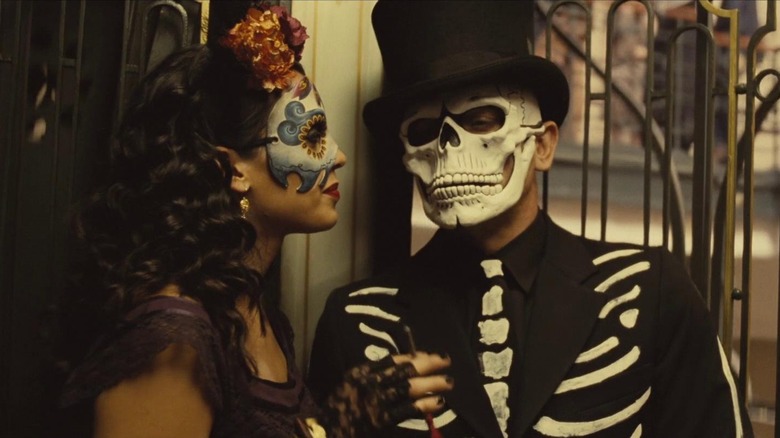
There was a lot of expectation riding on "Spectre" after the critical and commercial success of its immediate predecessor "Skyfall." The movie also marks the first official Bond movie since "Diamonds Are Forever" to explicitly include Ernst Stavro Blofeld, after protracted legal issues prevented the villain's usage. This time, Blofeld is played by Christoph Waltz, with the added backstory that he and Bond grew up together contentiously as surrogate brothers, before the criminal mastermind faked his death. Since then, the movie reveals Blofeld has secretly been tormenting Bond from the shadows, leading to their eventual unhappy reunion for the fate of the world.
"Spectre" falls into the trap of trying to emulate "Skyfall" too much, right down to directly lifting music tracks from the preceding movie's score. The idea of Blofeld being Bond's brother figure, a concept also introduced in the 007 spoof "Austin Powers in Goldmember," is a laughable way to make their dynamic feel more personal. What salvages the movie from its lackluster script is its top-notch cinematography by Hoyte van Hoytema, particularly its stunning opening scene in Mexico City.
5. Tomorrow Never Dies
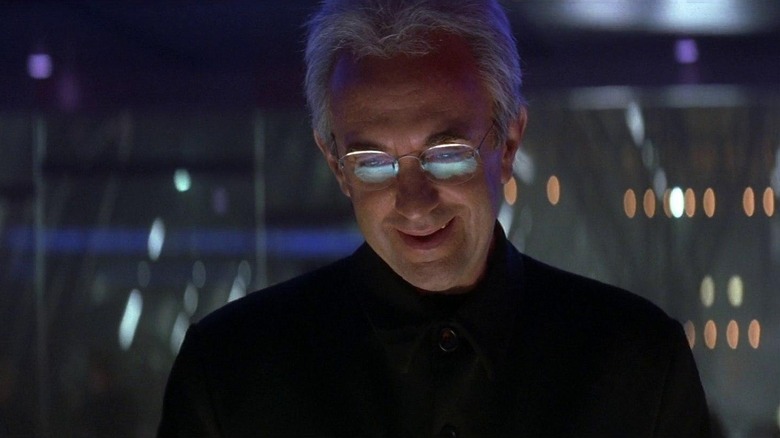
Brosnan's sophomore outing as Bond in 1997's "Tomorrow Never Dies" doesn't get as much credit as it deserves, overshadowed by its more successful predecessor. Another prescient entry in the series as far as its story is concerned, the main villain is a murderous media mogul providing his own news output. In order to take his media empire to the next level, Elliot Carver (Jonathan Pryce) tries to orchestrate a war between the United Kingdom and China. Bond and Chinese intelligence operative Wai Lin (Michelle Yeoh) work together to expose Carver's plot and prevent the conflict from breaking out.
Considering "Tomorrow Never Dies" scrapped its script days before filming, it's a wonder the movie came out as well as it did. The movie goes even more global than many other series' entries, taking Bond everywhere from Carver's offices in Germany to the streets of Saigon. What holds the movie back is that its plot does feel visibly rushed, while none of the action set pieces are as satisfying as the big moments in "GoldenEye." A glossier approach to the franchise than its predecessor's post-Cold War grittiness, "Tomorrow Never Dies" is a serviceable entry in Brosnan's Bond legacy.
4. No Time to Die
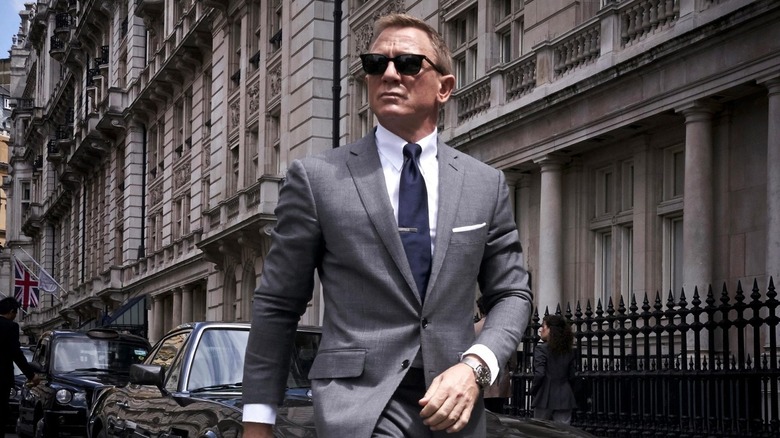
When Daniel Craig closed out his celebrated run as James Bond, he did so with a bang, leaving no stone unturned. This made "No Time to Die" the longest James Bond movie ever, opening with Bond believing his latest serious paramour, Madeleine Swann (Léa Seydoux), had betrayed him to Spectre. After abruptly leaving the service in the wake of this assumption, Bond is pulled back into action when a secret weapon is stolen from the British government. In the process of destroying this deadly project, Bond has to face familiar faces from his life before a fatal showdown against the terrorist Lyutsifer Safin (Rami Malek).
While it could've trimmed about 15 minutes from its runtime, "No Time to Die" provides Craig with a largely solid farewell. From the dusty streets of Italy where Bond tries to get closure for the events of "Casino Royale" to its explosive finale, the movie hits all the right notes. The film's villains, including Malek's Safin, are a bit of a mixed bag, but the action, including a centerpiece sequence in Cuba, is competently staged. A satisfying end to Craig's five-movie run as 007, "No Time to Die" sticks the landing even if it takes some time to get there.
3. License to Kill
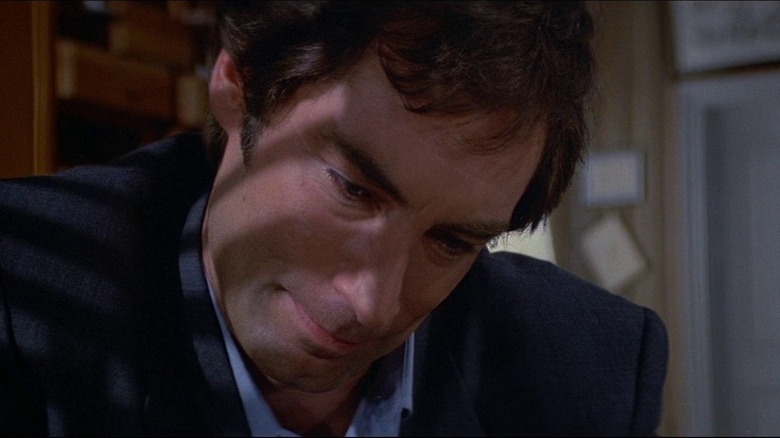
While it's not as fondly remembered today, 1989's "License to Kill" is an essential James Bond everyone should see at least once. Timothy Dalton's second and final turn as 007, the movie begins with Felix Leiter (David Hedison) and his new bride being attacked by drug lord Franz Sanchez (Robert Davi). With MI6 refusing to retaliate, considering the incident an outside matter, Bond angrily resigns from the service and sets out to avenge his friend. This unsanctioned vendetta eventually reveals that there is more at stake with Sanchez's latest scheme than Bond realized.
Though Dalton brought a more serious edge to Bond with his first movie in the role, "The Living Daylights," "License to Kill" is where he really cuts loose. Long before Daniel Craig did it, Dalton played Bond as a mean, lethal type that had no problem with getting his hands dirty to get the job done. These harder-edged sensibilities caught people off-guard, with the memory of the light-hearted Roger Moore tenure still fresh in their minds. But if you're looking to see why Timothy Dalton is filmmaker Christopher Nolan's favorite Bond actor, "License to Kill" is the perfect showcase.
2. GoldenEye
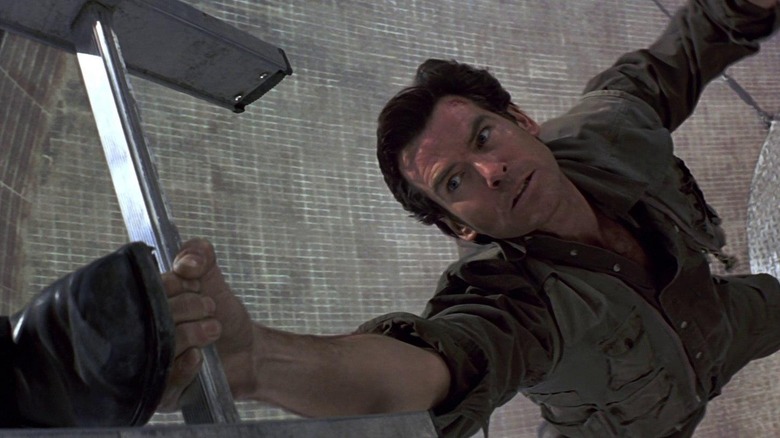
After a six-year hiatus following "License to Kill," James Bond finally returned to the silver screen in 1995, this time with Pierce Brosnan playing the role. "GoldenEye" was almost the end of the James Bond franchise as it tried to find its way after the Cold War. The specter of those global tensions certainly inform the movie's story, with Bond learning a Soviet-era weapons satellite has been hijacked. Venturing into the heart of Russia to identify the culprit, Bond comes face-to-face with his old friend and former 00 Agent Alec Trevelyan (Sean Bean), now leading a crime syndicate.
The Bond movie series needed a shot of adrenaline if it hoped to stay alive after the Cold War, and "GoldenEye" delivered. Brosnan strikes the perfect balance between Moore's self-aware charm and Dalton's steely-eyed intensity while exploring the nuances of the character like never before. The action is as memorable as the franchise gets, and the supporting cast around Brosnan all turn in fantastic work, especially Bean as Trevelyan. Cementing the franchise's relevance beyond a set time period, "GoldenEye" remains the most important box office hit in Bond history, and that comes from a film of enduring quality.
1. Skyfall
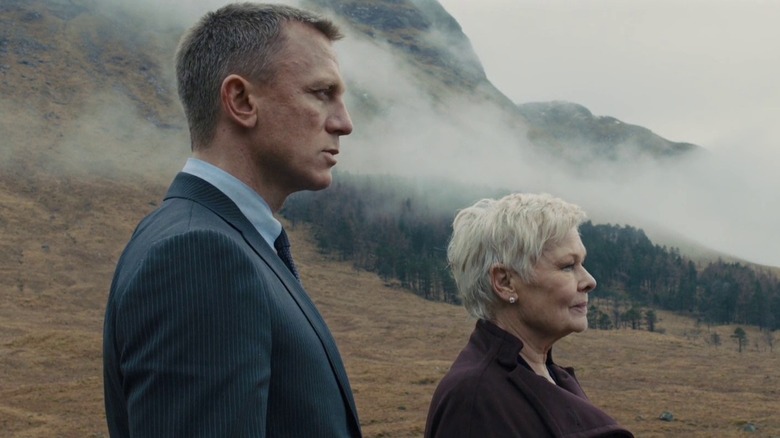
Speaking of box office success, "Skyfall" became the biggest James Bond movie ever when it opened in theaters in 2012. Continuing Daniel Craig's run after a four-year hiatus, the movie has Bond reconcile with his lethal occupation's toll on his body and mind after a disastrous mission in Istanbul. Returning to duty after London is attacked by a shadowy figure linked to M (Judi Dench) and her own unresolved legacy, Bond has to contend with his own advancing age. Fortunately, this mission and its eccentric villain Raoul Silva (Javier Bardem) are just the things to help Bond overcome his midlife crisis.
Released in time for the film series' 50th anniversary, "Skyfall" feels like a celebration and commentary on the legacy of James Bond. Under sharp direction from Sam Mendes, the movie beautifully illustrates those themes while delivering bombastic action sequences, including a fantastic fight scene in Shanghai. Elevating the proceedings is haunting cinematography from Roger Deakins, really accentuating the light and shadows that Bond frequently plays in. An absolute masterpiece from top to bottom, "Skyfall" deconstructs Bond and thematically rebuilds him for the 21st century.