

Christopher Nolan's Batman Begins Borrowed Part Of Its Plot From A Beloved Animated Series Episode
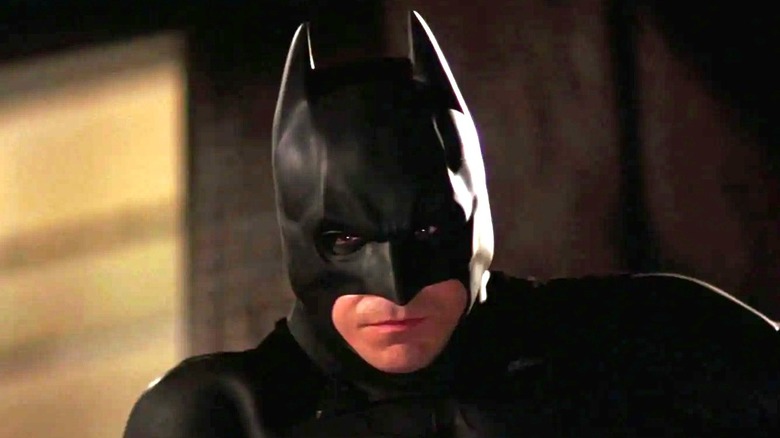
In each of the three "Dark Knight" trilogy films, the villains make an attempt to destroy Gotham City from within. In "Batman Begins," one of those villains is Doctor Jonathan Crane/The Scarecrow (Cillian Murphy). The head of Gotham's Arkham Asylum, Crane is obsessed with fear. With ingredients provided by the League of Shadows, he's manufactured a "fear toxin" that can drive anyone exposed to it to terror. Using Arkham inmates, Crane has been dumping the toxin into Gotham's water supply via the asylum's pipe systems.
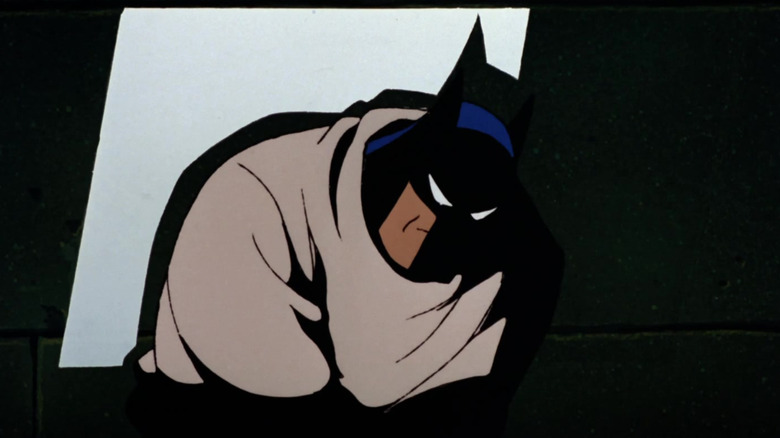
"Scarecrow tries to infect Gotham City with fear toxin" has become a stock "Batman" plot, like in the 2015 video game "Batman: Arkham Knight" or the 2021 comic crossover "Fear State." Look back, though, and you'll find it before "Batman Begins" — specifically, in "Batman: The Animated Series" episode "Dreams in Darkness," written by Judith and Garfield Reeves-Stevens. Batman, exposed to the Scarecrow's fear toxin and suffering hallucinations, is judged insane and locked inside Arkham as a patient.
Under his doctors' noses, Scarecrow plots to dump his toxin into an underground river that flows into Gotham's reservoirs, infecting the city and sparking a mass frenzy of fear. Crane isn't doing it for ransom or a statement; a former academic, he's running a mass experiment in studying the psychological effects of fear.
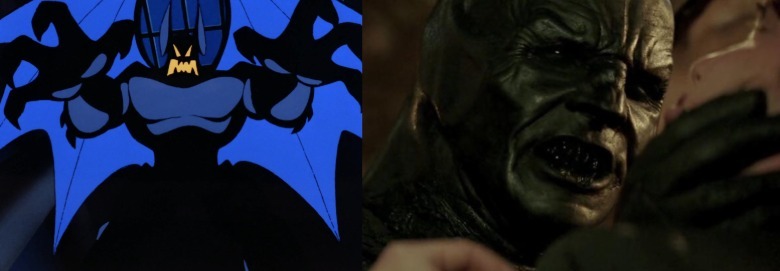
Still, it's hard to write off the similarities between "Dreams in Darkness" and "Batman Begins" as coincidental. The scene of Batman (Christian Bale) defeating Crane is even taken from a different "Batman: The Animated Series" episode: Scarecrow's debut, "Nothing to Fear." Batman poisons Scarecrow with "his own medicine," causing Crane to hallucinate Batman as not merely a man in a bat costume but a demonic, man-sized bat creature.
 Warner Bros
Where Batman Begins echoes and differs from Dreams in Darkness
Whereas in "Dreams in Darkness" Crane is moving in and out of his cell, "Batman Begins" put him in control of Arkham (reimagining Crane's original backstory as a college professor). "Dark Knight" trilogy co-writer David S. Goyer has said he convinced Christopher Nolan that Scarecrow needed to wear his mask, and they devised a practical reason: The mask is a gas mask that keeps Crane from ingesting his fear toxin and scaring his victims who do. That is not the case in "Dreams in Darkness," where Crane is exposed to the toxin while in costume and ends the episode back in his cell as a hysterical mess.
Goyer has said the selection of Scarecrow as the villain of "Batman Begins" came out of the movie's theme of confronting fear. If you're going to steal, steal from the best, because "Dreams in Darkness" is a masterclass at showing Scarecrow getting under Batman's skin. It's the most frightening Scarecrow episode of "Batman: The Animated Series" and the only one that actually comes close to being a horror story, thanks to Batman's repeated and menacing hallucinations.
The first fright is a jump scare; Batman sees the Joker walking towards him reflected on the Batcomputer's screen, only to turn around and find it was Alfred. The terror doesn't let up, and once Batman makes it to Arkham, there's also the dash of psychological horror. Batman is locked in the same asylum as his greatest foes, where no one believes his pleas, and their doubt could cost a city's worth of lives. Granted, the doctors' refusal to believe Batman does border on incompetence. Scarecrow wanting to poison the city is just another night in Gotham, but Arkham's staff treat Batman like he's raving mad.
Dreams in Darkness lives up to its title
Many of the best "Batman: The Animated Series" episodes feel like 22-minute film noirs, and "Dreams in Darkness" is no exception. The episode begins in media res at Arkham, with the opening twist that the "new patient" the doctors are talking about is Batman. Batman gets a voiceover narration — a noir staple — as flashbacks explain how he ended up in a straitjacket.
The hallucinations get worse before they get better. Batman's cell door swings wide open, bathing him in a hellish red light. His parents walk into a dark tunnel, disappearing as that tunnel becomes the barrel of a giant handgun. Once Batman escapes and makes it to the caverns where Scarecrow dwells, he imagines a rat taking on the Joker's face. Imagined villains then keep gruesomely metamorphosing into others. As Batman imagines himself falling into an abyss, the darkness becomes a spiral shape with Scarecrow's face in the center.
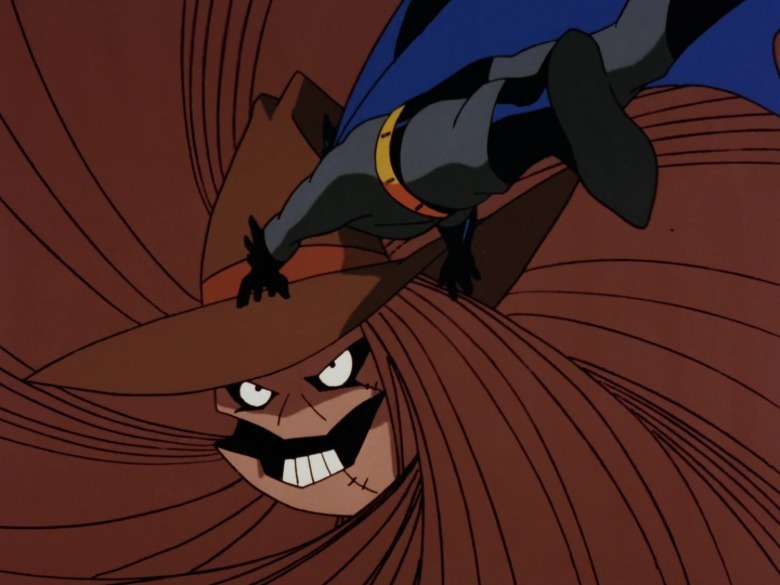 Warner Bros Animation
It's beautifully animated and genuinely creepy stuff; the central image of Batman falling looks right out of Alfred Hitchcock's "Vertigo."
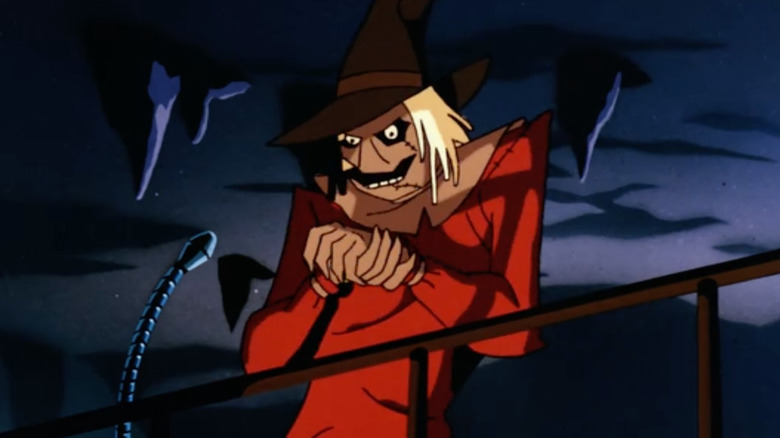
As for the straw-man of the hour, Scarecrow doesn't appear much. He only shows up onscreen halfway through and spends his time waiting on a countdown for his experiment. But "Dreams in Darkness" is Scarecrow voice actor Henry Polic II's best, and most subtle, performance in the role. His baritone is soft, almost mellifluous, which only makes moments like Scarecrow's cruel snicker at how he's left Batman "much, much worse" off than death more unnerving. Polic's time as Scarecrow can be overshadowed by Jeffrey Combs' later, superior performance on "The New Batman Adventures," but "Dreams in Darkness" shows he could be as great a Scarecrow as Combs — or, indeed, Cillian Murphy.