

Cillian Murphy's Scarecrow Holds A Unique Record Among Batman Movie Villains
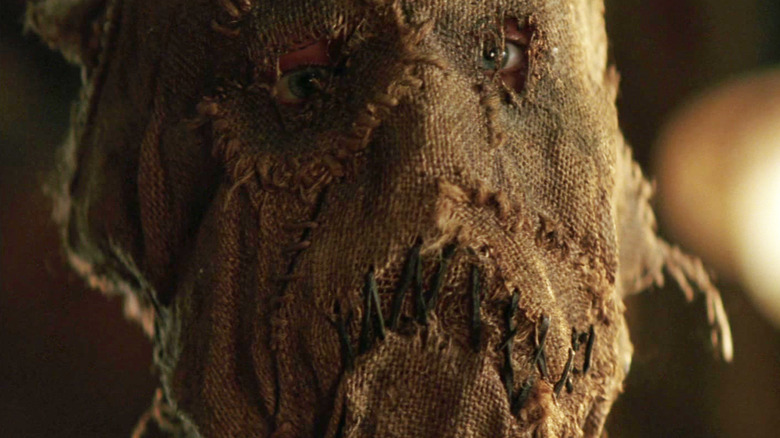
Which Batman villain has appeared in the most movies? Unsurprisingly, it's the Joker. As of 2026, the Clown Prince of Crime has appeared in nine theatrically-released films (live-action and animation), played by eight different actors. Close behind the Joker in frequency are Catwoman, the Riddler, and the Penguin. All four of these villains have a leg up: Together, they're the most famous villains from the Adam West "Batman" show, and they formed a quartet of evil in the 1966 "Batman" spin-off movie. But there's another villain who never made it to the Adam West show yet has a similar record.
That'd be Jonathan Crane/the Scarecrow. After Joel Schumacher's third Batman film (intended to feature Scarecrow) fell through, Crane finally made it to the silver screen as one of two main villains in Christopher Nolan's "Batman Begins." Crane escapes at the end of the movie, setting up a sequence early in the sequel, "The Dark Knight," when Batman (Christian Bale) busts Scarecrow during a drug deal with the mob. Come trilogy capper "The Dark Knight Rises," Bane (Tom Hardy) turns Gotham into a city ruled by the criminals — with the freed Crane serving as judge of any dissident.
Scarecrow is the only villain to appear in every chapter of the "Dark Knight" trilogy. That also gives the character a unique record among Batman movie villains: He's appeared not just in three films, but three films in a row, without a recast or a reboot. "Batman Begins" was the first time that Nolan and Murphy worked together, a partnership that eventually yielded multiple Oscar wins come 2023's "Oppenheimer."
But despite the recurring appearances, has Scarecrow gotten his laurels? Even with his supporting role across the Nolan films, there's never been a Batman movie with Scarecrow as the primary villain.
Despite three turns, Scarecrow never got to be the big bad
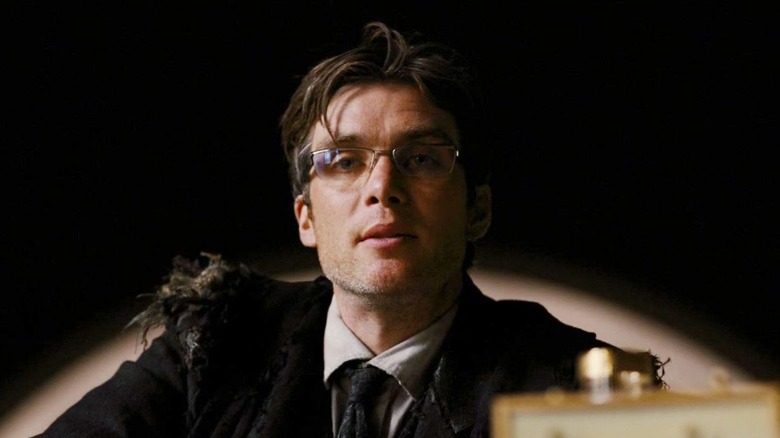
In "Batman Begins," Crane is subordinate to Ra's al Ghul (Liam Neeson). The League of Shadows provides Crane with the plants he needs to make his fear toxin, and it's the League's plan to destroy Gotham by spreading that toxin across the city. Scarecrow winds up as a glorified henchman, with the pathos of a villain as Batman's foil all saved for Ra's.
Frankly, this is a problem that Scarecrow has faced across "Batman" media. Even the superlative "Batman: The Animated Series" didn't use him that much. Scarecrow has a sadistic compulsion to scare people and an academic's interest in studying fear's effects, i.e. qualities that are hard to make sympathetic. The best Batman villains are usually tragic monsters, and Scarecrow doesn't quite fit —but some of the "Batman" stories that use Scarecrow the best suggest this monster doesn't need a tragedy.
In a red carpet interview with Deadline, "Clayface" star Tom Rhys Harries suggested that Scarecrow should be the next Batman villain to get his own movie: "You could do some kind of like 'Inception,' the audience [doesn't] know what's real kind of thing." But I'd push back a little. Scarecrow is best when he's a way to bring out Batman's fears, and there has to be someone to overcome the fear he inspires. A recent iteration of Scarecrow, and one that shows both that and Cillian Murphy's lasting legacy in shaping the villain, comes from Scott Snyder and Nick Dragotta's "Absolute Batman."
"Absolute" Scarecrow is the villain of the arc "The Straw Man," and his design somewhat resembles Murphy-as-Crane in the "Dark Knight" trilogy. He wears a jacket and tie, resembling a business suit instead of the farmer-like clothes of a typical Scarecrow.
Absolute Batman's Scarecrow resembles another Cillian Murphy role
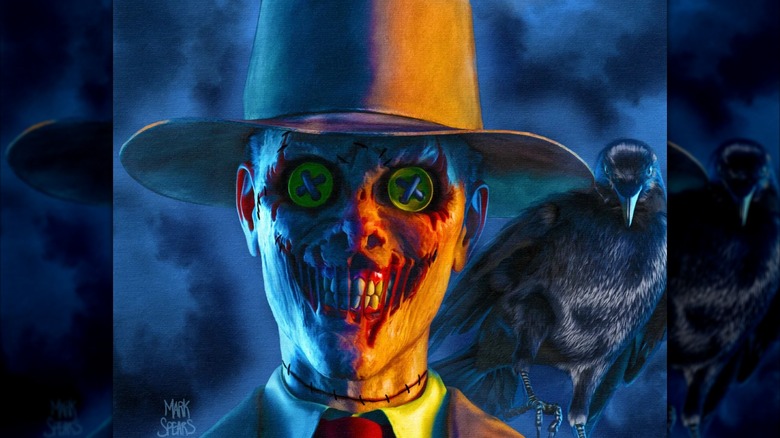
What sets "Absolute" Scarecrow apart from Cillian Murphy's is his face. He has buttons stitched over his eyes, with similar stitching across his mouth. Crane even hints that his Scarecrow "mask" isn't really a mask.
Some Batman fans have noted the lanky "Absolute" Scarecrow looks even more like another one of Murphy's roles: J. Robert Oppenheimer. Scarecrow's suit and dress shirt outfit is a classical early 20th Century style, he wears a wide-brimmed pork pie hat, and he's rarely seen without a cigarette — as was Oppenheimer, in film and reality. If an "Oppenheimer plus Scarecrow" design is what Nick Dragotta was going for, that's a clever meta approach. But is that all there is to it?
"Absolute" Scarecrow is less about terrorizing individual people and more about spreading paranoia. In "Absolute Batman" #20, Scarecrow explains why he does what he does: It's because the modern day is "an age of dread," one where people have to compartmentalize slow-moving disasters and go about "fearing things too big to comprehend let alone affect." For a fear-fascinated sadist like Crane, that's heaven. What created the "age of dread"? I'd argue Oppenheimer's atomic bomb, for it birthed a world where one day, by accident or impulse, everyone might die in a nuclear fire.
"The Straw Man" casts Crane in a role similar to his part in "Batman Begins." This Scarecrow is still only a pawn of a greater villain (Jack "The Joker" Grimm), and the comic never invites sympathy for him. Batman ultimately shuts out the doubts and fears Crane planted in his head, then leaves him strung up on a cross like a real Scarecrow. It's as fitting a punishment as Murphy's Crane getting a taste of his own fear toxin in "Batman Begins."