

10 Sci-Fi Movies That Became Cult Classics After Flopping

We may receive a commission on purchases made from links.
Some people are obsessed with the business side of filmmaking. How much studios cough up for a project? How well its marketing team sells the film? What do a film's awards prospects look like relative to its box office? Head over to the r/BoxOffice subreddit, and you'll find hundreds of armchair analysts and prognosticators scrutinizing a film's financial sense.
Of course, box office success has never equaled quality, and dozens of box office bombs are truly worth watching. This has been especially true historically for sci-fi. The genre's existential themes about the essence of human nature and its frequent speculation about our own future can occasionally make for challenging, provocative, or dour films that struggle to connect with contemporary audiences looking for more digestible entertainment. And yet, some of those sci-fi films are among the best movies of all time and, as such, have found devoted audiences over the years, steering them into the pantheon of all-time great films. These movies may have been ahead of their time, but their enduring themes of human nature have helped them last.
Here are 10 sci-fi movies that became cult classics after flopping.
Blade Runner
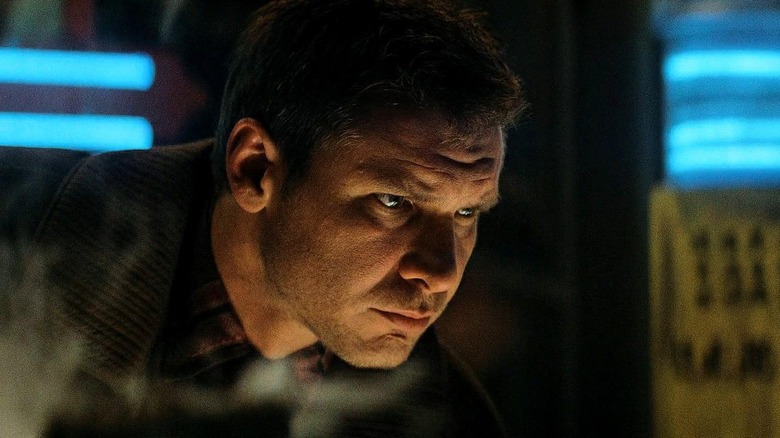
It may be hard to believe that Ridley Scott's rain-soaked neo-noir was a huge dud when it hit theaters in June 1982, but believe me when I say that basically no one went to see this movie. It barely recouped its budget domestically, squeezed between the other, more family-friendly sci-fi juggernaut known as "E.T." Audiences showed up expecting another rollicking Harrison Ford space adventure and instead got, well, "Blade Runner." Early test audiences found the film too dense and hard to follow, so Warner Bros. added needless voice-over narration and a revised ending, meaning the movie people saw wasn't even Scott's original vision.
Given that Scott says it's the hardest movie he's ever done, it was always something of a disgrace, but who knew Scott would maintain such fidelity to the existential nature of his source material in adapting Philip K. Dick's novel "Do Androids Dream of Electric Sheep?" The film follows Rick Deckard (Ford), a burned-out ex-cop in 2019 Los Angeles who is dragged back in to hunt a group of escaped replicants, led by the feral, poetic Roy Batty (Rutger Hauer). Along the way, he falls for Rachael (Sean Young), a replicant who doesn't know she's one.
Home video and repertory screenings gave "Blade Runner" new life. Scott's 1992 Director's Cut and 2007 final cut stripped away studio meddling and helped cement the film as a bona fide classic unfairly dismissed in its time. But then the 2017 sequel, "Blade Runner 2049," underperformed, so it seems that flopping is hereditary for this franchise.
Dark City
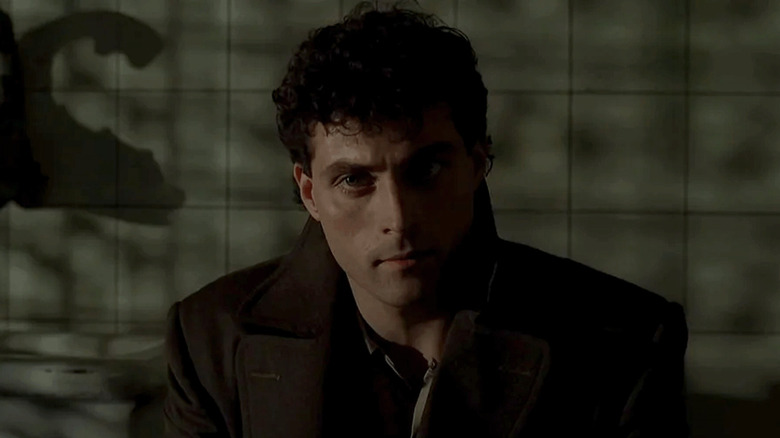
If "Blade Runner" is the patron saint of this list, "Dark City" is its steadfast disciple. Alex Proyas' 1998 neo-noir hit theaters with a thud, grossing roughly what it cost and getting buried by the long shadow of "Titanic." Its ill-timed arrival was especially cruel since "The Matrix" followed a year later, borrowing not only some of the film's ideas but also the same Sydney studio sets.
Rufus Sewell plays John Murdoch, who wakes up in a bathtub with no memory and a dead woman in the next room. He's wanted by the police, led by the world-weary Inspector Bumstead (William Hurt), and chased by the Strangers: pale, bald, trench-coated beings who freeze the city every midnight, rearrange its buildings, and swap its residents' memories like playing cards. Kiefer Sutherland, hamming it up in the best way as the limping Dr. Schreber, does his very best Peter Lorre.
The film is frequently completely gorgeous, rendered as a German Expressionist-flavored stylistic dream where it's always night, and Proyas' eye for production design makes the shifting city feel textured and alive. Yet another movie beset by studio meddling, the biggest flaw is the mandated opening narration, which spoils much of the central mystery right from the jump. Nevertheless, time has proven "Dark City" acolytes correct: It remains one of the smartest sci-fi films ever made.
Donnie Darko
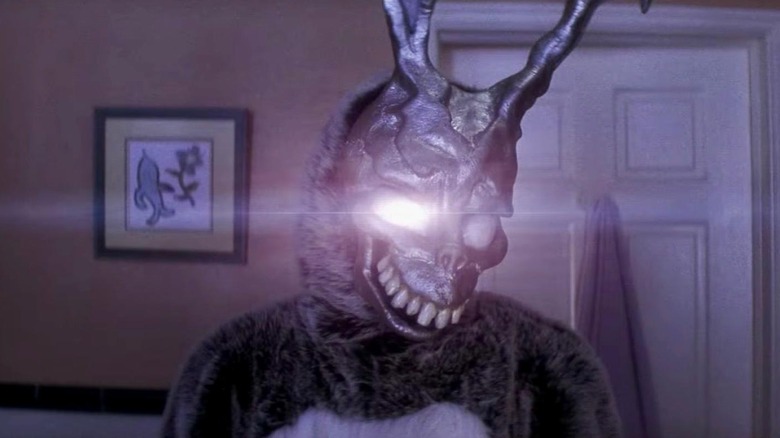
"Donnie Darko" almost didn't make it to theaters, and executives were surely kicking themselves after seeing the box-office receipts for this now-seminal cult classic. Sure, every half-learned film fan can spot Frank the Bunny's (James Duval) costume from a mile away, but in October 2001, nobody had an appetite for a film about a teen whose bedroom is destroyed by an airplane jet engine and whose strange psychological experiences go unexplained.
Jake Gyllenhaal plays Donnie, a sleepwalking, medicated suburban Virginia teen in 1988 who is told by Frank, a six-foot demonic rabbit, that the world will end in 28 days, 6 hours, 42 minutes, and 12 seconds. Writer and director Richard Kelly uses that setup to craft a famously weird movie that's part time-travel puzzle, part teen drama, and part Reagan-era satire, embodied by Patrick Swayze as a smarmy self-help guru.
Like "Blade Runner," "Donnie Darko" found its audience later through midnight screenings and DVD rentals, where a dedicated core of fans grew, trading theories and begging for explanations of the mysteries in Kelly's film. Maybe some of those answers are finally coming, as Kelly has recently announced a sequel novel called "The Philosophy of Time Travel." More likely, fans will still be left relishing how much Kelly's sensibilities leave them scratching their heads.
Event Horizon
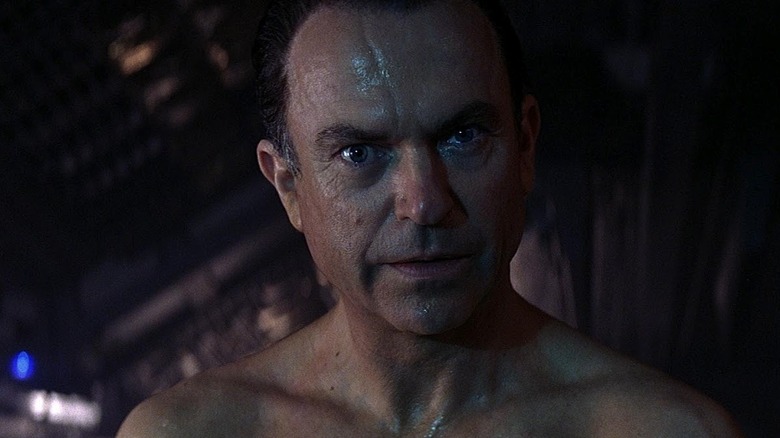
An entry that makes you wonder what the studio's bookkeeping department was thinking: Paul W.S. Anderson's 1997 space-horror outing cost about $60 million, earned less than half that, and was widely panned. Its release date was reportedly so rushed that Anderson had no time to polish it, and the cut was trimmed after test audiences recoiled at the extreme violence. That footage has become genre-movie legend, seemingly lost to time, despite restoration bodies' best efforts to dig it up.
Such is what fuels the legend of what is now considered a sci-fi horror cult classic. Philip Eisner's script transplants the haunted-house template to space, following a rescue crew led by Captain Miller (Laurence Fishburne) that's sent to Neptune to investigate the Event Horizon, a research ship that vanished seven years earlier and has just reappeared. Its designer, Dr. Weir (Sam Neill), joins them, and soon the crew learns the ship's experimental gravity drive opened a gateway to somewhere very sinister. Things get gooey fast, and "Event Horizon" pushes the limits of on-screen violence even in its final, edited form.
It really is the nastiest entry on the list, and it shares the love of oppressive atmosphere and impeccable production design with something like "Dark City." Critics may have been savage at the time, but horror and sci-fi fandoms have fervently claimed it, and those fans are being rewarded: "Event Horizon" is getting a comic book sequel.
Gattaca
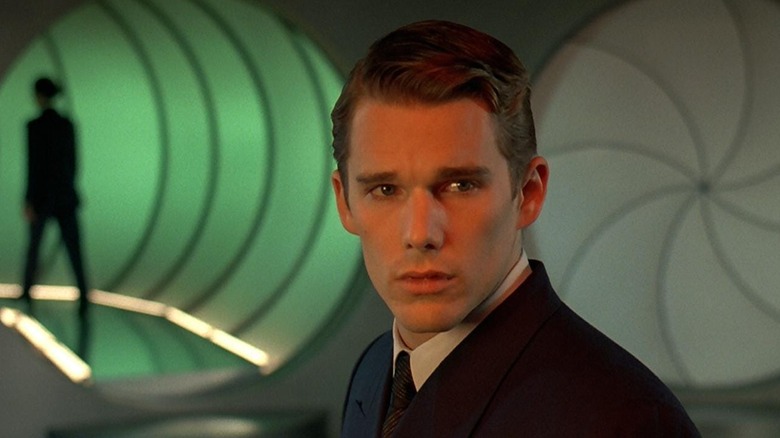
Released the same year as "Event Horizon," Andrew Niccol's directorial debut is a stylistic inverse —where Anderson went for gore and chaos, "Gattaca" is cool and restrained, gorgeously designed and stubbornly aloof, so audiences steered clear. It earned about $12 million against a roughly $36 million budget, probably because its pitch didn't sound like the most fun night out.
Ethan Hawke plays Vincent Freeman, a "natural" born in a society where children are engineered to perfection and thus relegated to menial work. He dreams of going into space, so he borrows the identity of Jerome Morrow (Jude Law), a genetically flawless swimmer paralyzed by an accident. Every day, Vincent scrubs away his shed skin and hair and swaps in Jerome's blood and urine. When a mission director is murdered, a detective (Alan Arkin) starts poking around, and Vincent's carefully built scheme begins to fracture.
This film is all philosophy and heart, with nary a laser or robot to distract from its thematic concerns about the stubbornness of the human will. Michael Nyman's score is gorgeous, and its stylish retro-futuristic presentation earned Academy Award nominations for set decorator Nancy Nye and Art Director Jan Roelfs. In a decade full of breakout sci-fi fare, it's firmly one of the best sci-fi movies of the '90s.
The Iron Giant
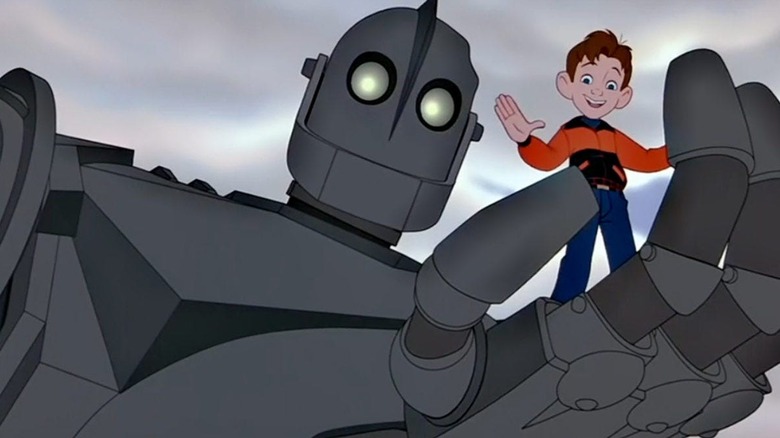
Warner Bros. was to blame for "The Iron Giant" bombing at the box office. The studio never quite figured out how to sell Brad Bird's hand-drawn directorial debut. In August 1999, after a skimpy marketing campaign, reportedly because the studio was still licking its wounds from the bomb that was "Quest for Camelot," "The Iron Giant" earned roughly $31 million against a $50 million budget. Families who might have flocked to the movie about a boy and his giant robot friend didn't know it existed, and by the time they did, it had left theaters.
Adapted from Ted Hughes's 1968 children's book "The Iron Man," the film is set in 1957 Maine, where nine-year-old Hogarth Hughes (Eli Marienthal) discovers a 50-foot metal visitor (voiced by Vin Diesel, years before "The Fast and the Furious" made him a star) snacking on a power station. Hogarth hides his new pal in the scrapyard of beatnik sculptor Dean McCoppin (Harry Connick Jr.), but Sputnik-era paranoia sends government agent Kent Mansley (Christopher McDonald) sniffing around town, convinced the Soviets are behind everything.
Where movies like "Dark City" and "Gattaca" chew on identity through adult-flavored noir-style sci-fi, "The Iron Giant" translates similar ideas of self-discovery into the animated story of a kid and his misunderstood best friend, with grown-up political themes on the periphery. Bird's warm, painterly animation and Michael Kamen's score boost its rewatchability, and its finale is infamous for being an emotional wrecking ball. Like other films on this list, reruns and home-video sales turned it into a touchstone for a certain generation.
The Rocky Horror Picture Show
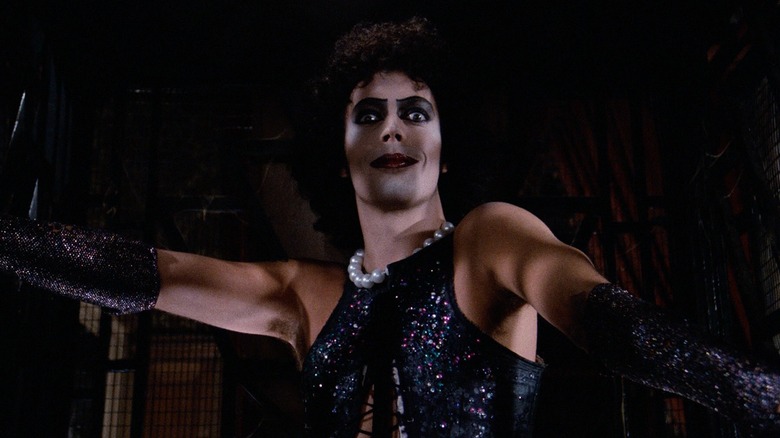
Every movie on this list eventually found its audience, but none of them found it quite like "The Rocky Horror Picture Show," a film that became the perfect cinematic sanctuary for freaks. When 20th Century Fox released Jim Sharman's adaptation of Richard O'Brien's stage musical in the fall of 1975, it was yanked from most theaters almost immediately because of low attendance for a rock opera about a cross-dressing alien scientist. Then the midnight screenings happened. After playing at New York's Waverly Theater in 1976, the film set itself on a path to becoming a permanent fixture at late-night repertory houses, with participatory crowd screenings. To this day, theaters around the country play it every weekend.
The setup is simple: Newly engaged squares Brad Majors (Barry Bostwick) and Janet Weiss (Susan Sarandon) get a flat tire in a rainstorm and knock on the door of a spooky castle. There, the mad scientist Dr. Frank-N-Furter (Tim Curry) is unveiling his latest creation: a muscle-bound man named Rocky (Peter Hinwood), built to be his plaything. Frank's servants, Riff Raff (O'Brien himself) and Magenta (Patricia Quinn), are, like their master, from a planet very far from Denton, Ohio.
While "Donnie Darko" cultivated its devotees through similar midnight screenings, "Rocky Horror" rewrote the rulebook: fans show up in costume, shout their own lines at the screen, and hurl rice, toast, and water pistols at one another. But beneath the glitter and garters, "Rocky Horror" is an affectionate love letter to the B-movie sci-fi and horror flicks of previous decades, and Curry's iconic, campy star turn endures as his defining role.
Starship Troopers
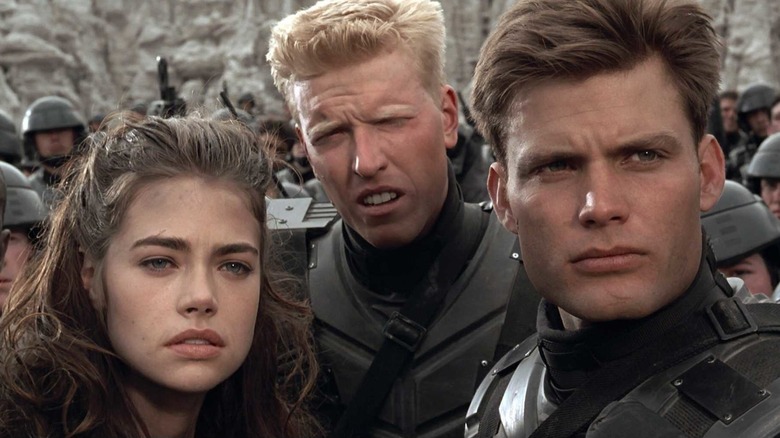
Part of the box-office failure of "Starship Troopers" may have stemmed from its being too smart for its own good. Hollywood's class of 1997 was notably unkind to Paul Verhoeven's monster-movie military satire, and it was an expensive casualty. Costing $100 million, it scraped up about $55 million at the domestic box office, largely because critics and audiences watched a movie about gung-ho militarists and took it at face value, treating the film and Verhoeven himself as props of a fascist state. Turns out Verhoeven's tongue may have been planted too deeply in his cheek.
Casper Van Dien stars as Johnny Rico, a Buenos Aires high-school jock who joins the Mobile Infantry to chase fighter-pilot trainee Carmen Ibanez (Denise Richards), with pal Dizzy (Dina Meyer) hot on his heels. Neil Patrick Harris plays Carl, who lands in military intelligence wearing a black leather trench coat that should probably remind you of the Gestapo. After a meteor hurled by the arachnid "Bugs" flattens Buenos Aires, Rico and his tough-as-nails sergeant (Clancy Brown) are shipped off to take the fight to the bugs' home planet.
What nobody wanted to hear in 1997 was that Verhoeven and screenwriter Edward Neumeier, who'd already skewered corporate America in "RoboCop," were gleefully lampooning military propaganda, from the cheery newsreels indoctrinating kids to join the troops to the zealous way the character is shipped off to fight a war on foreign soil. Even more, it implicates and criticizes the audience and Hollywood for glorifying these violent interventions in bombastic action movies — "Starship Troopers" is as good a sci-fi action movie as it is a political commentary, which makes it all the more scathing.
The Thing
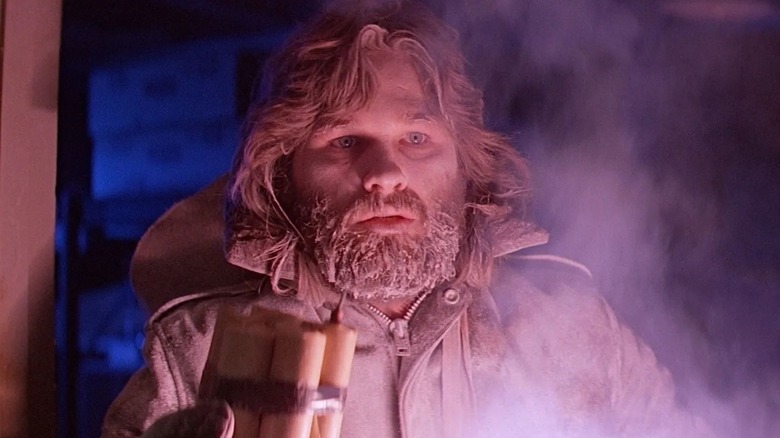
June 25, 1982 was a punishing day for sci-fi movie history: both "Blade Runner" and "The Thing" opened in theaters, two weeks after "E.T." had America fall in love with an endearing alien who finds a new family. Audiences weren't ready for sci-fi of a decidedly moodier, more violent temperament. Kurt Russell was on the money about why "The Thing" wasn't a hit when it came out, as critics savaged the film as bleak and gratuitous, and it earned barely more than its $15 million budget. Nevertheless, "The Thing" has grown in status and is now widely regarded as one of the best sci-fi and body horror movies ever made.
Kurt Russell stars as R.J. MacReady, a helicopter pilot at a remote research station whose team discovers that a creature unearthed from the ice can imitate any living thing, including their friends. Wilford Brimley, Keith David, and Richard Dysart round out a paranoid group of men who can't trust one another, bumbling around their Arctic facility in freezing, pitch-dark cold, wondering how to trust their fellow man.
"The Thing" is known for its gross creature effects, and Rob Bottin's practical effects are still peerless. But the film's ice-cold nihilism and infamously ambiguous ending helped lift its status from a home-video favorite to a certified classic. Like "Blade Runner," it also spawned a follow-up that flopped, inheriting a family curse born on the day the two films were released. History has proven them to be masterful, estranged pieces of canonized sci-fi.
TRON
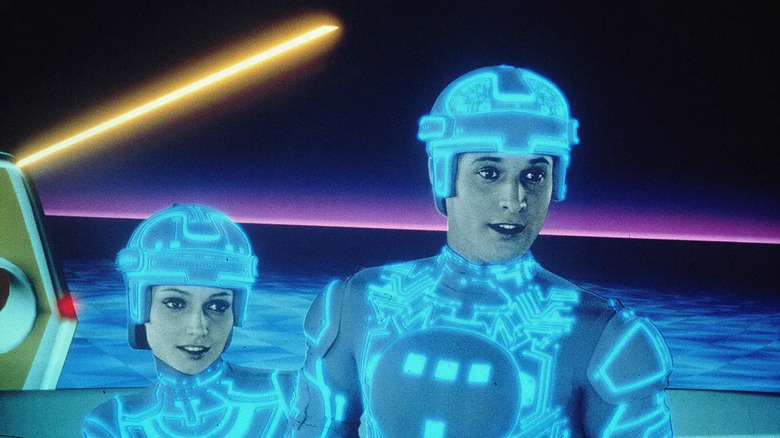
Disney's bid for a computer-age blockbuster landed on July 9, 1982, two weeks after "Blade Runner" and "The Thing," capping the disastrous summer for sci-fi outings not named "E.T." "TRON" earned roughly $33 million on a $17 million budget, which sounds reasonable until you remember that the studio expected a mega-hit — those simply aren't blockbuster profits. That seems to be a curse for the franchise; to this day, "TRON" continues to flop at the box office.
Jeff Bridges stars as Kevin Flynn, a brilliant programmer turned arcade owner who tries to hack his way into ENCOM, where executive Ed Dillinger (David Warner) stole his video games. The company's Master Control Program zaps Flynn into the digital world, where programs resemble their human users and are forced into gladiatorial games, including the now-iconic light cycles. There, he teams up with the security program Tron (Bruce Boxleitner) and the program Yori (Cindy Morgan) to take down the MCP.
Only about 20 minutes of the film use true computer animation, with the rest created through painstaking backlit animation of black-and-white footage, but the result was still cutting-edge for its time. Like "Blade Runner," it was a film whose visuals outpaced its audience, and its talk of "users" and omnipotent software feels downright prophetic now. Even if "TRON" always seems slightly out of step with its audience, its core ideas about conflict within digital worlds are perfectly apt.