

10 Best Western Movies Of The 2000s, Ranked
We may receive a commission on purchases made from links.
The Western experienced a slow decline throughout the 1990s, from being by far the biggest entertainment genre in the early days of film and television — with exponentially more Westerns made from the 1930s through the 1950s than any other genre — to a trickle of more revisionist or subversive versions that countered the fact that the genre's traditional forms were rooted in classical ideas that had become old-fashioned. As the world advanced, it constantly threatened to outdate the Western.
However, the genre could never truly die, as it's far too rooted in elemental ideas about the creation of America. By the 2000s, Western films were certainly in a low period in terms of output, but the decade produced some of the best films the genre has ever seen. Just as the 21st century as a whole can't be counted out when it comes to Westerns — as seen in our list of the 15 best Western movies of the 21st century — the aughts have substance to spare in their depictions of the mythic stories we tell ourselves about America.
Here are the 10 best Western movies of the 2000s, ranked.
10. Appaloosa
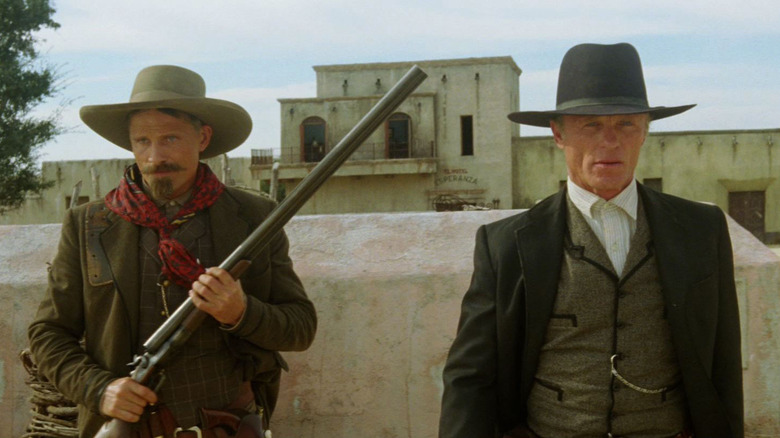
Ed Harris' "Appaloosa" is a throwback in the best sense, a lean, unhurried genre picture that trusts the old pleasures of the Western: two men, a town, and a code. Harris directs, co-writes with Robert Knott, and stars, adapting Robert B. Parker's novel with faithfulness, as a chance to see how much life remains in the classical form.
Set in 1880s New Mexico Territory, the film follows Virgil Cole (Harris) and Everett Hitch (Viggo Mortensen), longtime partners who work as lawmen. The town of Appaloosa brings them in after rancher Randall Bragg (Jeremy Irons) murders the local marshal and his deputies. Order is restored quickly, but the real drama arrives on the train in the form of Allison French (Renée Zellweger), a widowed pianist whose shifting loyalties test the partnership and Cole's sense of control.
The gunfights are brisk and businesslike, as the film's real interest is in the friendship. Cole is a man of rigid principle who fumbles for big words, while Hitch acts as his reserved anchor. Mortensen's watchful, understated performance makes their bond feel lived-in. It was a modest box-office performer, and it's been criminally underrated ever since. It's a reliable rewatch and a reminder that a plainspoken Western can be quietly perceptive about loyalty, dependence, and the melodrama of masculine emotion.
9. The Good, the Bad, the Weird
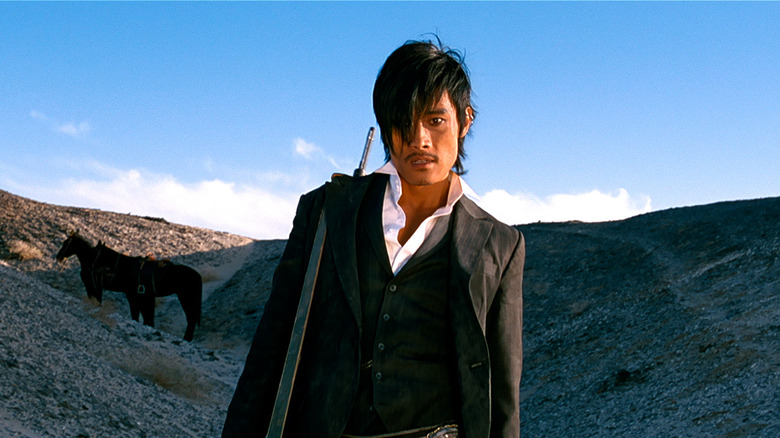
Kim Jee-woon's "The Good, the Bad, the Weird" is a maximalist, tongue-in-cheek homage to Sergio Leone, transplanted from the American Southwest to 1930s Manchuria. That setting, a lawless borderland under Japanese occupation, gives the film an unexpected historical texture beneath its sugar rush of action, and it's among the most purely entertaining films on this list.
The plot is a classic three-way chase. Park Chang-yi (Lee Byung-hun), "the Bad," is a vain, sadistic gangster hired to retrieve a mysterious treasure map. Park Do-won (Jung Woo-sung), "the Good," is a stoic bounty hunter pursuing Chang-yi. Yoon Tae-goo (Song Kang-ho), "the Weird," is a bumbling thief who steals the map during a train robbery and finds himself hunted by everyone, including the Japanese army and an assortment of bandits.
Kim stages his set pieces with admirable ambition. The opening train heist, a wild motorbike chase through a bustling black market, and a climactic desert standoff involving what feels like hundreds of riders all give the film a sense of scale that may surprise viewers expecting something more of a trifle. The film premiered at Cannes in 2008 and, at the time, was one of the most expensive productions in South Korean history, and the budget shows on screen. Song, in particular, carries the film, stealing scenes with a mix of slapstick and unexpected pathos. It's a reminder that the Western is a portable language and that its conventions can transmute among drastic changes of scenery.
8. The Proposition
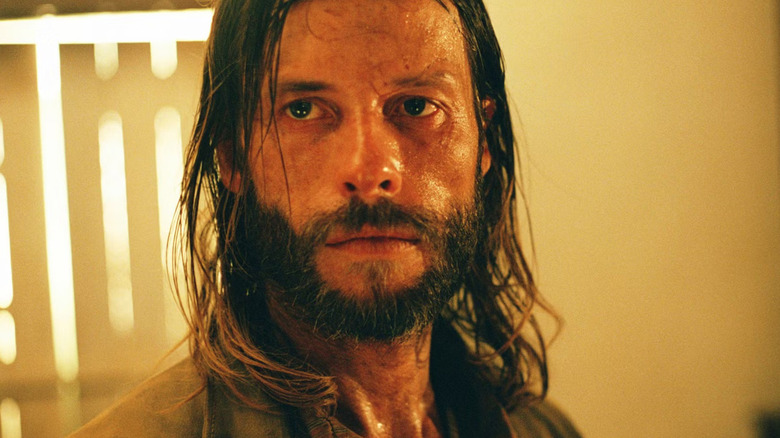
If "Appaloosa" is the Western at its most traditional, "The Proposition" is the genre at its most brutal. Directed by John Hillcoat and written by musician Nick Cave, this 2005 film relocates the Western to the Australian outback of the 1880s and finds a landscape whose hostility rivals the American frontier: sun-scorched, fly-ridden, and cruelly indifferent to the people crawling across it.
Guy Pearce plays Charlie Burns, an outlaw captured alongside his younger brother by Captain Stanley (Ray Winstone), a lawman with lofty ideas about civilizing the colony. Stanley offers a bargain: Find and kill Charlie's older brother, the monstrous Arthur (Danny Huston), within nine days, or his younger brother Mikey (Richard Wilson) will hang. As Charlie sets off on his quest, the audience is thrust into a world defined by dead-end decisions, violence, and moral ambiguity, where every choice is underscored by fatalism and consequence.
What makes the film so distinctive is how Hillcoat and Cave treat violence. It arrives in sudden, sickening bursts, leaving behind an inexorable sense of dread. Cave's haunting score, composed with Warren Ellis, does much of the emotional work alongside it, giving the film a grander texture than you might expect from its modest production resources. The film has been called a masterpiece of the "outback Western," and it earns that reputation — even Roger Ebert noted how much it haunted him. It's a bleak, poetic picture and one of the 2000s' great Western entries.
7. Open Range
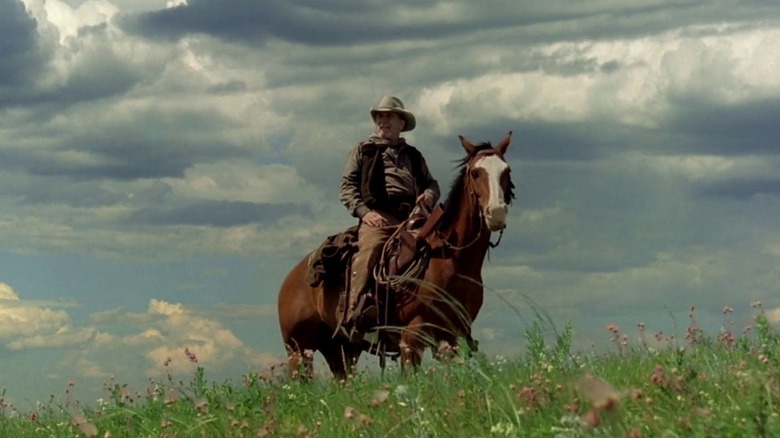
By the early 2000s, Hollywood had largely written off the Western, making Kevin Costner's "Open Range" a quiet act of faith in the genre's reliability, even when it wasn't most in demand. Costner, who won Oscars for "Dances with Wolves" a decade earlier, directs and stars in a film that plays it defiantly straight. There's no deconstruction or artistic revisionism here, just a handsome, well-made story about decent people pushed to violence.
Robert Duvall plays Boss Spearman, a veteran "free grazer" who drives cattle across open land with his crew, including the guarded gunman Charley Waite (Costner). When they run afoul of Denton Baxter (Michael Gambon), a land baron who considers the range his own and their kind a trespass, the conflict escalates into a fight for survival. Along the way, Charley finds a tentative romance with Sue Barlow (Annette Bening), the town doctor's sister, and must face the violent past he'd hoped to leave behind.
Duvall serves as the film's heart, delivering one of the best late-career performances in the genre, and the movie's payoff is a striking gunfight. Eschewing a stylized showdown, the film offers a chaotic, deafening, and exceedingly realistic exchange of gunfire that lingers on the consequences and the real weight of true, unchangeable violence — it's one of the best shootouts ever. "Open Range" isn't trying to reinvent the Western, but its craft, sincerity, and respect for the tradition make it a sturdy, deeply satisfying example of the classical form.
6. Brokeback Mountain
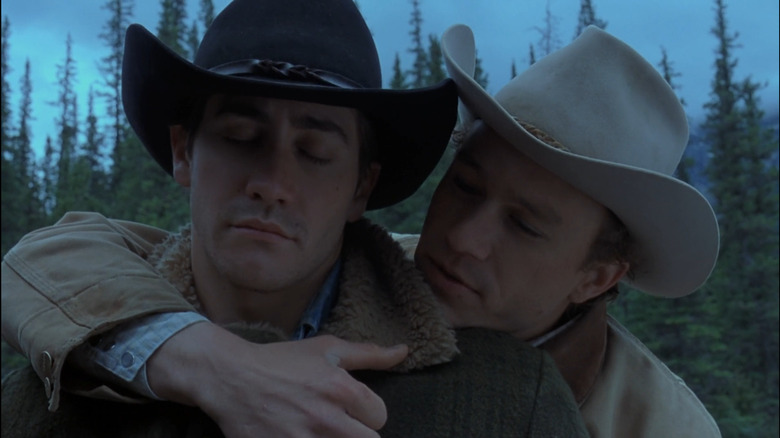
It's easy to forget how radical "Brokeback Mountain" felt in 2005. Ang Lee's adaptation of Annie Proulx's short story, written for the screen by Larry McMurtry and Diana Ossana, takes the most masculine of American genres and sets a tender, devastating love story between two men against that backdrop. It became a cultural lightning rod, inspiring a barrage of "gay cowboy movie" jokes that still could never dilute the film's reputation enough to ruin what an emotional stunner it truly is.
In 1963, Wyoming ranch hands Ennis Del Mar (Heath Ledger) and Jack Twist (Jake Gyllenhaal) are hired to herd sheep on Brokeback Mountain, where an unexpected intimacy develops between them. When the summer ends, they part ways, marry (to Michelle Williams's Alma and Anne Hathaway's Lureen), and build lives around the fear of what they've lost. Over the next 20 years, they steal time together on "fishing trips," perpetually putting off the inevitable of when they have to let each other go.
Ledger's performance is heart-rending in its taciturn nature: a mumbling, coiled portrait of a man who can't say what he feels and knows exactly what the world will do to him if he does. Rodrigo Prieto's photography turns the Alberta-shot mountain landscapes into sites of beauty set against all the internal strife. The film won three Oscars, including Best Director for Lee, but it lost Best Picture to "Crash" in one of the most notorious upsets in Academy history. Time has made its case: It's one of the best romance movies of all time, and the Western at its most heartbreaking.
5. 3:10 to Yuma
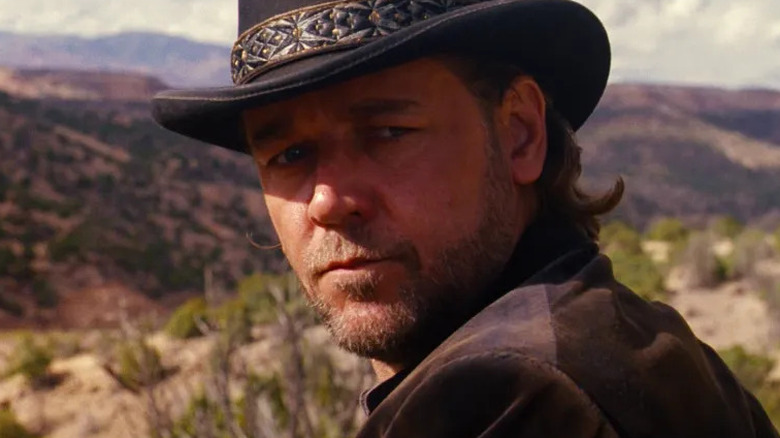
"3:10 to Yuma" runs the classic Western through the action-movie engine to spectacular effect — Roger Ebert even gave it a perfect score. James Mangold's remake of Delmer Daves's 1957 film, itself adapted from an Elmore Leonard short story, retains the lean premise of earlier versions and adds the grit and bloodshed a contemporary audience expects. The result is a crowd-pleaser that doubles as a piercing character study.
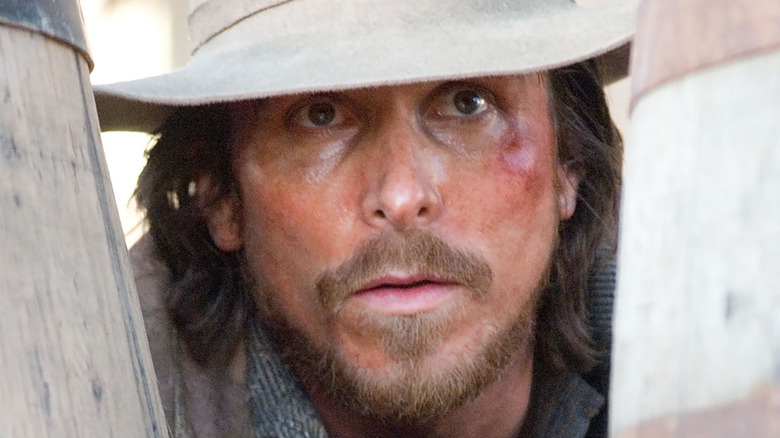
Christian Bale plays Dan Evans, a Civil War veteran and struggling Arizona rancher who lost part of his leg in the war and is drowning in debt, as his family's respect slips away with every failed season. When the charismatic outlaw Ben Wade (Russell Crowe) is captured after robbing a stagecoach, Evans signs on for $200 to escort him to the town of Contention, where a train to the Yuma prison awaits. Wade's gang, led by the unhinged, dandyish Charlie Prince (Ben Foster), is close behind. Peter Fonda turns up as a hard-bitten Pinkerton man, and Logan Lerman plays Evans's teenage son, who tags along.
What this becomes is a long, tense two-hander between Bale and Crowe, as they battle each other's stubbornness and menacing charm while testing each other's ideas of what a man owes to a family and to himself. With its lived-in world, textured character detail, and operatic finale, it's one of Mangold's best films and proved that a well-made Western could still find its audience in the 2000s.
4. The Three Burials of Melquiades Estrada
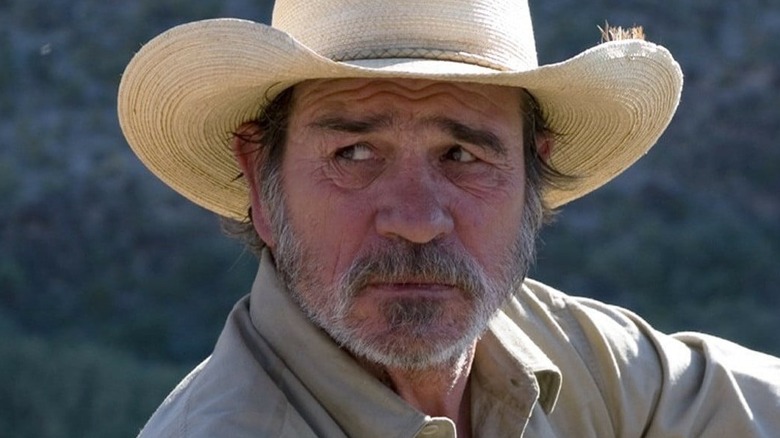
Hey, look, another 2000s Western that earned a perfect score from Roger Ebert! Tommy Lee Jones's directorial debut strips the genre down to its essentials in this story about friendship, a corpse, and a long ride across unforgiving border country. Working from an original screenplay by Guillermo Arriaga, the writer behind "Amores perros" and "21 Grams," Jones follows Arriaga's typical tone of dusty, realistic grit, delivering a great performance from Jones and some of the most authentic-feeling Western aesthetics and ideas found this side of the year 2000.
Jones plays Pete Perkins, a Texas ranch foreman whose closest friend, the Mexican ranch hand Melquiades Estrada (Julio Cedillo), is shot dead by Mike Norton (Barry Pepper), a Border Patrol agent new to town who barely seems to grasp what he's done. When the local sheriff (Dwight Yoakam) buries Melquiades in an unmarked grave and shrugs off the case, Pete digs the body up, kidnaps Norton, and forces him to accompany the corpse on horseback into Mexico, honoring a promise to bury his friend at home.
The film has an angry streak, focused on how the border treats people who try to cross it, but it often relies on dry, deadpan humor, grotesque comedy, and Jones's weathered, world-weary face and mannerisms, which communicate his fatigue with the simplest of gazes. Instead of building to a shootout, this one builds toward a quieter manifestation of penance and self-actualization. The film remains underseen, but it deserves to be in conversation with the best of what this century has to offer.
3. The Assassination of Jesse James by the Coward Robert Ford
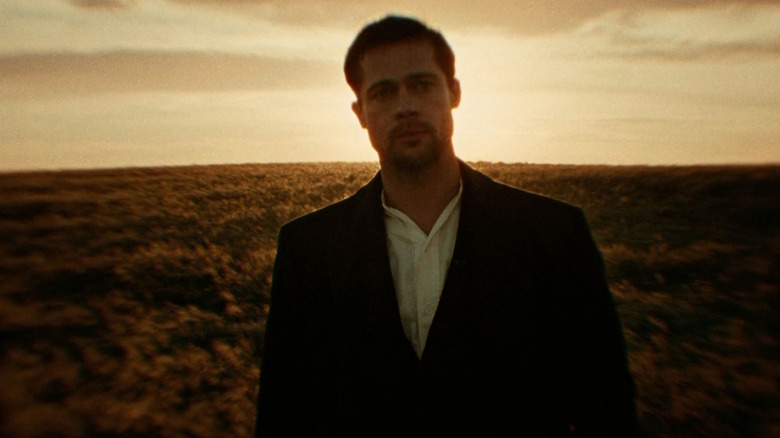
Andrew Dominik casts the legacies of American myth into doubt in this stunning and sophisticated arthouse Western that brings the genre into a modern sense of somber self-reflection. Brad Pitt plays Jesse James in 1881, the legendary folk hero on the verge of outliving the myth he's created for himself, contrasted by Casey Affleck as Robert Ford, a nervy, starstruck young man who has grown up on the dime novels that have given James his reputation and who pushes his way into the gang of his idol.
Other familiar faces dot the cast: Sam Rockwell is Ford's older brother, Charlie, and Sam Shepard, Paul Schneider, Jeremy Renner, and Mary-Louise Parker help fill out the ensemble, all on the slow march toward the fatalism promised by the film's title. It's a slow, agonizing accumulation of resentment and dread that builds as we realize how much of our heroic legends are rooted in falsities — as Ford learns, America is built on many lies, embodied by the shifty, underhanded James.
Warner Bros. basically left this one for dead: with its morose tone and near-three-hour runtime, the studio skipped a major marketing push, and the film barely registered at the box office. But Roger Deakins's Oscar-nominated cinematography — truly some of the most striking in any movie this century — the mournful score by Nick Cave and Warren Ellis, and Dominik's control over the tone of tragedy have earned the film a strong modern reputation. Even still, Dominik says there's an even longer, better cut of the movie, but we'll never get to see it.
2. There Will Be Blood
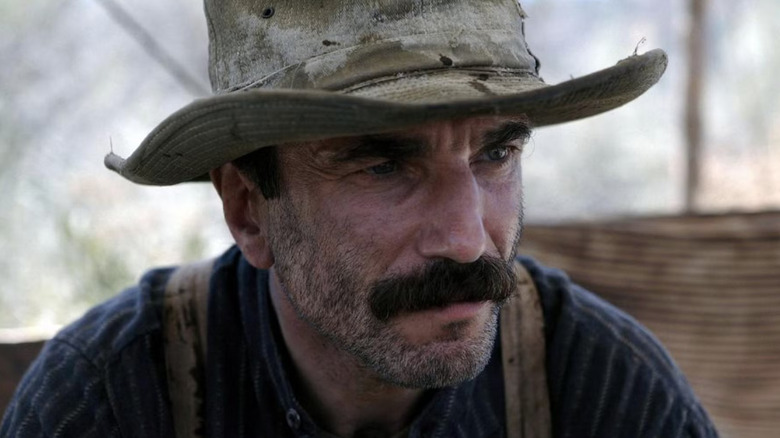
One of the most revered movies of this century, Paul Thomas Anderson's "There Will Be Blood" takes the Western's founding myth of the rugged individual carving a fortune out of the land and follows it to poisonous conclusions about malignant capitalism. Loosely adapted from Upton Sinclair's novel "Oil!," it doesn't have many of the traditional signifiers of the Western — some may argue it doesn't fit the category at all — but its DNA is unmistakable in its focus on dusty vistas and the hunger for land, power, and control.
Daniel Day-Lewis won his second Best Actor Oscar as Daniel Plainview, a silver miner turned oilman who builds his fortune in early-20th-century California. When a tip leads him to a small town sitting on a sea of oil, he runs into Eli Sunday (Paul Dano), a young preacher with his own appetite for money and influence. Their rivalry, part business dispute and part holy war, drives the film's second half, with Plainview's adopted son H.W. (Dillon Freasier) caught in between.
Anderson stages the film with an operatic sense of inescapable fatalism, brought on by Plainview's distillation of a distinctly American thirst for wealth and authority. With the title in mind, it always feels like it's driving toward a terrible tragedy, and Anderson finds that sorrow in the dark joke of its final scene, proving him a masterful filmmaker. He treats greed and faith as two sides of the same American coin, each leeching off the land in opportunistic narcissism. "There Will Be Blood" dissects how we got to where we are today, and it points blame in all directions.
1. No Country For Old Men
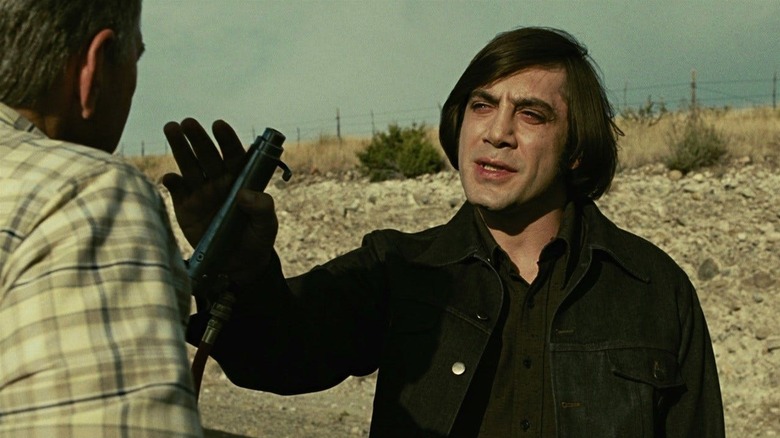
The Coen brothers' adaptation of Cormac McCarthy's novel is a Western in modern clothes, set in West Texas in 1980 and haunted by the sense that the old rules of the frontier no longer apply. It's arguably the leanest, most controlled film of the Coens' career, stripped of almost any score and content to let silence and landscape build the tension.
The story starts with a simple, fatal decision. Welder and Vietnam veteran Llewelyn Moss (Josh Brolin) stumbles upon the wreckage of a drug deal gone wrong and walks away with a case containing two million dollars. Anton Chigurh (Javier Bardem) pursues him, a hitman guided by a private, terrifying philosophy of chance, and Sheriff Ed Tom Bell (Tommy Lee Jones) trails them both, a weary lawman who sees violence outpacing his ability to understand it. The three form an uneasy trio representing a changing world, where codes of honor and integrity have given way to incomprehensible savagery.
The Coens are a perfect match for McCarthy's blunt-as-a-tack story, unforgiving yet restrained in its depiction of modern evils and the roles of choice, chance, and fate, all underscored by the film's ambiguous, pensive ending, which is more powerful than ever. The film deservedly won Best Picture and Best Director for the Coens at the Academy Awards, along with Best Adapted Screenplay. Not only the best Western of the 2000s, it sits right alongside any classic work as one of the best ever made.