

5 Best Sci-Fi Movies Of 1994, Ranked
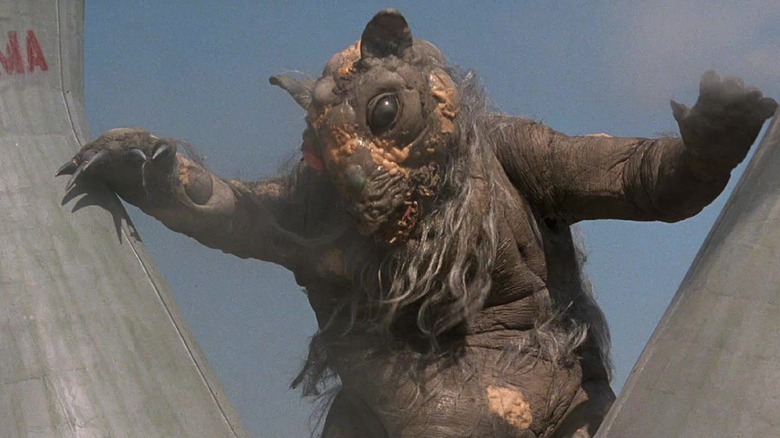
1994 was a wild time at the cinemas. Blockbusters looked very, very different than they do today, sporting a wider variety of genres. The highest-grossing film of 1994, domestically, was the animated Disney Renaissance film "The Lion King," followed by the Boomer nostalgia opera "Forrest Gump." Other films in the top 20 highest-grossers included a James Cameron action-comedy ("True Lies"), a high-profile horror romance ("Interview with the Vampire"), two family comedies ("Mrs. Doubtfire" and "The Santa Clause"), a terse political thriller ("Clear and Present Danger"), and a live-action rendition of "The Flintstones."
But while those films were selling a lot of tickets, audiences and critics were turning a lot of their attention toward indie theaters and smaller releases. It was the year of "Clerks" and "Pulp Fiction." "Hoop Dreams" was released. Some of the most celebrated films of 1994 were initially box office bombs; see: "The Shawshank Redemption" and "Ed Wood."
Meanwhile, sci-fi movies were struggling to find an identity. It's hard to lay down roots when the dominant artistic trend of the day was unique movies from ambitious filmmakers. None of the films on the below list can easily be sorted into any one trendy box, other than the fact that they were all released in the year 1994. One is a wild slapstick comedy. One is a franchise misfire (that may be worth a look anyway). One of them is a clunky yet fun vehicle for a well-known action star. And one of them is an adaptation of classic literature. Nothing made sense in 1994, and it was exciting.
Let's take a look.
1. Timecop
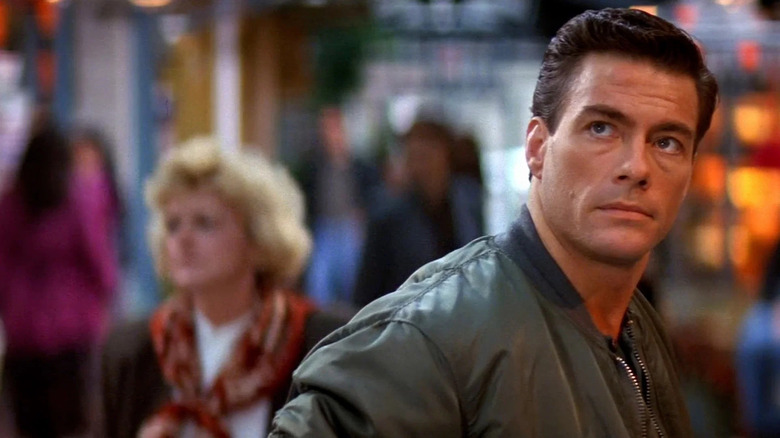
Peter Hyams' "Timecop" is a pretty goofy animal. Jean-Claude Van Damme plays Agent Max Walker, a cop in the employ of the Time Enforcement Commission. It's 2004 and time travel is real, although not in widespread use. For the most part, criminals use time machines to go back in time and make money; an opening sequence sees a time-traveler stealing a store of Confederate gold, for instance. Max Walker has to go back in time and apprehend the criminals before they can do any damage to the timeline.
This is a neat premise, but it's handled clumsily. The script isn't terribly tight, and Van Damme, while a charismatic leading man, isn't well suited to the material; he needs more bad guys to kick to be fully comfortable. Ron Silver plays the film's bad guy, though, and he has a ball chewing the scenery next to his time-travel doppelganger. "Timecop" was produced by Sam Raimi and Robert Tapert, so one can imagine a goofier, more drive-in-friendly version of the flick, perhaps even with someone like Bruce Campbell in the lead.
The best thing about "Timecop," though, is its time travel rules. I appreciate that no one can travel to the future in "Timecop" because, well, it hasn't happened yet. Also, if you go back in time to the recent past and meet yourself, it's gravely important that you don't come into physical contact with them. The laws of physics don't seem to appreciate when the same matter occupies the same space. There is also a good causality scene wherein the past Ron Silver is injured on the face, and the future Ron Silver finds a scar spontaneously appearing.
2. Stargate
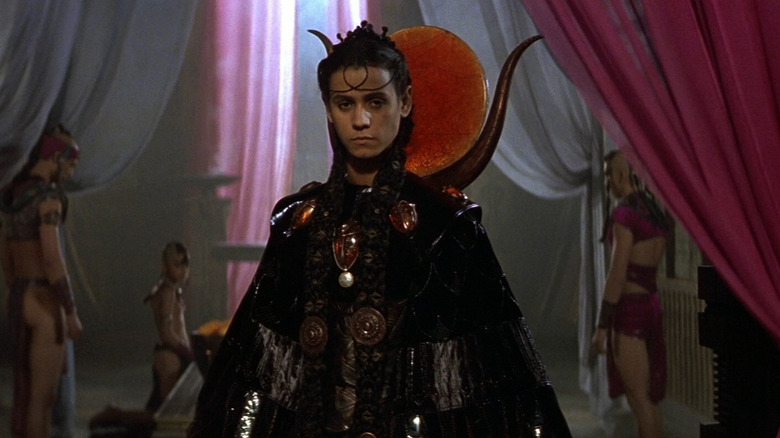
"Stargate" is one of the slickest sci-fi movies of 1994, sporting fun production design and excellent special effects. This was the film that introduced Roland Emmerich to a wider American audience, although he had already caused a stir in 1992 with "Universal Soldier." He would return in 1996 with "Independence Day," one of the decade's biggest hits.
"Stargate" is based on a fun/dumb conspiracy theory that the Pyramids of Giza were actually constructed by visiting extraterrestrials, who served as the basis for ancient Egyptian faiths. Jaye Davidson, for instance, plays Ra, the king of the gods. In the mythology of "Stargate," Ra is actually a powerful alien who took the body of a young human, and who enslaved Egypt thousands of years ago.
The aliens also left behind Stargates, which allow humans to travel spontaneously between two gates even if they are millions of lightyears apart. James Spader plays the nerdy scientist who is called in by the government to solve the mystery of the Stargate, and Kurt Russell plays the army wonk who is there to charge through the Stargate with guns once it opens. The bulk of the action takes place on the Egyptian aliens' distant home planet. The costumes are neat, and, as mentioned, the effects are first-rate.
"Stargate" was intriguing enough to launch an entire media franchise, beginning with the long-running TV series "Stargate SG-1" in 1997. That show lasted for 214 episodes over its ten seasons and begat three additional TV spinoffs (and one web series!) along with video games and other ancillary materials. The mythology seemed so simple at first. Now "Stargate" is a whole universe unto itself.
3. The Class of Nuke 'Em High 3: The Good, the Bad and the Subhumanoid
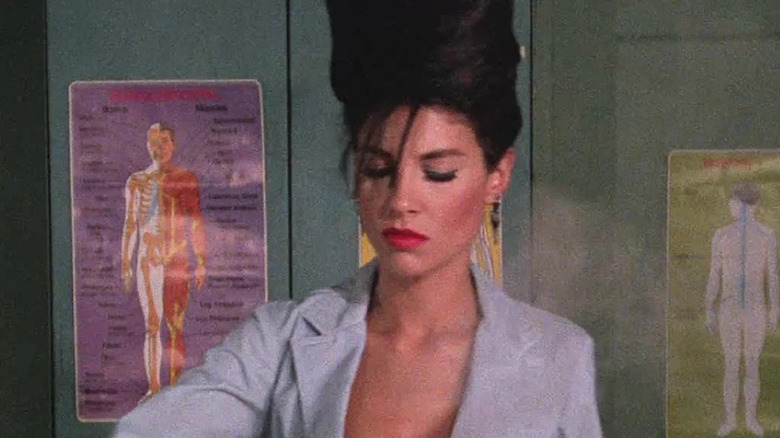
What would happen if someone remade "The Naked Gun" as a spoof of teen comedies, while also making it a searing indictment of Reagan-era nuclear power politics? Oh yes, and he borrowed the story from William Shakespeare's "Comedy of Errors?" You'd have Troma's "Class of Nuke 'Em High 3: The Good, the Bad and the Subhumanoid," co-written by Lloyd Kaufman and directed by Eric Louzil.
The "Nuke 'Em High" movies are all slimy and absurd. The first film sets up the premise that Tromaville High School is located next to a leaking nuclear power plant that causes mutations in the local student body. The second film is all about an engineered race of subhumanoids that are bred to be slaves. The third film is about a pair of identical twins named Dick and Adlai (both played by the bohunkular wrestler Brick Bronsky) who are separated at birth. One is raised good, and the other evil. The plot involves a scheming villain (John Tallman) using the evil twin to frame the good twin, hence manipulating the political landscape of Tromaville.
The background of "Nuke 'Em High 3" is a wild cartoon wonderland of glop, melting down subhumanoids, and plenty of raunch. There is a subplot about superpowers. Even if you watch the film sober, you'll feel like you're drunk. It's that kind of dizzying experience. It's always a delight when Troma lets it all hang out and just sneezes their slime all over you.
Naturally, the film is a comedy. Be sure to stay through the credits, as I think it's more than 50% jokes.
4. Star Trek: Generations
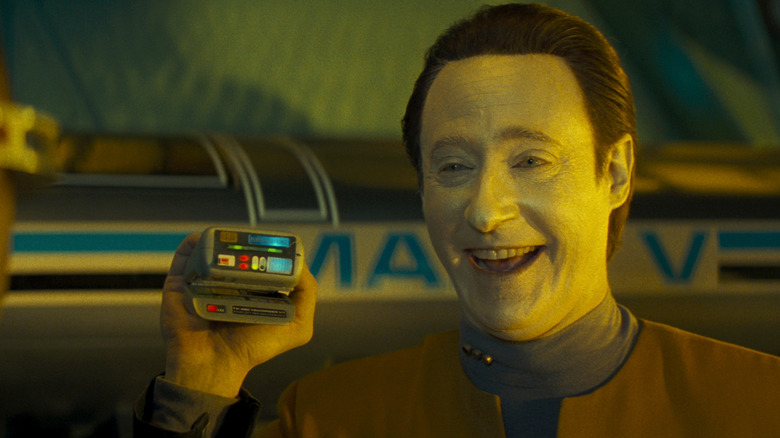
I have the perhaps-controversial opinion that none of the four films based on "Star Trek: The Next Generation" are very good. Not even the largely celebrated "Star Trek: First Contact" is particularly smart, and none of them do a good job of capturing the cerebral tone of the TV show.
Even hardcore Trekkies would agree that David Carson's "Star Trek: Generations" isn't that great. The film went well out of its way to get Captain Kirk (William Shatner) and Captain Picard (Patrick Stewart) on screen together as a means of "passing the torch" from one generation to the next. The problem was, "Next Generation" had already been very successful on TV for seven years, and no such passing was required. As such, the film is largely mawkish, and the story is clumsy. Malcolm McDowell gives a fun performance as the wicked Dr. Soran, a man trying to reach a physical manifestation of Heaven, but it's hardly a great movie, and it was weighed down by studio requirements.
But it's hard to deny the thrill of what this movie felt like in 1994. As a teen Trekkie at the time, I was very, very willing to overlook any of the flaws in "Generations," and enjoy the fact that film-like quality was now being applied to some of my favorite TV characters. I'm glad Data (Brent Spiner) got his emotions chip. I'm glad Worf (Michael Dorn) finally got a promotion. And I was exhilarated to see the Enterprise-D get totally trashed when it crashed into that planet.
1994 was a good year to be a Trekkie. This movie ran alongside a new season of "Star Trek: Deep Space Nine," and "Star Trek: Voyager" was slated to debut in a few months. "Generations" may not be good, but it was a party I loved attending.
5. Mary Shelley's Frankenstein
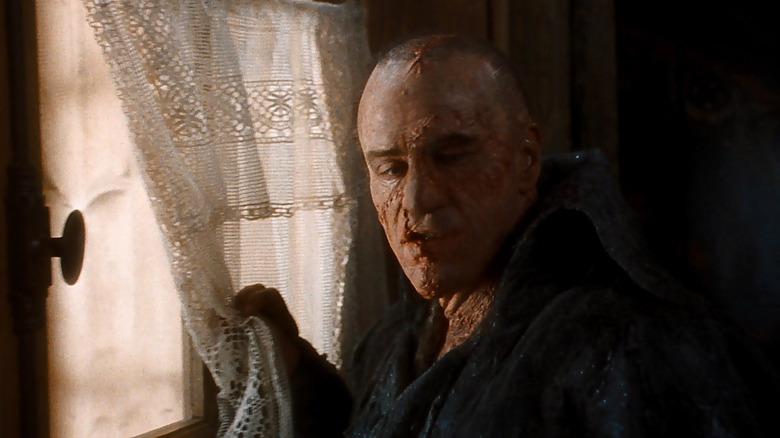
Kenneth Branagh loves big swings, and he certainly made a lot with his adaptation of "Mary Shelley's Frankenstein." Branagh plays the titular doctor as the hero of a harlequin romance, eager to shed his shirt and snog his beloved Helena Bonham Carter. The early scenes of "Frankenstein," all about Victor's rise in the world of mad science, are noisy and chaotic. The camera swirls and the music by Patrick Doyle blares. There are many scenes of blood and fluid, and the themes are up front and obvious; when Victor's mother dies in childbirth, he weeps with a plaintive "Bring her back!" This kicks off his obsession with resurrecting the dead.
Some may bristle at Branagh's performance because it is so brazenly ego-driven. Branagh made this film to show off, not because he necessarily had any affinity for Mary Shelley's 1818 work. I do appreciate, though, that he brings the Gothic dourness of the novel into the realm of modern sci-fi; Frankenstein's lab is as impressive as ever.
Then, when the monster is finally created, suddenly the film shifts gears. Robert De Niro may be cinema's best Frankenstein Monster, playing him as wounded and confused, undergirded by a rage he doesn't understand. He's not the childlike innocent of previous iterations. He's a wounded adult. The camera stops swirling. The music silences. "What of my soul," he asks Victor late in the film. "Do I have one? Or was that a part you left out?" He, of course, has more soul than the bratty Victor could ever muster. "Frankenstein" is gorgeously balanced between chaos and peace, the technological and the pastoral. It is unfairly maligned, and certainly deserves a second look.