

5 Best Fantasy TV Shows Of 2026 (So Far)
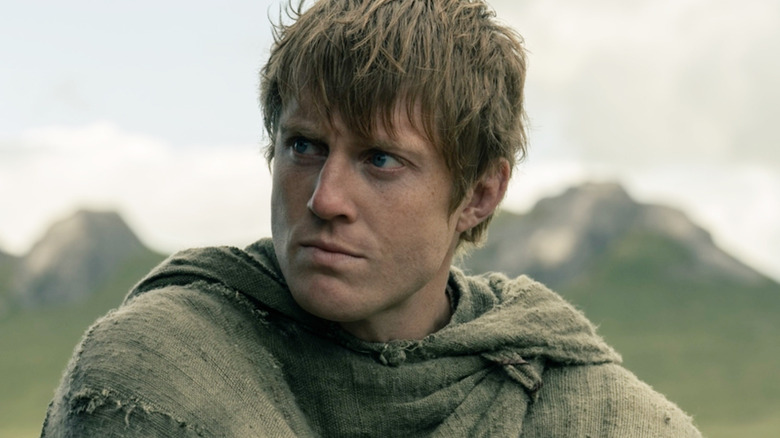
With respect to Nicole Kidman's AMC Theatres ad, we come to this place for magic, dragons, daemons, and cavemen roaming around atop trusty T-Rexes. With everything we have at our fingertips these days, it's almost startling to realize how far the fantasy genre has come in the last few decades alone. Believe it or not, there was a time when even a film adaptation of "The Lord of the Rings" was considered an expensive risk of the highest magnitude, while getting caught reading a "Percy Jackson" book was likely to get you labeled a dweeb. Cut to 2026, and these franchises are currently all but ruling the world.
Now, fantasy TV is picking up the torch and keeping the good times rolling. After the phenomenon of "Game of Thrones" helped prove that this most geeky of genres can also double as prestige television, the industry hasn't looked back since. This year alone will usher in even more options to dominate our pop culture cycle for the foreseeable future, from more stories set in the "Avatar: The Last Airbender" universe to the next season of "The Lord of the Rings: The Rings of Power."
In the meantime, however, we've had no shortage of shows to keep us occupied. What follows is our definitive (though by no means complete) list of fantasy series that have fired up our imaginations, immersed us in worlds unlike our own, and given us heroes (and villains) galore to keep us invested every step of the way.
Daemons of the Shadow Realm
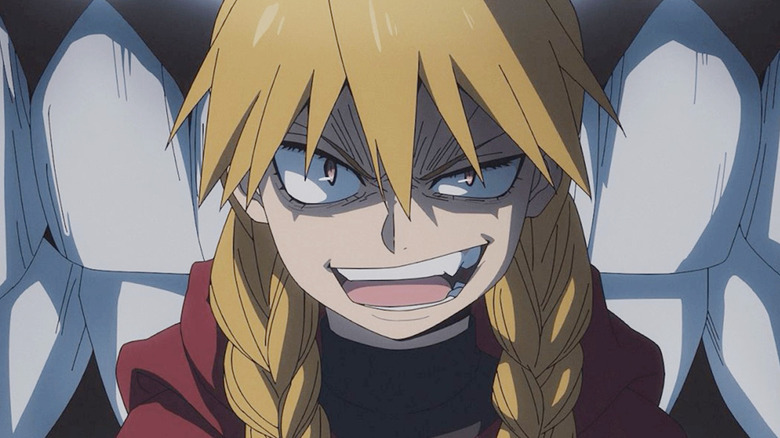
Battle shonen manga and anime increasingly favor urban fantasy settings, where teens hunt and fight monsters in contemporary Japan. (See "Chainsaw Man," "Jujutsu Kaisen," etc.) Now, there's "Daemons of the Shadow Realm," a new anime that features one of the shonen maestros offering their take on that formula.
"Daemons" is the serialized battle shonen return of "Fullmetal Alchemist" author Hiromu Arakawa. (The anime is produced by Studio Bones, the same studio that adapted "Fullmetal Alchemist," too.) That series took place in a highly fictionalized 1910s Europe. "Daemons" seemingly sets itself in the past, too, as its first episode opens on Higashi Village, right out of ancient rural Japan. That's when helicopters and contemporary soldiers invade the community. Indeed, Higashi is merely a secluded corner of the modern world. The lead character of "Daemons," Yuru, is a typical fantasy lead, flung into an unfamiliar world he must quickly adapt to — only that world is our modern one.
Yuru and his twin sister Asa are both prophesied to wield great power. Yet, they're on opposite sides of a war to claim that destined power. The weapons in this war are not only swords and guns but Daemons, magical creatures that come in pairs and can contract with humans. Yuru has two guardian Daemons known only as Right and Left, i.e. the living statues that stood watch over Higashi Village. Burly with sharp teeth and red-white hair, Right and Left look like dragons taking human shape.
The Daemons' designs and variety of them, from cute to creepy, is the series' strongest fantasy flourish. The scariest villains so far include Tenaga and Ashinaga, two almost-human-like cannibals with long limbs, and Ivan, an assassin with two daemons shaped like swords that can cut through reality itself. (Devin Meenan)
House of the Dragon Season 3
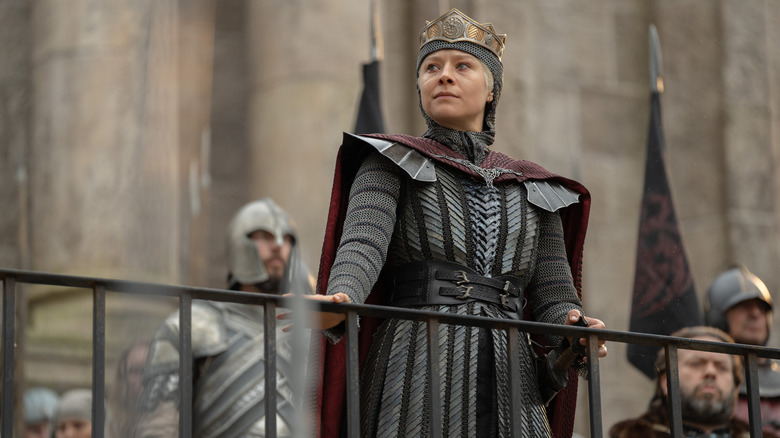
Forget the Prince That Was Promised: "House of the Dragon" takes the cake when it comes to long-delayed answers to a prophecy, in this case one referring to the beginning of the end of the Targaryen dynasty. The "Game of Thrones" prequel series purports to tell the story of the fabled Dance of the Dragons, a civil war born out of ambition, tragedy, and lust for power that ultimately brings down the greatest seat of power Westeros has ever seen. It's the stuff legends and myth are made of, which is likely why HBO set its sights on this saga as the heir apparent to the spiky Iron Throne.
While the results have been somewhat of an up-and-down roller coaster over the years, there's no denying this simple fact: Nowhere else on TV do you see fantasy brought to life with such melodrama, attention to detail, and seemingly endless amount of resources. Like its parent series before it, "House of the Dragon" Season 3 takes a bigger, darker, and more complex view of the flaws at the heart of its larger-than-life figures. The estranged friendship and clashing rivalry between Alicent Hightower (Olivia Cooke) and Rhaenyra Targaryen (Emma D'Arcy) is as operatic as it gets. The slow-motion downfall of their best-laid plans and ambitions has been breathtaking to watch unfold. Now, all that's left to decide is which side suffers more by the end — and we wouldn't have it any other way. (Jeremy Mathai)
A Knight of the Seven Kingdoms
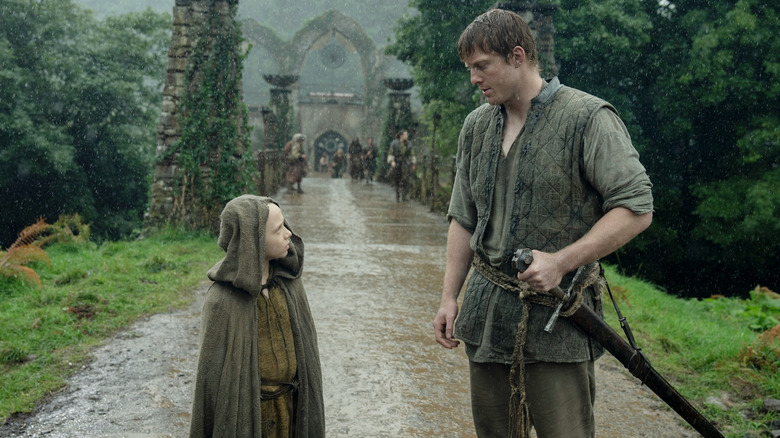
Courtly intrigue and warring royal families are good and all, but "A Knight of the Seven Kingdoms" — HBO's latest "Game of Thrones" prequel/spin-off series — reminds us that, for all the attention that history (fictional or otherwise) lavishes on monarchies, it's the smaller folk that actually keep the world spinning. In that regard, "A Knight of the Seven Kingdoms" is to its parent show what "The Hobbit" is to "Lord of the Rings." Adapting the "Tales of Dunk and Egg" novellas by George R.R. Martin (who co-created the series with showrunner Ira Parker), the show spins a lower-stakes and less grandiose yarn than its peers. Yet, in exploring the difficulties of being a truly decent and honorable person in a vicious, unjust world, it manages to outshine them.
To be certain, Westeros has never been more whimsical, or musical, on-screen than it is here. That and the absence of bank-breaking spectacle (not to mention, flourishes like darkly comedic montages and thematically appropriate real-world needle drops) makes "A Knight of the Seven Kingdoms" a welcome reprieve to its predecessors. Perhaps more than anything, though, its "lowborn" hedge knight protagonist, Peter Claffey's forthright Ser Duncan the Tall ("Dunk" to his friends), is the hero we deserve in 2026. As we follow him and his smaller, quicker-witted companion Egg (Dexter Sol Ansell, who pairs perfectly with Claffey), we're treated to a splendid fantasy series that rejuvenates the ballooning franchise around it. (Sandy Schaefer)
Primal Season 3
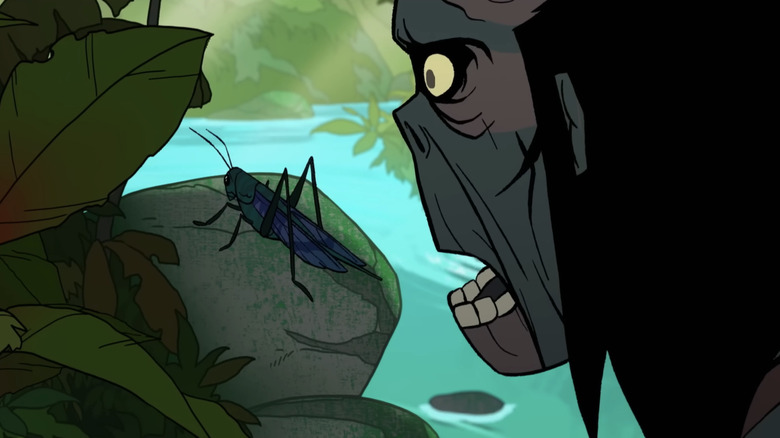
Just when you thought the adventures of Spear and Fang were done and "Primal" creator Genndy Tartakovsky was moving on to a new anthology story for the animated series on HBO Max, the caveman and dinosaur returned for another fantastic season.
After Spear sacrificed himself to save his companion Mira and his dinosaur friends at the end of Season 2, that could have easily been the end of the tale. But when a new threat becomes apparent, mystical magic brings him back to life. However, Spear isn't fully himself, shuffling around confused and without much of a memory.
As Spear lumbers around this dangerous, prehistoric world, he encounters various gnarly monsters and warriors, driven only by faint visions of something from his past. Eventually, he finds Mira and Fang, but Spear's disassociated brain has an uphill battle to become the man he used to be, and that makes Fang distrusting of her former ally, creating a new emotional hurdle that makes this unexpected third season a great continuation of their story.
With animation purely geared towards adults, "Primal" continues to be violent and beautiful all at once. Flesh tears and blood splatters, but the landscapes and even the dangers of the world are all visually stunning. You'd also be hard-pressed to find much better action on television. But it's the beating heart of the show that really makes it sing, especially with episodes like "Feast of Flesh" making you care about a simple cricket. (Ethan Anderton)
Witch Hat Atelier
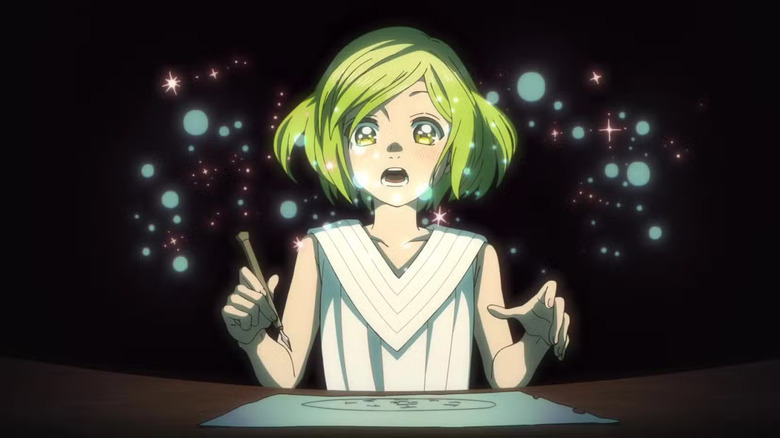
You've probably heard this before: A seemingly ordinary child gets whisked away to a school to learn magic. But "Witch Hat Atelier" is no mere echo of "Harry Potter" or any similar magical school stories.
Based on the gorgeously-drawn manga by Kamome Shirahama, "Witch Hat Atelier" follows Coco, a green-haired girl who dreams of learning magic in a world where seemingly only a chosen few can. A surprise visit from a young witch named Qifrey gives Coco the tools to cast a spell but not the ability to control it, and her spell encases her mother in a crystalline shell. So, to undo her mistake, Coco becomes one of Qifrey's students to learn the closely-guarded secrets of magic.
The most innovative part of the "Witch Hat Atelier" fantasy world is the tactile mechanics of magic, which is cast by drawing spell symbols on pieces of paper. It's a lovely self-reflexive statement for a fantasy anime to make. Art itself is magic, and learning to cast spells means teaching oneself calligraphy.
The luscious animation of "Witch Hat Atelier," and the story of a young woman in a magical but dangerous world, makes it feel like a Hayao Miyazaki film sliced into 12 episodes. The most medium-blending part of the animation ties directly into the fairy tale motif, too. Episodes of "Witch Hat Atelier" will literally open with a storybook, its embrittled pages flipping through the wind until it settles on an illustration of the episode's opening scene.
The final vital ingredient is the sound. Composer Yuka Kitamura (famous for composing scores for the dark fantasy games "Dark Souls II" and "Elden Ring") crafts sweeping and whimsical music right out of a Celtic fantasy, a last perfect touch to this spellbinding anime. (Devin Meenan)