

10 Most Rewatchable '90s Movies, Ranked
We may receive a commission on purchases made from links.
There's a common sentiment among film fans today that we may never have it as good as we did in the '90s. The decade was a booming, exciting time for the industry, filled with blockbusters and cult classics born of a more adventurous business attitude at the major studios, taking risks on renegade new voices and ideas that pushed the medium and culture forward. They were the days when mid-budget adult dramas were still in vogue; when steamy thrillers were everywhere you looked; when the independent film boom, led by the likes of Quentin Tarantino and Steven Soderbergh, was in full swing; when advances in digital technologies were showing audiences things they had never seen on screen before.
Indeed, the '90s are full of gems, including a whole litany of films that nobody seems to talk about anymore. These are not those films — here, we've collected the most rewatchable movies of the '90s: the ones you couldn't help but finish when you saw them running in syndication on the movie channels when you still had cable. Some of them earned their reputation that way, others were instant hits, and others took years to click with international audiences.
But in any case, these are the '90s movies that have stayed in constant rotation, and for good reason.
10. Mission: Impossible
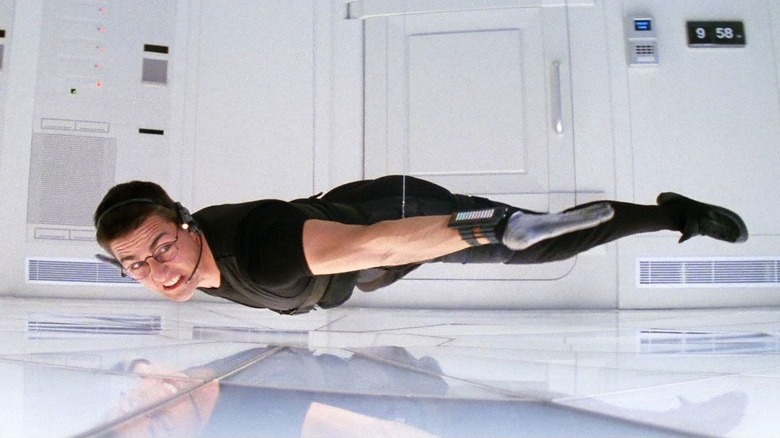
"Mission: Impossible" may have become a film series dedicated to showing all the ways in which Tom Cruise sacrifices any inkling of good sense for the sake of audience entertainment (on that note, check out our ranked list of the most dangerous "Mission: Impossible" stunts), but the first film from 1996 is pure, juicy, Brian De Palma-directed espionage pulp. Lovingly modernized from the 1966 television series, the pairing of De Palma and Cruise kick-starts one of modern cinema's most effective blockbuster machines.
Cruise takes on his long-standing mantle as Ethan Hunt, an agent for the IMF (yes, the Impossible Missions Force) who finds himself caught in a conspiracy that reaches the top of his own organization. After an iconic opening sequence that leaves his entire crew dead, Ethan is left as a lone operator with the walls of deceit closing in on him. He's forced to pull together a ramshackle team of professionals and operatives to protect a sensitive "NOC" list from getting into the wrong hands, while his own government tracks him down under suspicion of being a traitor.
While future "M:I" entries would emphasize explosive action and truly psychotic stunt work, almost always done completely in camera by Cruise, this first movie is more ground-level, but no less stylistically flashy. Lest you forget, De Palma, of all people, is behind the camera; he imbues the film with his signature visual style, including extreme close-ups, canted angles, and dramatic conversations rendered in split-diopter shots. It's one of the most out-and-out commercial films the director ever touched, and yet it's still so distinct and rewatchable because of the mix of his unassailable artistic flourishes, Cruise's movie-star persona, and the spy-movie thrills of the material.
9. Hard Boiled
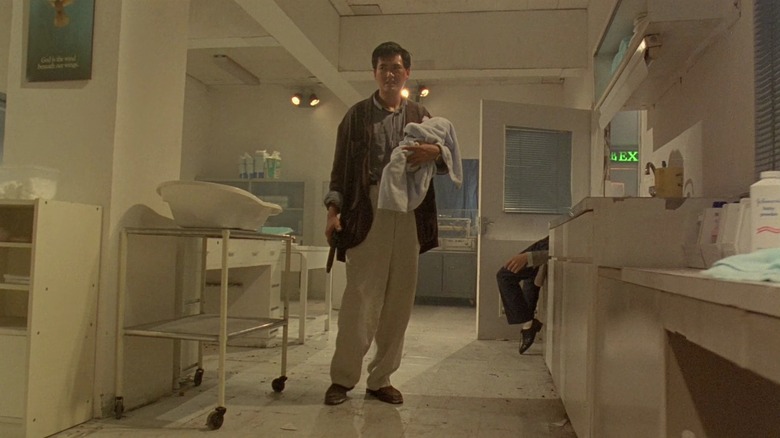
John Woo made "Hard Boiled" as a farewell letter to Hong Kong cinema before Hollywood came calling, and in the process, he made one of the most explosive and stylized action movies ever. Slow-motion gunfights, mournful doves, impossible tracking shots through collapsing buildings — Woo's operatic "heroic bloodshed" style of masculine melodrama reaches a kind of critical mass here, his violence staged with the rhythm and grace of a musical number and a unique sensitivity to relationships between men. (Some may even say it's gay!)
Chow Yun-fat is Inspector "Tequila" Yuen, a cop who unwinds by playing clarinet in a jazz bar and who loses a partner in the film's blistering opening teahouse shootout while chasing gun smugglers. His investigation collides with Alan (Tony Leung Chiu-wai), an undercover officer buried deep with the triads. The two men's uneasy alliance builds toward a hospital-set finale so sustained and technically audacious — stitched from long takes to simulate one continuous, blood-soaked siege — that it's still cited as an action-genre landmark.
Woo left for America almost immediately after, remaking himself with "Broken Arrow" and "Face/Off," and his fingerprints are all over Tarantino, the Wachowskis, and two decades of shooter video games that borrow his dual-pistol iconography. But "Hard Boiled" endures on rewatch also for its odd tenderness and perceptiveness of feeling, which keeps the carnage from ever becoming too dark or desperate; instead, "Hard Boiled" enlivens.
8. Boogie Nights
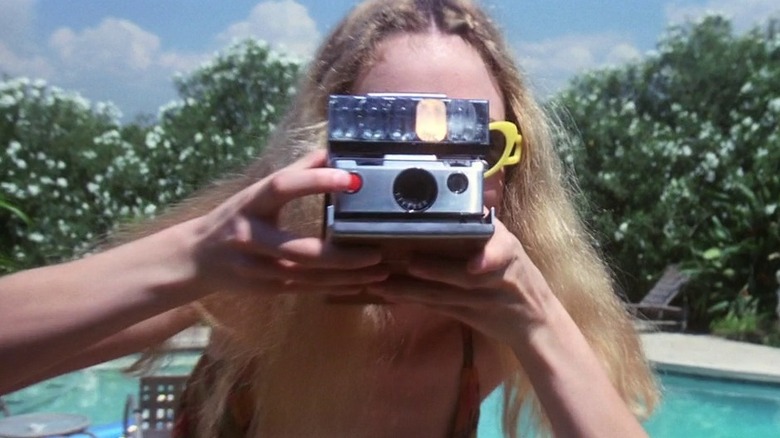
Paul Thomas Anderson was 27 when "Boogie Nights" arrived and announced, unmistakably, a major American filmmaker — one working in the sprawling, multi-character tradition of Scorsese and Altman but with an ambition and empathy entirely his own. The film's opening shot alone, a Steadicam gliding through a nightclub introducing half a dozen future leads in one unbroken breath, is a statement of pure directorial confidence and bravura.
Mark Wahlberg stars as Eddie Adams, a teenage busboy remade into adult film star Dirk Diggler by director Jack Horner (Burt Reynolds), joining a makeshift family that includes Julianne Moore's Amber Waves, Heather Graham's Rollergirl, John C. Reilly, Don Cheadle, and Philip Seymour Hoffman. The first half glows with disco-era camaraderie; the second, set against the VHS boom and cocaine come-down of the early '80s, sharply pivots into paranoia and squalor, culminating in Alfred Molina's firecracker-strewn drug den, one of the decade's most anxiety-inducing set pieces.
Reynolds, who reportedly clashed with Anderson during the shoot, still earned an Oscar nomination and a career resurrection out of it. Nearly 30 years on, "Boogie Nights" holds up as both a hangout movie and a tragedy, endlessly rewatchable for its music, its warmth toward characters, and Anderson's obvious, effusive, infectious love of making movies. It's a film that keeps getting better with age.
7. Clueless
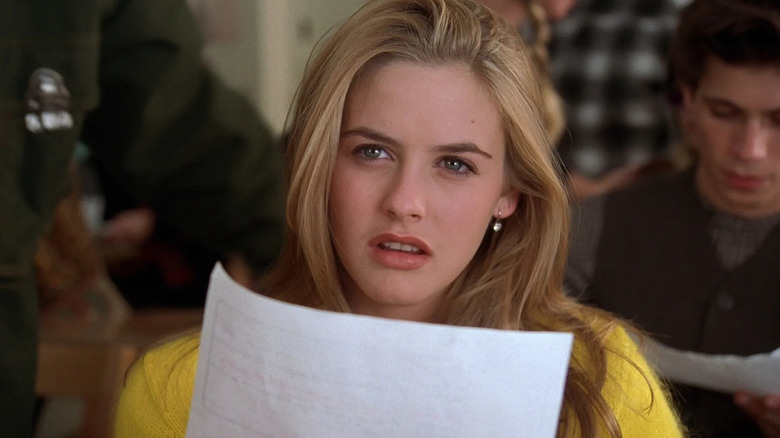
Amy Heckerling's masterstroke with "Clueless" was recognizing that Jane Austen's "Emma" — a novel about a wealthy, well-meaning meddler who mistakes social engineering for kindness — mapped almost perfectly onto a Beverly Hills high school. The result is a teen comedy endlessly quotable and stylish, accentuating the film's sharp satire of privilege and consumerism.
Alicia Silverstone plays Cher Horowitz, a cheerfully oblivious matchmaker who takes new student Tai (Brittany Murphy) under her wing, spars with debate-team crush-turned-ex-stepbrother Josh (Paul Rudd), and cruises through school with best friend Dionne (Stacey Dash) at her side. Heckerling's screenplay, narrated in Cher's own dizzy, invented vernacular, turns garden-variety teen-movie plotting into a succession of unexpected iconic movie moments and dialogue; "As if!" entered the culture immediately from "Clueless."
Costume designer Mona May's plaid schoolgirl uniforms became as instantly recognizable as anything in '90s fashion, and the film spun off a TV series and comic book line almost immediately. What keeps "Clueless" in constant rotation, though, is the balance Heckerling strikes between mockery and affection; sincerity and absurdity. It's a film that finds Cher's world preposterous and still genuinely likes and believes in her. The appetite for "Clueless" still seems strong enough for a sequel series to be ordered, though whether "Clueless" has a place outside this specific moment of the '90s remains to be seen.
6. Toy Story 2
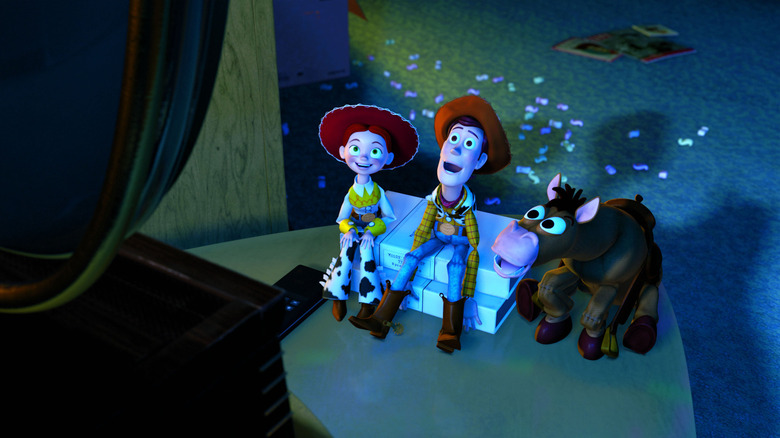
Few sequels have survived a production this chaotic. Pixar began "Toy Story 2" as a modest direct-to-video follow-up before Disney, mid-shoot, decided it deserved a full theatrical release, forcing a nearly complete rebuild in under a year. Partway through, an errant command wiped much of the film's data outright; the project was reportedly saved only because supervising technical director Galyn Susman happened to have a backup on her home computer.
None of that turmoil shows onscreen. A toy collector steals Woody (Tom Hanks) and plans to sell him to a Japanese museum, allowing the cowboy doll to discover his forgotten past as the star of a 1950s show, "Woody's Roundup," alongside cowgirl Jessie (Joan Cusack) and the increasingly sinister Prospector (Kelsey Grammer). Buzz Lightyear (Tim Allen) leads a rescue mission, while Woody wrestles with the offer of a glass-case immortality over the messier, more finite love of a child.
"Toy Story 2" proved Pixar's ability to catch audiences off guard with devastating emotion within animated films ostensibly for children. The film's detour into Jessie's backstory, scored to Sarah McLachlan, remains one of Pixar's most moving, surprisingly gut-wrenching sequences. "Toy Story 2" is routinely cited as a rare sequel that surpasses its original, rewatchable for its jokes, which were indeed wittier in 1999 than they are in the newer "Toy Story" fare, but also for its adult perspective and existential underpinnings, unflinchingly meditating on ideas of grief and obsolescence. The film's legacy lives on, having forever changed how Pixar and Disney approach sequels.
5. Jurassic Park
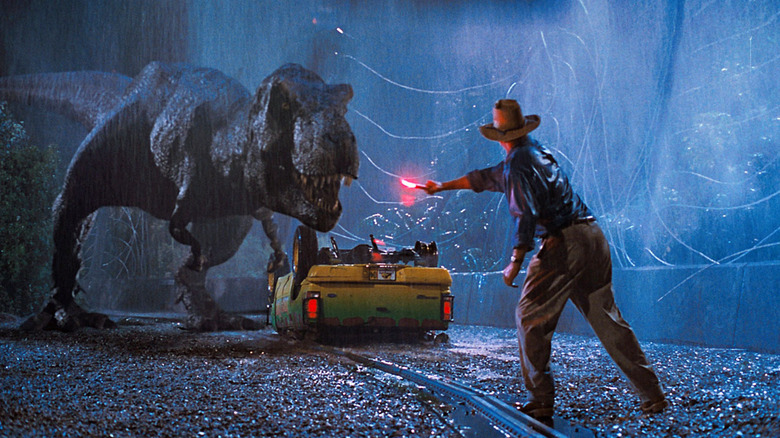
When Steven Spielberg decided to adapt Michael Crichton's best-selling techno-thriller creature horror novel, he changed what blockbusters could look like overnight. "Jurassic Park" married Stan Winston's full-scale animatronics with then-nascent CGI from Industrial Light & Magic, and the seam between the two remains an awe-inspiring feat, a rare effects landmark that feels as breathtaking now as it did over 30 years ago.
Sam Neill's paleontologist Alan Grant and Laura Dern's Ellie Sattler are recruited by eccentric billionaire John Hammond (Richard Attenborough) to vet his island theme park, joined by Jeff Goldblum's chaos-theorist Ian Malcolm, a voice of warning among a group of people waiting to experience the consequences of playing God. He's proven right once a disgruntled programmer (Wayne Knight) sabotages the park's systems and the dinosaurs — soon the towering, wondrous brachiosaurus reveal gives way to the iconic and still, to this day, imposing and scary Tyrannosaurus attack, which sees the movie shift into survival mode for our crew of researchers and intellectuals.
The film won three technical Oscars and briefly became the highest-grossing movie ever made. What's kept it in constant rotation is how precisely Spielberg calibrates wonder against dread: the intersection of analog and digital craftsmanship in creating the dinos is unassailable, and John Williams's classic score heightens the film's awe and foreboding. It may have spawned an ongoing franchise, but "Jurassic Park" remains the best of the bunch.
4. The Nightmare Before Christmas
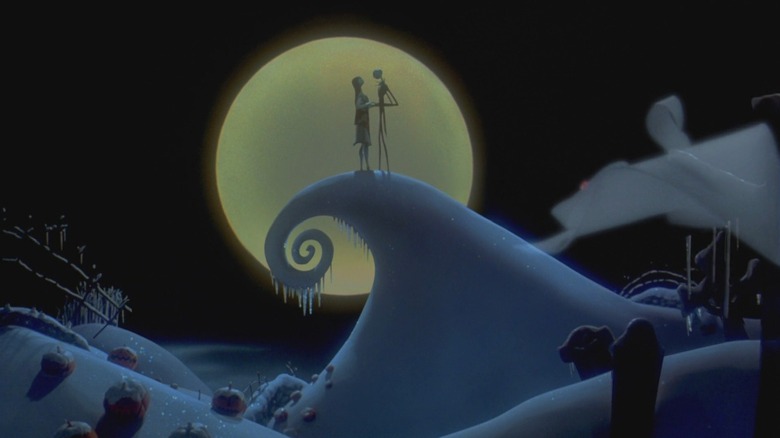
Tim Burton dreamed it up as a poem in the early '80s, but Henry Selick spent nearly two years building the blended-up emo-vibes holiday movie "The Nightmare Before Christmas", directing an army of animators as they painstakingly moved stop-motion puppets frame by frame in a converted San Francisco warehouse. It wasn't the film Disney expected — nervous about its ghoulish sensibilities, they released the animated feature under the Touchstone Pictures label, worried the material skewed too dark for the studio's family brand; decades later, it's a cable staple around the holiday season.
Jack Skellington (voiced by Chris Sarandon, with Danny Elfman handling the songs), the reigning Pumpkin King of Halloween Town, grows restless with the same scares year after year and stumbles into Christmas Town, instantly smitten with its color and warmth. His scheme to hijack the holiday and deliver presents himself, aided by a lovesick ragdoll named Sally (Catherine O'Hara) and undermined by the scheming Oogie Boogie, revels in the spooky and the whimsical.
Elfman's score does as much storytelling as the screenplay, practically operatic in how it carries the film's tonal whiplash between yuletide cheer and macabre comedy. What's made "Nightmare" such a durable rewatch is its rare identity as a two-season perennial: it's a Halloween movie and a Christmas movie, played on loop across both, and its handcrafted stop-motion textures have aged strikingly well. Disney has re-released it in theaters repeatedly, Hot Topic built a merchandising empire around Jack's silhouette, and the cult of devotion surrounding the film and its iconography never seems to wane.
3. The Matrix
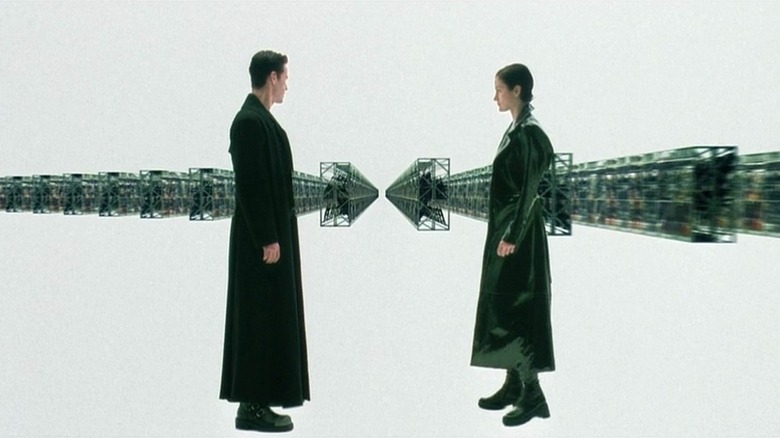
Lana and Lilly Wachowski spent years shopping around a script that fused cyberpunk anime, Hong Kong wire-fu, and a grab bag of philosophy (including shades of Baudrillard, Plato's cave, and Buddhist and gnostic imagery) before Warner Bros. finally bit. What they delivered upended action filmmaking almost overnight, arriving as both a blockbuster and a formal experiment that would influence decades of action films — "The Matrix" broke the box office, and cinema was never the same.
Keanu Reeves stars as Neo, a hacker recruited by the enigmatic Morpheus (Laurence Fishburne) and the leather-clad Trinity (Carrie-Anne Moss) to learn the truth: His entire reality is a simulation run by machines, with Hugo Weaving as the system's enforcer, Agent Smith. And thus the playground for action-movie innovation was created. Cinematographer Bill Pope and visual effects supervisor John Gaeta pioneered "bullet time," the swirling-camera freeze effect that's since been parodied and imitated so often that it's hard to explain its true psychic impact on theater screens in 1999. Meanwhile, choreographer Yuen Woo-ping, borrowed straight from the Hong Kong action scene, drilled the cast in wire work for months beforehand.
The proof is in the film, and the crew was rewarded for their efforts: "The Matrix" won four Oscars for its technical craft and grossed nearly half a billion dollars, but its afterlife has been just as significant as its release, in ways both good and bad. For example, the "red pill" phrasing has long been weaponized by the political right; the Wachowskis later spoke openly about the film's roots as a transgender allegory; and its DNA is visible in nearly every action movie that followed for a decade. It rewatches beautifully, both as pure spectacle and as a morass of ideas that reward repeated looks.
2. The Shawshank Redemption
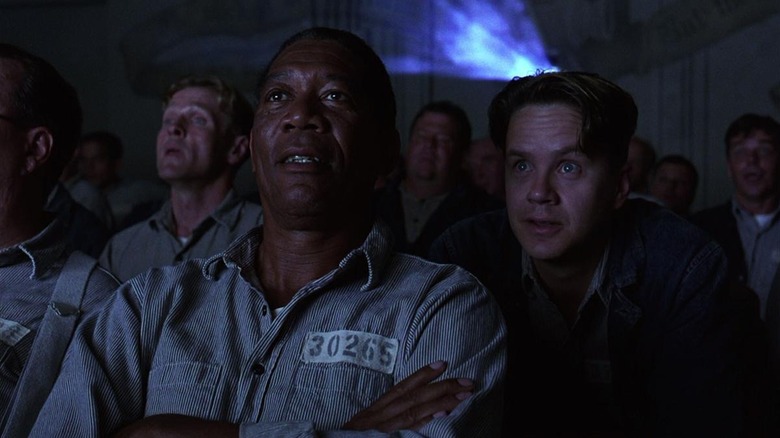
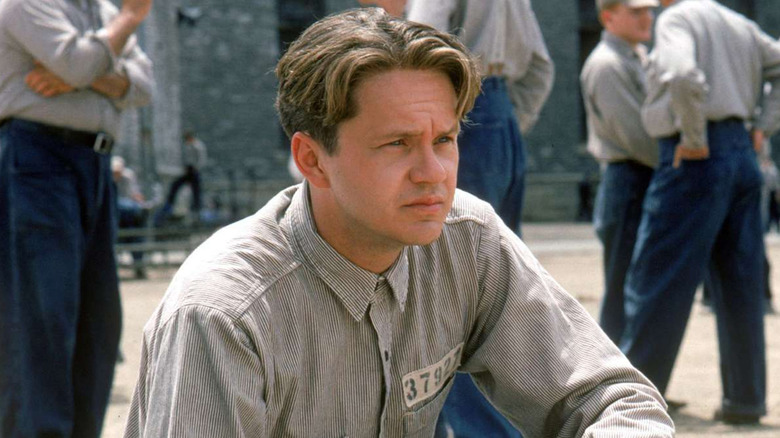
Frank Darabont adapted "The Shawshank Redemption" from a Stephen King novella tucked inside his story collection "Different Seasons," a deliberate departure from King's horror brand toward something quieter and more sentimental. The film was a box-office non-event on release, buried that awards season by "Forrest Gump" and "Pulp Fiction" and unable to translate seven Oscar nominations into a single win. Nonetheless, it's become a hallmark of '90s cinema, widely regarded as an esteemed film, with its near-ubiquitous reputation as a great movie almost reaching "Citizen Kane" levels.
Tim Robbins plays Andy Dufresne, a banker wrongly convicted of murdering his wife and sentenced to Maine's Shawshank State Penitentiary, where he strikes up an initially uneasy friendship with Red (Morgan Freeman), the prison's resident fixer and the film's world-weary narrator. Roger Deakins's cinematography finds an unlikely warmth in the prison's grim stone corridors, and the film's patience, unfolding across nearly two decades of Andy's sentence, lets its themes of hope, institutionalization, and quiet defiance accumulate real weight behind the emotional plight of its characters.
That's why "Shawshank" found a second life after theaters. Cable networks, TNT chief among them, aired the film on seemingly endless rotation through the late '90s, and audiences who'd skipped it in theaters found it on television and never let go. It's been the top-rated film on IMDb's user-voted list of the 250 best movies for years running, an impressive afterlife for a movie that flopped on arrival. It shows that instant success isn't the end of a film's lifespan — just like "Kane," sometimes it just needs the chance to find its audience.
1. Goodfellas
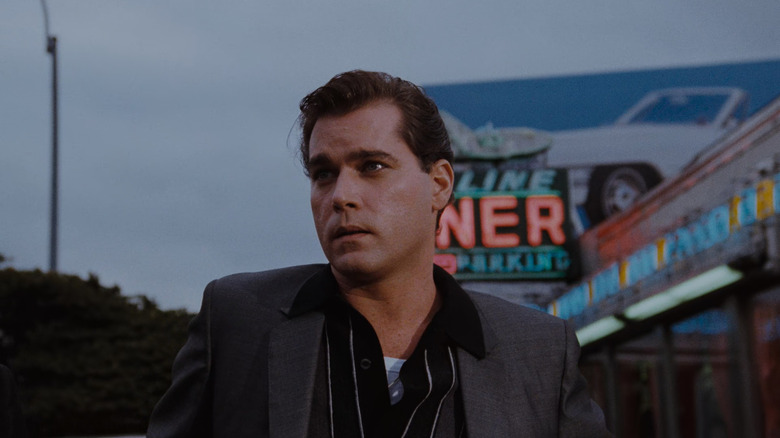
Martin Scorsese adapted "Goodfellas" from Nicholas Pileggi's nonfiction book "Wiseguy," with Pileggi co-writing the screenplay, and that real-life inspiration gives the film's events a notable shot of realism. The final film sees Scorsese firing on every cylinder he'd been sharpening throughout the '70s and '80s: his restless camera moves, propulsive editing, and conspicuous needle drops that lend texture to the era and the characters' interior lives. It's often cited as the moment his style broke through from interesting efforts in his own lane to a wholly new cinematic language that other filmmakers would chase for decades.
Ray Liotta stars as Henry Hill, the real-life mobster turned FBI informant whose voiceover narrates his rise and unraveling within the Lucchese crime family, alongside Robert De Niro's cool, calculating Jimmy Conway and Joe Pesci's volcanic Tommy DeVito, in a deliciously unpredictable performance that won him the Supporting Actor Oscar. Lorraine Bracco, as Henry's wife, Karen, offers the film an outsider's eye into a world wearing a veneer of glamor, where seduction conceals dead-end avenues of destitution, violence, and death. Scorsese and cinematographer Michael Ballhaus capture the seduction with clear-eyed precision and cinematic bravura: take another look at the famous unbroken Steadicam shot following Henry and Karen through the Copacabana kitchen to see how the film invites the audience into its world.
Scorsese's freeze-frames, fourth-wall narration, and whiplash tonal shifts between comedy and sudden brutality have echoed everywhere since, especially in "The Sopranos," which borrowed cast members and structural DNA from "Goodfellas." It's the most rewatchable movie of the '90s because its pure, undiluted energy simply never fizzles out. Even if you know the party is gonna be broken up by the end, you can't help but hang around.