

10 Best Low-Budget Sci-Fi Movies, Ranked
Many of the biggest and most notable sci-fi films of all time are celebrated for their extensive world-building, made possible by a wealth of resources that let filmmakers depict brand-new worlds or speculative offshoots of our own reality with impressive depth and detail. James Cameron has spent lifetimes' worth of money taking audiences to the planet of Pandora with the most realistic digital effects and mo-cap work possible in "Avatar." Denis Villeneuve had to physically conceptualize a massive desert universe of warring political factions in "Dune." Many of these well-funded tentpoles end up on our list of the best sci-fi universes of all time.
However, the sci-fi genre also lends itself unusually well to low-budget ventures, where filmmakers have to get creative and embrace a DIY ethos to evoke large ideas with much tighter means. Because so much of sci-fi is speculative — the wonderment and consideration of novel scientific concepts that pick at your brain — the best directors can make the smallest sci-fi production feel as innovative, thought-provoking, and exciting as the biggest franchises, sometimes even more so. In a genre that so often features people pushing the limits of reality, sci-fi and small budgets go hand in hand because it lets filmmakers do the same.
Here are the 10 best low-budget sci-fi movies, ranked.
10. Cube
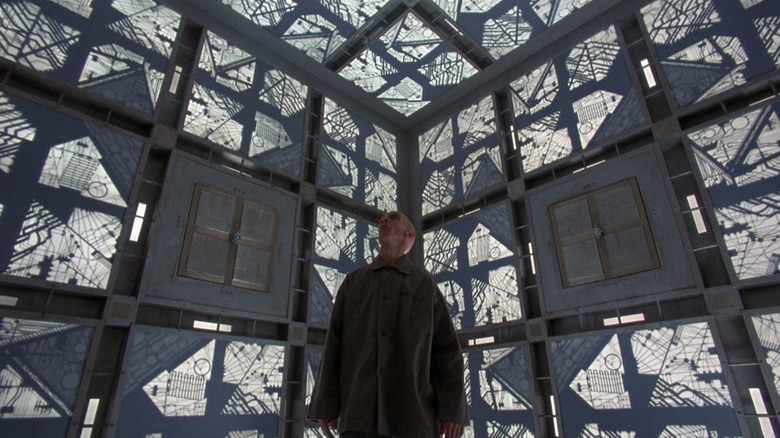
Back in the '90s, co-writer and director Vincenzo Natali set out to depict the existential horror and claustrophobia of... geometry. Thus, "Cube" was born, a sci-fi psychological horror film about seven strangers who wake up trapped in a massive, endless labyrinth of cube-shaped rooms. Lacking any memory of how they ended up there, they must rely on their individual skills to navigate lethal traps hidden throughout the rooms and find a way out.
"Cube" has a novel high-concept that's easy to latch onto: a chamber survival thriller that pits characters with different personalities and temperaments in a desperate bid for their lives (fans of "Saw II" would likely have a good time with this one). It's filled with palpable, oppressive tension and gestures toward broader themes about society's cold bureaucracy. It also has some impressive and gory practical effects.
Most impressive of all, it was made for practically no money, as the final budget totaled about $350,000 CAD (or around $250,000 US dollars in 1997, which is closer to $520,000 today). The production kept costs low by relying on a single physical 14-foot room set that was re-lit with different colored gels, and by securing donated services to keep the production moving. It all adds to the film's sense of ingenuity. You're really watching the actors scramble around the same room over and over again, which is exactly the maddening quality the film seeks to communicate.
9. Dark Star
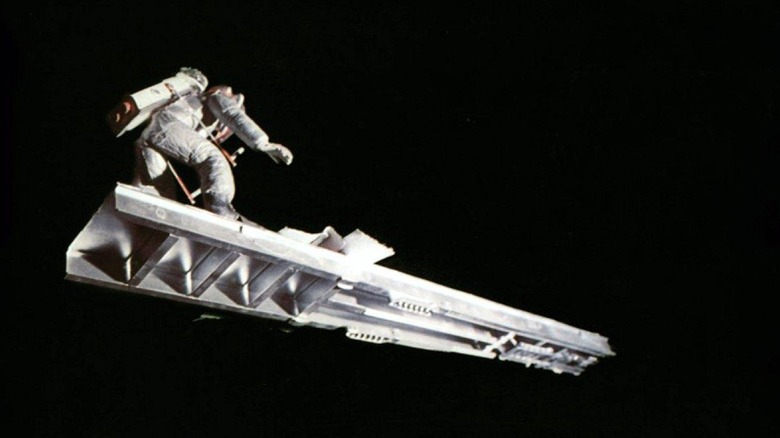
Before he would become known for perverting the sanctity of suburban America with the stalking footsteps and knife slashings of Michael Myers, and before his critically lauded Apocalypse Trilogy, John Carpenter directed this space-set sci-fi comedy that flopped badly but put both him and future "Alien" screenwriter Dan O'Bannon on the radar of industry connections who would later help them properly launch their careers. "Dark Star" is largely forgotten today, but you can see the beginnings of both men's talents taking shape in its DIY crevices.
Similar to "Alien," "Dark Star" is about blue-collar space workers at the ends of their ropes, at the behest of an uncaring corporate employer, though this time in a much more dryly farcical register than the looming dread and doom of the future Ridley Scott-directed masterpiece. It's about a bored, dysfunctional crew on a dilapidated scout ship twenty years into a mundane mission to blow up unstable planets — it's basically an office comedy where the workers are a crew of dopey men sent out for a boring job in space. Chaos eventually ensues when the on-board alien that looks suspiciously like a beach ball starts wreaking havoc.
The laughs in "Dark Star" are fairly mild, and the plot is shambling and aimless, but it's only 80 minutes and has some cool low-fi space visual effects. Not to mention, it began purely as a student film that got extra budget to tack on footage to complete it, with an estimated final budget of just $60,000. As an early work from two genre stalwarts, it's a fascinating and amusing diversion.
8. Monsters
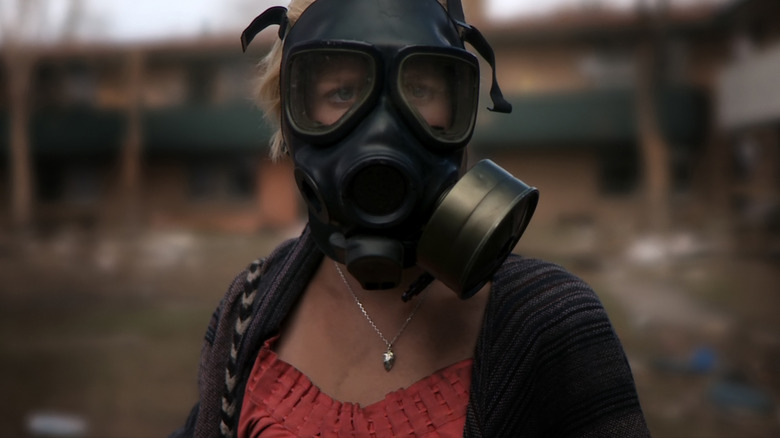
Before he became the guy studios sought after for solid mega-budget IP entries like "Godzilla," "Rogue One: A Star Wars Story," and "Jurassic World: Rebirth," and before he attempted his own original studio sci-fi flick with "The Creator," Gareth Edwards made this sci-fi drama that earned him early critical goodwill and set the stage for his future work. "Monsters" is about an American photojournalist who must escort his boss's daughter across a quarantined, alien-infected zone in Mexico after a NASA space probe crashes, releasing giant extraterrestrial creatures.
"Monsters" was made on an incredibly low budget. At an estimated cost of $500,000, Edwards used guerrilla filmmaking, self-taught visual effects, and a skeleton crew working out of a single van to keep the production lean and cheap. It's amazing what he accomplishes with such meager resources — "Monsters" achieves an epic, atmospheric sci-fi milieu and a sense of grandeur even on its micro-budget. Much of that is down to the tack with which Edwards approaches the story, opting for a patient, naturalistic, character-based tale with the alien elements on the outskirts rather than bombastic set-pieces and action.
To this day, it's up there as Edwards's most impressive work, with its less-is-more approach proving more interesting and fruitful than some of the sci-fi-movie-by-committee projects he would find himself stuck in later on. It has a leisurely, thoughtful quality that has since largely gone missing, as he's gone to facilitate the machinery of big-budget Hollywood franchises.
7. Moon
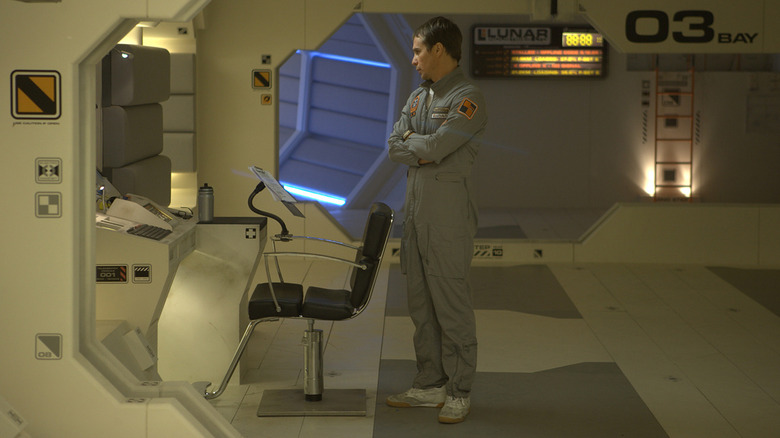
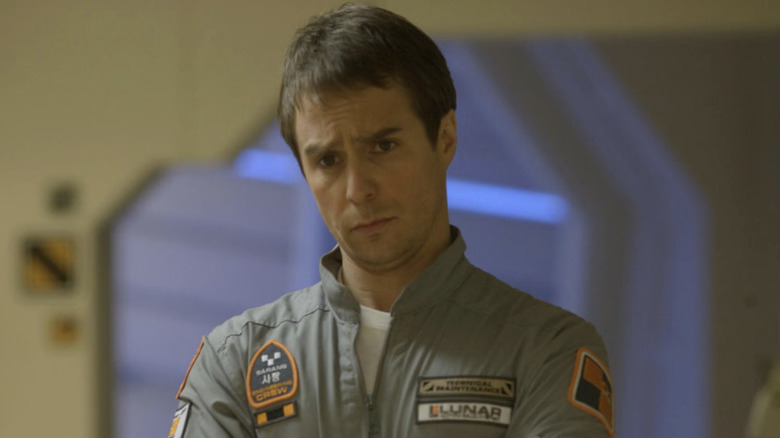
Before he'd go on to direct the time-loop thriller "Source Code" and stumble through the ill-fated "Warcraft" adaptation, Duncan Jones made his debut with this quiet, melancholy two-hander about isolation and identity. Sam Rockwell stars as Sam Bell, the sole human employee of a lunar mining operation nearing the end of a grueling three-year solo contract, with his only company a soft-spoken robotic assistant named GERTY (sorry, but it's voiced by Kevin Spacey). When Sam has an accident and stumbles onto something that shouldn't exist, the film pivots into an unnerving meditation on cloning, corporate exploitation, and what it means to be human.
Made for around $5 million — still plenty shoestring by studio sci-fi standards — "Moon" achieves its sense of cold, lived-in scale almost entirely through miniature work. Jones brought on Bill Pearson, a model-effects veteran who'd worked on "Alien," "Aliens," and "Outland," to build physical models of the lunar base and rovers rather than relying on CGI. The tactile, slightly grubby textures of those miniatures do a lot of heavy lifting, though it also pulls off impressive VFX work elsewhere, like having two versions of Sam Rockwell in a single shot. The entire production was shot on a single soundstage at Shepperton Studios, with Rockwell essentially carrying the film alone.
What's remarkable is how emotionally expansive "Moon" feels despite its constraints. It's a chamber piece that plays like a classic, humanist '70s sci-fi (there's a clear lineage to "Silent Running" and "2001"), proving Jones understood that the simultaneous dread and pathos of the sci-fi greats didn't necessarily require an extravagant budget, just a poignant idea tackled with finesse.
6. THX 1138
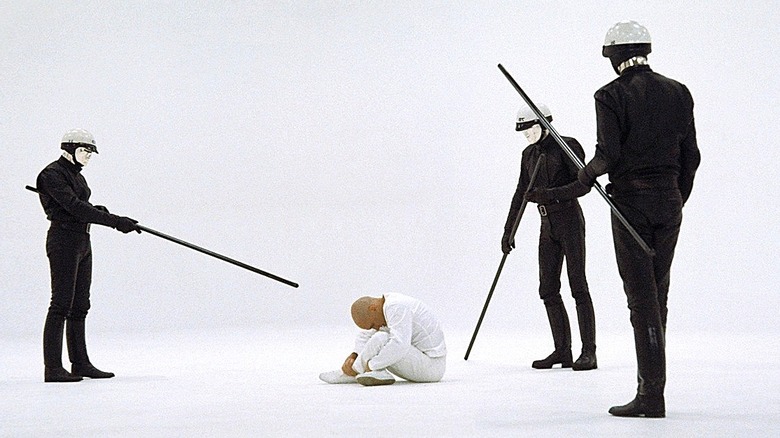
Long before "Star Wars" would dominate the culture and change the industry forever, George Lucas made his feature debut with this chilly, clinical dystopia, expanded from a student short he'd made at USC. Produced under Francis Ford Coppola's fledgling American Zoetrope banner as part of a first-look deal with Warner Bros., "THX 1138" imagines an underground future where sex and emotion are chemically suppressed, citizens are stripped of names in favor of alphanumeric codes, and android police enforce total conformity. Robert Duvall takes center stage as the title character, a man who commits the ultimate crime of falling in love and going off his meds.
Budgeted at roughly $777,000, Lucas kept costs down with a strategy that's since become something of a low-budget sci-fi playbook in its own right: shooting on real locations and letting the stark, minimalist set design do the world-building. Much of the film was shot in San Francisco's then-unfinished BART subway tunnels, along with the brutalist Marin County Civic Center, dressed with plain white sets and costumes that made "the future" cheap to fabricate — it mostly just meant emptying rooms out.
The result is austere and unsettling, closer in spirit to "1984" or Godard's "Alphaville" than to the swashbuckling throwback adventure serial Lucas would become synonymous with (though easter eggs from "THX 1138" pop up all over the "Star Wars" universe). Warner Bros. famously recut it against his wishes, souring him on studio interference for years. In hindsight, that grievance likely shaped how fiercely he'd guard control over his next project.
5. The Vast of Night
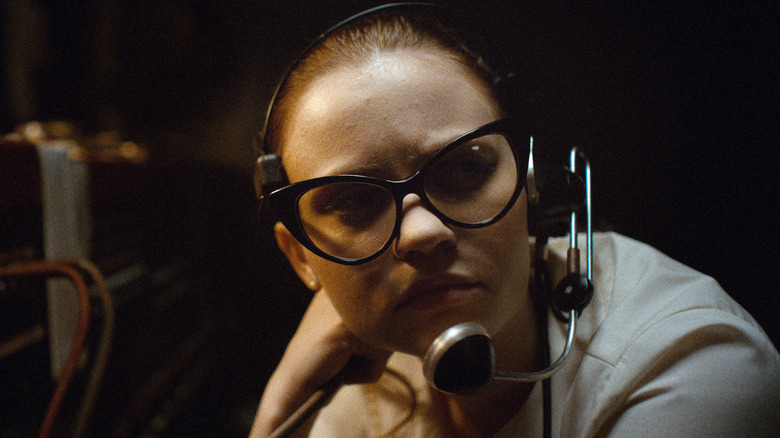
Andrew Patterson had never directed a feature before this one, and it shows in an appealing way. "The Vast of Night" has the nervy, show-off energy of a filmmaker determined to prove what he can do with minimal resources. Playing like an episode of a "Twilight Zone"-style supernatural anthology show, it follows a radio DJ and a teenage switchboard operator in a 1950s New Mexico town who, while most of their neighbors are packed into the high school gym for a basketball game, stumble onto a strange frequency that suggests something otherworldly is passing overhead.
Shot in just 19 days on a reported budget of around $700,000, the film is a master class in suggesting scale without the money to actually show it. Patterson leans hard on sound design, overlapping dialogue, and a handful of audacious, minutes-long unbroken tracking shots — the standout glides across the length of the entire town — to create a more all-encompassing sense of scope and intrigue that never requires a single alien or spaceship to appear on screen. It's closer to a radio drama than an effects film, which may turn off some viewers but is very much the point.
Premiering at Slamdance before Amazon Studios picked it up, "The Vast of Night" drew attention for how confidently it wears its restraints. Patterson understands that the scariest thing in a UFO story is often what you don't see, and he uses that absence, along with notable directorial verve, to offer a great example of how to make a mesmerizing sci-fi movie on a budget.
4. The Endless
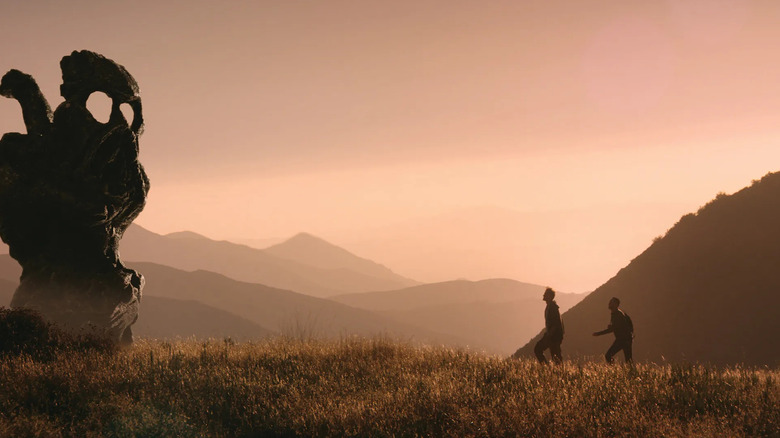
Indie directors Justin Benson and Aaron Moorhead made waves at the Tribeca Film Festival in 2017 with "The Endless," their micro-budget sci-fi flick following the cult-favorite "Spring." This $1 million-budgeted feature follows two brothers who receive a cryptic video message and return to the former UFO death cult they once belonged to. There, they find that the cult's members are being held hostage by a massive, unseen cosmic entity that creates endless time loops of varying lengths, trapping them.
Benson and Moorhead deliver a vivid, tactile, sensorial experience in their low-budget approach to cosmic Lovecraftian horror, employing a creepy, unsettling tone that amplifies the arresting nature of the film's concepts. They pulled this off through on-set efficiency, as the two wore multiple production hats and relied on extensive pre-production rehearsal. Both directors served as producers and editors, while Moorhead also served as cinematographer, keeping costs low by doing much of the work themselves.
It pays off, and it makes one wish that the cinematic landscape wasn't dire enough to prevent them from continuing to make these types of movies at a large scale instead of resigning to directing "Moon Knight." "The Endless" proves their ability to turn high-concept sci-fi into something thematically rich and formally daring, even with limited resources.
3. Upgrade
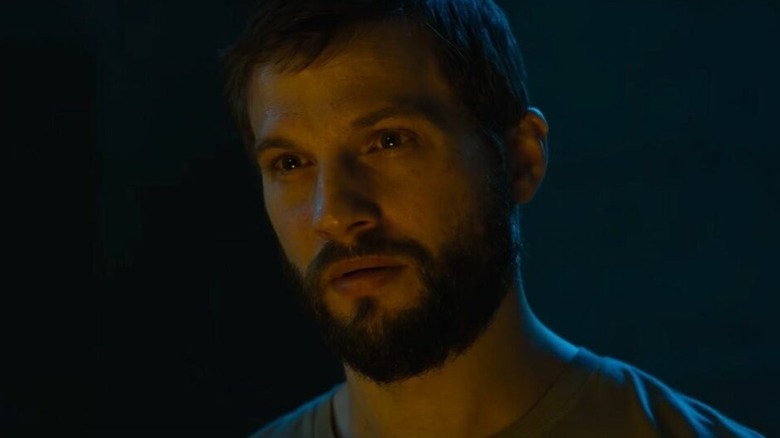
Longtime James Wan collaborator Leigh Whannell (who co-created and starred in "Saw" and "Insidious") proved his own pulpy genre bona fides with this cyberpunk cyborg riff about Logan Marshall-Green getting really strong and killing a bunch of guys. Marshall-Green plays Grey Trace, an ordinary man in the near future whose wife is killed and who is left paralyzed after a brutal car crash and gang assault. He's offered a lifeline by a billionaire tech investor: an illegal, experimental AI microchip called STEM that takes over and controls Grey's body, granting him fluid, robotic martial arts and superhuman combat skills.
It's a slick little piece of grungy tech-noir that both nods to the explosive Paul Verhoeven-flavored sci-fi of the '80s and '90s, like "Robocop" and "Total Recall," and offers its own pointed commentary on the fascistic institutional violence and rot at the heart of so much corporate technological innovation (it's especially funny and prescient how much the futuristic self-driving AI cars look like a direct mix between the sleekness of normal model Teslas and the horrid angularity of Cybertrucks).
"Upgrade" was made on a reported budget of $3 million, with Whannell pulling off the futuristic look by going intentionally grungy, scaling back the script's more expensive-to-visualize ideas, and honing in on his contained story, with the world-building suggested around it. It earns its cult fandom and credibility — it's no easy feat to make a sci-fi action movie on a Blumhouse budget.
2. Coherence
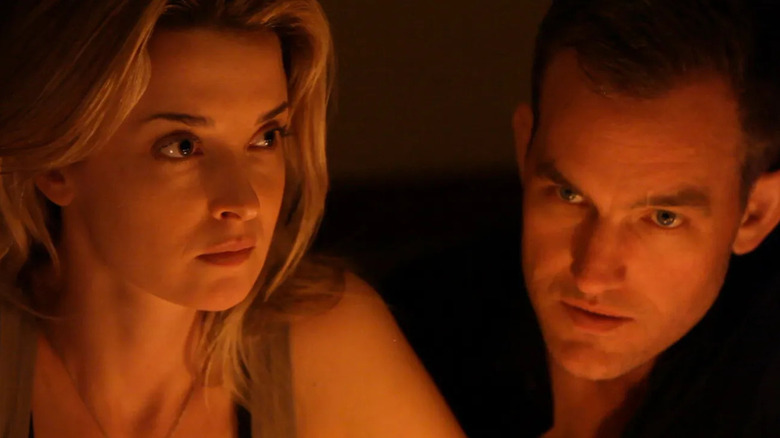
James Ward Byrkit is best known for his collaborations with Gore Verbinski, serving as a conceptual and storyboard artist on the first three "Pirates of the Caribbean" films and a story co-writer on "Rango." But in 2013, he directed a small-scale sci-fi thriller designed to completely break your brain. "Coherence" has a small but ardent following of fans who consider it one of the greatest sci-fi films of the century.
The film follows eight friends at a dinner party whose pleasant time together is upended by the passing of a comet overhead. The comet causes a neighborhood blackout, then ultimately splits reality into overlapping alternate universes as different versions of the characters interact and clash. As the characters slowly realize they are encountering doppelgängers from other houses, paranoia sets in about who is authentic and who is an imposter, and what those two ideas even mean.
Shot in just five nights inside a single house, "Coherence" features small-scale craft that cleverly leverages massive conceptual ideas, making the movie feel grand in scope. Despite its mere $50,000 price tag — kept low by at-home shooting with a skeleton crew and the lack of a script, as nearly all of the dialogue in the film is improvised — "Coherence" encompasses the kind of frightening existential thought experiment that lives in your brain alongside the best of classic sci-fi.
1. Primer
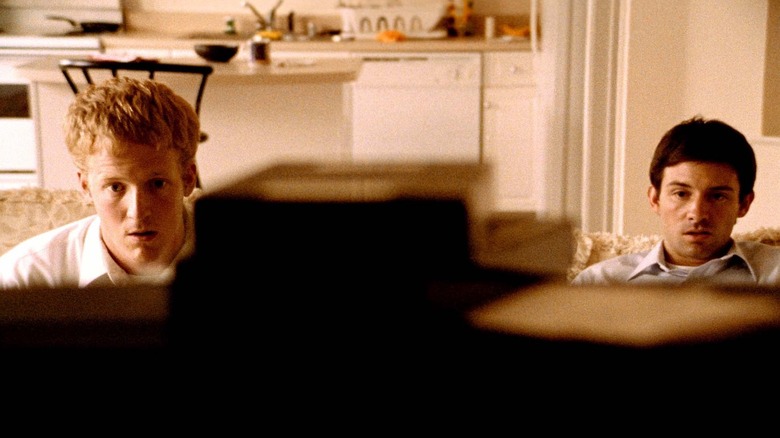
If you're the type to stew over the confusing mechanics and reality-distorting inconsistencies of how real-life time travel would actually work, "Primer" is the movie for you. Writer-director (and star, producer, editor, production designer, composer, and sound designer) Shane Carruth treats the classic sci-fi concept as an intense, consequential math equation, crafting a film that captures the byzantine ambition of what it would actually mean to distort and move through time.
"Primer" follows two engineers, Aaron (Carruth) and Abe (David Sullivan), who accidentally build a machine in their garage that reduces mass and manipulates time. They ultimately use the machine for personal gain, such as playing the stock market, but overlapping timelines, double copies of themselves, and escalating paranoia begin to tear their partnership apart. Carruth conveys these tropes with unflinching realism, with characters speaking in fast, natural, highly technical jargon without explaining anything to the audience. It breaks time travel down to a practical, unforgiving science.
Working almost entirely by himself, Carruth made "Primer" on a tiny budget of just $7,000. Most of that budget went toward Super 16mm film stock, and Carruth limited himself to an ultra-tight shooting ratio of two takes per usable shot, filming in cheap locales around Dallas, Texas. Despite its DIY genesis, the complexities of its esoteric plot have generated years of discussion among fans, who have gone to the lengths of devising charts and graphs to map out the film's bewildering timeline entanglements. If you have your own questions about what the hell is happening in "Primer," we have our own explainer.