

The Spider-Man Franchise Never Recovered From The Cancellation Of Sam Raimi's Spider-Man 4
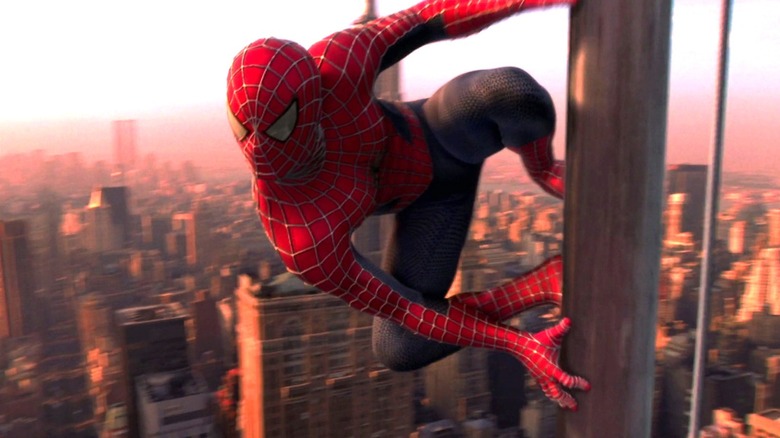
I first saw "Spider-Man 3" in the theater when I was eight years old. Back then, I didn't care about minor details like "story structure" or "narrative cohesion." No, I just thought it was so cool when Spider-Man (Tobey Maguire) and Harry Osborn/Goblin 2.0 (James Franco) teamed up against Venom (Topher Grace) and Sandman (Thomas Haden Church) in the third act. If I'm honest, seeing that movie then — even more so than "Spider-Man 2" on DVD or reruns of the 1990s "Spider-Man: The Animated Series" — might be the thing that forever rewired the webs of my brain to love Spidey forever and always.
But of course, most others did not receive "Spider-Man 3" as the mind-blowing thrill ride my younger self thought it was. (And to be clear, yes, I now recognize it's obviously the weakest of the trilogy and a hot mess.) Yet "Spider-Man 4" had still been greenlit ... until, in 2010, it was announced Maguire and director Sam Raimi had walked away. With them gone, Sony had chosen to scrap "Spider-Man 4" and start again at page one.
The cancellation of "Spider-Man 4" was one of the first pieces of movie news I heard about and processed as it happened. I also remember thinking that, based on rumors that Anne Hathaway would play not Black Cat but a reimagined Felicia Hardy as "The Vulturess," perhaps we'd dodged a bullet. But looking back, the cancellation has only diminished Spider-Man. Outside of animation with the "Spider-Verse" movies, Spidey has been in search of a strong creative vision to equal the one Raimi brought.
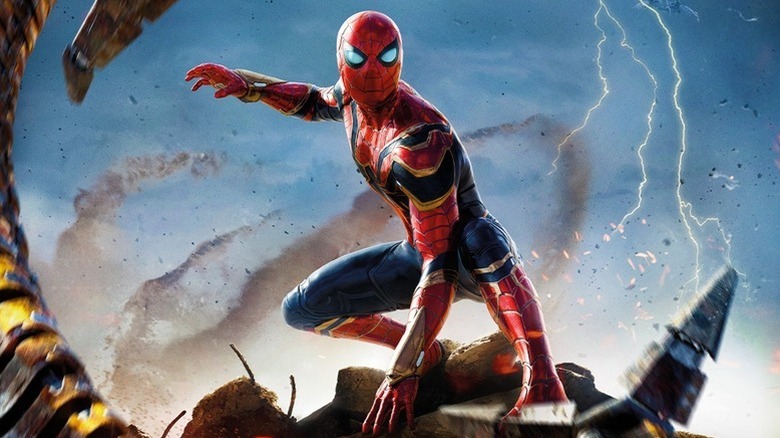
As we approach the 20th anniversary of "Spider-Man 3," the (live-action) "Spider-Man" movies have yet to reach the heights Raimi first established, and the franchise feels stained by Sony's reactionary handling of its post-Raimi path. There's a reason the Tom Holland-led "Spider-Man: No Way Home" was largely a walk down the memory lane that Raimi built.
Why Sam Raimi walked away from Spider-Man 4
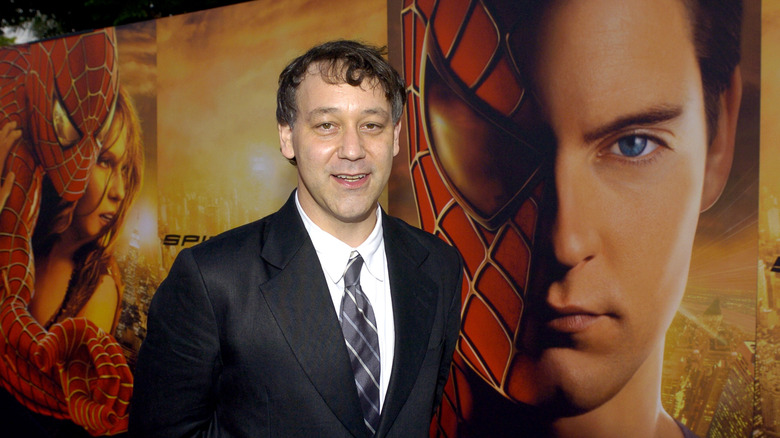
Coming off the not-great reception to "Spider-Man 3" and his own dissatisfaction with how the movie turned out, Sam Raimi didn't want to make another "Spider-Man" sequel unless he knew he could be proud of the end result. When he couldn't find a script he liked in time to get production rolling for a summer 2011 release, he walked away.
Speaking to Vulture, Raimi stressed that his leaving "Spider-Man 4" was a professional, mutual creative breakup. After the bloated "Spider-Man 3," he wanted "to make 'Spider-Man 4' to end on a very high note, the best 'Spider-Man' of them all." As he explained:
"I couldn't get the script together in time, due to my own failings, and I said to Sony, 'I don't want to make a movie that is less than great, so I think we shouldn't make this picture. Go ahead with your reboot, which you've been planning anyway.'"
Note Raimi saying Sony had been planning for the reboot "anyway." When it was announced Raimi and Tobey Maguire had left Spider-Man behind, Sony simultaneously put out a statement reassuring fans that a rebooted, high school-aged Spider-Man would be swinging into theaters in summer 2012. That, of course, ended up being Marc Webb's "The Amazing Spider-Man," starring Andrew Garfield as Peter Parker.
Per Sony's own agreement with Marvel, the studio has to regularly produce Spider-Man movies every few years or it forfeits the rights to the character altogether. This also helps explain why Sony couldn't push "Spider-Man 4" back further to give Raimi time to crack the script.
What Sam Raimi wanted to do with Spider-Man 4
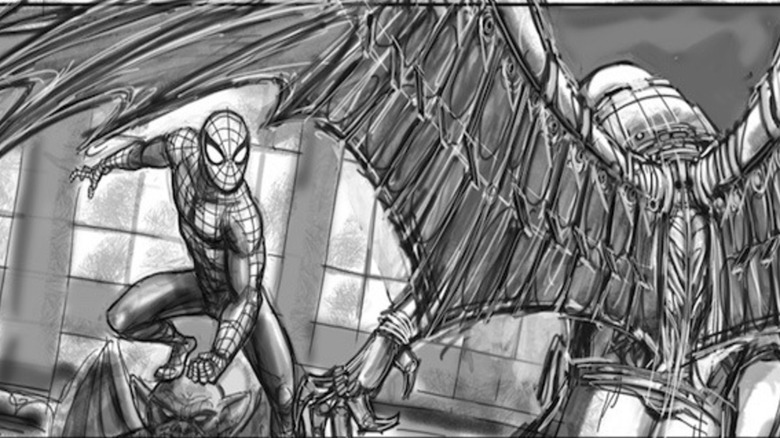
One thing that was rock solid about the planned "Spider-Man 4" is who the villain was going to be: The Vulture. The film had even cast John Malkovich, who Raimi had previously considered to play the Green Goblin back when making the first "Spider-Man." "Spider-Man 4" concept art, released by concept artist Jeffrey Henderson, gives a glimpse of what Malkovich's Vulture could've looked like. As Henderson explained to io9:
"Everyone was going to dismiss the Vulture as just an old guy in a silly green suit, so we wanted to go the opposite way and really make him the most fearsome and formidable adversary that Spider-Man had faced in the series."
In a later conversation with /Film, Henderson said the "Spider-Man 4" story was never quite locked down, which tracks with Raimi having not reached a script he was 100% on. One idea considered, though, is that Vulture's daughter would be the head of a firm that buys out the Daily Bugle, giving fan favorite J. Jonah Jameson (J.K. Simmons) a subplot about the changing media environment.
According to Henderson, the idea for Vulture's daughter was her father would die battling Spider-Man, she would discover his super-villain gear, and then battle Spider-Man as the Vulturess. This proposed Vulturess storyline largely reads as a compressed repeat of Harry Osborn becoming the new Green Goblin across the first three films. That might be one reason why Raimi wasn't confident enough in any script to push forward.
But Sony had spent the 2000s building up fan investment and good will in Raimi and Maguire's Spider-Man. Even if "Spider-Man 3" was a stumble, a reboot without giving fans a chance to miss the webhead was never going to be a great idea, even if it was the only business option.
The Amazing Spider-Man films were a reboot that didn't work
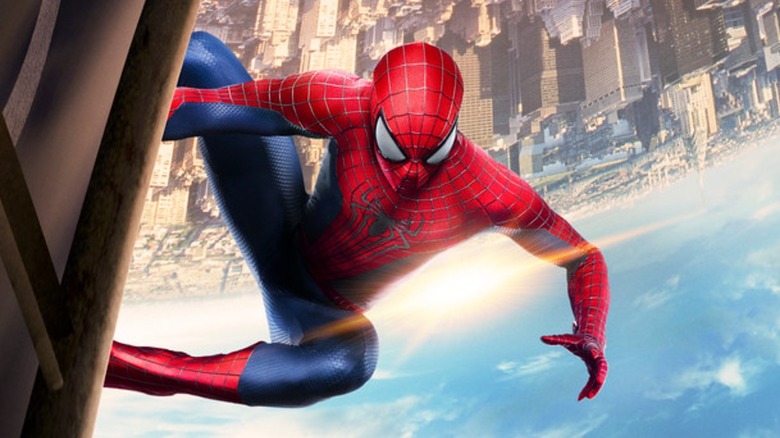
When "Spider-Man 4" was canceled in 2010, this was before "The Avengers" proved cinematic universes could work, much less the superhero multiverse. The cancellation was, at the time, an abrupt goodbye to Raimi's Peter Parker with no chance of seeing him again. That only made it harder for fans to accept the new Spider-Man as "Amazing."
In leaked emails about "The Amazing Spider-Man 2," former Marvel President Alan Fine hit this problem on its head. (Though, Fine also made the confusing claim that the "Amazing Spider-Man" films were meant as prequels to the Raimi films).
"I think that it is a mistake to deny the original trilogy [its] place in the canon of the Spider-Man cinematic universe. What are you telling the audience? That the original trilogy is a mistake, a total false-hood? We lied to you? Just made it up? Why should the audience buy into the world we create now?"
Some of Fine's confusion might be because "The Amazing Spider-Man" was marketed as "the untold story [of Spider-Man]," implying it was showing audiences something the previous films hadn't. Then, the actual movie didn't bear that out.
Even upon release, people could tell there was something missing from "The Amazing Spider-Man." The consensus, based on cut lines that made it into promotional material and revelations in "The Amazing Spider-Man 2," is there was an excised subplot revealing that Peter's scientist father Richard Parker (Campbell Scott) had tweaked his son's DNA, meaning Peter becoming Spider-Man wasn't chance, but destiny.
What was left in "The Amazing Spider-Man" felt like a lesser rendition of the origin story Sam Raimi had told audiences a mere decade before. "The Amazing Spider-Man" was not distinct enough, and where it was different from Raimi's "Spider-Man," it was lesser. The movies gestured at more comic accuracy, e.g. Andrew Garfield's being pricklier like the Stan Lee/Steve Ditko original and using Gwen Stacy (Emma Stone) as the romantic lead, but it didn't matter.
Live-action Spider-Man movies have never left Sam Raimi's shadow
It's worth keeping in mind the Sam Raimi "Spider-Man" movies were an accelerant of the superhero movie boom. They not only dominated pop culture, they defined what Spider-Man was for a whole world of viewers. Take Spider-Man's webslinging; that's something Raimi had to define onscreen without any true precedent outside Saturday morning cartoons or low budget TV. Note, too, that "The Amazing Spider-Man" hardly flatters itself by concluding on a wordless sequence of Spider-Man webslinging through New York City, a faint echo of the first Raimi movie's ending.
Then came "The Amazing Spider-Man 2" in 2014. So messy it flattered "Spider-Man 3" in comparison, that sequel pivoted from the first movie's "Batman Begins"-lite vibe into trying to ape the Marvel Cinematic Universe while simultaneously trying to make the reboot more like the lighter, funnier, and more romantic Raimi "Spider-Man" films people still preferred.
The narrative became that Sony had no vision for what made Spider-Man work, the studio had pushed away the director who had, and it was just chasing the trends of other superhero movies. The Tom Holland-led "Spider-Man" films, co-produced with Marvel Studios and set in the Marvel Cinematic Universe, have been better received than the "Amazing Spider-Man" films, but they're also an admission of defeat from Sony. Back in 2014, it seemed to many viewers like Marvel Studios could do no wrong, and it was an endless refrain that the company would make a better "Spider-Man" movie than Sony could. Sony heard that, and all but conceded the point.
Then there was the nostalgia fest of 2021's "Spider-Man: No Way Home." Watching that was like watching Sony and Marvel Studios admit that they'd never make "Spider-Man" movie villains as good as Willem Dafoe's Green Goblin or Alfred Molina's Doc Ock, so they might as well just bring them back. Indeed, "No Way Home" rocketed its way to massive success by, in part, delivering something "Spider-Man" fans had wanted since 2010: The return of Tobey Maguire's Spider-Man.
Sam Raimi's Spider-Man saga sits without an ending
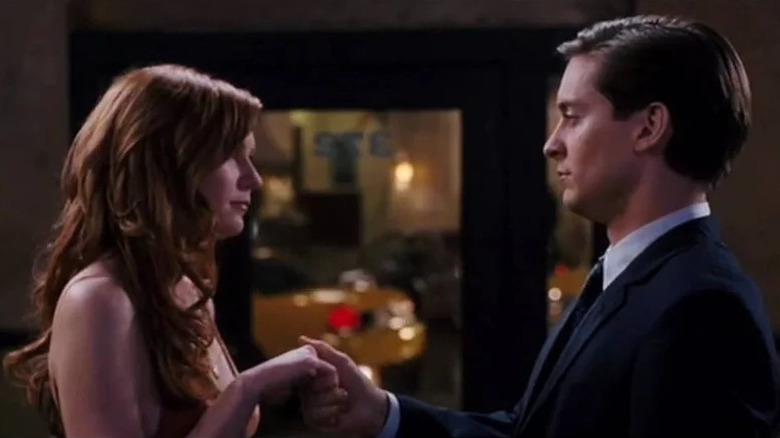
"Spider-Man: No Way Home" satisfied fans who'd been waiting to see Tobey Maguire's Peter Parker again since 2007. Yet if anything, it feels like that brief return only made those fans want Sam Raimi's "Spider-Man 4" more. On the heels of "No Way Home," Raimi's grand finale seemed possible once again, even if Raimi has since said "Spider-Man 4" still can't happen right now. I think that speaks to how "No Way Home" could only offer so much resolution to Peter's story — especially since Kirsten Dunst's Mary Jane didn't return with him — and that, regardless of quality, "Spider-Man 3" always felt like another chapter but not a finale.
The Raimi "Spider-Man" films were romantic dramas as much as superhero films, capturing the romance that artist John Romita Sr. brought to the 1960s "Spider-Man" comics. The movies turned MJ into Peter's childhood crush (which she never was in the comics), and he spends the first two films pining after her but telling himself they can't be together because of his dual life.
At the end of "Spider-Man 2," they finally agree to be together regardless of the inevitable challenges. "Spider-Man 3" is all about those challenges. The ending is them embracing and slow dancing at the jazz club where MJ works, a more bittersweet reaffirmation of the "Spider-Man 2" ending.
That's an appropriate ending for "Spider-Man 3," but it doesn't quite feel like the ultimate capstone to Raimi's whole "Spider-Man" saga, even without knowing there were more films planned. There were more places for this relationship to go (like marriage, eventually) and plenty more battles for Spider-Man to fight. In a perfect world without studio deadlines, Raimi surely could've cracked the code to deliver that ending and a redemption for his movies after "Spider-Man 3." But as Peter Parker knows all too well, we don't live in a perfect world.