

5 '60s Sci-Fi Shows That Deserve A Modern Reboot
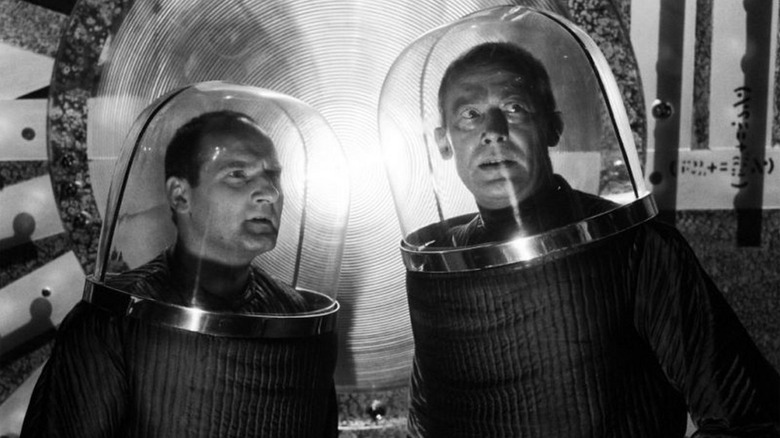
If reboots are any gauge, the 1960s were the best possible time for sci-fi television. Many of the hit sci-fi shows of the day have stuck in the popular consciousness, and many of them were incessantly rebooted or revived over the years. Most famously, 1966's "Star Trek" was rebooted as a movie in 1979 and then as "Star Trek: The Next Generation" in 1987, and that franchise is currently still airing as "Star Trek: Strange New Worlds."
Indeed, think of a hot 1960s TV show, and you'll find that it has been remade, adapted into a movie, or restarted decades later. "The Outer Limits," "Lost in Space," "The Invaders," "Doctor Who," "My Favorite Martian," "Thunderbirds," and "The Time Tunnel" (whose remake was repurposed into the 1976 movie "The Time Travelers") have all been revisited. Even animated shows "The Jetsons," "Jonny Quest," and "Space Ghost" have been remade, rebooted, or readapted along the way. "Space Ghost Coast to Coast" is one of the best TV shows ever made. Something about 1960s sci-fi stuck in the mass consciousness, and we are still very much living with it some 60 years later.
That said, there are still multiple forgotten high-concept sci-fi oddities from the 1960s that would, here in the 2020s, make for some excellent reboot fodder. Indeed, there is a lot of forgotten '60s sci-fi that would simply be good to revisit and enjoy before one downs an espresso and begins spitballing reboot pitch meetings to, say, Apple TV or Disney+. The list below is five such TV shows, most of them obscure, and all waiting to be rescued by a remake.
'Way Out (1961)
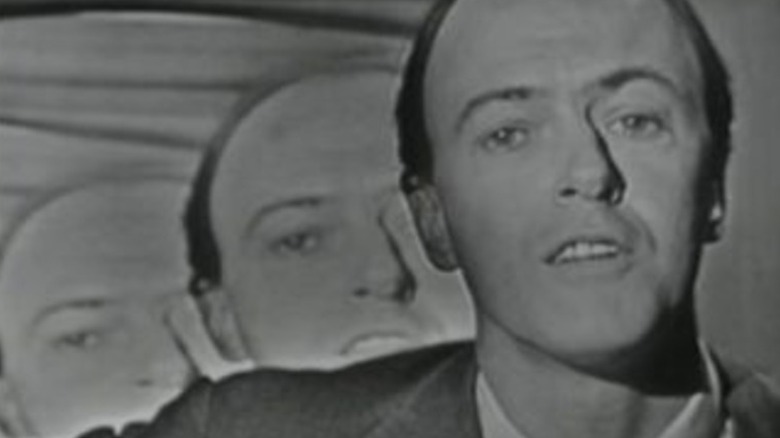
Many readers might know author Roald Dahl for his well-remembered children's novels like "Charlie and the Chocolate Factory," "The BFG," "Matilda," "James and the Giant Peach," "The Witches," and "Fantastic Mr. Fox." More attentive fans of Dahl will also know that he is the author of many grim, adult-friendly short stories, as well as several biographical works. Said fans will also be able to tell you that Dahl has a very moody, often macabre sensibility that points more in the direction of horror than whimsical childhood fancy. Dahl's gloomier instincts were put on full display in the 1961 anthology series "'Way Out," which Dahl hosted and wrote the pilot episode for.
"'Way Out" only featured one direct Dahl adaptation, "William and Mary," the pilot episode, but it was marvelously dark. A woman's abusive husband has died, but pieces of his body, including his brain and his eye, were preserved in a miracle procedure. William can still see and is conscious, which Mary loves. She hated William, you see, and now merely performs all the acts he disapproved of in front of his still-seeing, completely helpless eye.
Larry Cohen, of "The Stuff" and "God Told Me To" fame, wrote one episode, and another was based on "Button, Button," a short story by Richard Matheson that was eventually turned into an episode of "The Twilight Zone" as well as the feature film "The Box."
A reboot of "'Way Out" could reach into Dahl's vast collection of short stories to start, and then branch out to other literary sources as it goes on. Dahl's stories, as we know from a film anthology from Wes Anderson, make for great shorts.
Undermind (1965)
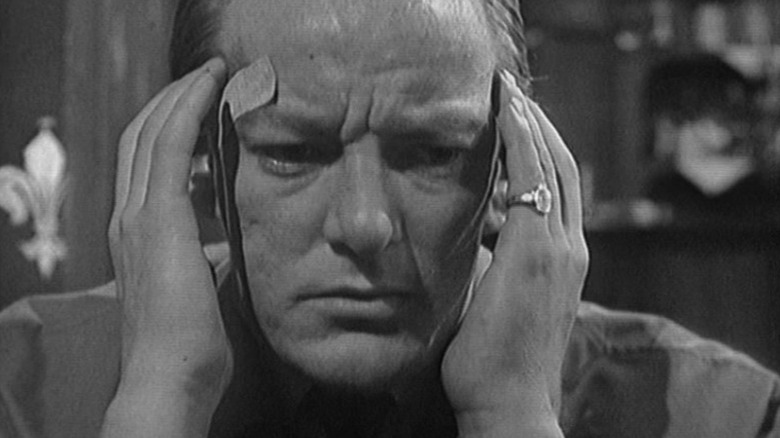
Few people likely remember "Undermind," and that's okay, as it's terribly obscure. The premise, however, is gloriously paranoid, and, thanks to the basic trappings of modern technological living, paranoia never goes out of style.
"Undermind" stars Jeremy Wilkin and Rosemary Nichols as Drew and Anne Hariot, a brother-in-law-sister-in-law pair who have discovered that their mutual connective relative, Frank, has been behaving very strangely, and even attacked a member of Parliament. Anne has long been estranged from Frank, but this was out-of-character, even for him. Anne and Drew eventually find that Frank has had his brain taken over by some kind of eerie, disembodied alien intelligence. It seems that aliens are beaming mind-control rays into British citizens and forcing them to subtly sabotage their own social infrastructure as a means of weakening the Earth and paving the way for a future full-scale invasion.
The people who have been taken over behave in an erratic and destructive fashion. The aliens are eventually nicknamed the Underminds, and Anne and Drew travel around looking for potentially infected people, marked by their bland complacency.
In a modern age marked by a massive uptick in wild conspiracy theories by half-mad weirdos (see: Alex Jones and his kooky ilk), something like "Undermind" is poised to offer some prime commentary on life in the 2020s. The makers of a new "Undermind" could easily adapt the politics of the original into a modern milieu, and posit that the real-world evil of the day is being aided by aliens. It's "They Live" for a new day (which was inspired by stories from the 1960s anyway).
Space Patrol: The Fantastic Adventures of the Spaceship Orion (1966)
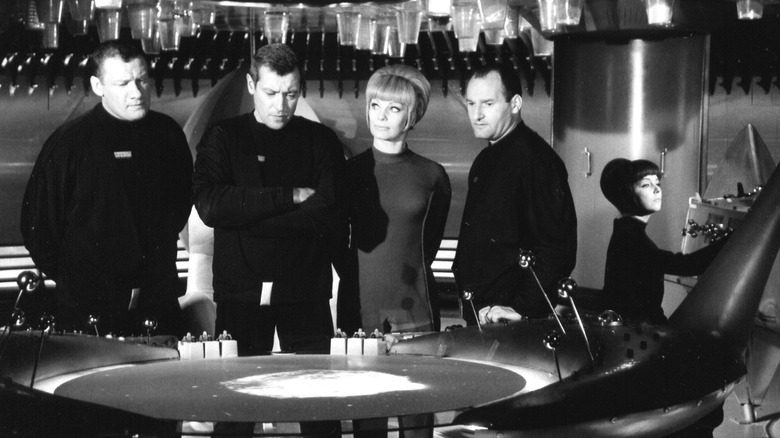
It's a pity that more people don't know about the German sci-fi series "Raumpatrouille: Die Phantastischen Abenteuer des Raumschiffes Orion," or "Space Patrol: The Fantastic Adventures of the Spaceship Orion" in English. "Orion" debuted pretty much the same week as "Star Trek," and has a similarly utopian vibe, only undergirded by a groovier, more stylish aesthetic and a more intense tone. Set in the year 3000, "Orion" envisions a future where Earth nations have all united, and humans now live among the stars in huge saucer-shaped ships. The Orion is the fastest that humanity has yet built, and it looks comfortable, too; it was like the Enterprise-D from "Star Trek: The Next Generation," but 21 years prior to its invention.
The Orion is commanded by Commander Cliff Allister McLane (Dietmar Schönherr), who has devoted his life to peace. He is best friends with the ship's tactical officer, Lt. Mario de Monti (Wolfgang Völz), an incorrigible womanizer. The navigator of the Orion is Lieutenant Atan Shubashi (Friedrich G. Beckhaus), its chief engineer is Lieutenant Hasso Sigbjörnson (Claus Holm), its communications officer is Lieutenant Helga Legrelle (Ursula Lillig), and its security officer is Lieutenant Tamara Jagellovsk (Eva Pflug). Like on "Star Trek," each one of these characters is of a different nationality (they are American, Italian, Japanese, Swedish, French, and Russian, respectively).
The villains of the series are the "Frogs," a species of resentful energy beings who are trying to wipe out Earth's starships. The show's only seven episodes dealt with the war with the Frogs. If "Star Trek" can remain alive for 60 years, then "Orion" can be revisited, too. It's time we did so.
Fantastic Voyage (1968)
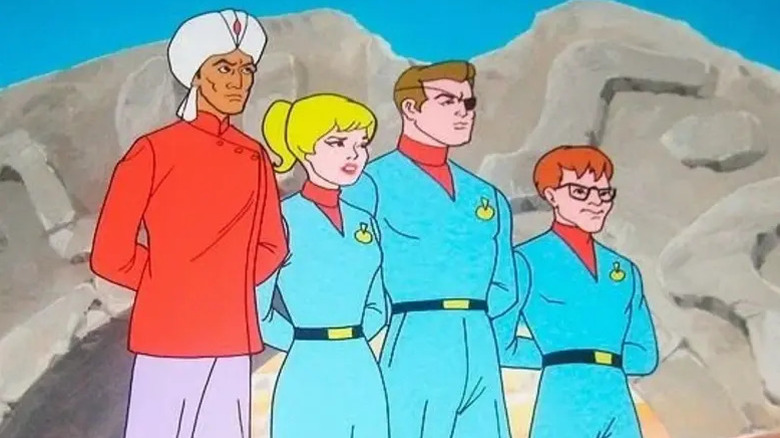
The 1968 TV series "Fantastic Voyage" was made by Filmation, the same studio that would eventually find success with the animated version of "Star Trek" and, of course, "He-Man and the Masters of the Universe." At the time, Filmation was best known for its Superman TV shows, but it was also in the market for adapting hit movies to the small screen. "Fantastic Voyage" was an adaptation of Richard Fleischer's hit 1966 feature film about a team of explorers (Donald Pleasance, Raquel Welch, and Stephen Boyd among them) who are shrunk down to microscopic size and injected into the body of a comatose scientist. The movie sees their tiny submarine sailing around inside a human body, doing battle with white blood cells and the like.
Filmation's version turned that premise into a serialized series of adventures starring a new quartet of characters who were regularly shrunk and tasked with fighting medical problems, or just other forms of microscopic malfeasance. In the TV series, there were evil counterspies that the protagonists also had to do battle with. The team was led by the eyepatch-sporting Jonathan Kidd, and filled out by the psychic Guru, the biologist Dr. Erica Lane, and the nerdy engineer Busby Birdwell.
The TV series is ... well, it's not very good. It also only ran for 14 episodes from September of 1968 through the following January, so it's not terribly well-remembered. But, golly, that's a tantalizing premise, just waiting for the star TV treatment. Microscopic spies on a shrinking submarine? That can be made more adult and fun than the goofy "Voyage" TV series. Just give it some medical authenticity and enrich the characters. We can put Shawn Levy's failed "Fantastic Voyage" movie remake behind us.
Joe 90 (1968)
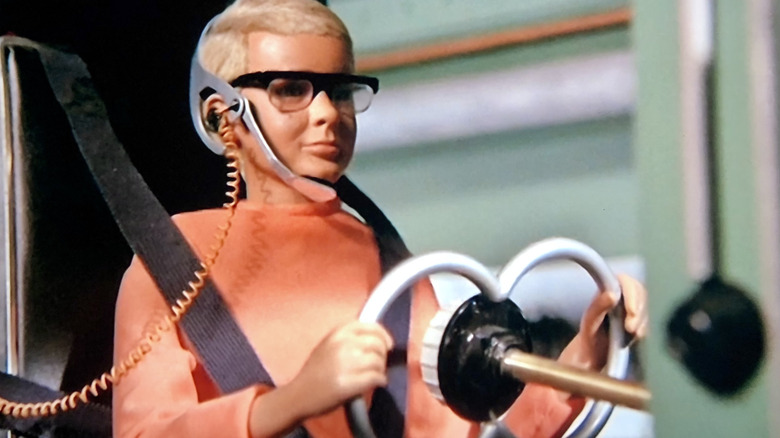
Back in the 1960s, Gerry and Sylvia Anderson pioneered a series of puppet-based entertainments that they dubbed Supermarionation. Their shows all starred stone-faced marionettes and were generally centered on fantastical vehicles and other wild machines, all built to scale. The most popular Supermarionation show was "Thunderbirds," a show about a rescue team of American brothers who piloted the titular rescue craft. That show spawned two puppet movies and a notorious live-action 2004 feature film (that ruined director Jonathan Frakes' career). Supermarionation shows also included "Captain Scarlet and the Mysterons," "Supercar," and "Fireball XL5."
The 1968 show "Joe 90" is perhaps less known in the Gerry and Sylvia Anderson canon, but it is also a lot of fun. The title character is Joe McClaine, a nine-year-old boy living in the early 2010s, in a remote castle with his scientist father, Dr. Ian McClaine. Dr. McClaine has invented a device called the Brain Impulse Galvanoscope Record And Transfer machine, or BIG RAT for short. When Joe climbs into the center of the BIG RAT, its swirling oscillators can shunt information directly into his brain on a temporary basis. Joe is often recruited by a super-spy agency to be fed espionage skills and sent into the field to engage in dangerous spy missions. Joe, however, becomes an expert in a new skill every week, so he is confident and assured in all his missions. He can easily infiltrate dangerous areas because no one suspects a nine-year-old.
"Joe 90" lasted for only one 30-episode season, but it still has its fans. It's also one of the best "kid spy" ideas this side of the first "Spy Kids" movie. Put this thing in live-action right away, and let's see what can be done.