

10 Best Nickelodeon Shows Of The '90s, Ranked
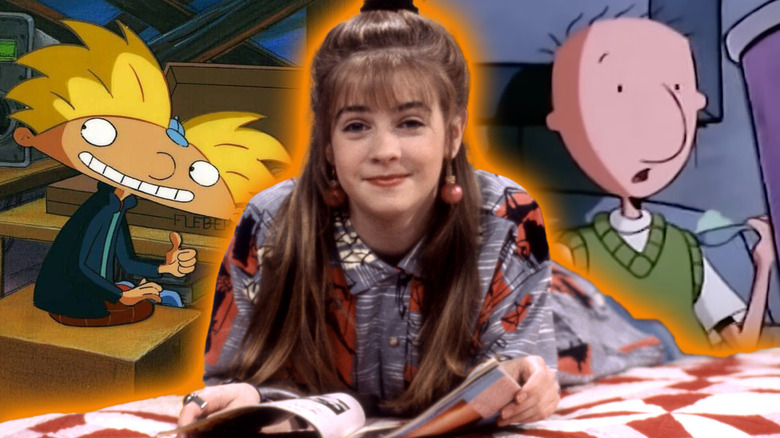
If you were a kid in the '90s, there's a good chance you were regularly tuned into the Nickelodeon programming block. The weekend and late-night lineups of quirky, kid-centric sketch comedy and live-action variety and anthology shows were supported by an innovative line of idiosyncratic animation programming, all of which are nostalgic for grown-up millennials with fond memories of the distinct television culture that persisted in the '90s.
Indeed, Nickelodeon made their name by carving out a rebellious and irreverent niche that pushed the boundaries of what children's entertainment could look and sound like. While Nick would see a strong continuation of their domination during the new millennium, as seen in our list of the best Nick shows of the 2000s, the '90s had an even more radical streak, throwing new ideas at the wall to see what would work in pioneering, iconoclastic ways. Everyone thinks the programming they had when they were a kid was the best, but '90s Nickelodeon has grounds to stake a claim to having the best overall lineup for kids, tweens, and teens.
Here are the 10 best Nickelodeon shows of the '90s, ranked.
10. CatDog
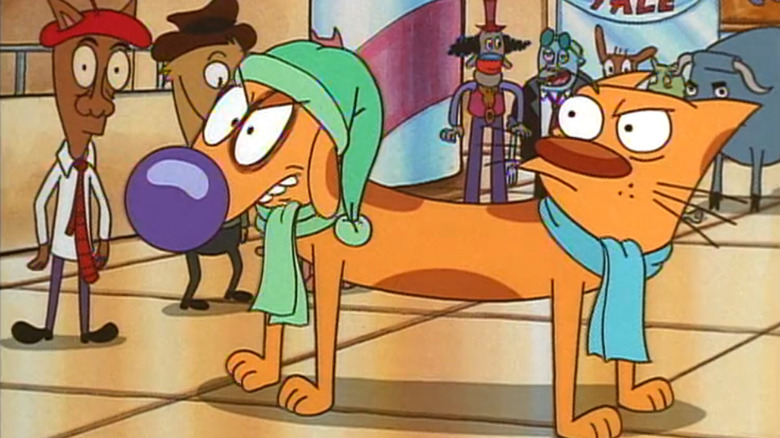
Peter Hannan's "CatDog" took the Nicktoons' common conceit — anthropomorphized animals with recognizably human neuroses — and pushed it into something even more heightened: two siblings fused at the torso, one a fastidious, anxious cat, the other a slovenly, id-driven dog, unable to escape each other for a single second of their lives. In rendering a fable about obligation as something resembling body horror, the show mines the discomfort of not choosing your family for both slapstick and regular bouts of sincerity.
What set "CatDog" apart from the gross-out anarchy of the likes of "The Ren & Stimpy Show," its clearest stylistic forebear, was its interest in Cat (Jim Cummings) and Dog (Tom Kenny) as an actual unit that has to live together and the real implications of that for them as characters, rather than as a vehicle purely for shock gags. The show cared about their codependency, their bickering, their begrudging loyalty, among all the oddballs populating the town of Nearburg, including the likes of the feral Greaser Dogs and the eerily upbeat Winslow (Carlos Alazraqui). The animation leaned into elastic character design that reflected the stretchy torso of its lead characters, which now hits the nostalgia buttons of seeing this particular era of Nick cartoons.
"CatDog" never achieved the crossover cultural footprint of something like "SpongeBob SquarePants" — so influential it in turn resulted in one of the best Nickelodeon movies — but it remains an underrated entry in Nickelodeon's animation golden age, unique in its comedic and emotional engine around the impossibility of separating from the person who annoys you most.
9. Clarissa Explains It All
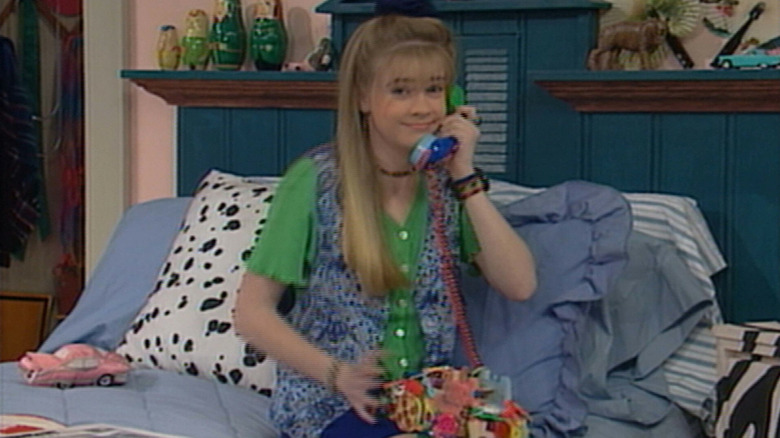
Before breaking the fourth wall became a regular sitcom shorthand, Mitchell Kriegman built an entire show around it. "Clarissa Explains It All" put Melissa Joan Hart's Clarissa Darling directly in conversation with the audience as her sardonic, self-assured teen girl character narrated her own suburban chaos from a bedroom cluttered with lava lamps and band posters. In doing so, it gave Nickelodeon its first real teenage voice that didn't sound like it had been written by an adult imagining what teenagers were like.
The show's genius was treating a teenage girl's interior life as inherently worth listening to, without flattening her into someone more palatable or less opinionated. Clarissa had distinct taste, actual computer skills, perceptible disdain for her doofus younger brother Ferguson (Jason Zimbler), and a best friend, Sam (Sean O'Neal), who had a habit of climbing through her bedroom window via ladder, engaging in a friendship that operated outside adult supervision.
Hart's performance, of course, was the glue to the enterprise, and her deadpan asides also felt relatable and funny, helping the direct-address gimmick turn into a regular storytelling convention. "Clarissa" doesn't get discussed with the same reverence as Nickelodeon's other golden age shows, and our newfound perpetual insight into other people's lives via our phones has put a damper on a once-planned reboot. Still, it proved a girl-led, single-camera sitcom could anchor a network and helped pave the way for the wave of live-action programming that would follow on Nick throughout the decade.
8. The Ren & Stimpy Show
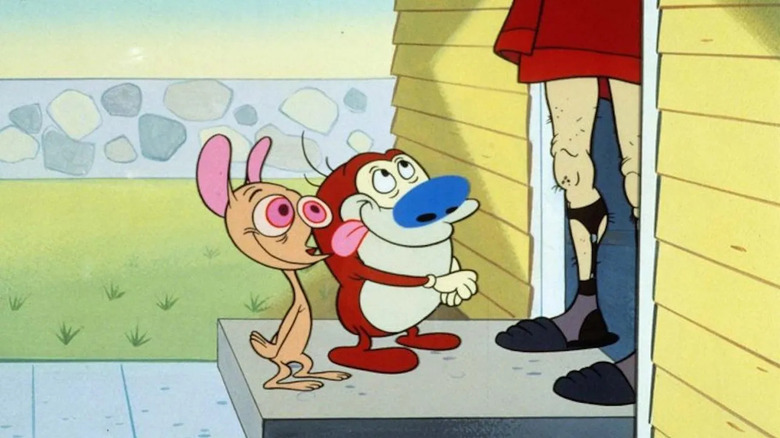
Few shows aimed at children have ever looked or sounded like "The Ren & Stimpy Show." Premiering alongside "Doug" and "Rugrats" as one of the original three Nicktoons in 1991, it was immediately the outlier, gleefully grotesque and anarchic in its revival of rubber-hose animation aesthetics and built around extreme close-ups of nostril hairs, eyeballs, and other body parts, which saw the show revel in a kind of avant-garde slapstick.
The show's ambition is inseparable from its behind-the-scenes turmoil. Creative and content disputes with Nickelodeon eventually led to the show's original production company being removed from it entirely, a rupture reflective of the show's unruly sensibility and the antagonism it created toward the network that aired it. (It should also be noted that, along with Kricfalusi being fired from the show, he was later accused of sexual grooming by two former employees.)
To that end, "The Ren & Stimpy Show" is routinely cited as a formative influence on the more stylistically adventurous, adult-skewing animation that would follow it by a decade, particularly from Cartoon Network's late-night slate and onward. It's a show that's abrasive by design and not the same source of cozy comfort and nostalgia as other Nick animation programming. But that willingness to indulge in unpleasantness is why it stood out as a maverick among the rest of the programming lineup, acting as a turning point for what was conceivable within children's animation.
7. Kenan & Kel
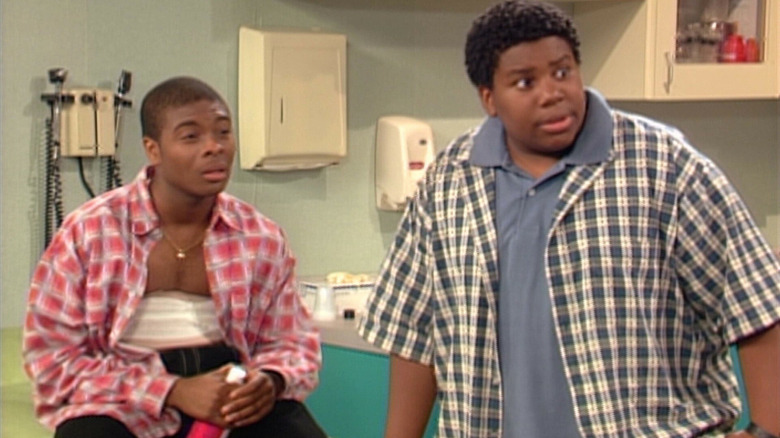
Spun out of the sketch-comedy incubator "All That," "Kenan & Kel" gave Kenan Thompson and Kel Mitchell a showcase built entirely around their chemistry. It's a classic straight-man/fool dynamic filtered through increasingly absurd, tall-tale plots that usually begin with a small lie and end in some form of citywide catastrophe. The show was basically a live-action cartoon, with Mitchell's Kel serving as something of a human member of Looney Tunes, while Thompson's Kenan played the exasperated foil to his friend's chaos.
It spawned kid-friendly iconic ephemera for the monoculture of children and young teens who were plugged into the programming block: the "who loves orange soda" bit became an oft-quoted reference point for the show and for Nick at large because it distilled the whole show's comedic ethos into a distinct, absurdist gag. It plays to the cheap seats with broad, physical comedy that's utterly unconcerned with good taste or realism, making the show feel like a unique descendant of variety-show slapstick, tailored to '90s teenage expectations of absurdity.
Thompson's easy comic demeanor here is the clear template for the career he'd go on to have as "Saturday Night Live's" longest-tenured cast member. The show itself also transcended television in its time by allowing the pair to star in their own film, "Good Burger," a key reference point of '90s Nickelodeon nostalgia (and it's actually better than you remember). It's a neat distillation of the silly strain of live-action kids' comedy that worked alongside the network's more regular blocks of animation programming.
6. Doug
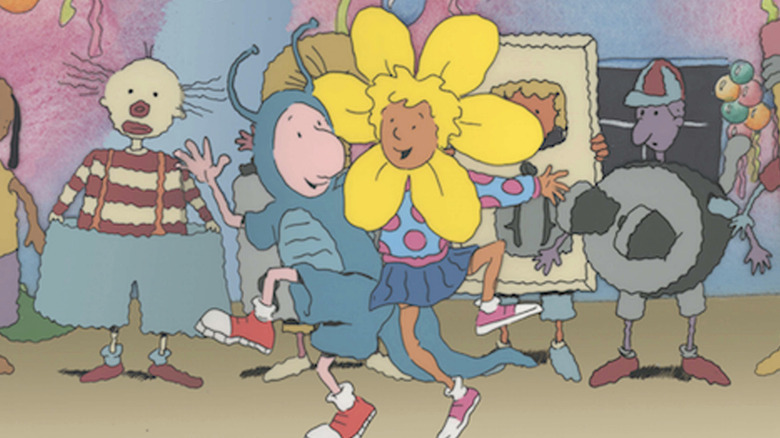
"Doug" was always a bit of a black sheep. Of the three original Nicktoons that premiered in 1991, it was by far the quietest, and it resolutely embraced that identity. Jim Jinkins built the show around the diary entries of its lead character, Doug Funnie (Billy West), allowing the series to dwell on the small anxieties of early adolescence — crushes, bullies, the existential fear of embarrassing yourself in front of your entire middle school. It's defined by a more earnest sense of sincerity and relatability that could be found in other Nicktoons only intermittently.
The show matched that aura of restraint in its visual style: muted, folk-art-adjacent color palettes and gently rounded character designs that give the town of Bluffington a charming, comfortable small-town texture, more closely resembling a child's picture book than the more garish anarchy and excess found elsewhere in '90s animation. It encourages its young audience to look within themselves and examine their emotions, wants, and vulnerabilities. Meanwhile, Doug's fantasy alter egos, particularly his self-styled superhero identity Quailman, embrace the imaginative lives within children's active imaginations.
The gentleness of "Doug" made it an apt candidate for its eventual move to Disney, where a glossier look and broader jokes are cited as a general diminishment of the show's original charms. But the original run has a soft power in treating the humiliations of growing up with the weight they carry for the children experiencing them, empathizing with its audience and, in turn, allowing them to better understand themselves and the world around them. A "Doug" sequel show was in the works at one point, but, unfortunately, it will never be made.
5. Rocko's Modern Life
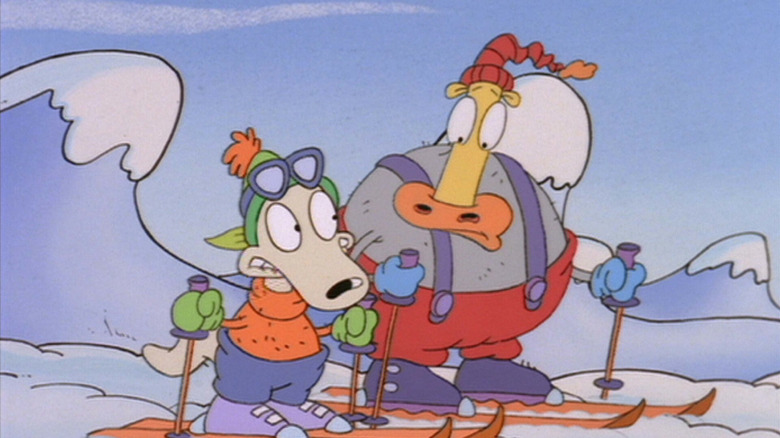
Joe Murray's "Rocko's Modern Life" arrived a few years into the Nicktoon renaissance, but it turned the now-familiar visual language toward its own unique perspective and sensibilities. It follows Rocko (Carlos Alazraqui), a wallaby immigrant navigating the indignities of adult life in the polluted, consumerist sprawl of O-Town. His job at the King of a Lot O' Comics store, his DMV nightmares, and his home-improvement disasters with best friend Heffer (Tom Kenny) and Filburt (Mr. Lawrence when speaking; Kenny when singing) were the standard sitcom-of-manners tropes now plastered onto a show for children, smuggling in renegade ideas about bureaucracy and consumer culture.
The animation had that anarchic, sometimes garish feel of the golden age of Nicktoons: bulbous, overblown character designs and a persistent sense of grime underscoring the overstimulating quality of an urban center defined by the rat race and corporate hierarchies. Murray and his writers layered in innuendo and satire dense enough to sail over young viewers entirely while still grounding Rocko's entire reality in ideas of worker exploitation, the burned-out reality of the daily grind, and material obsessions.
"Rocko" never had the merchandising ubiquity of some of the other Nicktoons, but its fingerprints, like many of its contemporaries, are all over the sardonic and slightly anxious strain of adult-adjacent kids' animation that followed. It was also the subject of a 2019 revival focused on ideas of gender identity and gentrification, confirming not that entertainment had suddenly become political in the 21st century, but that "Rocko" always had a socially conscious backbone it refused to back down from.
4. All That
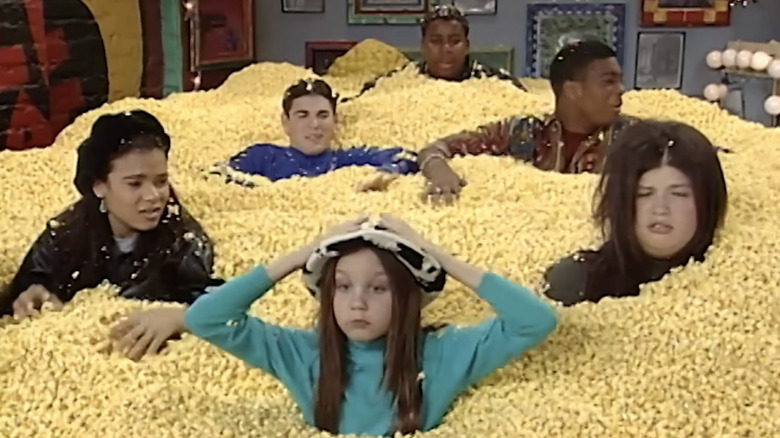
"All That" lifts its entire structural premise from "Saturday Night Live." It's a live-action sketch show built around a rotating repertory cast, complete with a house band and a stable of recurring characters, and simply directs that format toward teens instead of adults. That's all it took to make a hit: "All That" lives on as a prime example of the type of broad, absurdist entertainment that hooked '90s kids and lives in their memories of watching after school on CRT televisions.
Like many sketch-related enterprises, it functioned as an incubator for new talent, and the cast list now reads as a syllabus of Y2K comedy careers: Kenan Thompson and Kel Mitchell, of course, parlayed their chemistry directly into "Kenan & Kel," Amanda Bynes used it as a springboard into "The Amanda Show" and a subsequent film career, and later cast members like Nick Cannon and Jamie Lynn Spears extended the show's pipeline well into the 2000s, claiming their own noted careers and leading projects.
The show shares the same unrefined, specific sense of humor that defined this era of live-action Nickelodeon, as well as the same vaudevillian logic that "Kenan & Kel" would adopt to emulate the connection "All That" made with its audience. The show doesn't get remembered as an aesthetic achievement the way Nick's animation slate does — this one is really more of a "you had to be there" sort of thing — but as a star-making machine and proof of concept for youth-led sketch comedy, it mutated a concept associated with an older audience and made something shamelessly aimed at kids. And that's part of why Nick achieved such a dedicated audience.
3. Hey Arnold!
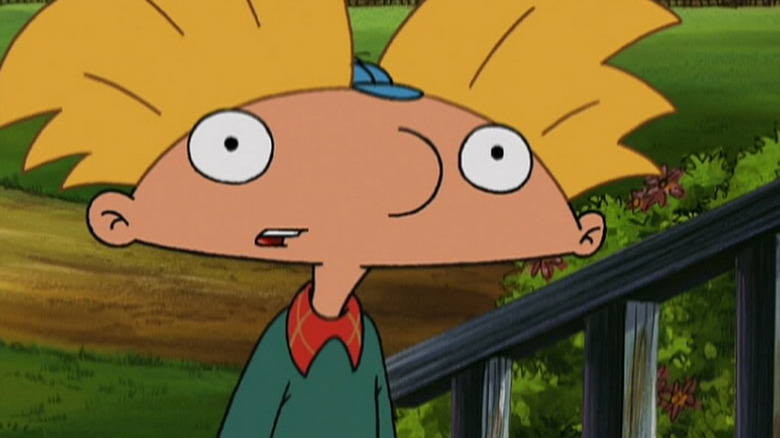
"Hey Arnold!" distinguished itself from its Nicktoon contemporaries by rejecting typical cartoon logic at almost every turn. Set in an unnamed but clearly working-class, ethnically diverse city modeled on series creator Craig Bartlett's own upbringing near Seattle and Portland, the show gave its football-headed fourth-grade protagonist a life defined by the unromantic aspects of reality. Indeed, Arnold (Lane Toran, Phillip Van Dyke, and Spencer Klein across the show's run) lives in a boarding house in a city full of oddballs who perpetuate urban legends about the puzzles of city living — really, it's a surprisingly mature show about living in a big city.
The visual style leans toward more muted urban backdrops rather than the exaggerated, excessive geography found elsewhere among Nicktoons, reinforcing the show's interest in its own setting. "Hey Arnold!" cares about the stoops, fire escapes, and neighborhood curiosities as much as the internal lives of its characters, and Arnold and his friends are inseparable from the environment in which they're being raised. Bartlett and his writers develop a rich interiority for Arnold with occasionally challenging material, most famously the unresolved mystery of Arnold's missing parents, which the show allowed to simmer for years before paying it off in the 2002 film and following up again in the 2017 TV movie.
"Hey Arnold!" remains the clearest example of the type of emotional maturity Nickelodeon could reach during its animation era — where they had "The Ren & Stimpy Show" for gross-out gags, they had programming like "Hey Arnold!" to balance the scales of coarseness and heart.
2. Are You Afraid of the Dark?
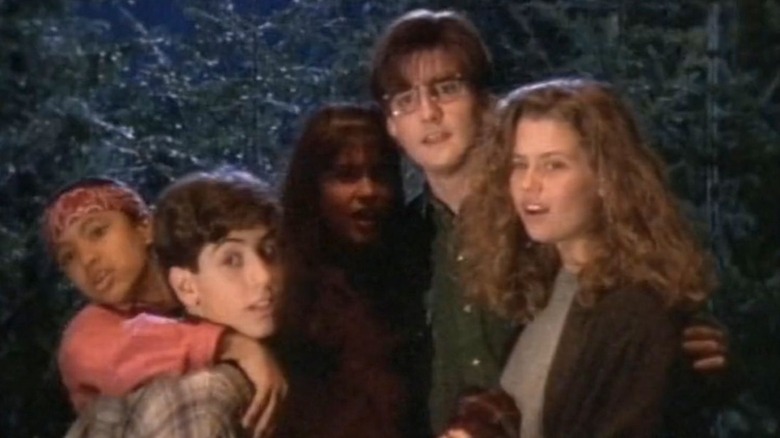
Decades later, despite prestige television making anthology horror fashionable again, it seems nothing has topped "Are You Afraid of the Dark?" Well, not in kids' anthology horror, that is. Nick cultivated a generation of horror fans with this live-action, spooky tall-tale series about a clubhouse group of kids called the Midnight Society, who traded ghost stories around a campfire. That gives the show ample room to diversify the types of frights it delivers, resetting with new environments and new flavors of kiddie dread, from haunted dolls to cursed video games to carnival ghosts.
It set itself apart from typical kids' horror fare by committing to atmosphere over jump scares and indulged in being scary when other genre-adjacent kids' fare would flinch. With moody lighting, evocative sound design, and a willingness to tell ambiguous or unresolved stories, it trusted viewers to embrace the discomfort that accompanies the horror genre, introducing ideas of terror and unease that acted as a catalyst for engaging with more mature stories.
That's the very reason the show has retained a cult following all these years later among fans who grew up with it: its refusal to talk down to kids. Alongside that, its Canadian production roots gave it a slightly different texture from its American contemporaries, occasionally more actively mature and less polished, which gave it an extra edge that kids couldn't find elsewhere. The same magic wasn't captured in the 2019 revival, but '90s kids will always have fond memories of when Nick sustained a sincere and successful relationship with the horror genre.
1. Rugrats
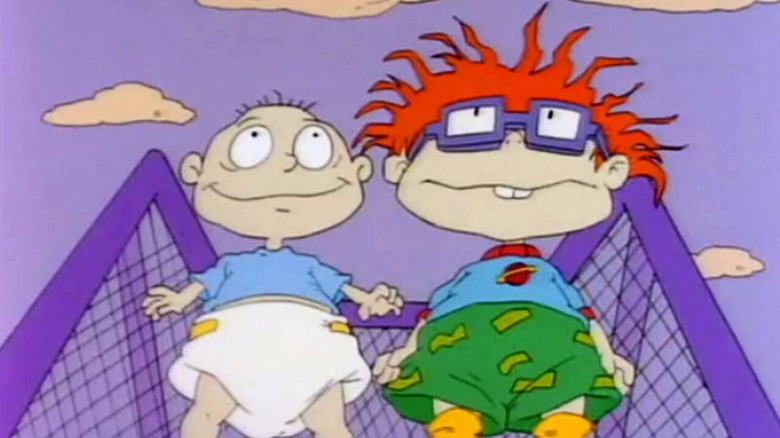
If "Rugrats" isn't the king of Nickelodeon's entire '90s enterprise, I don't know what else it could be. Of the three original Nicktoons that debuted in 1991, it became by far the most commercially dominant, its simple yet clever premise of filtering the mundane world of a suburban household through the perceptual logic of toddlers proving to be a huge crossover hit among families. It led to plainly funny and creative scenarios: vacuum cleaners became monsters, trips to the grocery store were odysseys, and adult conversations were fragmented into abstruse messages the toddlers couldn't fully understand.
The premise let creators Aelene Klasky, Gábor Csupó, and Paul Germain fit in real pathos without breaking the internal logic of a toddler's worldview. The show concerns itself with parental anxiety, sibling rivalry, the terror of the unfamiliar, and more, using a scratchy, hand-drawn character design with misshapen, oversized heads and spindly limbs that gave the show an endearingly messy, crayon-colored quality that reflected the unkempt nature of the toddlers at the center.
"Rugrats" also became the commercial engine that proved Nicktoons could be a merchandising and box-office force, spinning off three theatrical films and a broader "All Grown Up!" sequel series that aged the cast into adolescence, which you could probably take or leave. (You could probably also do the same for the computer animated reboot on Paramount+ and the live-action "Rugrats" movie that is in the works.) Its cultural saturation, though, doesn't undermine the appeal and achievement of the original show itself, which was so good that it's only natural for it to have become one of the most successful animated franchises in television history.