

How Emily Wilson Feels About Christopher Nolan's The Odyssey Adaptation
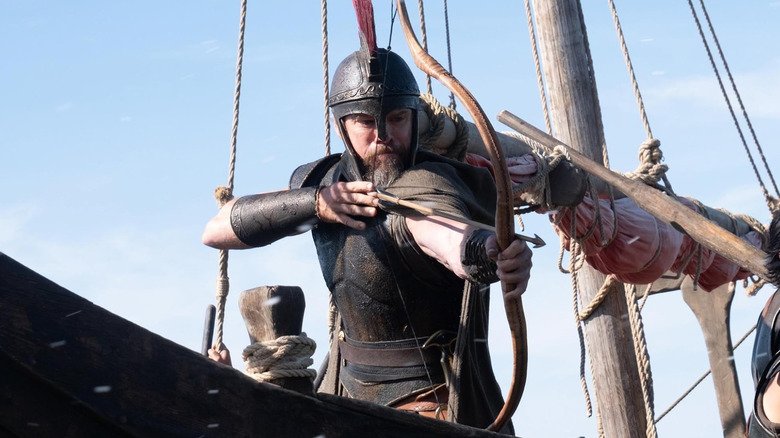
We wouldn't be honoring Zeus' Law if we didn't warn you: Spoilers for "The Odyssey" ahead.
You're not going to believe it, but a new Christopher Nolan film just came out, and folks have Thoughts™ about it. On the whole, the response to "The Odyssey" — Nolan's take on the ancient Greek poem that is commonly attributed to Homer and, most importantly, inspired "The SpongeBob SquarePants Movie" — has been extremely positive when it comes to movie critics and general audiences. As far as Greek mythology scholars go, though, it's more complicated. Then again, no two written renditions of Homer's epic are identical, so it's kinda impossible for any adaptation of "The Odyssey" to be "faithful" in a way that will satisfy everyone.
Nolan himself has name-checked Emily Wilson's 2017 translation of "The Odyssey" as one of the inspirations for his film, and it's apparent in the text. Wilson's interpretation paints the tale's famed protagonist, Odysseus, as a "complicated man," and he's certainly that in Nolan's movie. As played by Matt Damon, Nolan's take on the Greek King of Ithaca is a figure tormented by the harm he's caused through his cleverness and willingness to violate the very laws that govern his world. (He's essentially the namesake of Nolan's "Oppenheimer" if he had created the Trojan Horse instead of the atomic bomb.) Wilson's version of "The Odyssey" is also known for translating the poem in a clear, easy-to-read fashion, a choice that, in some ways, is just as controversial as Nolan's similar decision to use modern dialogue in his movie adaptation.
So, does Wilson think Nolan's "The Odyssey" is the bee's knees then? Per AP News, the esteemed British-American classicist, writer, and professor certainly feels the film is a spectacular theatrical experience. Still, she does have some issues with it.
Emily Wilson questions Christopher Nolan's decision to leave certain elements out of his Odyssey adaptation
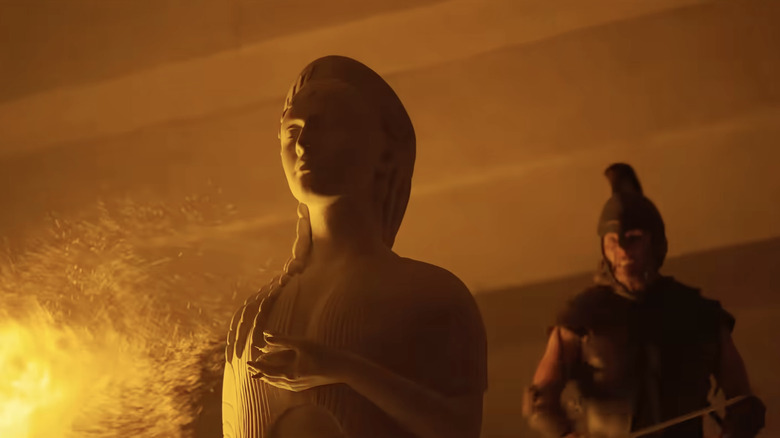
For a movie full of characters who constantly talk about the Greek gods, there aren't a lot of literal gods in Christopher Nolan's "The Odyssey." Athena (Zendaya) is the only god who appears in the flesh, yet, even then, nobody but Odysseus can see her. Not only that, but we later learn that Athena has the same face as a Trojan priestess who was killed in front of Odysseus during the Greek army's attack on Troy. Does Odysseus really spend the movie conversing with Athena? Or is the goddess of wisdom, warfare, and so on just the imagined manifestation of his guilt about the role he had in Troy's gruesome downfall?
Ultimately, Nolan leaves this open to interpretation, just as he avoids showing gods like Zeus and Poseidon. In doing so, his movie raises questions about how many of the woes that befall Odysseus and his men on their journey home from Troy are the result of their gods being angry with them for their transgressions ... and how many of them are plain bad luck or a consequence of them making ill-advised decisions (like failing to recognize when a sea storm is brewing). Nolan's "The Odyssey" takes place in a world of "apparent magic," as its opening title card puts it, so this is all clearly the filmmaker's attempt to ground Homer's poem in the same way that he tried to bring more realism to the Batman universe in his "Dark Knight" trilogy.
Emily Wilson, per AP, questioned Nolan's choice to leave these and other equally fantastical elements out of his "Odyssey" adaptation, and not unfairly so. Her other critiques, though, speak more to recurring criticisms of Nolan's films overall.
The Odyssey is a Christopher Nolan movie (and all that implies)
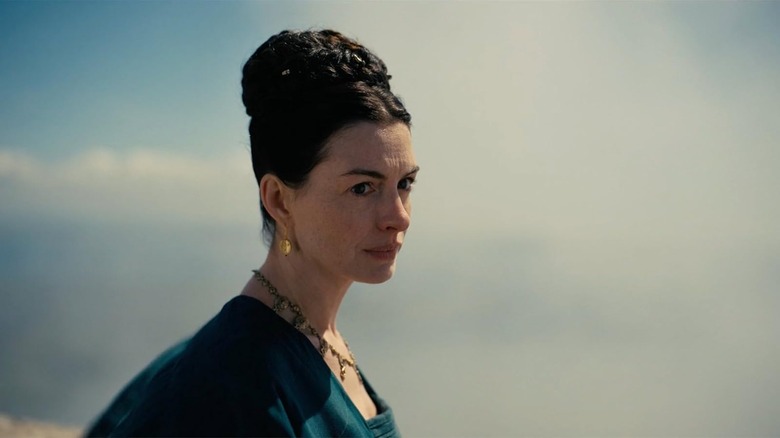
If there's one criticism that Christopher Nolan just can't shake, it's that he's simply not great at writing women. Specifically, Emily Wilson thinks Nolan's "Odyssey" under-uses Odysseus' long-suffering wife Penelope (Anne Hathaway), so much so that it jeopardizes "any possibility of believing in this marriage." Unsurprisingly, however, Hathaway makes the most of her limited screen time, and that goes double for the other women in the film (especially Lupita Nyong'o as Helen of Troy/Clytemnestra and Samantha Morton as Circe). Together, they swiftly, and powerfully, express just how infuriating and dangerous it is to be a woman in their world.
In addition, Wilson feels the movie is guilty of some "incoherent" messaging in that it denounces warfare yet seems to condemn those who avoid physical conflict altogether. This appears to be alluding to Antinous (Robert Pattinson), Penelope's sleazy suitor who avoids joining the Greek army when he's younger. It's worth remembering, though, that Antinous secretly forces a young man named Sinon (Elliot Page) to take his place in the army. As such, one could counter that the real reason Nolan's movie villainizes him is because he selfishly sacrifices others to save his own skin (something he does more than once in the story).
Wilson also told AP the movie's portrayal of Odysseus' ever-faithful dog, Argos, "catered towards modern sentimentality" because "everybody's a sucker for a dog," and, yeah, can't argue with her there. Still, she's avoiding being "snobby" or nit-picky. "It was fun to be there with my kids. I didn't feel it was pulling teeth to engage with it," she said. "If you can see it on a big screen, you should absolutely go." That basically sums up most people's thoughts on "The Odyssey," which is now in theaters.