

5 Ways DC's Supergirl Movie Changes The Incredible Woman Of Tomorrow Comics

Spoilers for "Supergirl" follow.
To bring the Girl of Steel to the silver screen, "Supergirl" adapts Tom King and Bilquis Evely's 2021 miniseries "Supergirl: Woman of Tomorrow." Like the comic, the movie's story begins with Kara Zor-El (Milly Alcock) on a planetary pub crawl with Krypto to celebrate her birthday. She meets Ruthye Marye Knoll (Eve Ridley), a girl out to avenge her father's murder by the dastardly Krem of the Yellow Hills (Matthias Schoenaerts). After Krem poisons Krypto, Supergirl and Ruthye follow him across planets in pursuit of Ruthye's revenge, and an antidote to save Kara's dog.
One of the planets our heroic duo visit in "Supergirl" is named "Bilquis," in apparent tribute to the book's artist. But we've also known for a while that "Supergirl" would be making some changes. For one, the movie includes a DC Comics fan-favorite, intergalactic bounty hunter Lobo (Jason Momoa), who appears in an apparent test run for a spin-off movie. That's far from the only way "Supergirl" streamlines, adjusts, or just outright rewrites the source material into a cinematic adventure.
Supergirl changes Kara's character arc from Woman of Tomorrow

"Woman of Tomorrow" and by extension "Supergirl" are based on the classic Western "True Grit," in which a young girl recruits a legendary hero to help hunt down her father's murderer. The movie chooses to make Kara like gunslinger Rooster Cogburn (played in past movies by John Wayne and Jeff Bridges) in personality, not just role.
In the comics, Supergirl is an optimistic and experienced superhero. She joins Ruthye on the quest to dissuade her from killing Krem, because saving one little girl's soul is just that important to her. "Supergirl" instead makes Kara cynical and maladjusted; she's roaming the galaxy at the start of the movie because she hasn't settled on Earth as her true home yet. From her messy spaceship and lifestyle, she feels like a feminine Peter Quill (Chris Pratt) from DC Studios head James Gunn's "Guardians of the Galaxy" movies.
This new DC Universe began in earnest last year with "Superman," so "Supergirl" sets out to contrast Kara with her cousin Clark (David Corenswet) instead of echoing him. "[Clark] sees the good in everyone, I see the truth," Kara tells Ruthye.
"Supergirl" makes this structural change to give Kara a more transformative character arc; she becomes a better hero instead of staying one. Notably, in the movie she spends most of the runtime wearing a brown trenchcoat and a Blondie T-shirt, only breaking out her Supergirl costume for the grand finale. The movie ends with her returning to Earth — for good this time. Superman actually cameos in "Supergirl" to facilitate this arc, whereas he never appeared in "Woman of Tomorrow."
Not every Woman of Tomorrow chapter makes it into Supergirl

"Supergirl: Woman of Tomorrow" runs for eight issues, and the comic book format means the story is more episodic than a feature film can or should be. The most notable excision in the movie is issue #3, when Kara and Ruthye stop on planet Corunn while tracking Krem. They stay in a town called Maypole, which resembles an idyllic 1950s suburbia inhabited by small, blue-skinned gremlin aliens. Like the real U.S. suburbia, there's a dark, discriminatory secret: the people of Maypole paid Krem to wipe out a purple-skinned minority group, whom they hated only because of their skin color.
Speaking to Entertainment Weekly, "Supergirl" screenwriter Ana Nogueira explained that, "We couldn't have Krem be a world destroyer because we wanted to keep it all within the same story," and said that the purple genocide "didn't feel immediate to the story."
"Supergirl" does include issue #5, when Kara is stranded on a planet with dual suns. The green sun poisons her, forcing her and Ruthye to wait it out until the yellow sun rises. But the movie excludes the dinosaur-like fauna on the planet that Ruthye has to dodge. Speaking of, the movie also removes another sidekick for Supergirl: Comet the flying horse. Nogueira told EW that she believed Comet would've been asking audiences to accept too much, not to mention that the movie already had one animal companion for Kara. "I couldn't do a horse and a dog," Nogueira explained.
Supergirl does not emulate Woman of Tomorrow's aesthetics
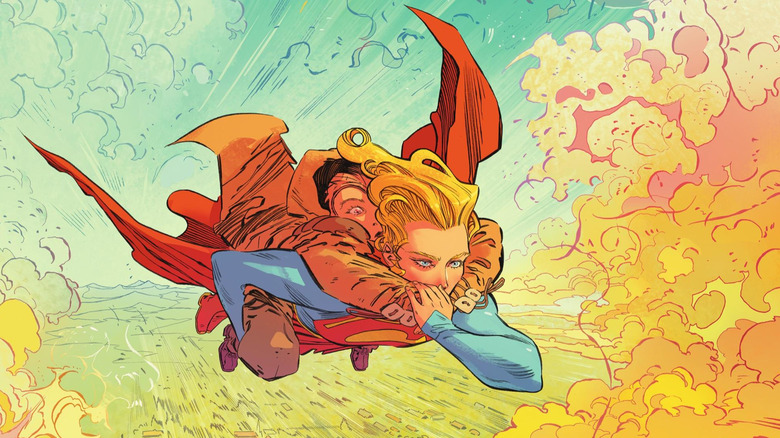
The real reason "Supergirl: Woman of Tomorrow" has become such a classic is Bilquis Evely's art. Lush with alien beauty, the comic genuinely looks like an odyssey across the galaxy more so than a typical superhero book. Colorist Matheus Lopes reflects both the light Supergirl brings to the galaxy and the idea of "golden-hued" memories, because the comic has a framing device of Ruthye recounting her journey with Supergirl many years later.
Speaking to Gizmodo in 2025, Evely explained how drawing "Woman of Tomorrow" let her imagination loose: "We went through a lot of planets, and in every single case, you could create another world. It was kind of a fun way to explore the creativity and the imagination of what we could create."
"Supergirl" director Craig Gillespie has said (including to Polygon) that he purposefully conceived his vision for the movie based on reading the script first. He didn't ignore the comic or not take anything from it, "but I didn't want to start there because I didn't want to just do the comic book."
Framed next to Evely's art, though, the look of "Supergirl" falls short. The worlds Kara visits, the puppet/made-up aliens, and the grimy-industrial starships all resemble what you would see in a "Star Wars" or "Guardians of the Galaxy" film. The color-grading can hardly compare to Lopes' work with pens, and the third act battle — set in a lifeless desert — feels barren of any imagination from the comic.
Supergirl overhauls Woman of Tomorrow villain Krem
In the 2010 "True Grit" film, when Mattie Ross (Hailee Steinfeld) finally catches up with her father's killer, Tom Chaney (Josh Brolin), he's not some charming but ruthless black hat gunslinger. That's the kind of villain you expect in an epic Western, but no; Chaney is just a greedy buffoon.
The same can be said of Krem in the "Woman of Tomorrow" comic. He's nobody special, just an unremarkable murderer who made the bad choice to anger Supergirl. There's a reason that Kara and Ruthye spend the movie chasing after him: Krem runs because he's a coward. He eventually joins up with some space pirate Brigands, but is out of his depth trying to lead them.
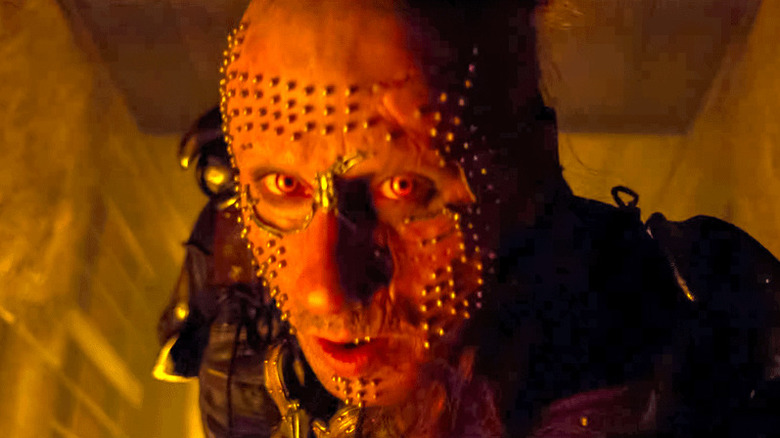
Krem's look has also been overhauled for the film. His pointed red beard has been swapped for piercings, a braided ponytail, and jagged skeletal armor. He's strong enough to challenge Supergirl and is feared across the galaxy because of it. Rather than a criminal from Ruthye's planet, he leads the Brigands from the start, and they behave like space Vikings — down to enslaving their victims.
It's revealed about halfway through "Supergirl" that the Brigands take young girls from planets to serve as their "wives," for their own race is all men. Ana Nogueira explained to EW that this was inspired by "Mad Max: Fury Road," "one of [her] favorite movies," in which Max (Tom Hardy) helps Furiosa (Charlize Theron) free five captive wives from warlord Immortan Joe (Hugh Keays-Byrne). It's a bold change, but "Supergirl" is often resistant to getting dark enough to fully explore the horrors of human (well, alien) trafficking.
Krem's fate, too, is also quite different in the movie compared to the original comic.
The ending of Supergirl is completely different than Woman of Tomorrow

"Woman of Tomorrow" drops a twist in the final issue: Krypto was never actually in danger. He shrugged off the poison and Kara just said she needed an antidote to follow Ruthye without telling her the real reason why — she wanted to stop Ruthye from killing Krem, but knew words alone would never convince her. When Kara also swings a sword to cleave off Krem's head in the last issue, and Ruthye calls out on her not to, Supergirl knows that Ruthye has learned her lesson.
Krem doesn't get off scot free, though; he's sentenced to the Phantom Zone. The comic ends on an epilogue set 300 years later, where Kara (still youthful) and an elderly Ruthye free Krem. He's repentant and seemingly truly changed, but that still doesn't mean Ruthye has to forgive him. She bonks him over the head with her cane, exacting non-lethal vengeance as the sun sets.
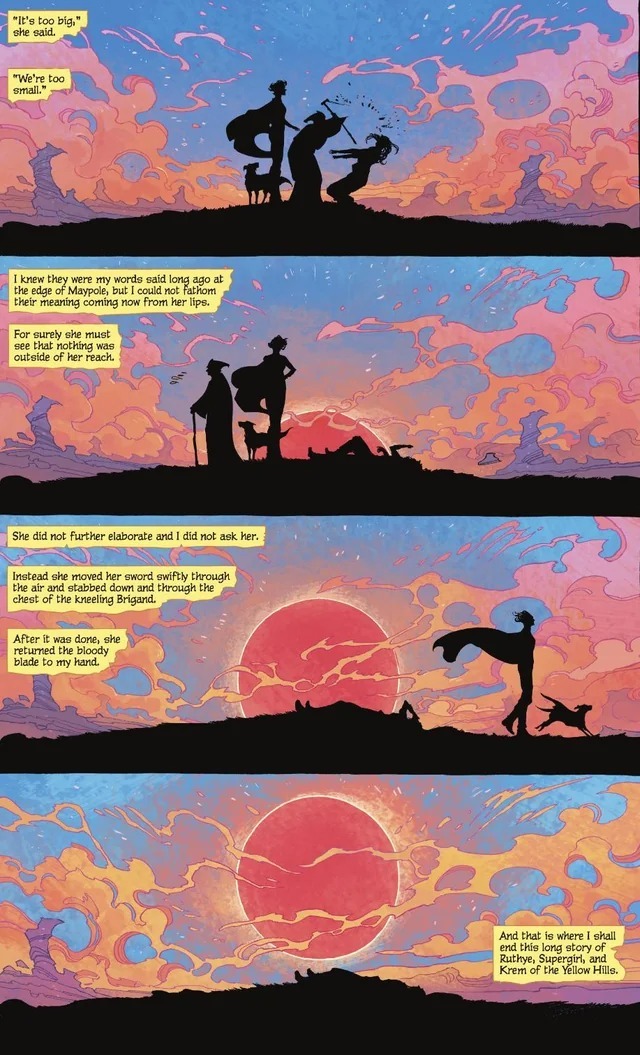 DC Comics
In the movie, Kara convinces Ruthye to stay her hand against Krem, telling her to run off before she changes her mind. Krem, satisfied he's seemingly escaped justice, taunts Kara, but then Kara stabs and kills Krem. He deserved to die, Kara just knew Ruthye's pain would only end by letting go. There's also the fact that Krypto really was in danger in the movie, and the ticking clock to save him was real. Kara had a genuine grudge against Krem too.
Supergirl ensured Ruthye did not become a murderer, then took on the burden of delivering frontier justice herself.
"Supergirl" is playing in theaters.