

10 Best Batman Movies Of All Time, According To IMDb
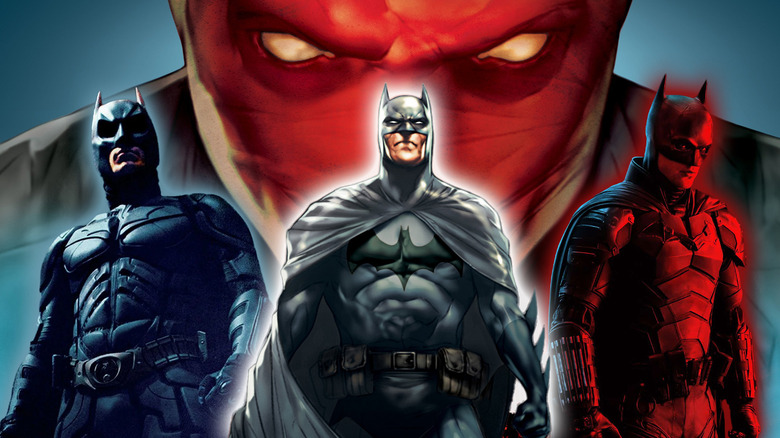
People love Batman. Ever since breaking out of comic book nerd culture into the mainstream, the story of a psychologically tortured billionaire socialite who masks his furtive, psychopathic tendencies by using his fortune to dress as a bat and build advanced gadgets to fight crime has enraptured fans for many reasons, from the inherent power fantasy of heroism to sharp observations on justice and renegade law enforcement. Studios recognize the power he wields too, as Batman holds the Guinness World Record for the most adaptations of any comic book character in live-action films.
That leaves plenty of room for differing opinions about the character's portrayal, since the world record doesn't even account for animated films. But this list sure will, as we're looking at the highest-rated Batman films on IMDb across any film medium (and for your pleasure, we already have a list of the live-action Batman movies ranked from worst to best). This will give us one of the more objective insights into how fans and general audiences receive the different Batman properties, and which adventures of the Caped Crusader have spoken to them most after decades of diverse interpretations.
Here are the 10 best Batman movies of all time, according to IMDb.
Batman: Mask of the Phantasm
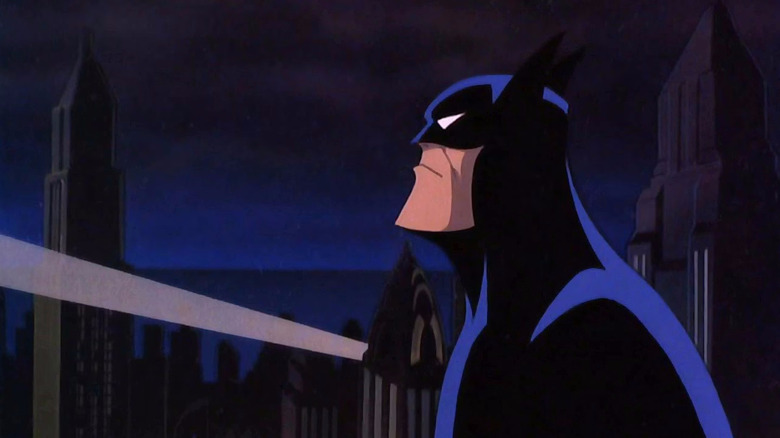
"Batman: Mask of the Phantasm" delves into the psychology of the Caped Crusader in just 76 minutes more deeply than many other Batman films do, despite their much longer runtimes. After an impressive first season of "Batman: The Animated Series," Warner Bros. put the ball in writer Alan Burnett's court to develop a treatment for a feature-length animated film in the same style and with the same talent. The result would be, arguably, the best DC animated movie ever made.
Inspired by "Citizen Kane" and told through a present-day Batman narrative and origin-story flashbacks, "Batman: Mask of the Phantasm" explores the fractured psychology of Bruce Wayne in ways not yet seen on the big screen. Drawing on elements of the "Batman: Year One" and "Batman: Year Two" comic book arcs, it follows Batman (Kevin Conroy) as he is framed for the murders of local crime lords, who are actually being taken out by the mysterious, Grim Reaper-like Phantasm. At the same time, Bruce's old flame Andrea Beaumont (Dana Delany) re-emerges, forcing him to confront why he pursued his vow of vengeance in the first place.
"Mask of the Phantasm" charted new territory in depicting Batman's tortured soul for a broader audience, compelling the character and viewers alike to reckon with the sacrifices and perpetual scars that Bruce endures when donning the Batman mask. It would foreshadow more serious, mature shades of the character that would emerge in film the following decade, after Hollywood had gotten some of the goofier renditions of the hero out of its system. It currently sits at a 7.8 on IMDb, perhaps underrated, given how influential this style of Batman storytelling would ultimately become.
The Batman
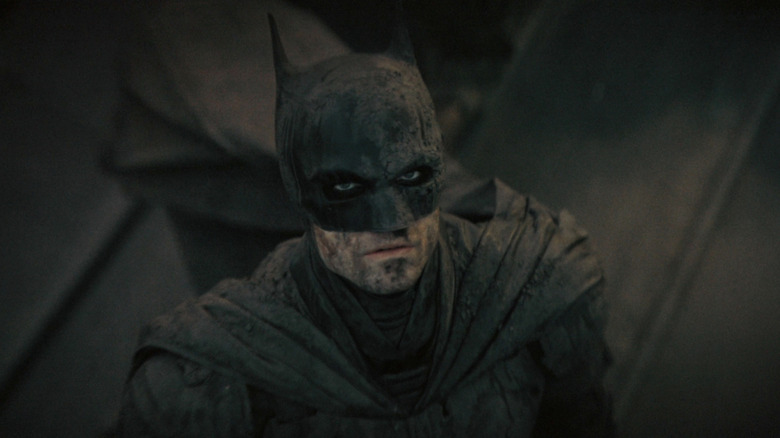
Warner Bros. gave us three different theatrical live-action renditions of Batman within 18 years, and Matt Reeves' moody, gothic take proved to be the change of pace audiences welcomed after Christian Bale hung up the cape and cowl (sorry, Ben Affleck). A distinct style that reflects the character's ingrained melancholy surely helps, as "The Batman" casts the hero as an emo crusader for an emo world, offering a novel take on the property.
With a luxurious runtime of just under three hours, Reeves and co-writer Peter Craig tell a Batman story disconnected from the broader DCEU, when the original formulation of that universe was still in the midst of its death throes. It focuses on a younger version of Bruce Wayne, played with sullen dejection by Robert Pattinson, in his second year of crime-fighting as he uncovers long-buried family secrets and is put on a collision course with the serial killer known as The Riddler (Paul Dano).
Reeves faces an uphill battle in making such familiar dynamics with a recently oversaturated character feel distinct, but he succeeds by placing the character in an indulgent noir procedural with a dark, seedy, textured look and feel to Gotham City and its inhabitants, letting "The Batman" carve out its own identity. Pattinson, too, defines his own idea of the character in his angsty, asocial ungainliness, and he's surrounded by a killer supporting cast, including Dano, Zoë Kravitz, Jeffrey Wright, Colin Farrell, and John Turturro. At a 7.8 rating on IMDb, it signals that audiences are willing to follow Reeves into the squalid underbelly of Gotham in a sequel that, after a long delay, has just now started filming.
Batman: The Dark Knight Returns, Part 1
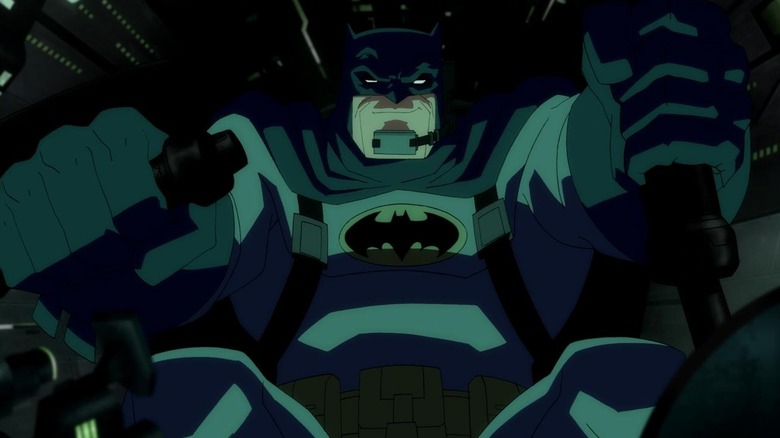
Few comic book stories have cast as long a shadow over superhero storytelling as Frank Miller's 1986 "The Dark Knight Returns." Its elegy for aging vigilantes, reimagining Batman as a weathered, morally complicated relic of a meaner era, inspired countless more mature renditions of the character. Warner Bros. Animation's two-part adaptation is one of the more faithful translations of source material in the Batman film canon. Part 1, directed by Jay Olivia and adapted by Bob Goodman, brings the opening of Miller's dense, stylized story to life in animation.
The story unfolds in a near-future Gotham where Bruce Wayne (Peter Weller) has been retired from crimefighting for a decade. The city's deterioration — fueled by a gang called the Mutants and a politically manipulated Harvey Dent (Wade Williams) — gradually pulls Bruce back into the cape and cowl. When a scrappy teenager named Carrie Kelley (Ariel Winter) takes up the mantle as Robin, the film finds its emotional center in passing the torch between generations of tortured heroes.
"The Dark Knight Returns, Part 1" honors the thematic weight of its source material. Miller's comic was a meditation on obsession, institutional failure, and what it means when one man takes up the mantle of justice and vengeance. Olivia's film doesn't flinch from that discomfort, reckoning with what vigilante justice actually costs in a world where the establishment has collapsed. At 7.9 on IMDb, it benefits from the goodwill of its faithful adaptation but earns its standing as a lean, serious opening chapter in an essential Batman story.
Zack Snyder's Justice League
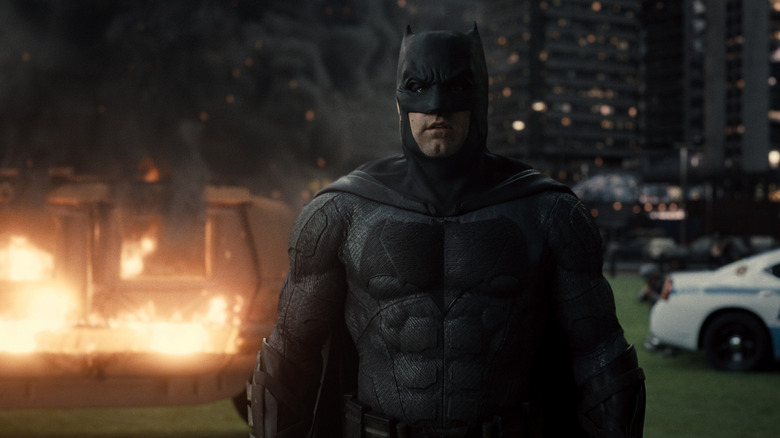
You can take all the justified umbrage with entitled, toxic "Snyder Bro" fans all you want — the fact remains that Zack Snyder being able to release his full four-hour cut of "Justice League," after stepping away amid family struggles and having Joss Whedon step in as a hired gun who turned the film into a misbegotten Frankenstein of disparate tones and ideas, and which ruined the DCEU, is a net positive. Even more incredible is that he released it exactly as he wanted: four hours long and in a 4:3 aspect ratio, emphasizing the towering, mythic might with which Snyder views these heroes.
True, Snyder is still trying to wrestle an unwieldy cinematic universe into a crossover event, desperately trying to match the cultural phenomenon the MCU created. But his version gets far closer to that level of capability than its theatrical counterpart: "Zack Snyder's Justice League" follows through on its director's po-faced, occasionally silly ideas about these characters, delivering a blockbuster epic with surprisingly riveting filmmaking.
Snyder successfully leverages the bones that were always present in the project, further developing the storylines of characters like Cyborg (Ray Fisher) and The Flash (Ezra Miller) that were rendered incoherent in Whedon's version. With a 7.9 IMDb rating and as the only DCEU film to make it on this list, audiences could clearly feel the ambition being met. With James Gunn now in the driver's seat for the revamped DCU, "Zack Snyder's Justice League" plays as a vision of an alternate future for Batman and friends, one where Snyder would have led the heroes on a decidedly darker path.
Batman: Under the Red Hood
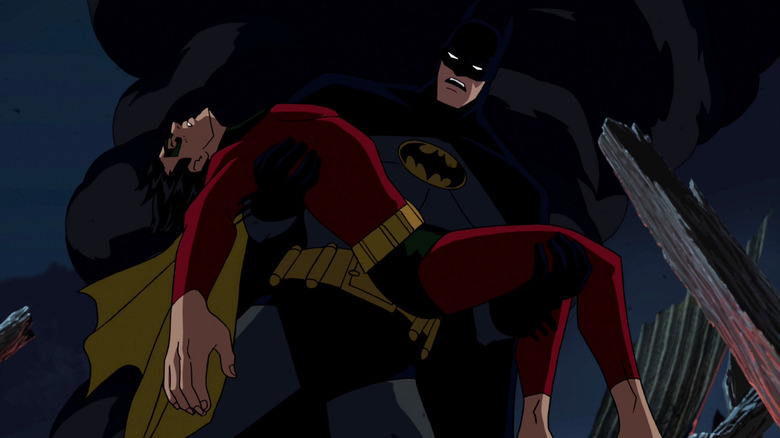
The DC Universe Animated Original Movies line has produced a surprisingly deep catalog of quality work, but "Batman: Under the Red Hood" remains one of the best. It's a film disciplined enough in its darkness to earn its premise, with a uniformly excellent voice cast and appealing animation. Adapted by Judd Winick from his own comic arc and directed by Brandon Vietti, it is arguably the most emotionally involving animated Batman film since "Mask of the Phantasm," continuing the trend of probing the character's psychological depths.
The film picks up in the aftermath of one of Batman's (Bruce Greenwood) most storied failures: the death of Jason Todd, the second Robin, at the hands of the Joker (John DiMaggio). Years later, a vigilante known as the Red Hood (Jensen Ackles) emerges in Gotham, dismantling crime syndicates with brutal efficiency and operating by a moral code uncomfortably close to Batman's own.
What "Under the Red Hood" leverages that many other superhero films don't is the idea that the most devastating conflicts are built on moral complexity and contradictions. Batman's no-kill rule has always been the character's defining tension, and this film leans into it unflinchingly, refusing a clean, hero-ready conclusion. At 8.0 on IMDb, it's the second-highest-rated animated Batman with the hero as the title character — an admirable feat and a strong case for a character with a storied history in the animated medium.
Justice League: The Flashpoint Paradox
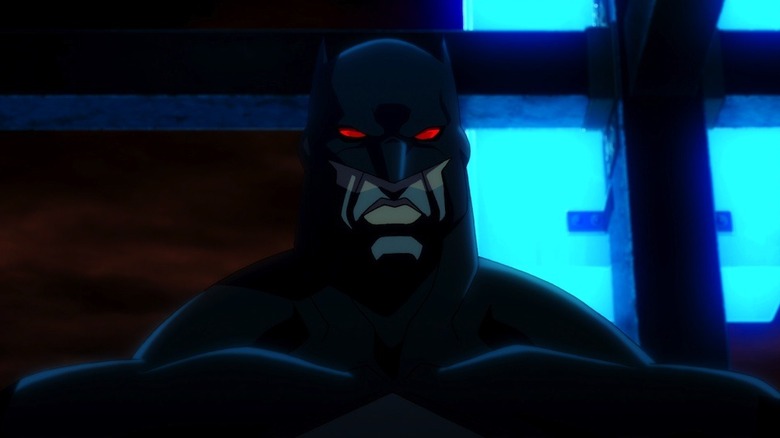
"Justice League: The Flashpoint Paradox," at first glance, seems ill-fitting for a list of Batman films. The hero at its center is Barry Allen (Justin Chambers), not Bruce Wayne, and its engine is a time-travel conceit involving Allen's decision to go back and save his mother (the same storyline that would be loosely adapted for the Ezra Miller-starring live-action film). But the Batman this alternate timeline produces — a gun-wielding Thomas Wayne (Kevin McKidd) who watched his son die in Crime Alley and took up the cowl in his grief — is one of the more compelling iterations of the character in film.
Helmed by "Batman: The Dark Knight Returns" director Jay Olivia and adapted by Jim Krieg from Geoff Johns' 2011 comic event, the film isn't shy about the fact that the story is an excuse for a prolonged, sprawling ensemble action piece and character skewering. The alternate timeline produces slanted versions of all the Justice League heroes, including Aquaman (Cary Elwes) and Wonder Woman (Vanessa Marshall) locked in a world-consuming war. But the alternate Wayne is what sharpens the film. Thomas Wayne is raw, wounded, and with nothing left to lose, in a way that distinguishes him from the strict principles of Bruce.
"The Flashpoint Paradox" likely earns some extra goodwill in retrospect for being the more satisfying adaptation of this story. With 8.1 on IMDb, it's the second-highest-rated Batman-related animated film on the site, and it's more than justified on this list because this distorted view of the character supplements and reshapes what we already know about him.
Batman Begins
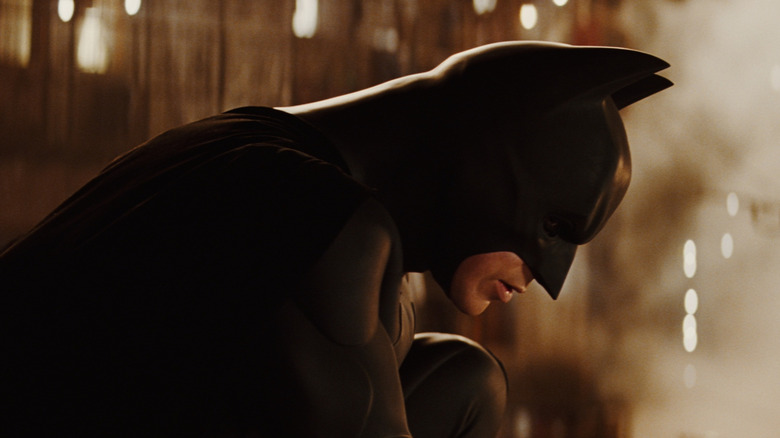
Co-writer and director Christopher Nolan was launched into the public consciousness with his debut in what would become his own Batman trilogy, released in 2005. Following the resolute disaster of Joel Schumacher's "Batman & Robin" in 1997, Nolan was responsible for revitalizing the popular idea of the character for mainstream audiences in this darker, more intense conception of the character, 100% free of bat nipples and Mr. Freeze puns. Critics and audiences dug it, giving it an 8.2 on IMDb as of now, and it launched some of the most popular Batman films ever made.
Co-written with David S. Goyer, "Batman Begins" naturally serves as an origin story for the character, in which we observe the psychologically tormented Bruce Wayne (Christian Bale) depart from Gotham City to become a recruit for Henri Ducard (Liam Neeson), a mentor within the mysterious League of Shadows. Trained in martial arts, Wayne returns home and adopts the Batman moniker, and we catch up with him as he confronts the sinister Dr. Jonathan Crane (Cillian Murphy), who is responsible for poisoning Gotham's water supply.
You can feel the care Nolan and Goyer bring to the character in this entry, as they strive to redefine his popular persona in a more harrowing post-9/11 world. It tracks that "Batman Begins" was originally designed as a solo Batman movie, not a trilogy starter. It acts independently of larger franchise obligations, focusing more on serving as a character study of Bruce Wayne and how his unstable anguish is reflected in his crime-fighting persona.
Batman: The Dark Knight Returns, Part 2
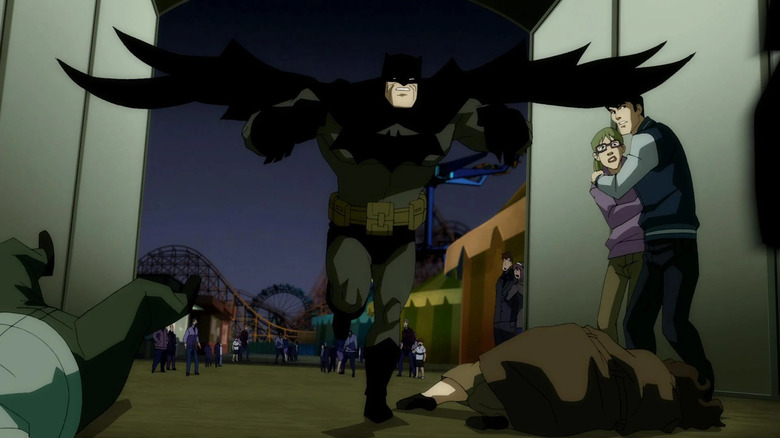
Jay Olivia returns to direct the concluding half of Frank Miller's 1986 opus, again working from Bob Goodman's screenplay. Released in January 2013, four months after its predecessor, "Part 2" inherits the weathered, near-future Gotham established in the first installment and pushes its political and psychological undercurrents to thrilling conclusions.
With Bruce Wayne (Peter Weller) back in the cape and cowl and the Mutants gang reorganized into the Sons of Batman, the film turns its attention to an old foe: the Joker (Michael Emerson), catatonic for years, who stirs awake the moment he learns Batman has returned. Their eventual confrontation runs parallel to a larger crisis, as a Cold War-addled federal government dispatches Superman (Mark Valley) to rein in his former ally, setting the stage for a showdown between two diametrically opposed personifications of heroism, turning Krypton's golden boy into a villain against the vigilante Bat.
Where "Part 1" got the story started as a slow-burn character study, "Part 2" is more concerned with ideological reckoning. The Batman-Superman clash, long a touchstone for debates about power and compliance within the superhero genre, is given ample room to breathe here, with all its moral complexities. The film refuses to let Batman emerge from the encounter uncompromised. Carrie Kelley's Robin (Ariel Winter) continues to ground the story's generational throughline, the one shimmer of optimism for the future in an otherwise grim story of institutional decay. At 8.3 on IMDb, it's the highest-rated animated rendition of the character and stands as one of the most satisfying, faithful page-to-screen adaptations that Batman has ever received.
The Dark Knight Rises
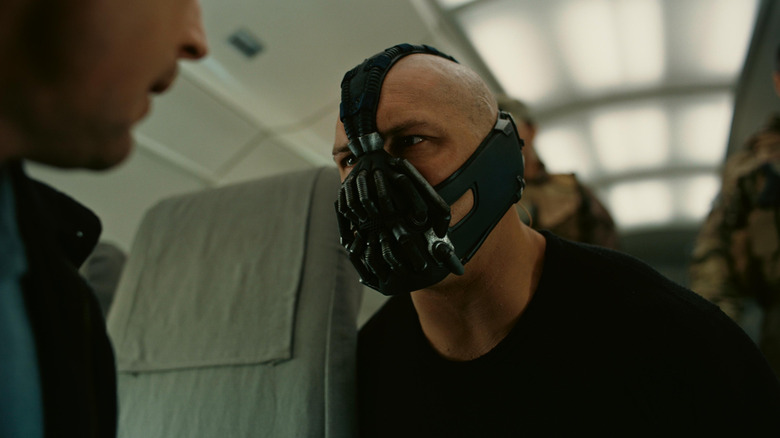
If you ask me, this is the one entry on this list that's clearly overrated — but who am I to argue with the fine users of IMDb? They've got this one sitting at an 8.4 rating on IMDb, indicating general satisfaction with how Christopher Nolan and co-writer Jonathan Nolan managed to wrap up the imposing and culturally dominant "Dark Knight" trilogy, no easy feat after one of the most critically acclaimed and commercially successful comic book films ever made.
The elephant in Gotham City, of course, is the death of Heath Ledger, the star who delivered the inimitable performance as the Joker in "The Dark Knight." One can imagine he would have played a meaningful role in the follow-up, but in any case, Nolan goes broader for "Rises." Eight years after "The Dark Knight," Bruce Wayne (Christian Bale) has gone into seclusion until a mercenary named Bane (Tom Hardy) and a cat burglar named Selina Kyle (Anne Hathaway) force Bruce back into the fold, eventually leaving him broken and fighting for redemption.
Ambitious though it may be, "The Dark Knight Rises" is hampered by a messy script that crams disparate Batman lore and weighty, elusive themes into a hodgepodge that's difficult to parse. It's difficult for Nolan to make a wholly bad film, though, and "Rises" is still filled with weighty spectacle and some classic, impressive Nolan-style nuts-and-bolts set pieces. It's an underwhelming conclusion, but even so, it has value on the merits of its pure bravura.
The Dark Knight
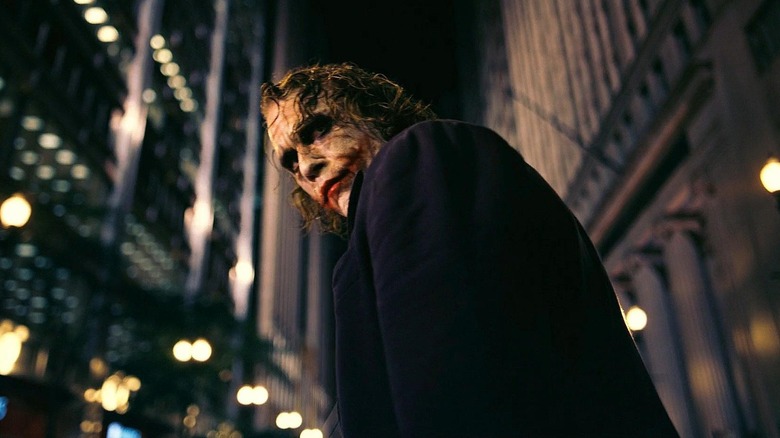
"The Dark Knight" has loomed so large over popular culture for nearly 20 years that it's impossible to imagine the top spot on this list going to anything else. "The Dark Knight" sits at a 9.1 rating on IMDb, which also places it at the number three spot on the site's Top 250 films, a comfortable margin away from the 8.4 rating of "The Dark Knight Rises." Nolan's zeitgeist-defining superhero film not only became perhaps the archetypal Batman film but also confirmed a new, standardized, darker approach to franchise filmmaking.
Honestly, "The Dark Knight" is still better than you remember. It's easy to feel overexposed to a film that's so prevalent and long worshipped by film and geek culture, but when you watch it again, the pieces come together like clockwork. The script by Christopher and Jonathan Nolan isn't the sturdiest object in the world, but Nolan's approach to blockbuster spectacle has rarely been so purely dynamic and hard-hitting, shooting in towering IMAX when possible and prioritizing practical effects for stunts like the flipping of an 18-wheeler.
Then there's Heath Ledger as The Joker, one of the most famously, endlessly referenced and recognizable film performances of all time. Ledger's villain is regularly and rightfully regarded as a timeless, towering performance, as he leans fearlessly into the psychotic flamboyance of Batman's greatest foe. The collision course the two are set on in this film feels like a ticking time bomb of chaos waiting to explode, all realized through Nolan's stark sense of street-level crime-movie realism that revitalized an entire culture of big-budget filmmaking.