

Despite 4 Oscars, Clint Eastwood Still Doesn't Have One Major Award
We may receive a commission on purchases made from links.
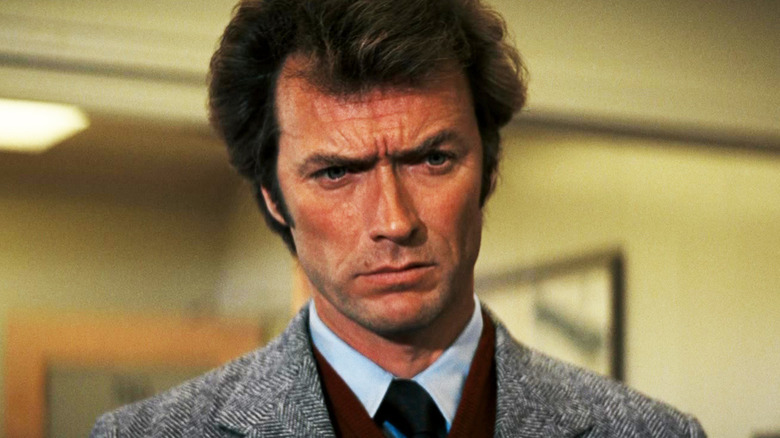
Clint Eastwood surely doesn't have anything left to prove. He is, after all, a 96-year-old living legend who managed to float effortlessly between big budget blockbuster fare and thoughtful drama, embodying towering cinematic figures such as Dirty Harry while simultaneously earning plaudits for his directorial efforts. But there is one thing Eastwood still needs to do, and it may come as a surprise, even to fans: win a Best Actor Oscar.
Eastwood holds an Oscars record that still hasn't been broken. He's the oldest person to ever win the Oscar for Best Director, which represents just one of his four Academy Award victories. In his half-a-century-long career Eastwood has won both Best Picture and Best Director twice, once for his 1992 revisionist masterpiece "Unforgiven" and once for his 2005 sports drama "Million Dollar Baby." Despite those achievements and the fact he was also nominated for Best Actor in both instances, he's yet to claim victory in the Best Actor or Best Supporting Actor category.
Eastwood has been nominated for several other of his films, earning Best Picture and Best Director noms for both "Mystic River" and "Letters from Iwo Jima." He also picked up another Best Picture nod for the questionably accurate "American Sniper" in 2014. Still, he's yet to have taken home a Best Actor award. What's more, it took almost 40 years for Eastwood to gain any sort of acknowledgement from the Academy at all.
Clint Eastwood had to work hard to earn Oscars recognition
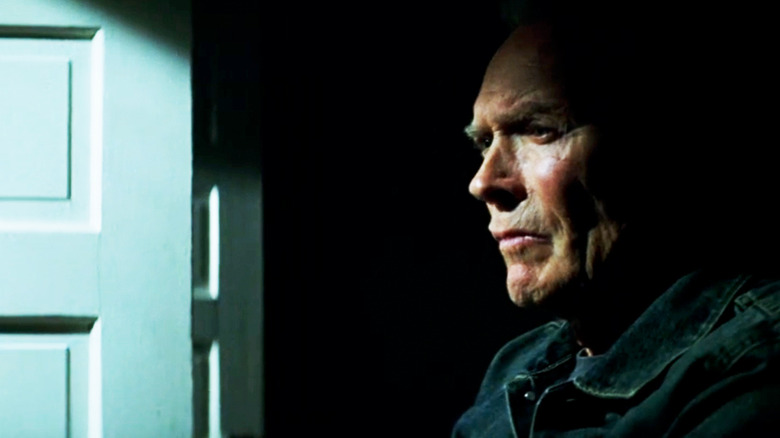
By the time Clint Eastwood won his first Oscar in 1993, he had long since been working to convince critics of his filmmaking prowess. His directorial debut, 1971's "Play Misty for Me" received positive reviews, though Eastwood's 1973 movie "Breezy" is rarely talked about partly because critics weren't all that impressed. But he continued to make films throughout the '70s and '80s, many of which were met with extremely effusive praise. Regardless, there was a sense that Eastwood — the stoic action star of the "Dollars Trilogy" and "Dirty Harry" — had to work harder than most to earn any of it.
Writing about Eastwood's box office triumph and his only '80s Western "Pale Rider" Vincent Canby of The New York Times seemed to sum up the general sentiment. "I'm just now beginning to realize that, though Mr. Eastwood may have been improving over the years," he wrote, "it's also taken all these years for most of us to recognize his very consistent grace and wit as a film maker." That's certainly the case if you go solely by the man's Oscars record. Eastwood's first film as director arrived in 1971 and it took him another 22 years to both earn an Oscar nomination and to win, even when he'd long since ostensibly proved his worth as a top-tier filmmaker.
Eventually, he wore down the critics and the Academy. But he's yet to win over the latter when it comes to his acting, and therein lies a fascinating facet of the man's career. Nobody would argue that Clint Eastwood is a bad actor. Yet there has been a question mark over his acting since the early days when naysayers decried his now famous gritted-teeth delivery.
Not everyone believes in Clint Eastwood's acting
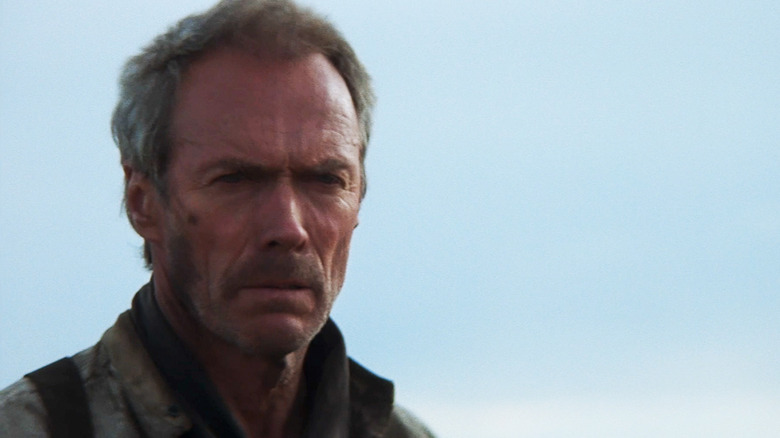
Clint Eastwood always had something crucial to any artist worth their salt: an opinion. Eastwood felt actors of his era made one fatal mistake in that they regurgitated performances they'd seen from big stars. Eastwood hated it. Clearly, then, he took his craft seriously enough to strive for originality. Still, he isn't always lauded for his acting ability, at least not as much as you might think.
Author of the biography "Clint: The Life and Legend," Patrick McGilligan wrote that Eastwood, "would rarely resort to shedding his skin and 'becoming' someone other than himself" — a preference that surely didn't play well with Academy voters. What's more, during an interview with The Wandrin Star, McGilligan downplayed the actor's range. "Clint's success as an icon and star revolves more around his persona," McGilligan said. "And his acting tends to fall back on what [Konstantin] Stanislavski (I believe) called 'the despotism of acquired habits.'" His skepticism of Eastwood's dramatic talents wasn't without precedent.
As the author notes in his book, some friends of Eastwood saw him as being "dead serious in his approach to acting" but there were those who suspected he viewed it with much less reverence. McGilligan points out that years after he'd already established himself, Eastwood was quoted as saying "Really, it [acting study] was sort of a pseudo-intellectual thing, a fad that people were going through at the time." Perhaps that's what prompted Fritz Manes to opine, "I think he was acting at being an actor."
Of course, Eastwood has given us plenty of evidence for his acting talent. But it is interesting to note this question mark which has followed him since the very beginning, and continued to linger long after he was brought to the attention of the Academy.