

Clint Eastwood Felt Actors Of His Era Made One Fatal Mistake
We may receive a commission on purchases made from links.
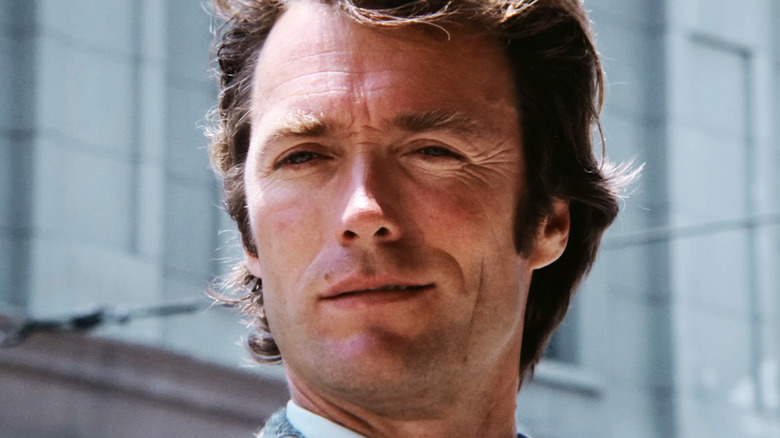
Clint Eastwood is a true original. At least, that's how he saw himself. During an interview with journalist Paul Nelson, the screen legend explained how he strove for originality in his performances. But he also detailed his personal dislike for actors who merely copied the mannerisms and movements of other more well-known performers — a tendency which according to Eastwood was rife in the 1950s.
As noted in Patrick McGilligan's "Clint: The Life and Legend," Eastwood "bristled at comparisons to [John] Wayne or comparisons to anybody." When it came to the Duke, the actor distinguished himself from his forbearer by breaking away from domineering directors to become a filmmaker in his own right. Whereas "Wayne subordinated himself to top-ranked directors," Eastwood simply couldn't allow himself to be seen as anything other than his own man. As McGilligan put it, "After Sergio Leone and Don Siegel, now after Phil Kaufman, [Eastwood] would never again surrender himself to any director who might dominate him."
But this wasn't solely an attempt to break away from associations with John Wayne (though considering Eastwood and Wayne's infamous feud that might have been a small part of it). The actor never liked being associated with anyone — actor or otherwise. Eastwood's best roles are all him, and as he told Nelson in a 1970s interview (via "Conversations with Clint"), "It's degrading to imitate somebody. Do your own thing." That last phrase, with all its positive and negative connotations, is as succinct a summation of the man's career as you're likely to hear.
Clint Eastwood thought actors were mostly just imitating other great performers
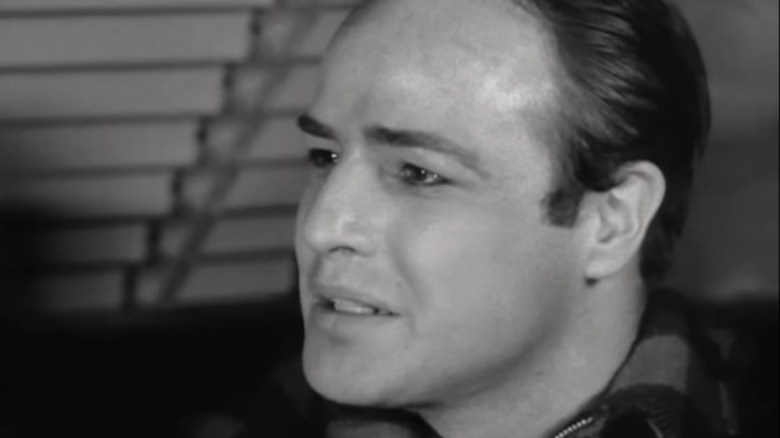
In the interview from "Conversations with Clint," Clint Eastwood explains how his aversion to imitation was solidified in the 1950s. He uses the example of a Marlon Brando movie with a near-perfect Rotten Tomatoes score as evidence of how his fellow actors were merely doing impressions of other well-received performances. "I came into acting in the period where everybody was imitating Marlon Brando," he said. "Everybody. Nineteen- fifties. There wasn't an actor on the screen who wasn't sitting around going [imitates Brando from 1954's 'On the Waterfront'] 'I'm a contender.' Even when they were playing brain surgeons they'd still be acting like Brando was when he was playing a fighter."
This observation seems to have been a major factor in determining Eastwood's approach to his career. "It was a wild period, but I don't think I was ever influenced by that," he continued. "To me, one performance doesn't deserve imitating like that. It's degrading to imitate somebody. Do your own thing." Eastwood went on to highlight examples of performances that were, in his eyes, wholly original. Montgomery Clift in "The Search," Oskar Werner in "The Last Ten Days," and Albert Finney in "Saturday Night and Sunday Morning" all received a shoutout. "The great performances you can think of," he said, "at least that I think are great over the last two or three decades were all people who had a certain individuality and that was it."
Of course when Eastwood started out in Hollywood, he did have a certain individuality and was unlike anyone else. But initially, that didn't actually help him. In fact, it got him fired from his first studio contract.
Clint Eastwood took some time to find his authenticity
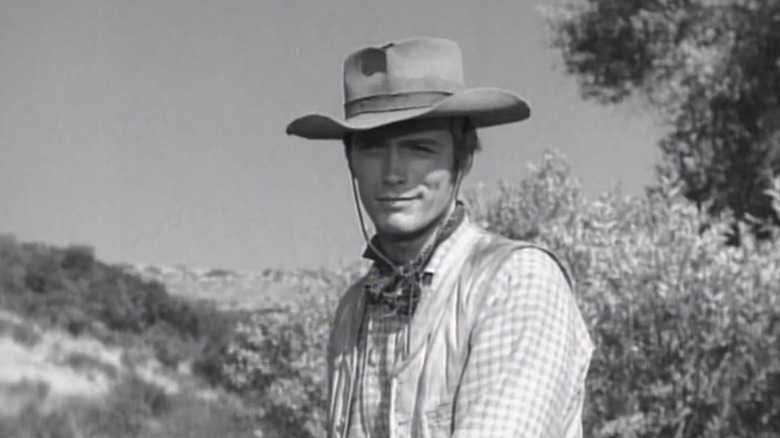
Clint Eastwood's first role was in the largely forgotten 1955 horror sequel "Revenge of the Creature." At that time, he was under contract with Universal Studios, but while he managed to land several bit parts in the mid-'50s, his unorthodox approach to acting didn't exactly help him gain stardom. At least, at first. While Marlon Brando was influencing an entire generation of performers with "On the Waterfront," Eastwood was, as Patrick McGilligan notes in "Clint: The Life and Legend," "cold, stiff, awkward. His raw appeal was hard to transfer to performance."
The actor's natural charisma would eventually shine through, but it seems the studio didn't have the patience required to see their young signee blossom at the time. After a year, Universal fired Eastwood alongside Burt Reynolds for the unlikely reason that his Adam's apple was too big (Reynolds was dismissed based on his acting ability). But the decision wasn't entirely about Eastwood's physicality.
As the actor later explained in his conversation with Paul Nelson, he was never really interested in trying to do what other people might have been familiar with. He was just figuring out how to be himself on-screen and that didn't initially lend itself to immediate success. "I've never been a big aficionado of any particular actor," he told the journalist, "and so I don't think I come off looking like I'm influenced by it." Had he been influenced by others, he might have found fame more quickly, though that fame would have undoubtedly been much more short-lived than the megastardom he eventually achieved.