

10 Best Haunted House Movies Of All Time, Ranked
We may receive a commission on purchases made from links.
There's something so fitting about the haunted house movie as a horror subgenre. Characters prowling a creaky old house with secrets buried in the walls create fertile ground for scary, invasive imagery. The supernatural intrusion on the comfort of domesticity follows you home from the theater. And the subgenre is flexible enough to offer cozy, rainy-night scares just as easily as it can leave a viewer utterly unsettled. In some cases, it even veers into comedy. The idea of an unwelcome presence in a place meant to provide shelter provides a universal feeling of unease that can be translated into so many different tonal contexts.
Haunted house stories have existed as long as people have told scary tales, so it's no surprise the subgenre has a century-long cinematic lineage as well, one that traces back to the earliest days of the medium and continues today. We've covered some of the most underrated haunted house films of the 21st century elsewhere, but this list casts a wider net: the best of the best across all eras. These are the most influential, the most memorable, the films that established and re-established the rules of the genre. Maybe watch them with the lights on.
Here are the 10 best haunted house movies of all time, ranked.
10. Paranormal Activity
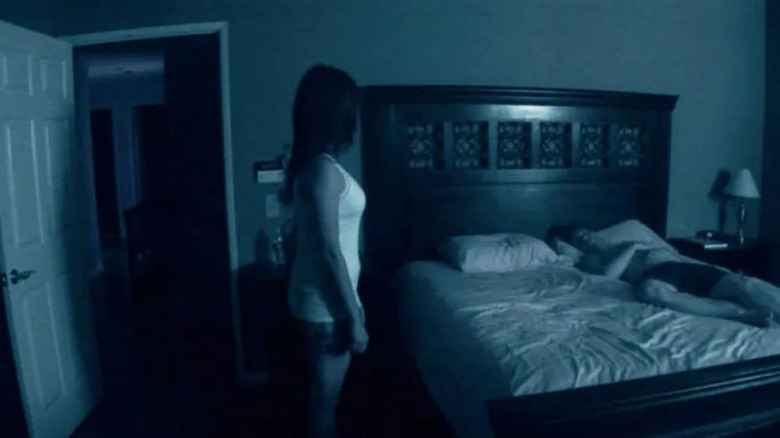
There's something to be said for a horror movie made on a principal budget of $15,000 becoming the most profitable horror film of all time. Cheap to make but propelled by a strong wave of viral and word-of-mouth hype following its acquisition by Paramount, "Paranormal Activity" sparked a boom in horror filmmaking across both the haunted-house and found-footage subgenres.
The premise is wonderfully simple, especially given the convoluted lore that later sequels would pile on: couple Katie (Katie Featherston) and Micah (Micah Sloat) suspect a supernatural entity is haunting their home, so they set up a camera in the corner of their bedroom to record what happens at night. During the day, we watch them grapple with their situation; after dark, we watch the presence torment them.
The film works so well because of that simplicity. Its scares are intimate, built almost entirely around a single shot: a couple's bedroom, which was, in fact, director Oren Peli's own. Shot in his house, the found-footage format creates a strong sense of recognition, making the film's frights easy to carry home and lie awake with. It dismantles your comfortable detachment by making everything deliberately uncinematic. It evokes the dull texture of everyday life, then rewrites it with the suggestion that something may be lurking in your own home.
9. Beetlejuice
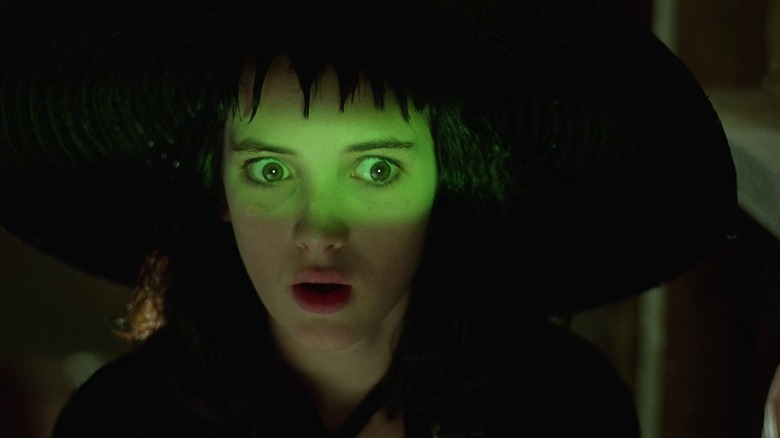
Tim Burton's second feature is a haunted-house movie in reverse: the ghosts aren't the threat; they're the problem-solvers — or at least they're trying to be. When Adam and Barbara Maitland (Alec Baldwin and Geena Davis) die in a freak accident and find themselves still stuck in their New England home, they discover that the new owners, an artsy Manhattan family, have no intention of leaving. Desperate, they hire Betelgeuse (Michael Keaton), a freelance "bio-exorcist" of dubious reliability, to do the dirty work for them.
Burton had only made "Pee-wee's Big Adventure" before this, and you can see him finding his register here, which led to the box-office run that would define his career. He would keep returning to the style of "Beetlejuice" for the rest of his career — macabre, cartoonish, irreverent. Bo Welch's production design is a marked achievement, merging the cozy folk-art aesthetic of rural Vermont with the surreal bureaucratic afterlife of a particularly underfunded government office. The film's internal logic is held together mostly by Michael Keaton's unhinged performance, which arrives late and is brief, yet still earns Betelgeuse a spot as an all-time, enduring character.
It's lighter on genuine scares than most of its neighbors in the genre, but that's never really the point. "Beetlejuice" uses the haunted-house setup as a vehicle for its stranger obsessions: what it means to belong somewhere, the absurdity of death as a bureaucratic inconvenience, and the particular horror of having your home redecorated against your will.
8. The Haunting
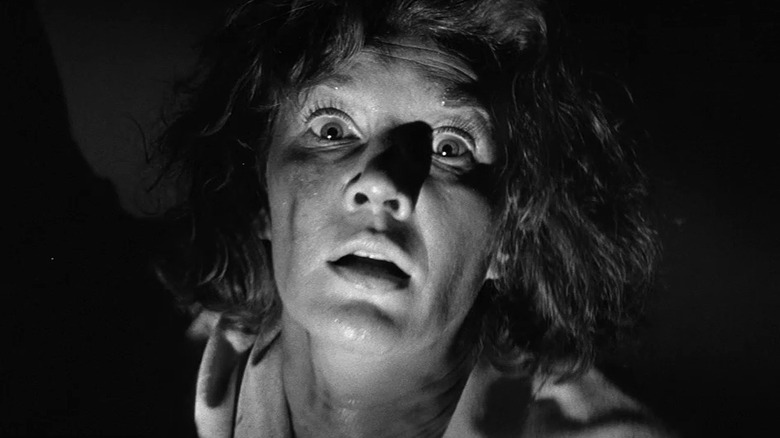
Robert Wise's 1963 film, "The Haunting," is the first film adaptation of Shirley Jackson's famed gothic horror novel "The Haunting of Hill House" and the perfect ghost movie for anyone who prefers their supernatural stories a bit more psychological. To be sure, the ghosts lingering within the historic, labyrinthine manor seem perfectly real, but they mainly serve as catalysts to reveal the main character Eleanor Lance's (Julie Harris) psychological neurosis.
Eleanor, having experienced ghostly activity in her youth and recently lost her invalid mother, is invited to Hill House by Dr. John Markway (Richard Johnson) as part of a small group of researchers investigating the extent of paranormal activity reportedly occurring there. The terrors of the house initially seem to reflect Eleanor's fragile state of mind — eventually, the frightening becomes beguiling, and Eleanor's pull toward the house grows stronger and stronger as she dissociates from reality.
Screenwriter Nelson Gidding's script is a departure from Jackson's novel, which he initially read as a metaphor for a character going through a mental health crisis. He incorporates those elements into a more classic haunted-house movie, elegantly directed by Wise, with quietly innovative methods for throwing the audience off balance. With his striking shot compositions from a then-experimental anamorphic camera, which uncannily capture the off-kilter, intentionally disconcerting set design by production designer Elliot Scott, "The Haunting" is disquieting in how it melds the terrors of the supernatural with those of the mind. It's one of the best ghost movies of all time.
7. The Conjuring
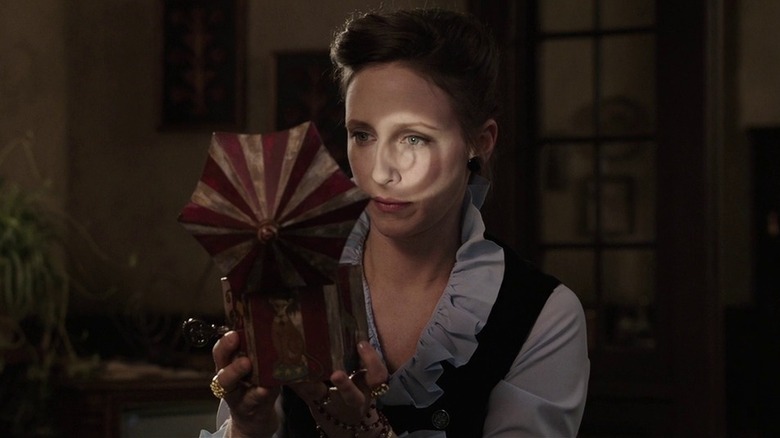
Horror virtuoso James Wan revitalized the classic haunted-house movie for contemporary audiences with this smash-hit throwback ghost movie that launched an expansive, ongoing, all-over-the-place cinematic universe. This period horror film, adapted from the lives of the very real Ed and Lorraine Warren and their probably-not-very-real supernatural investigations, is elegant in its execution of classic haunted-house tropes; it's a ghost movie with a maturity and polish that place it leagues ahead of most other mainstream entries in the genre.
Co-written by Chad Hayes and Carey W. Hayes, "The Conjuring" leans into its old-school studio-programmer vibe by setting its story in the early '70s. That gives Wan and co. plenty of mileage to pay tribute to the classic ghost movies of the previous generation: "The Conjuring" deliberately recalls everything from "The Changeling" to "The Exorcist" to "Poltergeist."
But as far as late 20th-century horror pastiche goes, you couldn't ask for a better imitator. Wan is a rock-solid horror director, with an uncanny ability to draw viewers inordinately into the on-screen events purely through camera work and the fundamentals of staging, both in the normal blocking of characters and in the architecture of his scares. "The Conjuring" consistently feels elegant and sleek, and uses these elements to pull the rug out from under you with how uneasy and jumpy its set-pieces are. Wan is a giddy strategist for making an audience jolt right out of their seats, and "The Conjuring" pulls it off with relish.
6. The Old Dark House
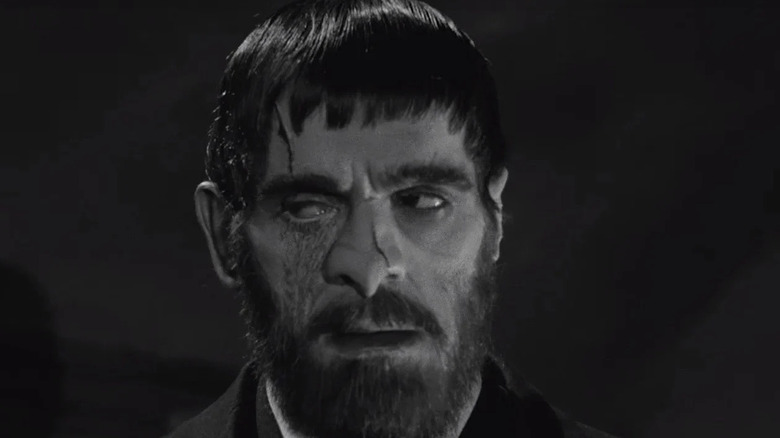
You could call this entry a bit of a cheat, since the terrors in the central mansion of "The Old Dark House" are entirely human. But director James Whale's pre-code chiller codifies so many of the atmospheric elements that would come to define the haunted-house movie as a horror subgenre, whether supernatural or not. It's one of the most moody and visually evocative entries on this list, with its stark use of shadows and gothic black-and-white photography making it apt for a night in with a spooky, classic horror.
Based on J.B. Priestley's 1927 novel "Benighted," "The Old Dark House" is set during the English interwar period, following three travelers who seek refuge at a remote estate during an intense rainstorm. The dynamics in the house quickly prove not to be as benevolent as they appear: the Femm family, who inhabit it, display an eccentricity that suggests an underlying sinister nature, becoming apparent as dangerous family secrets are revealed.
Priestley's novel was written as a commentary on English society, and there are indeed layers of allegory you can map onto the dynamics of class and social ostracization found within the story — there's even a prominent reading of "The Old Dark House" as an LGBTQ+ film, validated by Whale being publicly known as queer during his career. Whale invites all possible readings through his strong control over the horror elements and the camp comedy, and through his ensemble cast, most notably Boris Karloff in an unforgettable performance as the violent, mute butler Morgan.
5. The Others
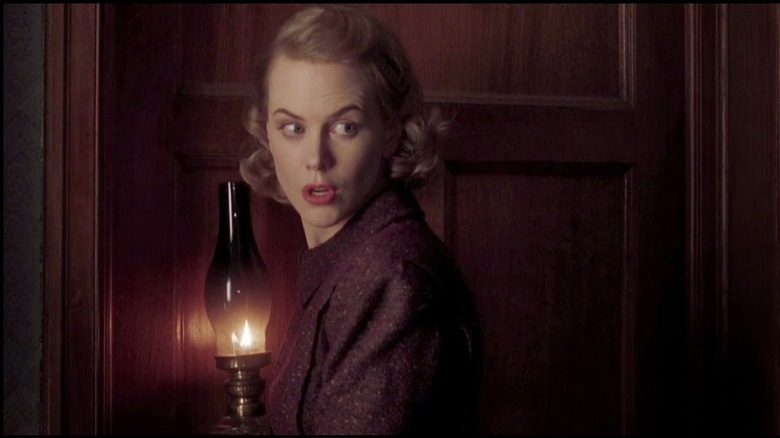
Writer and director Alejandro Amenábar draws on classic ghost stories and brings them into the 21st century with his 2001-released haunted-house fable "The Others." With an elegant leading lady in Nicole Kidman and an overall refined sense of style, "The Others" focuses on a melancholic, gothic mood over pure scares, making for a candlelit ghost story that's both cozy and tragic.
Kidman stars as Grace Stewart, a struggling, deeply religious mother to the young Anne (Alakina Mann) and Nicholas (James Bentley). The three of them reside in a remote estate among the English isles as Grace awaits word about her husband's status amid World War II. The house is already old and spooky, but Anne and Nicholas also suffer adverse reactions to natural light, so it is dark and lit only by candlelight at all times. The vibe is all the more appropriate when the family becomes aware of spirits inhabiting the house, who seem to be visiting Anne in particular.
"The Others" luxuriates in the patient pace of its "Turn of the Screw" style story, as Amenábar prioritizes a haunting, sobering atmosphere above all else. That doesn't mean "The Others" lacks frights, though, as it punctures the ambiance with effective, scary set pieces. Kidman's expressive, wide-eyed performance as the lone mother losing her grip is perfect, and Amenábar draws strong performances from the children as well, making this a well-rounded piece of sophisticated horror filmmaking.
4. The Changeling
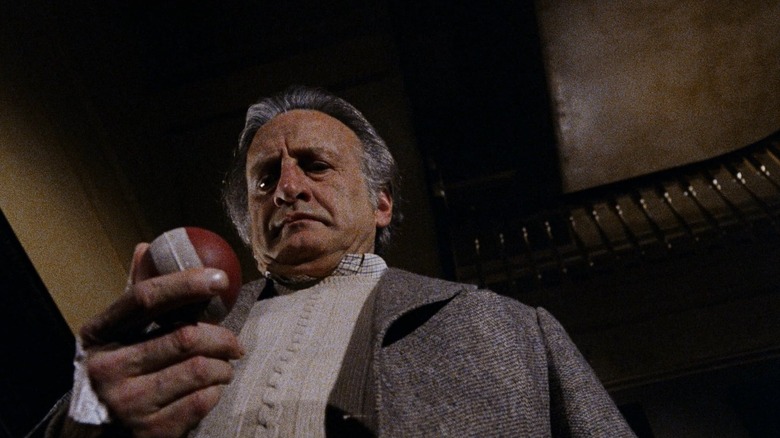
George C. Scott is having a terrible time in "The Changeling": his wife and daughter are hit by a car and killed, and then he realizes that the historic estate he's moved into on the other side of the country, in Seattle, is haunted. Peter Medak's "The Changeling" stands out for its prompt, unapologetic depiction of its supernatural activity. This isn't a movie about Scott's character, John Russell, slowly being convinced of the supernatural and saving his skin; it's about the supernatural as a gateway to an investigative procedural about generational violence hidden beneath the facade of American prosperity.
"The Changeling" helped redefine the haunted house movie in popular cinema; though it remains criminally underseen, its influence is felt among many contemporary horror filmmakers, including those who have openly sung its praises. It seems to have been a particular influence on James Wan, if we consider that the seance scene in "Insidious" is an exact recreation of one here, and that "The Conjuring" is built on the same unraveling of domestic comforts that masks horrible, long-festering trauma in 20th-century America.
You can see why everyone wanted to crib from "The Changeling" while watching it. Medak's execution of atmosphere and scares is impeccable, creating eerie, ghostly scenes that will send chills down your spine. The combination of Scott's character's tragic circumstances with his resolute determination to uncover the house's history makes for a horror film of supreme sorrow, foreshadowing the spectrum of horror films to come, from the melancholic to the jump-scare-filled.
3. Hausu
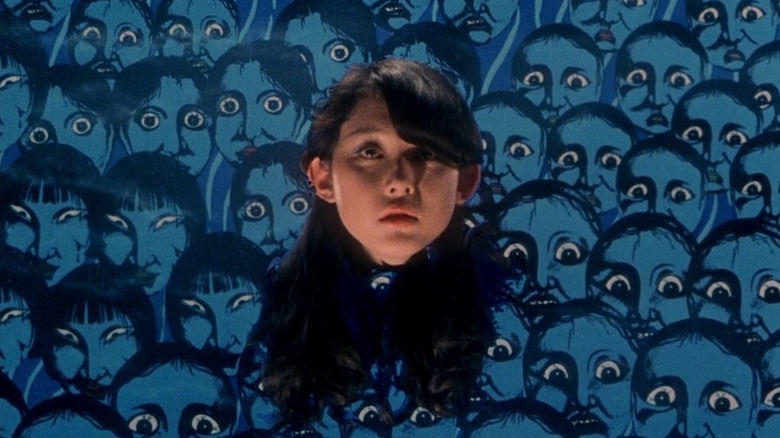
There is a version of Nobuhiko Obayashi's "Hausu" that could have been a straightforward Japanese answer to "Jaws" — a crowd-pleasing studio horror commission from Toho, designed to fill seats. What Obayashi actually delivered in 1977 is one of the most defiantly strange films ever made, a haunted-house movie that dismantles entire cinematic constructs with giddy imprudence.
The setup is straightforward: a girl nicknamed Gorgeous (Kimiko Ikegami) travels with six school friends to her aunt's remote country estate. The house, it turns out, is hungry. What follows an assault: Obayashi throws every visual technique available at the screen — painted backdrops, superimpositions, animation, whip-pans, irising effects — in service of deliberate, chaotic incoherence. The film's horror logic reads as though it's from a child's imagination, which is partially where it came from; Obayashi reportedly incorporated ideas from his young daughter about what she found frightening. Only in that context do you get a movie where a teenage girl is eaten by a piano.
What makes "Hausu" endure, beyond its surface spectacle, is how genuinely unnerving its chaos becomes. The relentlessness of its formal invention creates a disorientation that outlasts the laughs. You can never settle into the grammar of the film, which means you can never feel safe in it. The house devours its visitors, and the film devours your expectations of what a horror movie is allowed to do.
2. Poltergeist
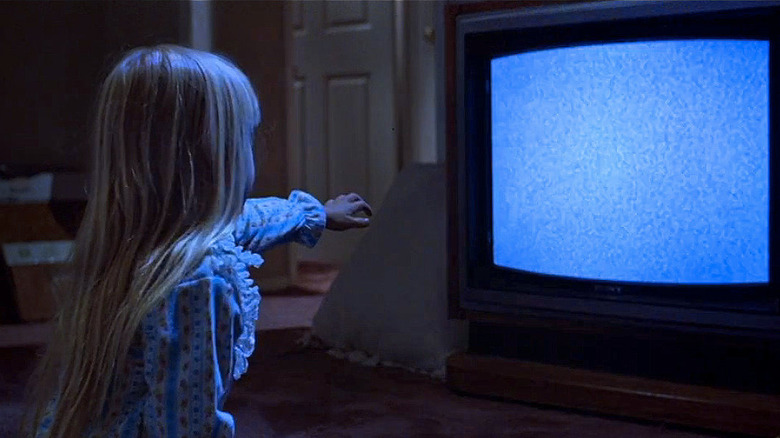
No matter who you think is most responsible for the final product of "Poltergeist" — Tobe Hooper directed, Steven Spielberg produced and co-wrote, and both men's fingerprints are all over it — the end result stands true as an unassailable horror classic. This is a deeply effective suburban horror movie that works precisely because its setting is so aggressively normal. The Freelings live in a California development so generic it was built on the cul-de-sac template that half of America grew up on. And then the walls start whispering.
The haunting begins small, almost playfully: furniture rearranges itself overnight, silverware bends on its own, the youngest daughter Carol Anne (Heather O'Rourke) starts holding conversations with the static on the family television. Then it escalates: the film's central set piece, in which Carol Anne vanishes into another dimension through the TV, remains startling, and Zelda Rubinstein's Tangina — the tiny, soft-spoken medium brought in to navigate the spirits — is one of the more memorable supporting characters in the genre.
"Poltergeist" has some of the period's most creative practical effects and some of its wobblier character work, but the real genius is in the specificity of its mundane setting. The haunted house here isn't a Victorian Gothic pile with a storied past. It's the kind of house your friends grew up in, on a street you've driven down a hundred times, which is, in its own way, much worse, and had enough power to spawn its own predictably lackluster franchise.
1. The Innocents
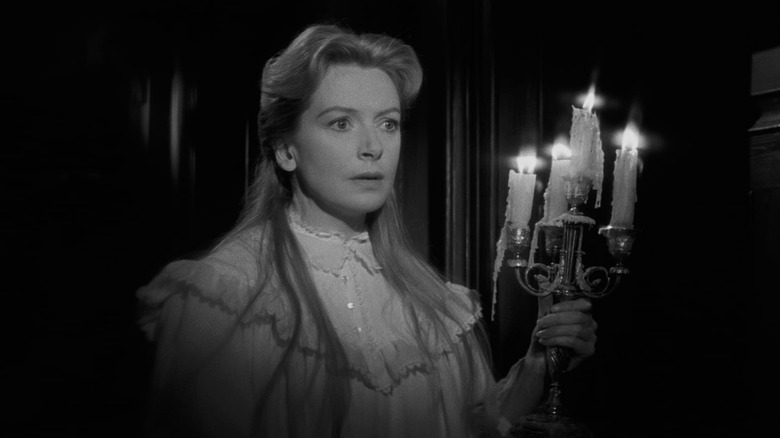
So many of the movies on this list owe their success to the resonant power of Jack Clayton's "The Innocents," and, by proxy, to Henry James's classic novella "The Turn of the Screw." Where a movie like "The Haunting" explores the depths of female repression and isolation as manifested through haunted-house trappings, and a movie like "The Others" focuses on a woman caring for two children who loses her grip as she reckons with the potential of the supernatural, "The Innocents" develops these ideas with timeless richness.
"The Innocents" largely succeeds because of the subjectivity with which its events are viewed — specifically, from the rattled, possibly skewed point of view of Deborah Kerr as the sheltered and inhibited Miss Giddens. Her understanding of the world is shattered when she takes on a job as a governess at a large estate, watching over two young children who seem to know more than they're letting on about the appearances of two ghostly apparitions around the grounds.
"The Innocents" is one of the scariest films ever made. It has a steady, unnerving quality, courtesy of Clayton's strong command of the tense, unsettling mood and his capacity for suggestion in his images, but it also offers a discomforting, transparent window into the psyche of an unbalanced, possibly completely unwell lead character, whose mental turmoil becomes far more unsettling than any ghost. It's the greatest haunted-house movie of all time.