

The Future Of Horror Filmmaking Is YouTube ... If You're A Dude
We may receive a commission on purchases made from links.
Horror, as a genre, has always been a sanctuary for artists creating work outside the status quo, with underground, regional, and micro-budget films frequently finding audiences beyond the traditional studio system. It's unsurprising that an online video sharing platform like YouTube would become an avenue for independent voices to thrive. Indeed, recent years have seen a surge in filmmakers discovered through their work on the platform, catching the eye of the powers-that-be at major studios (who then gleefully hand over a golden ticket in hopes of finding The Next Big Thing).
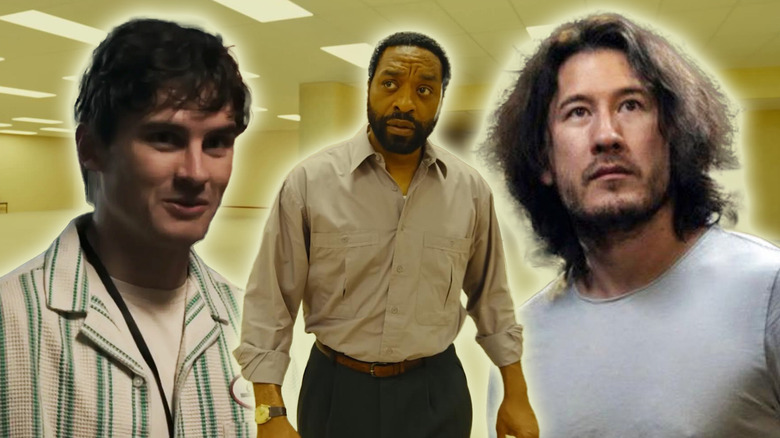
By and large, it's yielded great results. David F. Sandberg's viral short "Lights Out" became a smash horror movie for Warner Bros. Michael Philippou and Danny Philippou went from short films under the name "RackaRacka" to the buzzy horror hits "Talk to Me" and "Bring Her Back." Kyle Edward Ball transformed Bitesized Nightmares into the "Skinamarink" phenomenon. Chris Stuckmann's "Shelby Oaks" was the most successful horror movie in Kickstarter history and nabbed a distribution deal with Neon. Mark "Markiplier" Fischbach shocked the world when his independently produced and distributed video game movie "Iron Lung" made back over 10x its budget at the box office. And now, Curry Barker's "Obsession" is continuing to blow box office predictions out of the water, with Kane Parsons' liminal horror nightmare "Backrooms" on track to follow suit. Additionally, a filmmaker like Dan Trachtenberg was already working professionally when the YouTube virality of "Portal: No Escape" helped solidify his status as one to watch.
The YouTube-to-Horror Feature Filmmaker pipeline is very real. However, there's an important asterisk that is being overlooked when discussing this new wave of horror filmmakers: We cannot talk about the pipeline without acknowledging who even has access to it in the first place.
YouTube is a new avenue for major filmmakers, and its power will only continue to grow. But the realities of how success is found on the platform reinforce the systemic problems of the industry at large, and to explore that, we need to go on a side quest to something inherently uncinematic: MrBeast.
YouTube carries layered stigmas
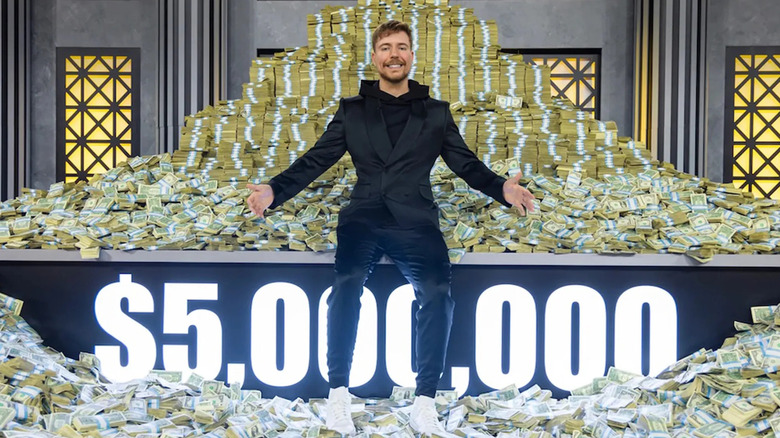
YouTubers are already heavily stigmatized by traditional industries and dismissed as amateurs the moment their work is circulated outside a studio system. While the platform can certainly elevate creators who lack formal training or infrastructure, many of its creators are highly trained professionals who chose YouTube specifically because it bypasses the gatekeeping, bureaucracy, and creative limitations of legacy industries. There's an air of skepticism that surrounds content creators when they attempt to cross into mainstream media, but the assumption that every creator is just another clickbait-hungry MrBeast clone is reductive and exposes how deeply out of touch mainstream attitudes toward digital media still are.
And yet, the culture surrounding figures like MrBeast contributes to YouTube's gender equality problem. MrBeast's "Beast Bible" was recently made public, and the document includes instructions on how all employees should relate to his all-male on screen talent team:
"It's okay for the boys to be childish. If talent wants to draw a d*ck on the whiteboard in the video or do something stupid, let them. Really do everything you can to empower the boys when filming and help them make content. Help them be idiots."
This is YouTube's most-followed figure and the standard by which countless others are trying to emulate. Although women were instrumental in pioneering the landscape of content creation, concerningly, of the 50 most-subscribed-to channels on YouTube (excluding corporate entities), only seven are women, and four — including the most-followed "woman"— are literal children (which requires an even more concerning conversation).
Not only is there a barrier to entry that exists solely for being known as "a YouTuber," but we then have to compound the systemic factors that prevent someone from even becoming a YouTuber, let alone one successful enough to garner mainstream attention.
YouTube is a platform that implicitly caters to men
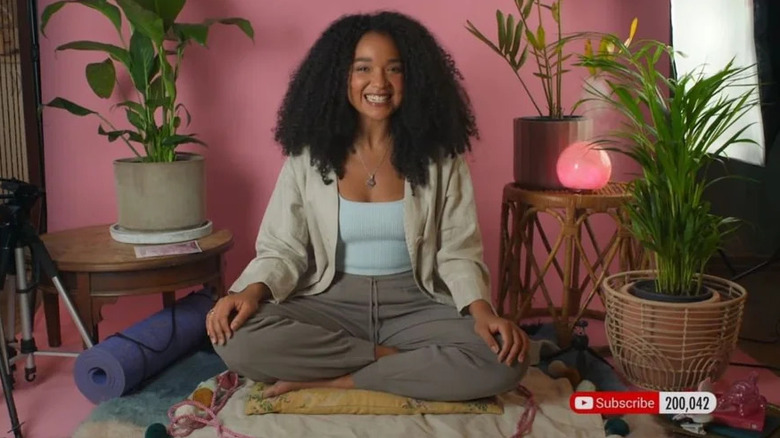
The ThoughtLeaders' four-part investigative series "Who Killed the Female YouTube Star?" exposes the brutal truth: YouTube was not built on equal footing. It's one of the hardest platforms to break into because it prioritizes long-form video. The platform rewards relentless long-form output, but long-form creation demands time, consistency, and unpaid labor before profit ever arrives. Women, who still shoulder a disproportionate share of domestic and emotional labor, begin that race already behind.
And even when women break through, many learn quickly that visibility comes at a cost. Across YouTube, women creators routinely downplay their gender unless their content explicitly depends on them showing their face because there's an assumption that women on YouTube are making "lifestyle content" and not anything based on creative expression. The Gender Credibility Gap proves that people subconsciously view men as more "credible" or "brilliant" than women, which is connected to the belief that men using YouTube for creative endeavors are seen as "entrepreneurs," while women using YouTube are seen as "attention-craving." This belief shapes who viewers trust, whose skills are treated as authoritative, and whose ambition is perceived as legitimate.
That bias forces women to over-explain their credentials to justify their presence before they can even begin releasing their work. This is something I have personally experienced in countless press rooms as more studios and streamers prioritize the inclusion of influencers in these spaces. People love to wave this away with "It's just the internet," but YouTube accounts for more watch time and daily engagement than any other single entertainment or social industry. When one of the most powerful media pipelines in the world systematically undermines women's credibility, it's not a "niche creator issue," it's a structural inequity with real-life consequences.
Algorithms are inherently hostile toward marginalized people
Online platforms are also becoming more and more dependent on algorithms, which is a huge problem for all marginalized people, including women. Algorithms will always reflect the information humans input, which will always display implicit biases. In "Algorithms of Oppression: How Search Engines Reinforce Racism," author Safiya Umoja Noble outlined:
"Part of the challenge of understanding algorithmic oppression is to understand that mathematical formulations to drive automated decisions are made by human beings. While we often think of terms such as 'big data' and 'algorithms' as being benign, neutral, or objective, they are anything but. The people who make these decisions hold all types of values, many of which openly promote racism, sexism, and false notions of meritocracy, which is well documented in studies of Silicon Valley and other tech corridors."
While the internet is hostile to everyone, marginalized people are harassed at significantly higher levels, with a study from #HerNetHerRights showing that women are 27 times more likely to be harassed online than men. The Journal of International Women's Studies reports that YouTubers "who were frequently subjected to trolling minimize their interaction with the platform; they reduce visiting and stop uploading, putting themselves at a professional disadvantage." In our current Rage Economy, where there's much money to be made from reactionary, hate-motivated content, it actually benefits people to be as horrible to marginalized people as humanly possible.
And suggestions like "don't read the hate" or even "turn off the comments" are not helpful, because online platforms thrive on continued engagement and giving users a reason to stay on the site — like comment sections. Videos are punished for turning off the comment sections, and content moderation tools are insufficient, turning trolling and violent threats into hazards of the trade.
The YouTube to Hollywood pipeline is another way the industry fails women directors
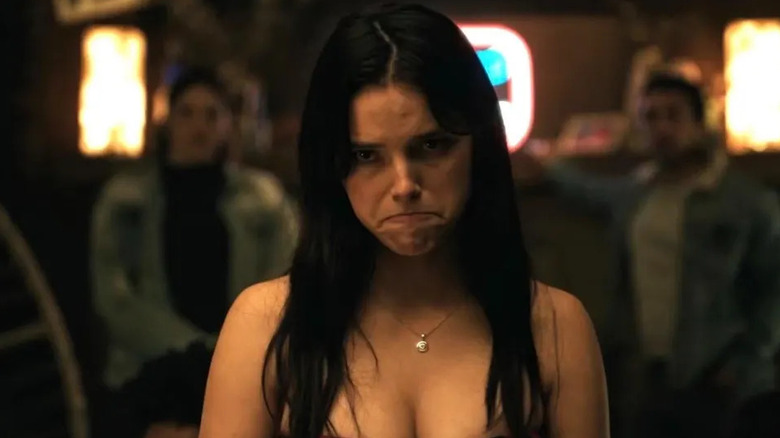
Hollywood continues to fail women directors, and according to the USC Annenberg Inclusion Initiative report (via Deadline), out of 111 directors who helmed the top 100-grossing films, only nine were women, representing 8.1%, a steep drop from 2024, when the percentage of women directors on those films was 13.4%. Admittedly, horror consistently provides more opportunities for women because the genre typically doesn't require massive budgets and has a thriving independent scene, but there's still so much work to be done, and YouTube cannot be the sole gateway. How can creative women gain a following or fandom on a platform like YouTube when they are up against all of these systemic hurdles before they ever even hit upload?
This is in no way an attempt to discredit or disparage the work of the men who have found a way to thrive in this pipeline, but rather to acknowledge the privilege they inherently have by virtue of being men. The lone non-white man in this group — Mark Fischbach — is also the only one to distribute his film without studio backing and the marketing machine that comes with it. He wisely leveraged his massive fanbase for grassroots distribution and proved that a creator-owned, studio-free release could be massively successful, but his being the exception seems to prove the rule.
With so much emphasis now being put on the YouTube-to-Horror movie trend as the next frontier of finding talented new voices, this difficult, uncomfortable conversation is more necessary than ever. Unless you exist as (or are believed to be) a cisgender, heterosexual, white man, the pipeline doesn't actually exist. YouTube is not and has never been a truly democratized platform, and we're doing the next generation of creatives a disservice by pretending it is.